Sunday, March 15, 2009

Rumours, Interrupted

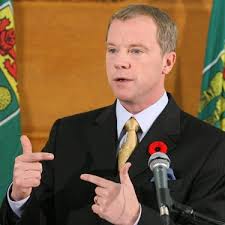
MacKay not planning to run for NATO Secretary General

If speculation that Defense Minister Peter MacKay was gunning for the soon to be elected position of NATO Secretary General were based merely on rumours, MacKay seemed intent to lay them to rest this week.

"Rumours are just that," MacKay insists. "I have a tremendous amount of work on my plate right now as Canada’s defence minister."

"I’m focused on my role as minister of defence in Canada and building our capacity, which is something that we’ve worked very hard at."

"We have a 20-year predictable Canada-first defence strategy that is going to replace all of our core capabilities and grow the size of our infrastructure and improve upon our operational capacity. All of these things are very live files," MacKay explained.

"We have a tremendous number of procurements complete but more of them in the pipeline. That’s my focus right now, and obviously getting the equipment into our theatre of operations and protecting our men and women in uniform as they carry out their important work in Afghanistan."

MacKay has continued to be as good as his word, announcing $40 million in upgrades to military facilities in Alberta.

The results of MacKay's work have also become evident on the ground in Afghanistan, as Canadian forces conducted a helicopter-borne assault conducted with Canadian helicopters -- a historical first.

MacKay's insistence that he isn't campaigning to be NATO's new Secretary General may seem to defy other recent comments made on the matter.

Then again, it's important to remember that former Liberal Foreign Affairs Minister John Manley has also been rumoured as a potential candidate of the job. While direct speculation about Manley seeking the job has been scant, it's important to remember that he's come close before. Manley narrowly lost out to current Secretary General Jaap de Hoop Scheffer in 2004.

And while MacKay is passing on a tremendous opportunity -- both to further establish himself as a future Conservative leader and Prime Minister and to solidify his party's internationalist credentials -- Manley would also represent Canada with distinction as NATO Secretary General.

Then again in politics it's remarkable how quickly things dismissed as mere rumours can blossom into reality. Politicians as savvy as MacKay has proven to be rarely turn down opportunities on the magnitude of the one that currently seems to have presented itself.

Economics - Canadians Doin' It Right

Saturday, March 14, 2009

Meghan McCain Gets It (Mostly) Right

Sean Hannity, unshockingly, gets it wrong

With the question of whether or not Guantanamo Bay detainees should have their rights respected hanging thick in the air, FOX News' Sean Hannity invited Meghan McCain, amongst a panel of other commentators, on his show to discuss the issue.

Hannity -- along with most of the panel -- is stringently opposed to "granting" the rights of Guantanamo detainees.

"They declared war on us and we're fighting a war and we know there is about 60-some odd detainees that have gone back to the battlefield. Why for the first time ever would we give rights to enemy combatants?" Hannity asked.

"What competent person thinks this is a good idea?" McCain asked. "Literally when I think of my brother and his people and his platoon, the people I know over there fighting for this so we can let them go so they can attack us again? It's insane."

McCain is right and wrong about this.

When, as the segment itself alluded to, the Guantanamo detainees accused of helping plan the 9/11 attacks admit their role in the plot and insist they're proud of it, it's pretty clear what they will do if they're released free and clear from Guantanamo Bay.

However, the topic of discussion wasn't merely about the notion that these men could be released. It was also about whether or not those detained should have any rights.

Since the United States began taking prisoners in the War on Terror, the "enemy combatant" designation has been used liberally as an excuse to avoid designating them as criminals or as prisoners of war.

If charged as criminals, those detained at Guantanamo Bay would be subject to Habeus Corpus and would enjoy a collection of civil rights that would rule out the treatment they've received at Camp X-Ray, including torture.

If declared to be prisoners of war, these detainees would be subject to the full range of rights laid out under the Geneva Conventions. Once again, torture would have been strictly forbidden.

Now, mercifully, the Obama administration is putting an end to the designation of Guantanamo detainees as "enemy combatants".

Wether as criminals charged under US law or as prisoners of war, these individuals will finally enjoy the rights mandated under law -- be it domestic or international -- and will finally be subject to some manner of justice worthy of the name.

As previously mentioned, one of these rights is the right to not be subjected to torture -- something that Hannity apparently thinks is acceptable even as a Christian.

McCain, for her own part, disagrees.

"I think it's what separates us from the terrorists," McCain explained. "My father could never lift me up as a child because he can't move his arm. He can't ride a bike because he can't bend his knee because he was tortured. I think he knows better."

There's also a serious issue at stake in pretending that the United States would be "giving" these individuals rights. In fact, the rights of these individuals are established within both US and international law.

Although McCain's approach to the issue of rights leaves much to be desired, her denunciation of torture is as effective, prescient and welcome is any. With the issue of how Guantanamo Bay detainees should be designated soon to be resolved, the voice of anyone with an understanding of the nature of torture is dearly needed.

Ruby Rocks Bollywood

In an amusing story emerging out of Ontario, Brampton MP Ruby Dhalla is threatening to sue a local film producer.

At issue is Kyon Kis Liye (which translates into Why? And For Whom?), a film about a Hamilton-area murder in which a man poisoned his wife in order to enjoy the proceeds from her life insurance policy. Dhalla starred in this low-budget film in 2003.

Dhalla insists that some of the promotional material for the film's DVD features pictures were doctored -- essentially that her face was photoshopped over another woman's body.

"I have worked extremely hard to get to where I am and will not be exploited by individuals," Dhalla says in a statement. "I have taken and will continue to take all necessary legal action to stop this opportunism, defamation, slander and exploitation by the producers."

Charanjit Sihra, the film's producer, vehemently denies this. "That is her. That is her body. That is her face," he insists. "She doesn't want the movie to be released. The pictures are from the movie."

"We want to see this movie go to homes. This film took a lot of work. She is the one causing nonsense because she is holding a politician's job. Indian people feel if someone works in a movie they should not be a politician," he continues. "But we feel that she did good work on the film and should be proud to show the people."

In other news, Calgary West MP Rob Anders is preparing legal action over a newly-disovered tape of him performing a duet of "It's Raining Men" with William Shatner.

Stay tuned.

It's Alive!

Manning: conservatism alive in Canada

Speaking to the Manning Centre Conference -- something of a CPAC north -- Preston Manning sought to sooth the jittery nerves of many Canadian conservatives by insisting that conservatism isn't dead in Canada.

"Conservatism took a hit in the United States. They lost the election, and you could argue the Republicans lost their way," noted Manning. "In Canada, they won the election — not with a majority, but with a strong minority."

Of course, there is a difference between a conservative party governing -- as currently remains the case in Canada -- and an actual conservative government.

Conservative governance has to be reflected in its policies. And while Hugh Segal recently noted that there is, traditionally, room for flexibility within the Canadian Conservative party, the National Post's Terence Corcoran notes that conservative commentators such as Terence Corcoran disagree with him.

Manning, for one, is under no delusion regarding the debate between market intervention and free market principles taking place within Canadian conservative circles right now, although he believes that Canada will emerge from the current economic crisis favouring less government.

But Manning, for one, also knows that having a conservative party in power doesn't necessarily mean conservative governance. After all, he was able to build his Reform party out of (primarily) western Canadians who judged the then-governing Progressive Conservative party as not conservative enough.

Canadian Alliance party founder and Mike Harris right-hand man Tom Long seem to invoke the political lesson of the 1993 PC collapse when he noted the inherent danger in the Conservative party attempting to push policies that are too far removed from the beliefs of the party faithful.

"Conservatives are often their own worst enemies. We have an internal debate going on in our heads, where we basically self-censor," Long said. "We've tried going out and selling things we don't believe in. How's that working?"

Long, it would seem, is much closer to Terence Corcoran's line of thought -- that the Conservative party needs to pull further to the political right -- as opposed to Hugh Segal's call for moderation, which is actually the camp that Preston Manning has historically fallen into.

That the Manning conference could even manage to put together a conference such as this, and attract speakers from as far off as the British Conservative party, is itself testament to the fact that conservatism, as a political philosophy, is not dead in Canada.

But Canadian conservatives need to re-imagine the ties that bind their diverse movement together. Debates such as the Segal-Manning/Corcoran-Long debate currently unfolding at the conference are going to be important steps toward that.

Friday, March 13, 2009

Will Mario Dumont Be Back?

Dumont's ride into the sunset may not be permanent

As the Action Democratique du Quebec looks anxiously toward its future -- a future without the only leader it has ever known -- some continue to speculate on former leader Mario Dumont's future.

Last year Lawrence Martin suspected Dumont would be named to the Senate as one of Prime Minister Stephen Harper's 17 new Senators. That didn't pan out.

Westmount Examiner columnist is being a little more cautious in his predictions. He expects that Dumont will be back, he just won't say how or when.

"Mario Dumont is a hero in his home town — the local lad who defied all odds to become the leader of a third political force in Quebec," Laresen writes. "He not only put Rivière-du-Loup on the map, he also served as an inspiration to many young rural Quebecers, showing them that Algeresque success is possible, given the right circumstances."

Larsen holds up two previous small-town Quebeckers -- Jean Chretien and Brian Mulroney, both former Prime Ministers -- as proof that there may be something to the mystique of small-town Quebecois leaders.

"Jean Chretien has always liked to refer to himself as the scrappy kid from Shawinigan, while Brian Mulroney proudly professes to be Baie-Comeau’s political wunderkind," Larsen notes. "Both claims are perfectly true, suggesting that any backwoods Quebec town can spawn a savvy, charismatic leader who has what it takes to rise to high political office."

It's worth noting, however, that both Chretien and Mulroney suffered ignominious fates in Canadian politics. Brian Mulroney backed out the back door before the Canadian people delivered his successor, Kim Campbell, a humiliating and crushing defeat.

Chretien left the Liberal party after his welcome had effectively been worn out, and with a major party-breaking scandal on the horizon. Like Mulroney, Chretien left his predecessor to face defeat, even if a decade of political fear mongering allowed the party to reduce both the scope and the immediacy of their defeat.

Yet the stories of Dumont, Chretien and Mulroney couldn't be more dissimilar in an important regard. As Larsen notes, Dumont built the ADQ from scratch, went on to win his seat in the National Assembly, and eventually transformed his party -- ever so briefly -- into a force to be reckoned with in Quebec politics.

By contrast, Chretien and Mulroney assumed the leadership of established political parties that were already on their way to governing -- a luxury that Dumont has never had.

Then again, few political leaders have ever come back from as complete a defeat as Dumont absorbed in Quebec's 2008 provincial election.

Larsen may be being overly optimistic about Dumont's chances.

"Dumont’s early retirement from political life certainly does not mean we’ll never see his name on a ballot again," Larsen surmises. "He most likely will return one day, probably when 'favourable conditions' prevail. This means he may still be the premier of Quebec one day, or even end up in Ottawa."

At Dumont's age one would be foolish to rule out a return to politics for the man formerly known as Super Mario.

But it won't happen any time soon. Furthermore, the how, when and why of his return can only be in the hands of Dumont himself.

Ironically, We Don't Want the Assholes to Love Us


Coming from Penn Jillette's Pennsays Youtube channel is the tale of Penn (of Bullshit! fame) and a video sent to him by the daughter of the late, great George Carlin.

In the video, Fred Phelps of the Westboro Baptist Church crows about the death of Carlin, and boasts gleefully about the torments he's allegedly subject to in hell (where he allegedly is).

Jillette then relates the story about a scene in The One and Only in which a "little person" (otherwise known as a midget) wrestler asks "why do we always want the assholes to love us?"

Jillette describes the scene as "profound", and something that he looks back on whenever he receives hate mail as a result of his work on Bullshit!.

It's a worthy mentality, one that I personally can relate to.

Individuals like Fred Phelps are marked by an extreme inability to deal with people who disagree with them. It isn't an uncommon trait. While some people are content to label people who disagree with them as merely "stupid", Phelps is clearly an even more extreme case. To Phelps, anyone who disagrees with him is destined for hell.

Here at The Nexus and elsewhere, I get enjoy infrequent interactions with people who insist that the blog is "aptly named". On each and every one of these occasions, this stems from a matter of disagreement, and someone who cannot tolerate it.

Whether it's someone who disagrees that the mother of a dead soldier shouldn't be considered fair game for political attack, or someone who can't understand the idea that "pro-choice" advocates who won't protect the freedom of choice of people who disagree with them are clearly more in favour of abortion than choice, there is no shortage of people in the world who can't tolerate a difference in opinion and are eager to attribute all manners of moral failure to it.

There's little question that political extremism blends fairly effectively with what Phil Neisser considers "anti-disagreement thinking", and less question yet how such thinking can appeal so much to people who are so extreme in their own views that they can consider no recourse other than to label anyone who disagrees with them -- regardless of how moderate their views actually are -- as an "asshole".

Then, unshockingly enough, many of these people seem confused and irritated when they realize how few people actually care whether or not they like them.

Unshockingly, most sensible people don't want the assholes to love them. That might seem a little surprising coming from a blog entitled The Nexus of Assholery, but then again, those who don't understand this are the ones who never understood the point in the first place.

There are few valid reasons to care what hateful people like Fred Phelps or Canadian Cynic think, and fewer yet to care who they like and who they don't.

Thursday, March 12, 2009

Musharraf, Kasparov and the Tree of Terrorism

Russian Grandmaster's question about terrorism makes Pakistani General uncomfortable

If Russian President Vladimir Putin is paying any attention to the international exploits of his chief political rival, he may well feel just as uncomfortable as former Pakistani President Pervez Musharraf did recently.

Speaking alongside General Musharraf at a conference in New Delhi, Kasparov asked him a question that made him noticably skittish.

In the question, Kasparov likened terrorism to a problematic tree. He noted that when dealing with such a tree -- perhaps one whose roots threaten to grow through the foundation of a house -- the best strategy wasn't to periodically trim the leaves, but rather to deprive it of its water source.

Reportedly, Musharraf attempted to avoid answering the question, insisting that the Pakistani government doesn't provide support to terrorists, and insisting that it was the Afghan drug trade that was supplying terrorists.

Kasparov's terror tree has recieved support from Pakistan's military, mainly from the Inter-Intelligence Service (ISI). While Pakistan's official policy -- both under Musharraf's regime and under the current Pakistani People's Party government -- is to oppose terrorists, it hasn't always done a convincing job of doing this in practice.

Of course, it's another thing if the tree proves to be somewhat useful. Islamic militancy and terrorism has certainly been a fruit-bearing tree for Musharraf -- it's helped him justify coup d'etats in Pakistan.

The ISI has been known to provide material support to terrorists. Whether its out of sympathy for their aims or because the Pakistani military has found them useful -- justifying ever-higher annual expenditures on miliary spending -- is a bit more a complex matter.

Even if Musharraf's administration never directly provided material support to terrorist organizations his half-hearted attempts to control them have certainly proven to be a form of support all their own.

It's important to note that the administration of current Pakistani President Asif Ali Zardari and Prime Minister Yousaf Raza Gilani hasn't done any better. Their practical hand over of the Swat region to the Taliban will provide shelter to Taliban and other Islamic Militants that will strengthen their operations throughout both Pakistan and Afghanistan.

General Pervez Musharraf could have cut off the water supply to the tree of terrorism long ago -- if only by controlling the Pakistani border.

Sadly, Gary Kasparov seems to be one of the few leaders willing to stand up and tell him as much. Vladimir Putin must be a little worried to see that his unelected rival is a stronger international leader than he is.

Wednesday, March 11, 2009

Missing the Balance

Conservative party not as "balanced" as Hugh Segal insists

Writing in an op/ed in today's Globe and Mail, Conservative Senator Hugh Segal suggests that the Conservative Party of Canada is immune to the identity crisis plaguing many conservatives -- particularly in the United States -- by virtue of its history:
"While some on the left and in the punditocracy assume conservatives have been put under water by Wall Street's collapse and the seeming core incompetence or dishonesty of American financial market players, the opposing truth is that Canadian conservatives have a heritage much richer and more diverse than simple free-market devotion."
Certainly, this may be true.

But it's one thing to have such a heritage. It's entirely another to remain true to it. Segal effectively articulates the nature of that heritage:
"First, our heritage embraces the populist and pro-humanity legacy of Disraeli's 'one nation' Tory democracy - which worked at bridging the gap between the wealthy and the poor. We also can call on the Québécois 'bleu' tradition that is all about communitarian concern for the community and the culture our history reflects. Sir John A.'s 'progressive' conservatism, which sought to move beyond the anti-reform landed gentry to a more dynamic embrace of what the state can and should do in nation-building times is at the core of the Canadian conservative political story."
The problem, unfortunately, is that the Conservative party has failed to maintain that heritage.

Canadians may find it interesting to remember that John A MacDonald -- the father of Canadian Confederation, and long considered the prototypical Canadian conservative -- built the country on the basis of a railroad-building project.

Meanwhile, the Conservative party has never since taken on a national project of the scope of MacDonald's rail-building enterprise. Instead, most of Canada's great national projects -- our healthcare system being foremost among them -- have been undertaken instead by the Liberal party, with the support of the NDP.

While the Conservative party has proven extremely reluctant to follow in MacDonald's footsteps, it has proven itself quite eager to abort other parties' national projects -- such as the Liberal/NDP national daycare program.

What Canadian conservatives have long forgotten is that these national projects don't merely serve the interests of utopian socialism. National projects reinforce these very bleu conservative principles of communitarianism. They unite people and remind them what can be accomplished when an entire country buys in to an initiative and works together to accomplish it.
"That supports, as a foundation does a home, the social outreach, however belated, of R. B. Bennett in response to the Depression; George Drew's progressive social and economic development in Ontario; and the post-Depression social humanity and pro-working people and seniors reforms of prairie populists such 'Bible' Bill Aberhart, Ernest Manning, John Bracken and John Diefenbaker. Leaders such as Bob Stanfield, Joe Clark, Peter Lougheed, Preston Manning, Bill Davis or Richard Hatfield made a series of progressive and populist changes and proposals on income security, human rights, education, lifting seniors out of poverty, workplace safety and agricultural support that enrich the Tory part of the Conservative Party of today."
Many conservatives had high hopes that the merger of the Progressive Conservative and Canadian Alliance parties to form the modern Conservative Pary of Canada would merge the institutions of the PCs with the populism on which the Reform party was founded.

Instead, what has emerged has been very different. No one who witnessed Bill Casey's expulsion from the Conservative caucus as retaliation for him voting against the Conservative budget -- an act he considered to be in the best interests of his constituents -- could believe that Preston Manning's vision of Canadian politics, conservative or otherwise, is alive and will within the Conservative party.
"And that Tory base is actually strengthened by the anti-establishment Reform tradition of enhanced accountability.

Only for the hard-bitten left ideologue is the credit meltdown an indictment of Tory principles around thrift, prudence, informed risk-taking and earned profit.
"
Indeed, despite the magnitude of the Conservatives' planned stimulus package, thrift, prudence and informed risk-taking very much do remain at the heart of the plan.

Liberal and NDP politicians would likely be rushing to roll out billions of dollars in grants and loans to the automotive sector, for example, as opposed to requiring them to look in-house for potential solutions and reengineer their business model before recieving any government aid.

But the planned stimulus package has yet to offer anything in terms of a cohesive vision. The kind of deficit spending the government will embark upon over the next couple of years (at least) provides the Conservative party with a splendid opportunity to lead the Canadian people on another national project.
"The fact that our economy is taking on water because a reckless American speedboat produced a 90-foot wave and a hugely destabilizing wake, forcing Canada to take emergency action, neither discredits nor diminishes the solid Tory balance between a private economy that generates employment and wealth for hardworking farmers and business people, along with support for social and public programs, and a coherent elected public authority that pursues an enlightened and modest role for government."
Certainly, this is true.

But few of those taking pleasure in the Conservative party's misfortune -- governing at a time of an externally-caused recession -- are ever going to admit that the source of this recession lies below the 49th parallel. The most dishonest among them will even insist that the American policies that led to this economic collapse are Prime Minister Stephen Harper's own policies despite the lack of mass deregulation of financial markets in Canada.

It doesn't help that the Conservative party is lacking the balance that Segal insists is its greatest virtue. Even if the Conservative party hasn't wholeheartedly embraced the American conservative movement's economic policies, it certainly has embraced economics as the uniting element of conservative philosophies, just as the American conservative movement did.
"This balance is part of our Canadian Tory history. It embraces tradition, supports social and economic progress that is mutually reinforcing and builds legitimacy around the core value of equality of opportunity. Keeping this latter mission front and centre when tackling unemployment, poverty, economic growth and prosperity is not only the right Conservative mission, but the right course for Canada.

Tories are anxious about rapid-fire government intervention that seems more slapdash than well-considered. Moderation, even in the face of crisis, is a Tory virtue. Consulting with cities and provinces before dispatching funds for job-creating projects, as is now being done, makes sense.
"
It certainly does make sense to consult with provinces, cities and municipalities does make sense.

But the government must be certain to design a stimulus program that refutes parochial interests and embraces initiatives that will bring Canadians closer together.

Upgrading Canada's communication or transportation infrastructure could be just such a project. Public/private partnerships to extend DSL internet into remote parts of the country or start building high-speed rail -- a long-neglected initiative in all of North America -- would make an excellent conservative national project.
"After Bennett's famous radio address in 1935 announcing a series of radical measures to help the poor and the dispossessed, Arthur Meighen, a signal personality of Tory rectitude and continuity, commented that while he was untroubled by the content of the message, he worried that the urgency of radio and its use might itself be unsettling to the public in unsettling times.

Stability and 'steady as you go' determined government, with a tilt toward the practical, humane and visionary, has always typified the Tory brand at its most successful. It is this legacy option that is still very much available to all conservatives - whether they seek to manage an energy-rich province, a national government facing gargantuan pressures or even to retake government in the next Ontario election.
"
If the Conservative party wants to successfully do any of these things, it will need to embrace the very balance that Segal alludes to, look beyond narrow economic ideology and do what no party in Canada has bothered to do for more than 20 years: formulate a coherent, inspiring vision for the future.

Segal should not count on notions of historical "balance" to see his party through the tough times -- for both itself and the country -- ahead.

When the Conservative party was elected in 2006, it was viewed by many Canadians as a good option amongst poor alternatives. Now it's increasingly being seen as the least worst option amoung uninspiring alternatives.

Under the leadership of Michael Ignatieff, the Liberal party will recieve a second look from many Canadians. Many of them will like what they see.

If Hugh Segal and the Conservative party want to continue governing federally -- let alone defeat the Dalton McGuinty Liberals in Ontario -- they need to come up with a vision that Canadians will be inspired by and buy into.

The "historic balance" of the Conservative party will not be enough.
Alberta's New Morality Police

Movie inspectors to parent the province's children

It's amaing the kind of things a dominant majority government can pass when its citizens aren't looking.

In Alberta, Bill 18 -- the Film and Video Classification Act -- is set to establish a provincial film czar to classify or reclassify films within the boundaries of Alberta.

The film czar would also have the power to hire inspectors who would go to movie theatres and rental stores and ensure that children under the age of 14 aren't being admitted to or allowed to rent movies rated 18A or higher.

Any video rental clerk or usher allowing children under 14 to rent or see such films would be eligible for a $10,000 fine, even if accompanied by a parent.

Few people would suggest that children have any business watching movies such as Sin City or Watchmen. Then again, to establish a provincial office to dictate whether or not parents may allow their children to watch them or not is an unacceptable invasion of a parent's rights and responsibilities.

Bill 18 is merely a proclaimation away from being law.

But with word finally getting out about Bill 18, the government may find itself in a much less tenable position, but only if Albertans remain confident enough in their democratic ability to stand up and put a stop to it.


Other bloggers writing about this topic:

Lawrence Krysak - "Alberta's Indisputable Power to Censor"

Cracked Crystal Ball II - "Conservative Totalitarianism"

A New Face for the Republican Party

Meghan McCain is the anti-Coulter

In the wake of the Republican party's electoral meltdown, some rather curious icons are beginning to take dominate centre stage in the Republican Party.

In the wake of any strong leadership in the Republican party, American conservative icons like Rush Limbaugh and Ann Coulter are quickly becoming the face of the party as well.

American centrist conservatives have plenty of reason to be alarmed.

Few people seem to understand this more than Meghan McCain, the daughter of John McCain. Recently McCain denounced Coulter in no uncertain terms.

According to McCain, Coulter is “offensive, radical, insulting and confusing all at the same time. If figureheads like Ann Coulter are turning me off, then they are definitely turning off other members of my generation as well.”

“I love the Republican Party, I spent two years campaigning with my father and I completely fell in love with the Republican Party, and I think it’s hard for me to explain to my friends that are in their 20s when these icons of the party say radical things,” McCain explained. “I have a friend that’s Jewish – she made anti-Semitic comments. It’s hard to defend that.”

“I just wish for more centrist icons in the Republican Party,” she concluded.

Oddly enough, McCain herself has every bit of the potential necessary to supplant Coulter as an icon of the party, and particularly of American Conservative women.

Even as a recent convert to the Republican party McCain's centrist credentials are solid. McCain is known to hold liberal views on social issues, including support of same-sex marriage and stem cell research.

McCain has even interned on Saturday Night Live. With the exception of the various fictions that many people are intent on peddling about her father, there's very little not to like about McCain.

Meanwhile, Ann Coulter's attitudes and behaviours speak for themselves. Those conservatives Coulter doesn't alienate she reveals for precisely what they are -- extremists every bit as radical as she is.

Meghan McCain would, at the very least, put a younger, prettier, much more moderate face on the American conservative movement.

For their own sake, one hopes that American conservatives recognize this.

Tuesday, March 10, 2009

More to Immigration Than Importing Labour

Small-minded views on immigration threaten Canadian identity

Of the many things Canadians take in pride in about their country, multiculturalism is generally one of them.

Naturally, not everyone agrees with multicultural policy. In particular, many conservative-minded Canadians oppose multiculturalism because they feel it undermines the traditional Canadian identity -- one these particular individuals view as predominantly European and white.

Meanwhile for many Canadians multiculturalism seems to be largely irrelevant. Instead, they view immigration simply as an economic tool -- one in which they can find extra bodies to fill jobs.

Speaking alongside Leon Benoit in Lloydminster, Jason Kenney notes that he expects the current economic climate in Canada to reduce levels of immigration. Regardless of this expectation, the Conservative government is working on ways to streamline the immigration process in order to admit more workers to Canada.

Kenney and Benoit were in Lloydminster to discuss precisely that initiative.

"It’s a chance to meet people who are key in the community and figure out what the federal government can do to help them make sure the economy stays strong in this region," Kenney said. "Across Western Canada, we’re talking about tens of thousands of jobs that would go unfilled, businesses that would go down and bankrupt if they could not find temporary workers."

"Immigration is the sort of thing you just don’t want to do a short term knee-jerk reaction, you want to plan for the medium term, and that’s what we’re doing," Kenney explained. "We consulted industry and all of the provinces just a couple months ago and they all said we should probably keep levels about where they’re at now."

Of course, there's a serious problem with treating immigration mainly as an economic tool.

While it is a reality that immigration needs to be economically sustainable, acting recklessly upon some of the other preferences reportedly expressed -- toughening refugee policies and reducing government funding for groups serving minority communities -- would imperil multiculturalism in Canada.

Toughening refugee policies too much could result in refugees who deserve to be allowed into Canada based on merit being turned away. Reducing the funding for groups that serve minority communities would make it harder for new arrivals to adjust to Canadian society -- ironically, one of the concerns Kenney raised while in Lloydminster.

Reducing immigration to a mere economic tool is a formula for a more insular, parochial Canadian society -- one of the absolute last things Canada needs.

It seems that Jason Kenney and Leon Benoit may not fully understand this.

"People were asking about serious issues … and problems that need to be solved," Benoit added. "We have accomplished a high percentage of things that I recommended as critic, things I saw were wrong."

"Does that mean there’s nothing to do? Well you heard tonight: there is."

While Canadian immigration policies are far from perfect, the government needs to be very careful regarding which reforms it chooses to pursue.

Quid Pro Quo On a Global Scale

Compromise could pave the way for MacKay

With the election of the replacement for NATO Secretary General Jaap de Hoof Scheffer slowly approaching, a breakthrough that would allow Canadian Defense Minister Peter MacKay to win the job seems to be on the horizon.

“I don't think that traditions, in the sense of geography, should be a restriction on any position with NATO,” MacKay has recently said.

An unofficial NATO tradition is that a European will hold the office of Secretary General, while American commanders will maintain control of various military commands throughout the alliance.

American Vice President Joe Biden has reportedly offered a compromise to European leaders that may finally put this tradition to rest. Under Biden's compromise French commanders would assume control of several NATO commands in exchange for MacKay being elected Secretary General.

The likelihood that Biden's offer could be accepted is enhanced by the lack of a consensus amongst Europeans about which European candidate should be elected.

Polish Defense Minister Radoslaw Sikorski appears to be the strongest of the European candidates, but agitation between himself and Russia may undermine his candidacy.

Then again and by the same token, MacKay's recent verbal joust with Russia over bomber flights near Canadian airspace may make his own candidacy more questionable, considering that NATO is currently trying to strengthen its relationship with Russia.

MacKay has never lobbied Biden for his support. “I've never had a discussion with Vice-President Biden about this,” MacKay explained. “What I can tell you is that there is growing appreciation and I would even go so far as to say renewed respect for the role that Canada plays in NATO, not just in Afghanistan, but the fact that we have been an active participant and a founding nation for NATO in its 60 year history.”

Not to mention the direct leadership role Canada took in the creation of NATO.

With Biden's support -- knowing that Barack Obama isn't that far removed -- MacKay's candidacy for the job is far from a done deal, but it's become solidly within the realm of possibility.


Other bloggers writing about this topic:

James C Morton - "Peter MacKay as Secretary-General of NATO?"

Chucker Canuck - "Lefties: Here's a Chance to Show Europe Some Love"

Chris Tindal - "Sit Tight, Elizabeth"

Monday, March 09, 2009

The Quest to De-Canonize Science

Vatican concerns that science is for everyone, not just atheists

When someone who uses science and rationality as the backbone of his cause is found to be far more out of touch with science and rationalism than his allegedly irrational and superstitious opposition, one simply knows that individual is in trouble.

This is the dilemma that crusading Atheist Richard Dawkins finds himself in recently, as the Catholic Church, of all places, has cast some serious doubt on some of the conclusions Dawkins has reached and the obvious absence of the scientific method therein.

Richard Dawkins has been known to insist that the theory of evolution decisively proves that "God almost certainly does not exist".

At a five-day conference commemorating the 150th anniversary of On the Origin of the Species, Vatican theologians discussed the theory of evolution with biologists, molecular geneticists, paleontologists and philosophers. They noted that while Christians still accept God as the divine creative force behind they universe, the Catholic Church "does not stand in the way of scientific realities".

Pontifical Council for Culture head Monsignor Gianfranco Ravasi noted that there is no a priori incompatibility between the Bible and evolutionary theory.

Of course, Darwinian evolution and the creation account in Genesis may not be entirely compatible... if you take the word of the Bible literally. Such views are more generally described as fundamentalism.

Oddly enough, Cardinal William Levada offered his criticism of "those who have a fundamentalist interpretation of the Bible which they want to see taught to their children in the schools alongside evolution or instead of it."

Yet interestingly enough Richard Dawkins has to insist on a fundamentalist interpretation of the creation story as related in Genesis in order to argue that the theory of evolution decisively disproves the existence of God. If one acquiesces to the more widely-held view that the Bible is written predominantly in allegory and metaphor, Dawkins' claim becomes much harder to justify.

If Dawkins' claim that evolution proves "god almost certainly doesn't exist" relies so heavily on a fundamentalist interpretation of the Bible, it becomes very difficult to regard Dawkins himself as anything other than a fundamentalist.

Dawkins and his ilk have far too long been allowed to canonize science and hold it up to be the scripture which disproves religious scripture.

But if those who are allegedly most predisposed toward the fundamentalism that would validate such an argument instead reject fundamentalism, this is an argument without any kind of a future.

The best way to de-canonize science was for religious authority to accept it. Now that this has been done individuals like Richard Dawkins are going to need to find themselves a new scripture for atheism.

United They Stand

BC amalgamation plan will give aboriginals a stronger voice

In a province where dealing with aboriginal affairs has been notoriously difficult things are about to simplified significantly.

In 2002 the people of British Columbia approved the Gordon Campbell government's eight principles for treaty negotiation.

Those principles set the Campbell government's criteria for treaty negotiations. They stipulated the following:

-Private property rights should be respected, and that treaty settlements shouldn't involve the expropriation of property.
-Land use terms and licenses should be respected, and anyone whose commercial interests are disrupted should be compensated.
-The use of Crown land should be reserved for all British Columbians, including for hunting, fishing and recreation.
-Provincial parks should be reserved for the use of all British Columbians.
-Resource management and environmental protection standards shoulda apply province-wide.
-Aboriginal government should be modelled on local government. All powers delegated by the federal and provincial governments should apply.
-Harmonization of land use planning should be entrenched within treaties.
-Tax examptions for aboriginals should be phased out.

Even with the government's criteria for an agreement mandated by the citiens of BC negotiation of those treaties have proven very difficult. With more than 200 separate aboriginal groups in BC, reaching an agreement would prove nearly impossible.

A recent piece of legislation introduced by the government of BC would allow aboriginal groups to amalgamate, reducing the number of separate groups to a number as small as 25.

The legislation will also recognize the title rights of BC aboriginals as the original inhabitants of the province.

"We heard the B.C. minister of aboriginal relations and reconciliation say that it is up to the First Nations to determine what their political structure is going to be -- and it might well be 203 First Nations or it might be 30 or it might be 100. We just don't know how that's logically going to play out," said Chief Judith Sayers of the Hupacasath First Nation. "People have to ask questions because I don't want to be forced into working with First Nations that we might not get along with or it doesn't make a natural fit."

By amalgamating their groups not only will aboriginal treaty negotiations with the BC government go smoother, they will also have stronger, more unified voices to speak with.

That's why the Member of the First Nations Summit's decision to support the legislation put forth by BC Minister of Aboriginal Affairs and Reconciliation Mike de Jong is so important.

It could even provide a better model for Aboriginal self-government for the rest of the country.


Other bloggers writing about this topic:

Chrystal Ocean - "Native Rights to be Entrenched in BC Law"

Definitely For the Best

Brad Wall cancels out-of-province fundraiser for SK Party

It doesn't take much of a stretch of the intellect to realize that a provincial political party is not the same as a federal political party.

Considering that provincial parties, by their very nature, focus their efforts and concerns on matters of provincial scope -- exempting, of course, times of extraordinary political crisis and matters of inter-provincial cooperation -- it only stands to reason that they cannot fundraise the way a federal party does.

A general maxim in politics is that political parties raise funds from amongst their expected beneficiaries.

So it's on that note that it's for the best that Saskatchewan Premier Brad Wall has cancelled a Calgary fundraiser for his party.

The Saskatchewan party has had such dinners many, many times before, dating back to the tenure of Elwin Hermanson, the founder of the party. Now that the party is in government, however, Brad Wall seems things very differently.

"I think we're just going to take a different approach. We're a party now fortunate enough to be in government, so we're just taking a different approach more sort of consistent with that," Wall explained. "It is different. It is. ...I can't have a leader's dinner outside the province anymore, even if we call it that. It's a Premier's dinner and every province has their own Premier."

That's a decent enough reason to discontinue the dinners, but the best reason comes down to a matter of principle.

When provincial political parties fundraise out-of-province, it raises questions about who, precisely, the party is working in the interests of.

For example, currently acting leader of the Saskatchewan NDP notes that these dinners -- which primarily cater to the energy sector in Alberta -- raise questions about who sets the agenda for the Saskatchewan party, particularly as it pertains to energy and environmental policy.

"When you are responsible for managing the (energy) sector, for governing the sector, for regulating it and taxing it and then essentially going to the sector and saying, 'We're looking for your support.' ...The optic here is, at best, poor," Calvert noted.

In politics, the appearance of a conflict of interest is just as troubling as an actual conflict of interest.

The Saskatchewan party needs to make it unequivocally obvious that they represent the people of Saskatchewan, and that their agenda is set inside the province.

That is the best reason to not only cancel the annual leader's dinner in Alberta, but discontinue all of the party's out-of-province fundraising efforts.

Sunday, March 08, 2009

There's the "Taliban", Then There's the Taliban


It's important to know the difference

Ever since Canadian troops began the fight against the Taliban in Afghanistan, the notion of negotiating with the Taliban has been a controversial topic.

Yesterday US President Barack Obama mused that his administration may consider negotiations with the Taliban.

Today Afghan President Hamid Karzai made public his approval with this development.

Considering that it's only a matter of time until certain individuals begin to harp on the subject, it's important to understand precisely what is actually being proposed by this.

While Taliban as become a pervasive blanket term for the entire insurgency in Afghanistan, it's important to understand that there are actually numerous groups that together make up the Taliban.

One of those groups is Hisb-I-Islami, a group led by Gulbuddin Hekmatyar.

While Hekmatyar is currently an ally of the Taliban he has, in the past, also been an opponent of the Taliban.

Hekmatyar founded Hisb-I-Islami in 1977 in cooperation with Mulavi Younas Khalis. The group opposed the communist-leaning policies of Hafiullah Amin. Hekmatyar himself had long been involved in the continuing conflict within the country between Islamic and communist thinkers. In 1972 Hekmatyar was accused of murdering a Maoist student and imprisoned for two years.

Hekmatyar first rose to prominence during the Afghan-Soviet war. With support from the CIA, Saudi Arabia and Pakistan Hekmatyar led thousands of Mujahideen against the Soviet Union. However, Hisb-I-Islami had split into two factions at this point, with Khalis leaving to form a rival group.

After the formerly Soviet-backed Kabul government began to collapse in 1992 Hekmatyar attracted the support of most of the People's Democratic Party of Afghanistan. He then seized control of Afghanistan until he and Hisb-I-Islami were driven out.

In 1993 Hekmatyar was invited to be Prime Minister under President Burhanuddin Rabbani. In 1994, however, Hekmatyar left the government and aligned with Abdul Rashid Dostum. An impassed ensued in which Hekmatyar's forces got bogged down outside of Kabul and in frustration shelled the city.

The bitter civil war continued until 1996, when Hekmatyar and Rabbani again agreed to form a government together. Hekmatyar was to be Prime Minister.

The Taliban would sieze control of much of Afghanistan later in 1996. Hekmatyar would flee to Iran, then later return to fight the Taliban.

Hekmatyar has proven a strangely reliable track record in which he continually demonstrates that he is reliably unreliable as an ally. Basically, he fights with any one particular group until another offers him a better deal, then he switches sides.

The deal the Karzai government is offering Hekmatyar right now would offer him an opportunity to go into asylum in Saudi Arabia, then later return to Afghanistan to join the government.

Whether or not this is a better deal than the one Hekmatyar currently has with the Taliban is essentially best known by Hekmatyar and the Taliban.

But one thing is nearly certain: which ever side Hekmatyar decides to align with he will wind up fighting them sooner or later -- much likely more sooner than later. His previous record has shown this.

That being said, having Hekmatyar as part of the government would at least take him off the field of battle for a span of anywhere from a couple of months to a couple of years. One can only imagine what Afghan and NATO troops could do with Hekmatyar's Hisb-I-Islami off of their radar screens for that period of time.

Believe in Common Herosim

Patriot Guard Riders stand against hatred

Anyone who pays close attention to Fred Phelps and his hateful Westboro Baptist Church have likely noticed they're having a lot less fun these days.

Even as they're denied entry into foreign countries -- both Canada and Britain have turned them away -- their pickets of slain American soldiers' funerals are dwindling.

This can be credited at least in part to individuals like Sam Cottle, Jim Boland, and the more than 150,000 Americans who make up the Patriot Guard Riders, an organization that, since 2005, has protected the funerals of American soldiers from the WBC's demonstrations of hatred.

The Patriot Guard Riders have sought and recieved invitations to many such funerals, where they stand shoulder to shoulder with American flags and block out the WBC's protests. Never have they raised a hand in violence against the WBC (regardless of how much the WBC deserves it), even though they've been spit at by frustrated WBC protesters.

"We don't react to it," says pastor Tom Cottle.

Like many members of the Patriotic Guard Riders, Cottle is a Christian pastor fed up with Fred Phelps' and the WBCs' pollution of Christianity.

Others are simply fed up with the WBC's attempts to turn what should be a solemn day for the friends and families of deceased soldiers into a forum for their hatred.

Jim Boland joined the Patriot Guard Riders when he first heard about the WBC and their pickets. "I said, 'That isn't right. I'll go up there and see what's going on.' The protesters did not show up, but the whole town showed up. The Patriot Guard had at least 80 people on bikes and in cars. That's when I met some of my friends for the first time."

Certainly, Jim Boland has a great many friends now. Not merely among the Patriot Guard Riders, and not even merely among the friends and family of dead soldiers. Jim Boland and those courageous enough to stand with him have made a great many friends among anyone who opposes hatred, anywhere.

The actions of the Patriot Guard Riders are much more than an act of patriotism. Their actions are a triumph of the human spirit and of human compassion over vicious, inhumane, hateful, and evil people.

Their actions have taken a common reaction to the WBC and their theology of hate and transformed it into an act of simple, compassionate heroism.

Saturday, March 07, 2009

What's Good for the Goose...

...Must Be Good for the Gander

Many Canadians concerned with the recent lionization of the Tamil Tigers and demonization of the Sri Lankan government's attempts to defeat them have taken note of Liberal MP Gurbax Singh Malhi's appearance at a pro-Tiger rally in Toronto.

Raphael Alexander has picked this ball up. In a post on the National Post's Full Comment blog Alexander writes:
"By appearing at a rally on Parliament Hill surrounded by militant terrorist flags of the LTTE, Mr. Malhi has taken a stand shoulder-to-shoulder with an organization that is officially banned in Canada as a terrorist group. In a speech made before the crowd, the Liberal MP has compromised the priorities of a Canadian Parliamentarian by saying that the Tamils are fighting 'for a right cause'. Apparently the decision to address the crowd was impromptu; Mr. Malhi says he was just 'passing by' when he spotted the rally and decided to join in. Perhaps Mr. Malhi would be wise to recall that civilians have been killed in both sides of this struggle, and that by defending the actions of a terrorist organization he gives undue validity to them, however unintentional on his part."
Alexander's commentary wouldn't seem terribly unreasonable.

But then one also has to remember that a similar episode happened to Conservative MP Jason Kenney, who in 2006 addressed rally supporting the National Council of Resistance of Iran.

The NCRI is the political arm of the Mujahidin-i-Khalq. This group has been on the list of terrorist groups prohibited from operating in Canada. It was added to that list in 2005.

Like Malhi, Kenney claimed he was just passing the rally and decided to join in spontaneously.

"Canadian people would stand in solidarity with the Iranian people in their wish for respect for human dignity and human rights and democracy," Kenney told the 2006 rally. Not that different from Malhi's comments to the Tiger rally.

Moreover, Kenney would later claim that he had pursued due diligence in regards to the matter, contradicting his earlier claims of ignorance in regards to the matter.

Kenney, a Parliamentary Secretary at the time, continued to serve after the incident. After enduring a brief Liberal barrage in Parliament, Kenney moved on to eventually become Minister of Immigration, Citizenship and Multiculturalism -- a marked promotion from the lower echelons of cabinet.

Alexander isn't unreasonable to expect that Malhi should have considered the civilian deaths caused by both sides of the Sri Lankan conflict. But Mujahidin-i-Khalq has caused civilian deaths as well.

To demand an extraordinary act of repentance from Malhi would be unreasonable. If Kenney can walk away from his mistake and become a cabinet minister, Malhi can walk away free as well.


Other bloggers writing about this topic:

Dust My Broom - "Video: Liberal MP Speaks at Tamil Tiger Rally"

Friday, March 06, 2009

Curtains for John Tory

It's the end of the road for Ontario PC leader

When John Tory lost his seat during the 2007 Ontario general election, he had to know how badly he needed to win in a by-election.

Last night he failed to do that.

Liberal candidate Rick Johnson won the the Haliburton-Kawartha Lakes-Brock by-election by a margin of 2.5% of the vote. His 43.7% of the electorate narrowly trumped Tory's 41.2%.

"I'm very disappointed in the results of the election, as we all are, but the voters can never be wrong in what they decide, and I respect their decision," Tory announced while conceding the by-election.


Tory's loss represents something of a double defeat for the Ontario PCs. The seat he lost last night was one held by the Tories after the 2007 election. Laurie Scott won the seat against Johnson in 2007, then resigned so Tory could seek election.

With no seat in Queen's Park, there's nothing left for Tory to do but resign as the leader of the Progressive Conservative party of Ontario.

To date, Tory hasn't commented on whether or not he'll do so.

"As for me, I will have more to say about my plans tomorrow," he announced. "For now, I will only say that I gave this campaign my very best."

He can't expect to lead his party from the press gallery. The Ontario Conservatives need a Tory leader in the legislature, not Tory in the press box.


Other bloggers writing about this topic:

John LaForet - "Good Night and Good Luck John Tory"

Authur Kong - "Local Values Trump John Tory Ambitions"

Vlad Gebov - "John Tory Defeated by Rick Johnson"