"Ottawa group of four" defying Green Party leadership
When Green Party leader Elizabeth May went to her party membership looking for permission to ignore her own party's rules -- the Green Party constitution called for fixed-date leadership contests -- it was tough to tell whether or not the move should be condemned or applauded.
There was, of course, the sheer sanctimony of it. May has been the loudest complainer whenever she felt that Prime Minister Stephen Harper was breaking the rules. Then again, she was clearly disregarding the rules of her own party.
On the other hand, however, was Sylvie Lemieux. As a member of the Green Party's Ottawa Group of Four, she clearly had some extreme views, and was prepared to give herself the power to enforce those extreme views over others.
Paul Maillet, Quais Ghannem and Akbar Massoui round out the Group of Four.
A conference -- being described as a "peace conference" -- being organized by the cabal has quickly become a case in point.
The conference claims to be discussing “just and sustainable peace”. However, a deeper look below the blanket rhetoric reveals that it's actually about anything but.
According to Maillet, considered to be the ringleader of the Group of Four, the conference's goal is to identify “an alternative approach to conflict that doesn’t lead you down the path of violence."
“We were able to get some academics from the University of Tehran, and we thought that this was a good place to start,” he added.
For the sake of posterity, this needs to be stated again: they thought the University of Tehran was a good place to start. On speakers for a conference in favour of "just and sustainable peace".
However, the real cuplrit for the attendance of Dawood Ameri and Saeid Ameli was Manoussi, who attended an Iranian government-sponsored conference in Tehran during the last year.
The Ameri's Islamic World Peace Forum features several anti-Semitic cartoons. Ameli, who will be keynote speaker, has actually praised Iran for its efforts to protect women's rights, and has falsely claimed that stoning is no longer used by the Iranian "justice" system.
And these are the people that the Ottawa Group of Four are looking to as guides toward "just and sustainable peace".
The utter shamelessness of the Group of Four is utterly astounding. Maillet actually attempts to defend the event by espousing the values of non-violence.
“One of the principal Green party values in non-violence, and this is what we’re trying to practice,” he said. “Non-violence has to mean living these values somehow.”
Of course, this begs questions: does Iran truly practice non-violence when it funds Hezbollah, who in turn launch rockets into Israeli civilian settlements?
Rationally, we already know the question: no. Of course they don't. Maillet is either wilfully ignorant to this detail, or somehow ignorant altogether.
It's hard to tell whether Maillet, a former Colonel with the Canadian Forces, errs on the side of naivete or wilful ignorance.
“A professional peacekeeper does not choose to have conferences with his friends. He chooses to have dialogue and discussion with people with whom he has differences," he insisted. "That is the place you can make gains.”
Of course, what Maillet clearly doesn't understand is that you can only make gains with adversaries who are willing to come to the table in good faith. The Iranian regime -- with whom all of Maillet's prized Iranian speakers are aligned -- never comes to the table in good faith; it comes merely to spread its own propaganda.
Elizabeth May, at least, seems to understand this much.
“You can’t have a dialogue if you don’t have balance," May said. "You can’t be naive about these things.”
“This is not a happy event,” she continued. “If they’re not aware that they’ve put together a conference which is unbalanced, then they’re not paying attention. I hope they’ll cancel.”
If they don't, May will have a serious problem within her party.
What needs to be seen is what May will do if they don't cancel. The Green Party should move to not only cancel the nominations of Maillet and Ghanem, but expel all four members from the party. However, May hasn't committed to this course of action.
At least with Elizabeth May still at the helm of the Green Party, Sylvie Lemieux won't be using it as a platform for the Ottawa Group of Four's extreme tyrant-coddling agenda.
Other bloggers writing about this topic:
Creekside - "A Maclean's Conjob MP Circle Jerk"
John Oglivie - "What Do Elizabeth May and Vic Toews Agree On?

Showing posts with label Iran. Show all posts
Showing posts with label Iran. Show all posts
Thursday, October 28, 2010


Friday, October 01, 2010
Worth Repeating: Mahmoud Ahmadinejad Not Necessarily Batshit Crazy
Calculating Iranian President more dangerous than a crazy one
When Iranian President Mahmoud Ahmadinejad drove the US delegation out of the UN General Assembly by alluding to 9/11 "truth" theories during a speech, the general media narrative was that he's batshit crazy.
This isn't without good cause. A quick perusal of 9/11 "truth" theories quickly reveals those who believe such theories to be demonstrably nuts -- Scott Stockdale's objections and all.
But Mahmoud Ahmadinejad may have seized upon a key strategic interest with his comments: keeping the international community divided.
As the University of Alberta Gateway's Ryan Bromsgrove points out, Ahmadinejad has managed to solidify his position at the head of an anti-Western, anti-capitalist global bloc (regardless of how genuine he could possibly as such, considering that he leads a mass oil-exporting country).
But aside form this detail, Bromsgrove seems to have seized upon a successful gambit to make himself look reasonable, and his global adversaries seem unreasonable:
Underscoring Ryan Bomsgrove's article is a sobering reminder: while Mahmoud Ahmadinejad may want the western world to believe him to be crazy, a calculating Ahmadinejad is much more effective -- and dangerous -- than he would be if he were merely crazy.
When Iranian President Mahmoud Ahmadinejad drove the US delegation out of the UN General Assembly by alluding to 9/11 "truth" theories during a speech, the general media narrative was that he's batshit crazy.
This isn't without good cause. A quick perusal of 9/11 "truth" theories quickly reveals those who believe such theories to be demonstrably nuts -- Scott Stockdale's objections and all.
But Mahmoud Ahmadinejad may have seized upon a key strategic interest with his comments: keeping the international community divided.
As the University of Alberta Gateway's Ryan Bromsgrove points out, Ahmadinejad has managed to solidify his position at the head of an anti-Western, anti-capitalist global bloc (regardless of how genuine he could possibly as such, considering that he leads a mass oil-exporting country).
"The focus of the media has been on his suggestions about 9/11, and how the US delegation walked out on his speech. Relatively few news stories say much about what else he said -- he opened his diatribe with a religious criticism of capitalism, then moved on to the international response to 9/11. He described three potential viewpoints on the attacks -- that they were carried out by a terrorist organization, that they were the work of the American government, or that they were co-ordinated by a terrorist organization with the support of the US government -- and what groups he thinks holds each one. Critically, however, he didn’t reveal which he himself ascribed to. He then went on to remark that the wars spawned by 9/11 killed thousands more people. This was followed by a reasonable plea for nuclear disarmament and nuclear energy, and ending with a lengthy religion-infused call for peace, justice, love, and the end of capitalism."Moreover, how "reasonable" a plea for nuclear disarmament from the leader of a country that is currently in the process of arming itself with nuclear weapons is also extremely questionable.
But aside form this detail, Bromsgrove seems to have seized upon a successful gambit to make himself look reasonable, and his global adversaries seem unreasonable:
"Regardless of what Iran’s actual motives may be when it comes to nuclear weapons, power, and world peace, what is key is that much of the speech had the appearance of being reasonable. But by provoking western countries to walk out with two minutes of conspiracy nonsense, Ahmadinejad cunningly allowed himself to appeal to his own country, allies, and those sitting on the fence, while also being able to claim that despite making some very reasonable calls for peace and nuclear disarmament, the West wouldn’t listen to him. Sure, the western media will predictably demonize him, but he has nothing to lose there. Where it counts for him, he’ll likely strengthen his own support -- indeed, Iranian MPs released a statement giving their full support to Ahmadinejad’s speech before the UN General Assembly -- while making it look like it’s the US who are unwilling to negotiate"Of course we know that Mahmoud Ahmadinejad isn't interested in world peace by any means. He's more interested in keeping power in Iran, and he seems to know that repeatedly stirring up hostility against Iran will keep him entrenched among nationalistic elements within Iran, while continually feeding hostility against Israel will give Iranian nationalists something else to look at.
Underscoring Ryan Bomsgrove's article is a sobering reminder: while Mahmoud Ahmadinejad may want the western world to believe him to be crazy, a calculating Ahmadinejad is much more effective -- and dangerous -- than he would be if he were merely crazy.
Friday, September 24, 2010
With Friends Like These, Who Needs Iran?

If any evidence were needed to demonstrate precisely how warped US President Barack Obama's priorities really are, it was found today at the United Nations.
With three countries -- Canada, Germany, and Portugal -- vying for a rotating seat on the UN Security Council, one would imagine that someone with a direct stake in whomever occupies that seat would take enough interest to listen to the speeches delivered by each country before the General Assembly.
As a permanent member of the Security council, the United States had such a stake. But where was President Obama while Prime Minister Stephen Harper was delivering his speech?
At lunch, with much of the rest of the General Assembly.
Obama would return for, of all things, a speech by Iranian President Mahmoud Ahmadinejad.
Ahmaedinejad took his moment in the sun before the US President to peddle 9/11 "truth" theories, which prompted much of the General Assembly to walk out.
“Some segments within the U.S. government orchestrated the attack to reverse the declining American economy, and its grips on the Middle East, in order to save the Zionist regime,” Ahmadinejad announced.
At which point the US delegation walked out.
One delegation that didn't walk out was the Canadian delegation. Canada had the decency to boycott Ahmadinejad's speech.
If anything underscores the warped priorities of Obama's diplomatic agenda, it's unquestionably this.
The US delegation fails to show up to hear Harper's speech, and instead takes a lunch break that they should have scheduled while Mahmoud Ahmadinejad was at the podium spewing his 9/11 "truth" conspiracy theories.
With friends like Barack Obama, who needs Iran?
Saturday, August 21, 2010
Awaiting Justice For Neda
On June 20, 2009, an Iranian woman by the name of Neda Agha-Soltan was participating in a protest against the blatantly-rigged Iranian Presidential election.
During that protester, Neda -- an unarmed woman -- was shot in the chest by a sniper and died within seconds.
A bystander filmed Neda's death on a celphone camera and smuggled the video out of the country. Everything since has been history.
A commentator in For Neda, an HBO documentary about Neda and about the state of women's rights in Iran, declared the Neda video to be the most successful viral video in history. Within hours of the video being published, it had been viewed by millions.
The video of Neda's passing went viral faster than the famous video of China's tank man at Tiananmen Square.
Yet, like the tank man, Neda shares a common tragic legacy. While each video drew attention to the true nature of oppression in the country they originated from, each has -- to date -- failed to force the regime in charge of each country to change its barbarous ways, or respect the human rights of its citizens.
Not only has the Iranian theocracy not changed its ways following the release of the Neda video, it targetted Zahra Soltani, a woman unfortunate enough to share the name "Neda" as a nickname, and eventually drove her into exile.
Neda's murderer has never been brought to justice. She is not alone.
On July 11, 2003, Zahra Kazemi, a dual Iranian-Canadian citizen, was beaten and raped to death in an Iranian prison. Her crime was to have taken a picture of Evin prison, where Iran keeps its political prisoners.
Prior to Kazemi's murder -- which, like the killing of Neda, the Iranian regime attempted to cover up -- little public attention had been paid to the treatment of Iranian nationals in Iranian prisons.
Like Neda Agha-Soltan, there has never been justice for Zahra Kazemi. If the regime in Tehran has its way, there never will be.
Friday, August 20, 2010
Two Men, No Conscience
Is George Galloway really the real deal?
Based on this segment from his TV program of the same name, the answer must be, emphatically, "no".
In his interview with Iranian President Mahmoud Ahmadinejad, Galloway shows himself to be not only an individual who is himself bereft of conscience, but more than willing to provide an open forum to an individual who is even more so.
In the first portiono of the interview, Galloway wavers back and forth between self-aggrandizing talk of "breaking the siege of Gaza", and of the prospects for "American aggression" against Iran over the nuclear issue.
If the first portion of this interview weren't bad enough, the second portion will make any proper-thinking individual want to punch Galloway as well:
In the second portion, Ahmadinejad dismisses the Green Revolution as foreign stooges, just before he declares them to be insignificant.
With a smile on his face he declares that his country will decline an invitation from the President of Brazil to allow an Iranian woman convicted of adultery to go into exile in Brazil rather than be viciously stoned to death.
Throughout it all, George Galloway repeatedly declares himself to be a supporter of Mahmoud Ahmaedinejad, his farce of a reelection, and his government.
Frankly, when two individuals as bereft of consciecne as Galloway and Ahmaedinejad meet, it's hard to avoid the conclusion that they really do deserve one another -- and George Galloway certainly deserves his reputation as a ready boot-licker for all sorts of tyrants.
Based on this segment from his TV program of the same name, the answer must be, emphatically, "no".
In his interview with Iranian President Mahmoud Ahmadinejad, Galloway shows himself to be not only an individual who is himself bereft of conscience, but more than willing to provide an open forum to an individual who is even more so.
In the first portiono of the interview, Galloway wavers back and forth between self-aggrandizing talk of "breaking the siege of Gaza", and of the prospects for "American aggression" against Iran over the nuclear issue.
If the first portion of this interview weren't bad enough, the second portion will make any proper-thinking individual want to punch Galloway as well:
In the second portion, Ahmadinejad dismisses the Green Revolution as foreign stooges, just before he declares them to be insignificant.
With a smile on his face he declares that his country will decline an invitation from the President of Brazil to allow an Iranian woman convicted of adultery to go into exile in Brazil rather than be viciously stoned to death.
Throughout it all, George Galloway repeatedly declares himself to be a supporter of Mahmoud Ahmaedinejad, his farce of a reelection, and his government.
Frankly, when two individuals as bereft of consciecne as Galloway and Ahmaedinejad meet, it's hard to avoid the conclusion that they really do deserve one another -- and George Galloway certainly deserves his reputation as a ready boot-licker for all sorts of tyrants.
Friday, January 22, 2010
Cold War Mentalities Demand Weapons That Can be Watched
As tends to be the trend more than ever, the Watchmen director's cut incorporates additional footage into the film.
While the bulk of the new scenes actually deal with the character of Rorschach, the additional scenes also expand greatly on the character of Dr Manhattan, and shed interesting light on his relationship with the Comedian.
The Comedian (Jeffrey Dean Morgan) and Dr Manhattan (Billy Crudup) form something of an odd couple in the Watchmen. The Comedian is nihilistic and sociopathic, while Manhattan seems largely indifferent to the plight of humanity. In their own way, each is fundamentally disconnected from their central humanity.
The two are shown together fighting in Vietnam, a conflict won in the alternate timeline of the film because of Manhattan's involvement. Yet it quickly becomes apparent that Manhattan has no idea why he's exploding Viet Cong guerillas so effortlessly. He could just as easily be exploding Muslim mujahideen on behalf of the Soviet Union.
Meanwhile, the Comedian is skullduggery embodied. In the film's opening credits he's even depicted assassinating John F Kennedy.
While Dr Manhattan clearly represents the sheer mass intimidation of the nuclear deterrent, the Comedian represents the activities of the world's intelligence services, spy agencies, and covert "black ops" forces.
In time, Dr Manhattan becomes a figure greater than the United States' entire nuclear arsenal, and in time greater than the United States itself. Meanwhile, the Comedian slips into obscurity, his exploits the subject of state secrets.
Dr Manhattan, in the eyes of the US government, is a weapon too overwhelming to be kept secret, and controlling him is considered to be of paramount importance. The government even attempts to force Laurie Jupiter, aka the Silk Spectre (Malin Akerman) to devote hersef to keeping him satisfied and compliant with the government's wishes.
The far-less-powerful Comedian, meanwhile, is effectively discarded after use, and slips into the kind of obscurity that powerful states reserve for their ugliest secrets.
This has become the state of affairs in the post-Cold War world: with the exception the ongoing tensions between India and Pakistan, nuclear weapons are being sought not as a means of protecting themselves against an imminent threat, but as a means of keeping one's enemies in line.
Iran, for example, is seeking nuclear weapons not as a means of defending itself against an imminent threat -- as the United States' and Israel's primary antagonisms with Iran revolve around the country's nuclear weapons program -- but rather as a means of intimidating the world into giving in to its demands.
With an individual like Mahmoud Ahmadinejad holding the Presidency of Iran, Iran is as likely to use nuclear weapons to intimidate the world's smaller states than they are to reserve them as a defensive weapon against the US or Israel.
Just like the fictional United States of The Watchmen, they won't keep those weapons secret. It's what they do in the dark -- often to their own people -- that they'll keep secret.
Tuesday, August 11, 2009
Unravelling a Middle Eastern Riddle
When many people assess the current political state of the Middle East, many people can't help but wonder how it is that a stable, legitimate democracy can't seem to take root in the Middle East -- at least without substantial intervention by Western powers.
The west's closest Arab allies in the Middle East -- Saudi Arabia and Kuwait -- in no way resemble a western liberal democracy. Even Israel's democratic institutions are constantly bound within the constraints of vigilance.
Syriana offers one opinion on the matter: in the Middle East, the real enemy is the Machiavellian machinations of the West itself.
Bob Barnes (George Clooney) is a CIA agent assigned to curtail arms dealing in the Middle East. While executing the assassination of two Iranian arms dealers, Barnes unwittingly uncovers a plot to assassinate Prince Nasir Al-Subaai (Alexander Siddig), the elder prince and Emir-in-waiting of a vaguely unidentified Middle Eastern oil-producing state.
In a well-intentioned act of political defiance, Nasir has recently accepted a Chinese bid (the highest bid) for natural gas drilling. This, along with a significant degree of paranoia, leads Barnes' CIA superiors to brand Nasir as a "bad guy" and a potential terrorist.
Nasir is described as having his money "in a lot of dark corners", allegedly complicit in some rather nefarious deeds.
The truth -- which may or may not actually be known to the CIA -- is actually rather different.
Bryan Woodman (Matt Damon) is an economist who, through the misfortune of his son being electrocuted to death at the Emir's vacation compound in Spain, has been hired as Nasir's personal economic advisor.
From within Nasir's inner circle, Woodman recognizes precisely what Nasir is attempting to do -- maximize his country's oil profit margins so that he can modernize his country by improving its infrastructure and modernizing its political structure.
Syriana seems to imply that the Western World invents many so-called terrorist leaders through its political interventions in places such as the Middle East, making western interests so central to the affairs of many oil-producing states that anyone who attempts to deviate from serving those interests -- even when doing so may be in the best interests of their country -- is effectively pushed out to the political margins of their country, out into the "dark corners" where terrorists, revolutionaries and Islamic reactionaries so often dwell.
In Syriana, the individual being banished to these margins -- eventually through the machinations of Dean Whiting (Christopher Plummer), an oil industry executive attempting to ram a controversial merger through regulatory agencies, Nasir is supplanted as next Emir by Prince Meshal Al-Subaai (Akbar Kurtha) -- is precisely the kind of individual whom the Western World should want to become the country's next Emir: a democrat.
Woodman describes Nasir as the country's Ataturk. Like Ataturk, Nasir suffers the ignominious fate of an assassination at least partially because of this.
As the fallout of Iran's controversial presidential election continues, it probably isn't at all unfair to wonder how many potential Iranian reformers have been derailed by the clandestine acts of western agencies -- both governmental and business -- in Iran.
It probably isn't at all unfair to wonder how many potential reformers have been derailed by such acts throughout the Middle East.
Although a great many individuals would certainly prefer not to ask these questions, such questions simply must be asked -- especially at a time when Iran seems to continue teetering on the precipice of a revolution.
Friday, June 26, 2009
Michael Ignatieff Gets It
Michael Byers probably never will
As the world is momentarily distracted from the events occuring in Iran by the death of Michael Jackson, Liberal leader Michael Ignatieff took some time to address a rally in support of the Iranian protesters and protesting the Iranian theocracy's treatment of them.
"The Iranian regime did not anticipate you," Ignatieff told the assembled crowd.
"They thought they could suppress democratic rights and bully, beat and intimidate the people of Iran and the world would not care, the world would not watch," he continued. "They did not anticipate you."
"I'm proud of Canadians who understand that when others cannot stand up we must stand up for them, and when they cannot speak we have to speak for them."
"Canada has known for a long time this was a regime with which we could not have normal relations," Ignatieff announced.
"This is a regime that allowed Zahra Kazemi to be beaten to death in prison. This is a regime that has denied the reality of the Holocaust, that's attempted to develop nuclear weapons, Long before the election we knew this was a regime with which we could not have normal relations."
Ignatieff spoke volumes about the wisdom of Canadians. Indeed, Canadians have long known that we cannot afford our full respect to the Iranian regime.
Well, not all Canadians know this. University of British Columbia Political Scientist and erstwhile NDP candidate Michael Byers doesn't know this.
Some may recall Byers' January 1, 2008 op/ed article in the Toronto Star, in which he criticized Prime Minister Stephen Harper for recalling Canada's ambassador to Iran.
The reason for the recall was Iran's incredibly malfeasant handling of the Kazemi case. Zahra Kazemi, as many Canadians will recall, as a Canadian-Iranian dual citizen who was beaten and raped to death in an Iranian prison for the grievous crime of photographing a political protest.
Michael Ignatieff gets it. He knows that Canada cannot have a regular diplomatic relationship with this country.
But Michael Byers doesn't. Michael Byers believes Iran should be able to rape and beat Canadian citizens to death, develop nuclear weapons for the purpose of threatening its neighbours, hold Holocaust denial conferences, whip homosexuals while insisting they don't exist, and brutally stamp out political dissent without so much as a hiccup in diplomatic relations between our two countries.
Michael Ignatieff knows better. Michael Ignatieff gets it. Michael Byers probably never will.
As the world is momentarily distracted from the events occuring in Iran by the death of Michael Jackson, Liberal leader Michael Ignatieff took some time to address a rally in support of the Iranian protesters and protesting the Iranian theocracy's treatment of them.
"The Iranian regime did not anticipate you," Ignatieff told the assembled crowd.
"They thought they could suppress democratic rights and bully, beat and intimidate the people of Iran and the world would not care, the world would not watch," he continued. "They did not anticipate you."
"I'm proud of Canadians who understand that when others cannot stand up we must stand up for them, and when they cannot speak we have to speak for them."
"Canada has known for a long time this was a regime with which we could not have normal relations," Ignatieff announced.
"This is a regime that allowed Zahra Kazemi to be beaten to death in prison. This is a regime that has denied the reality of the Holocaust, that's attempted to develop nuclear weapons, Long before the election we knew this was a regime with which we could not have normal relations."
Ignatieff spoke volumes about the wisdom of Canadians. Indeed, Canadians have long known that we cannot afford our full respect to the Iranian regime.
Well, not all Canadians know this. University of British Columbia Political Scientist and erstwhile NDP candidate Michael Byers doesn't know this.
Some may recall Byers' January 1, 2008 op/ed article in the Toronto Star, in which he criticized Prime Minister Stephen Harper for recalling Canada's ambassador to Iran.
The reason for the recall was Iran's incredibly malfeasant handling of the Kazemi case. Zahra Kazemi, as many Canadians will recall, as a Canadian-Iranian dual citizen who was beaten and raped to death in an Iranian prison for the grievous crime of photographing a political protest.
Michael Ignatieff gets it. He knows that Canada cannot have a regular diplomatic relationship with this country.
But Michael Byers doesn't. Michael Byers believes Iran should be able to rape and beat Canadian citizens to death, develop nuclear weapons for the purpose of threatening its neighbours, hold Holocaust denial conferences, whip homosexuals while insisting they don't exist, and brutally stamp out political dissent without so much as a hiccup in diplomatic relations between our two countries.
Michael Ignatieff knows better. Michael Ignatieff gets it. Michael Byers probably never will.
Monday, June 15, 2009
Hope For Iran
The desire for democracy is Iran's best-kept secret
If one were to believe the tone of some of the coverage of the protests against Iranian President Mahmould Ahmadinejad's disputed re-election, one may think that a second Iranian revolution is underway.
Today hundreds of thousands of Iranians protested against what they insist was a corrupted election, one fixed so that Ahmadinejad could win.
Challenger Mir Hossein Mousavi promised to "pay any cost" today, even though he fully expects that his challenge to the results of the election will fail.
When compared to the number killed when Chinese troops crushed a student pro-democracy rally in Tiananmen Square, the single protester killed doesn't seem inconsequential. Many critics of the Iranian theocratic regime will still seize upon it as proof that the regime there is horribly repressive.
And it is.
But when critics of Ahmadinejad and his regime focus on events such as the killing of this protester, or on the censorship of music, or on beating of women's rights activists one can quickly overlook the true significance of these events.
It's incredibly significant that Iran has such a powerful pro-democracy movement that it can mobilize hundreds of thousands in opposition to what Mousavi rightly describes as the "selection" of Ahmadinejad as President. It's incredibly significant that there is a heavy metal scene in Iran for the government to ban. It's incredibly significant that Iran has a women's rights movement that is perceived as threatening enough that Iranian police would beat them.
In focusing on these images -- as deplorable as they are -- we overlook the signs of hope in Iran. And as dark as things may seem in Iran, those clouds have a democratic silver lining.
One way or the other, democracy is coming to Iran. The Iranian people's thirst for it may not be quenched by anything less.
If one were to believe the tone of some of the coverage of the protests against Iranian President Mahmould Ahmadinejad's disputed re-election, one may think that a second Iranian revolution is underway.
Today hundreds of thousands of Iranians protested against what they insist was a corrupted election, one fixed so that Ahmadinejad could win.
Challenger Mir Hossein Mousavi promised to "pay any cost" today, even though he fully expects that his challenge to the results of the election will fail.
When compared to the number killed when Chinese troops crushed a student pro-democracy rally in Tiananmen Square, the single protester killed doesn't seem inconsequential. Many critics of the Iranian theocratic regime will still seize upon it as proof that the regime there is horribly repressive.
And it is.
But when critics of Ahmadinejad and his regime focus on events such as the killing of this protester, or on the censorship of music, or on beating of women's rights activists one can quickly overlook the true significance of these events.
It's incredibly significant that Iran has such a powerful pro-democracy movement that it can mobilize hundreds of thousands in opposition to what Mousavi rightly describes as the "selection" of Ahmadinejad as President. It's incredibly significant that there is a heavy metal scene in Iran for the government to ban. It's incredibly significant that Iran has a women's rights movement that is perceived as threatening enough that Iranian police would beat them.
In focusing on these images -- as deplorable as they are -- we overlook the signs of hope in Iran. And as dark as things may seem in Iran, those clouds have a democratic silver lining.
One way or the other, democracy is coming to Iran. The Iranian people's thirst for it may not be quenched by anything less.
Saturday, May 09, 2009
Harbinger of Democracy?
In Metal: A Headbanger's Journey, Canadian anthropoligist Sam Dunn traces the history of heavy metal music and compares its historical cultural overtones to the outrage expressed against it by those who consider themselves a cultural elite.
In Global Metal Dunn takes his studies to the rest of the world and uncovers a startling and intriguing motif: heavy metal as a force for democracy.
In Brazil, Carlos Lopes of Dorsal Atlantica provides an intriguing thesis -- of heavy metal as a sound of Brazilian democracy. He relates the tale of how Brazil emerged from under the dictatorship of Marshal Emilio Garrastazu Médici and embraced heavy metal as a symbol that Brazil had finally become a free country. He and others treat the staging of a massive heavy metal festival in Rio Di Janeiro featuring Iron Maiden helped symbolize the arrival of freedom and democracy there.
Like democracy, heavy metal can be a potent vehicle for mobilizing nationalisms. In Brazil, Sepultura has become "the flag of Brazilian heavy metal". They accomplished this partially by embracing tradition Brazilian culture within their music. On Roots, Sepultura incorporated tribal Brazilian drumming into their music, coagulating specifically Brazilian cultural passions within their fan base.
Just as politicians can endear themselves to voters by embracing tenets of traditionalized culture -- or, in the case of multicultural Canada, cultures -- musicians can endear themselves to their fans by embracing their traditional culture.
Few things are as democratic as an icon. By nature of the mass embrace of the populace, individuals can become larger than life, and begin to represent more than even their music may symbolize.
In Jamaica, Bob Marley is precisely such an icon. Marley was already beloved by the Jamaican populace before 1976 due to his strict adherence to Rastafarian culture. However, Marley ascended to icon status when he appeared at the Smile Jamaica concert even after having been shot by extremists who opposed an end to the violence between factions from Edward Seaga's Jamaican Labour Party and Michael Manley's People's National Party.
By agreeing to play the concert, factions from the JLP believed Marley was siding with the PNP in a forthcoming election Manley and the PNP would win. (However, in 1980 Seaga and the JLP would win government.)
Two days before the concert PNP gunmen attacked Marley at his home. Legend has it that Marley was shot in the chest and survived, giving rise to his iconic status. In actuality, a bullet grazed his chest, coming within inches of his heart. While Marley never in his life formally declared support for the PNP or any other political party -- he rejected politics as not part of Rastafarian culture -- many credit the Smile Jamaica concert with helping the PNP win the 1976 election.
Marley's true purpose in playing the Smile Jamaica concert was in uniting the Jamaican people. Marley succeeded in bringing Jamaica together, but the concert did not overhwelmingly unite the country under one political flag. The margin of victory for the PNP in the 1976 election was 13% -- far from a political single-mindedness.
The character of Marley's music certainly helps account for its power as a force of unity.
Sepultura has rarely addressed politics as part of its music, but one particular song - "Refuse/Resist" speaks distinctly about Brazil under the military regime, and cements it as a voice for democracy in Brazil.
In China, meanwhile, heavy metal represents an intriguing break toward broader democratization. In the film, the proprietors of a shop in China that sells heavy metal music and T-shirts explains that traditionally, Chinese people have a tendency to listen to what they are told. But heavy metal provides those who feel so inclined with an opportunity to actually speak.
Considering the central importance of freedom of speech to democracy, the democratic significance of heavy metal in China cannot be overlooked.
In Indonesia, a country formally governed by an Islamic theocracy, heavy metal serves to highlight many of the injustices of their society.
Former Sepultura lead singer Max Cavalera (now of Soulfly) remarks about the brutality of the Indonesian regime, and about how seeing it first-hand surprised even him -- someone who had lived under a military dictatorship.
At a Metallica concert in Jakarta, a riot broke out when police confronted heavy metal listeners, whom they denounced as "communists". The government would respond to the riot by banning all heavy metal concerts in Indonesia, judging them to be far too much like political rallies for their liking.
The denial of freedom of assembly -- even for something as mundane as a rock concert -- seems to underscore precisely how threatening the theocracy finds the music. Indonesian heavy metal bands sing about political and social issues.
Not all bands are explicitly critical of the theocracy.
One band, Tengkorak, criticizes capitalism and Indonesia's treatment by the rest of the world. They even play a song entitled "Destroy Zionism", in which they insist that the goal of the Jewish people is to destroy Islam, and so Zionism must be destroyed. Many Indonesian metalheads interviewed seem reluctant to embrace Tengkorak's message.
While this may seem to be at odds with the argued democratizing motifs of heavy metal, one has to also remember that the right to agree with the government -- even undemocratic governments -- is actually a democratic right.
In Israel, some heavy metal bands fuse traditional Jewish instruments with Muslim vocal stylings. According to one metal musician interviewed, this is intended to represent Israel -- and Jarusalem -- in terms of cultural harmony, even as the ongoing conflict between Israelis and Palestinians continues to rage around them.
Many Israeli metal musicians play their music as a refusal to conform to, and participate in, this ongoing conflict. They demand a peaceful resolution to the conflict -- the peaceful resolution of conflicts (wherever possible) is the ultimate democratic demand.
They can also challenge perceptions of what is and is not acceptable speech. Salem, an Israeli metal band, drew criticisms from a member of the Knesset because they played a song about the Holocaust, which that individual argued is "sacred", and so cannot be played about in a heavy metal song. Fortunately, a Knesset colleague disagreed, and appreciated heavy metal as a vehicle for teaching about the Holocaust.
The same band nearly received a mail bomb from Vark Vikernes -- the famed murderer and church burner in Norway -- took issue with Salem for playing a song about the Holocaust. Sadly, heavy metal can become a vehicle for undemocratic political violence as well as democracy. As Vikernes demonstrates, heavy metal can become a vehicle for bigotry as well.
Iran is another country where the democratic motifs of heavy metal has found itself at odds with a theocracy. The Iranian regime will not allow heavy metal CDs or T-shirts to be sold in the country. Even merely having long hair can attract the attention of police. In many cases, fans have to travel to places like Dubai and Turkey in order to listen to the music they enjoy.
As one listener notes, the Iranian regime considers heavy metal to be anti-moralistic -- the same charge levelled against the music by Tipper Gore and the PMRC.
Heavy metal isn't the only genre of music oppressed in Iran. All forms of western music are outlawed in Iran. Dubai, marketing itself as one of the world's top tourist destinations, has embraced heavy metal as a tourist industry. Through concerts in places like Dubai -- one place to which many Iranians are allowed to travel freely -- heavy metal is slowly seeping into Iran.
When considering that downloading is the only method of receiving heavy metal music in places like Iran, Metallica drummer Lars Ulrich actually becomes quite supportive. Downloading heavy metal in a country where it's forbidden is certainly an act of political resistance. Iranian fans find in metal an opportunity to speak out in a country that offers very few opportunities for them to do so.
One has to wonder how Iranian President Mahmoud Ahmadinejad would react to an Iranian metalhead listening to Salem.
Heavy music has brought together millions of people -- not just within countries, but internationally as well. Iron Maiden's Bruce Dickenson notes that he shouldn't be surprised at this, but admits to often being astonished at the ability of his music to unite diverse groups of people.
In an increasingly globalized work, using tools such as the internet and export music catalogues, heavy metal can disseminate its democratizing message across the world and across varying cultures.
Heavy metal may only be one sound of democracy, but it is rapidly becoming part of a global rumble toward this noble ideal. This, in defiance of the music's reputation of being "unsophisticated" and "stupid".
Monday, March 16, 2009
Sure, Buddy, We Take You Seriously
Iranian Vice-President says Afghanistan makes Canada look bad
Ever since Iranian President Mahmoud Ahmadinejad insisted that there are no homosexuals in Iran many people have had a hard time taking Iranian politicians seriously.
So when Iran's Vice President, Esfandiar Rahim Mashaie recently suggested that Canada's role in Afghanistan is hurting its international reputation, one could be forgiven for not taking him seriously.
Ironically, Mashaie offered the sentiment during an unofficial visit to Ottawa meant to improve relations between the two countries.
Indeed, Canada is in Afghanistan refusing to allow the Taliban to return to power so it can oppress women, ethnically cleanse and harbour terrorists. And that hurts our international reputation.
Right.
 "It's good news that Canada is leaving in 2011 and we welcome that," Mashaie noted.
Given the amount of material support Iran has provided the Taliban with, there's little question that Iran would prefer that Canada leave the country. Little more question that they would rather have an Islamic fundamentalist government in power in Afghanistan than a democratic regime friendly (or at the very least not hostile) to the west.
For his own part, Foreign Affairs Minister Lawrence Cannon notes the internationalism of the mission, and how it reflects on Canada's positive role in that country. "Our engagement has earned the praise of international partners, most recently from [U.S.] President [Barack] Obama," Cannon notes. "The people of Iran stand to benefit greatly from a secure and stable Afghanistan. We will continue to encourage the government of the Islamic Republic of Iran to play a constructive role in the affairs of neighbouring countries. Canada has urged the government of Iran to take appropriate measures to ensure that no support is provided to any insurgent group in Afghanistan."
Mashaie also complained about some comments that Prime Minister Stephen Harper recently made about Iran.
"It concerns me that we have a regime ]in Tehran] with an ideology that is obviously evil," Harper mused. "My government is a very strong supporter of the state of Israel and considers the Iranian threats to be absolutely unacceptable and beyond the pale."
"Anti-Semitism is a pernicious evil that must be exposed, that must be confronted, that must be repudiated, whenever and wherever it appears," Harper continued. "Under our government, Canada will remain an unyielding defender of Jewish religious freedom, a forceful opponent of anti-Semitism in all of its forms and a staunch supporter of a secure and democratic state of Israel."
Mashaie complained that Harper's suggestion that Iran's government is "evil" were evidence of "weakness".
While Harper's comments certainly exaggerate the Iranian state's comparative malevolence, who could possibly think a country that beats and rapes the citizens of a foreign country to death, brutally whips homosexuals (then denies their very existence), and sends police to brutalize womens' rights protesters could possibly be evil?
One can only wonder if the Iranian administration actually wonders why no one takes them seriously.
Ever since Iranian President Mahmoud Ahmadinejad insisted that there are no homosexuals in Iran many people have had a hard time taking Iranian politicians seriously.
So when Iran's Vice President, Esfandiar Rahim Mashaie recently suggested that Canada's role in Afghanistan is hurting its international reputation, one could be forgiven for not taking him seriously.
Ironically, Mashaie offered the sentiment during an unofficial visit to Ottawa meant to improve relations between the two countries.
Indeed, Canada is in Afghanistan refusing to allow the Taliban to return to power so it can oppress women, ethnically cleanse and harbour terrorists. And that hurts our international reputation.
Right.
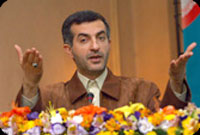 "It's good news that Canada is leaving in 2011 and we welcome that," Mashaie noted.
Given the amount of material support Iran has provided the Taliban with, there's little question that Iran would prefer that Canada leave the country. Little more question that they would rather have an Islamic fundamentalist government in power in Afghanistan than a democratic regime friendly (or at the very least not hostile) to the west.
For his own part, Foreign Affairs Minister Lawrence Cannon notes the internationalism of the mission, and how it reflects on Canada's positive role in that country. "Our engagement has earned the praise of international partners, most recently from [U.S.] President [Barack] Obama," Cannon notes. "The people of Iran stand to benefit greatly from a secure and stable Afghanistan. We will continue to encourage the government of the Islamic Republic of Iran to play a constructive role in the affairs of neighbouring countries. Canada has urged the government of Iran to take appropriate measures to ensure that no support is provided to any insurgent group in Afghanistan."
Mashaie also complained about some comments that Prime Minister Stephen Harper recently made about Iran.
"It concerns me that we have a regime ]in Tehran] with an ideology that is obviously evil," Harper mused. "My government is a very strong supporter of the state of Israel and considers the Iranian threats to be absolutely unacceptable and beyond the pale."
"Anti-Semitism is a pernicious evil that must be exposed, that must be confronted, that must be repudiated, whenever and wherever it appears," Harper continued. "Under our government, Canada will remain an unyielding defender of Jewish religious freedom, a forceful opponent of anti-Semitism in all of its forms and a staunch supporter of a secure and democratic state of Israel."
Mashaie complained that Harper's suggestion that Iran's government is "evil" were evidence of "weakness".
While Harper's comments certainly exaggerate the Iranian state's comparative malevolence, who could possibly think a country that beats and rapes the citizens of a foreign country to death, brutally whips homosexuals (then denies their very existence), and sends police to brutalize womens' rights protesters could possibly be evil?
One can only wonder if the Iranian administration actually wonders why no one takes them seriously.
Saturday, March 07, 2009
What's Good for the Goose...
...Must Be Good for the Gander
Many Canadians concerned with the recent lionization of the Tamil Tigers and demonization of the Sri Lankan government's attempts to defeat them have taken note of Liberal MP Gurbax Singh Malhi's appearance at a pro-Tiger rally in Toronto.
Raphael Alexander has picked this ball up. In a post on the National Post's Full Comment blog Alexander writes:

But then one also has to remember that a similar episode happened to Conservative MP Jason Kenney, who in 2006 addressed rally supporting the National Council of Resistance of Iran.
The NCRI is the political arm of the Mujahidin-i-Khalq. This group has been on the list of terrorist groups prohibited from operating in Canada. It was added to that list in 2005.
Like Malhi, Kenney claimed he was just passing the rally and decided to join in spontaneously.
 "Canadian people would stand in solidarity with the Iranian people in their wish for respect for human dignity and human rights and democracy," Kenney told the 2006 rally. Not that different from Malhi's comments to the Tiger rally.
Moreover, Kenney would later claim that he had pursued due diligence in regards to the matter, contradicting his earlier claims of ignorance in regards to the matter.
Kenney, a Parliamentary Secretary at the time, continued to serve after the incident. After enduring a brief Liberal barrage in Parliament, Kenney moved on to eventually become Minister of Immigration, Citizenship and Multiculturalism -- a marked promotion from the lower echelons of cabinet.
Alexander isn't unreasonable to expect that Malhi should have considered the civilian deaths caused by both sides of the Sri Lankan conflict. But Mujahidin-i-Khalq has caused civilian deaths as well.
To demand an extraordinary act of repentance from Malhi would be unreasonable. If Kenney can walk away from his mistake and become a cabinet minister, Malhi can walk away free as well.
Other bloggers writing about this topic:
Dust My Broom - "Video: Liberal MP Speaks at Tamil Tiger Rally"
Many Canadians concerned with the recent lionization of the Tamil Tigers and demonization of the Sri Lankan government's attempts to defeat them have taken note of Liberal MP Gurbax Singh Malhi's appearance at a pro-Tiger rally in Toronto.
Raphael Alexander has picked this ball up. In a post on the National Post's Full Comment blog Alexander writes:

"By appearing at a rally on Parliament Hill surrounded by militant terrorist flags of the LTTE, Mr. Malhi has taken a stand shoulder-to-shoulder with an organization that is officially banned in Canada as a terrorist group. In a speech made before the crowd, the Liberal MP has compromised the priorities of a Canadian Parliamentarian by saying that the Tamils are fighting 'for a right cause'. Apparently the decision to address the crowd was impromptu; Mr. Malhi says he was just 'passing by' when he spotted the rally and decided to join in. Perhaps Mr. Malhi would be wise to recall that civilians have been killed in both sides of this struggle, and that by defending the actions of a terrorist organization he gives undue validity to them, however unintentional on his part."Alexander's commentary wouldn't seem terribly unreasonable.
But then one also has to remember that a similar episode happened to Conservative MP Jason Kenney, who in 2006 addressed rally supporting the National Council of Resistance of Iran.
The NCRI is the political arm of the Mujahidin-i-Khalq. This group has been on the list of terrorist groups prohibited from operating in Canada. It was added to that list in 2005.
Like Malhi, Kenney claimed he was just passing the rally and decided to join in spontaneously.
 "Canadian people would stand in solidarity with the Iranian people in their wish for respect for human dignity and human rights and democracy," Kenney told the 2006 rally. Not that different from Malhi's comments to the Tiger rally.
Moreover, Kenney would later claim that he had pursued due diligence in regards to the matter, contradicting his earlier claims of ignorance in regards to the matter.
Kenney, a Parliamentary Secretary at the time, continued to serve after the incident. After enduring a brief Liberal barrage in Parliament, Kenney moved on to eventually become Minister of Immigration, Citizenship and Multiculturalism -- a marked promotion from the lower echelons of cabinet.
Alexander isn't unreasonable to expect that Malhi should have considered the civilian deaths caused by both sides of the Sri Lankan conflict. But Mujahidin-i-Khalq has caused civilian deaths as well.
To demand an extraordinary act of repentance from Malhi would be unreasonable. If Kenney can walk away from his mistake and become a cabinet minister, Malhi can walk away free as well.
Other bloggers writing about this topic:
Dust My Broom - "Video: Liberal MP Speaks at Tamil Tiger Rally"
Wednesday, January 14, 2009
Putin's Hands in the Honeypot?
Kasparov: Putin may be planning to stir the Middle Eastern pot
In a column published in yesterday's Wall Street Journal, Gary Kasparov issues a stern warning about the machinations of "petrodictators" -- authoritarian regimes that rely on oil revenue to sustain themselves.
As usual, Kasparov's target is Russian Prime Minister Vladimir Putin. "Russia and its fellow petrodictatorships are in dire need of a way to ratchet up global tensions to inflate the sagging price of oil," Kasparov writes. "Petrodictators, after all, need petrodollars to stay in power. The war in Gaza and the otherwise inexplicable skirmish with Ukraine over natural gas have helped the Kremlin in this regard, but $50 a barrel isn't going to be nearly enough. It will have to reach at least $100 and it will have to happen soon."
Kasparov writes that the current financial crisis has hit Russia extremely hard. With the memory of 1999's Ruble collapse fresh in the minds of most Russians, a mixture of fear of a recurrence is mixing with state controls on dissent -- complete with "anti-extremism" laws -- to create what could be a very unstable and dangerous political situation in Russia.
"Russians are ready to take to the streets," Kasparov writes. He also notes that if they do they'll likely be met by the paramilitary police forces controlled by Russia's interior ministry.
Kasparov worries that Putin may be attempting to engineer tension between Iran and Israel. "Open hostilities between Iran and Israel would lift the price of oil back to a level that would allow Mr Putin and his gang to keep funding the crackdown," Kasparov writes. "Israel's anxiety over Iran's nuclear-weapon ambitions is the most vulnerable link in a very weak chain."
Iran and Israel have never needed Russia to engineer tension between the two states. In fact, Iran's support of terrorism and Islamic militancy in the Middle East is very much at the heart of the current Israeli operations in Gaza. The Iranian Revolutionary Guard has provided Islamic militant groups with funds and weapons, and even helped supervise Hezbollah's rocket attacks on Israel in 2006.
Under such circumstances, it may only be a matter of time before Israel decides to deal decisively with Iran.
While Iran was busy helping Hezbollah incite a war in Lebanon, Russia was busy in the region, too -- discussing the sales of military helicopters and armoured personnel carriers to Hamas.
Russia has also been involved with the Iranian nuclear program, helping the Iranians build a nuclear reactor that could, in future, be used to enrich uranium for nuclear weapons.
This is certainly at odds with the stance of the United States and the European Union -- the countries that had imagined Russia would be a good post-Cold War ally -- on this issue.
Russia's track record in dealing with rogue states should not be considered encouraging. Yet many western leaders foolishly continue to look to Russia to take the lead in dealing with these states.
"There persists a very damaging myth in the West, spouted by politicians and the press, that says Russia's assistance is needed with Iran and other rogue states," Kasparov explains. "In fact, the Kremlin has been stirring this pot for years and has a vested interest in further increasing turmoil in the region. The Hamas/Hezbollah rockets, based on the Russian Katyusha and Grad, are not delivered via DHL from Allah. It doesn't require the guile of a KGB man like Mr. Putin to imagine a way to accelerate Iran's nuclear program, which has been aided by Russian technology and protected by the Kremlin from meaningful international action."
"It is time to bury the failed model of dealing with the world's antidemocratic and bloodthirsty regimes," Kasparov writes. "The real change we must effect in 2009 is toward a new global emphasis on the value of human life. Anything less confirms to the enemies of democratic civilization that everything is negotiable. For Mr Putin that means democracy; for Hamas it means Israel's existence. The Free World must take those chips off the table."
Kasparov also notes a significant difference between Israel and Hamas.
"Israel has the capability to annihilate Gaza to secure the safety of its people, but it chooses not to do so because the Israelis value human life," Kasparov continues. "Does anyone doubt for a moment what Hamas would do if it had the power to wipe out every one of the five-and-a-half million Jews in Israel? Hamas should not be considered less a villain simply because it does not as yet possess the means to fulfill its genocidal agenda."
Yet the indecisive agenda pursued by many western leaders undermines their own ability to insist they respect human life and revere human rights.
"The leaders of Europe and the U.S. are hoping that the tyrants and autocrats of the world will just disappear," Kasparov writes. "But dinosaurs like Vladimir Putin, Hugo Chávez and Iran's ayatollahs are not going to fade away by natural causes. They survive because the leaders of the Free World are afraid to take a stand."
In fact, the shameful and well-established -- places such as Rwanda -- method of waiting for genocides to be effectively over and then picking up the pieces afterward is only further proof of this.
"Years from now, when Zimbabwe's Robert Mugabe is either dead or deposed, his legacy will lead to another genocide trial in The Hague. Why don't Western powers, many of whom are condemning Israel's action in Gaza, take action now to stop the extermination in Zimbabwe instead of waiting a decade for a trial?" Kasparov asks. "Criticizing Israel is easy while rescuing Zimbabwe is hard. Choosing the path of least resistance is moral cowardice. It does not avoid difficult decisions, it only postpones them."
While Kasparov is right to urge action these issues -- and would be right to urge action on many others, such as Darfur -- on this particular note Kasparov has made a key logical fallacy.
With the United States engaged in Iraq and NATO as a whole engaged in Afghanistan, western leaders haven't consistently chosen the path of least resistance. The easy thing to do in Afghanistan, for example, would have been to drive the Taliban out of Kabul then let them fight it our with the Northern Alliance over who would control the country.
Choosing to rebuild Afghanistan was not the path of least resistance. In making this decision, western leaders knew full well they were choosing a very difficult path.
Russia has proven to be a valuable ally to NATO in Afghanistan. Then again, there is no question that Russia considers solving the Afghan dilemma to be crucial to their national security.
But some may argue that the litmus test of a state's foreign policy intentions isn't what they do when their national security is at stake, but rather what they do when their national security isn't at stake.
Russia's interests in the Middle East could be considered fairly modest by the standards of oil-importing countries. As an oil-exporting country, however, Russia has a tremendous economic interest in the Middle East.
There's little question that tension in the Middle East -- and the accompanying high oil prices -- is very much in Russia's economic interest. Having few national security-related interests in the region allows them to dabble there at the west's expense.
Gary Kasparov is right about the overall point of his column: it's time for western leaders to stop giving Vladimir Putin and Dmitri Medvedev a free ride.
In a column published in yesterday's Wall Street Journal, Gary Kasparov issues a stern warning about the machinations of "petrodictators" -- authoritarian regimes that rely on oil revenue to sustain themselves.
As usual, Kasparov's target is Russian Prime Minister Vladimir Putin. "Russia and its fellow petrodictatorships are in dire need of a way to ratchet up global tensions to inflate the sagging price of oil," Kasparov writes. "Petrodictators, after all, need petrodollars to stay in power. The war in Gaza and the otherwise inexplicable skirmish with Ukraine over natural gas have helped the Kremlin in this regard, but $50 a barrel isn't going to be nearly enough. It will have to reach at least $100 and it will have to happen soon."
Kasparov writes that the current financial crisis has hit Russia extremely hard. With the memory of 1999's Ruble collapse fresh in the minds of most Russians, a mixture of fear of a recurrence is mixing with state controls on dissent -- complete with "anti-extremism" laws -- to create what could be a very unstable and dangerous political situation in Russia.
"Russians are ready to take to the streets," Kasparov writes. He also notes that if they do they'll likely be met by the paramilitary police forces controlled by Russia's interior ministry.
Kasparov worries that Putin may be attempting to engineer tension between Iran and Israel. "Open hostilities between Iran and Israel would lift the price of oil back to a level that would allow Mr Putin and his gang to keep funding the crackdown," Kasparov writes. "Israel's anxiety over Iran's nuclear-weapon ambitions is the most vulnerable link in a very weak chain."
Iran and Israel have never needed Russia to engineer tension between the two states. In fact, Iran's support of terrorism and Islamic militancy in the Middle East is very much at the heart of the current Israeli operations in Gaza. The Iranian Revolutionary Guard has provided Islamic militant groups with funds and weapons, and even helped supervise Hezbollah's rocket attacks on Israel in 2006.
Under such circumstances, it may only be a matter of time before Israel decides to deal decisively with Iran.
While Iran was busy helping Hezbollah incite a war in Lebanon, Russia was busy in the region, too -- discussing the sales of military helicopters and armoured personnel carriers to Hamas.
Russia has also been involved with the Iranian nuclear program, helping the Iranians build a nuclear reactor that could, in future, be used to enrich uranium for nuclear weapons.
This is certainly at odds with the stance of the United States and the European Union -- the countries that had imagined Russia would be a good post-Cold War ally -- on this issue.
Russia's track record in dealing with rogue states should not be considered encouraging. Yet many western leaders foolishly continue to look to Russia to take the lead in dealing with these states.
"There persists a very damaging myth in the West, spouted by politicians and the press, that says Russia's assistance is needed with Iran and other rogue states," Kasparov explains. "In fact, the Kremlin has been stirring this pot for years and has a vested interest in further increasing turmoil in the region. The Hamas/Hezbollah rockets, based on the Russian Katyusha and Grad, are not delivered via DHL from Allah. It doesn't require the guile of a KGB man like Mr. Putin to imagine a way to accelerate Iran's nuclear program, which has been aided by Russian technology and protected by the Kremlin from meaningful international action."
"It is time to bury the failed model of dealing with the world's antidemocratic and bloodthirsty regimes," Kasparov writes. "The real change we must effect in 2009 is toward a new global emphasis on the value of human life. Anything less confirms to the enemies of democratic civilization that everything is negotiable. For Mr Putin that means democracy; for Hamas it means Israel's existence. The Free World must take those chips off the table."
Kasparov also notes a significant difference between Israel and Hamas.
"Israel has the capability to annihilate Gaza to secure the safety of its people, but it chooses not to do so because the Israelis value human life," Kasparov continues. "Does anyone doubt for a moment what Hamas would do if it had the power to wipe out every one of the five-and-a-half million Jews in Israel? Hamas should not be considered less a villain simply because it does not as yet possess the means to fulfill its genocidal agenda."
Yet the indecisive agenda pursued by many western leaders undermines their own ability to insist they respect human life and revere human rights.
"The leaders of Europe and the U.S. are hoping that the tyrants and autocrats of the world will just disappear," Kasparov writes. "But dinosaurs like Vladimir Putin, Hugo Chávez and Iran's ayatollahs are not going to fade away by natural causes. They survive because the leaders of the Free World are afraid to take a stand."
In fact, the shameful and well-established -- places such as Rwanda -- method of waiting for genocides to be effectively over and then picking up the pieces afterward is only further proof of this.
"Years from now, when Zimbabwe's Robert Mugabe is either dead or deposed, his legacy will lead to another genocide trial in The Hague. Why don't Western powers, many of whom are condemning Israel's action in Gaza, take action now to stop the extermination in Zimbabwe instead of waiting a decade for a trial?" Kasparov asks. "Criticizing Israel is easy while rescuing Zimbabwe is hard. Choosing the path of least resistance is moral cowardice. It does not avoid difficult decisions, it only postpones them."
While Kasparov is right to urge action these issues -- and would be right to urge action on many others, such as Darfur -- on this particular note Kasparov has made a key logical fallacy.
With the United States engaged in Iraq and NATO as a whole engaged in Afghanistan, western leaders haven't consistently chosen the path of least resistance. The easy thing to do in Afghanistan, for example, would have been to drive the Taliban out of Kabul then let them fight it our with the Northern Alliance over who would control the country.
Choosing to rebuild Afghanistan was not the path of least resistance. In making this decision, western leaders knew full well they were choosing a very difficult path.
Russia has proven to be a valuable ally to NATO in Afghanistan. Then again, there is no question that Russia considers solving the Afghan dilemma to be crucial to their national security.
But some may argue that the litmus test of a state's foreign policy intentions isn't what they do when their national security is at stake, but rather what they do when their national security isn't at stake.
Russia's interests in the Middle East could be considered fairly modest by the standards of oil-importing countries. As an oil-exporting country, however, Russia has a tremendous economic interest in the Middle East.
There's little question that tension in the Middle East -- and the accompanying high oil prices -- is very much in Russia's economic interest. Having few national security-related interests in the region allows them to dabble there at the west's expense.
Gary Kasparov is right about the overall point of his column: it's time for western leaders to stop giving Vladimir Putin and Dmitri Medvedev a free ride.
Saturday, October 04, 2008
Canadian Leaders Courting the Next Presidential Gold Medallion
Candidates square off over who best supports Canadian Judaism, Israel, and who can best handle Iran
As the 2008 federal election campaign grinds on, it's inevitable that various candidates will make their pitch to various ethnic and religious voting blocs.
In some cases, that could serve to backfire.
But for Liberal Mount Royal MP Irwin Cotler, his recent efforts have been little more than going back to the well from which he has so often drank.
Cotler has recently been involved with a petition to have Iranian president Mahmould Ahmadinejad charged with "inciting genocide".
Speaking at the conference against state-sponsored genocide in Washington organized as a prelude to Ahmadinejad's recent address to the UN, Cotler insisted "The crime of incitement to genocide has already been committed. Iran has paved the way to genocide, and genocide has already begun in [the sense of] incitement."
Cotler insisted that the charges alone could go a long way toward legitimizing Ahmandinejad. “The very process of initiating these remedies will embolden the progressive forces in Iran," he announced.
Cotler also aptly pointed out that those who incite genocide are as bad as those who actually commit it. “[Ahmadinejad] should be treated with the opprobrium of a genocidaire,” he concluded.
Some may be eager to dismiss Cotler's advocacy on behalf of Judaism to be empty partisan pandering. But to suggest so they would have to know very little about Cotler's past.
The genocide petition against Ahmadinejad isn't merely a flavour of the week gambit for Cotler. He has proven his dedication to preventing genocide and prosecuting those who commit it throughout his entire legal career, both before and after entering his politics.
His book Justice Delayed remains the landmark work on Nazi war criminals hiding in Canada.
The plentiful political capital that Cotler enjoys in Canada's Jewish community has been richly and rightly earned.
Yet not all of Canada's leaders have supported Cotler's advocacy on behalf of Israel. Liberal leader Stephane Dion recently accused former Foreign Affairs miniser (now Minister of Defense) Peter MacKay of obstructing Cotler's efforts.
"The [Liberal party] has supported Irwin’s initiative to hold President Ahmadinejad to account before the UN Security Council or a duly constituted international tribunal for the crime of genocidal incitement as required by the 1948 genocide convention," Dion told a Jewish audience in Winnipeg. “I do not understand why Conservative MPs have attempted to block Irwin’s motion in support of this initiative that he brought forward at Parliament’s human rights subcommittee,”
"Peter MacKay, then the foreign minister, rejected this initiative as a worthless gesture because [he said] it probably won’t work," Dion continued. "I don’t know how he came to that determination, but when it comes to international law, I think I’ll trust Irwin Cotler’s opinion over Peter MacKay’s."
Of course, MacKay actually has a point to this end. The UN has never been known for its sympathies toward Israel, and has often been hijacked by various Middle Eastern regimes for denouncing Israeli treatment of Palestinians. Ironically, they've historically often done this while these very regimes treat Palestinians -- and other minorities within their domain, including Jews -- no better, and often worse.
For his own part, Cotler credits Prime Minister Stephen Harper -- a fellow recipient recipient of B'Nai Brith's Presidential Gold Medal -- for his supportive words, but suggests he has yet to act on them. “The Prime Minister has done excellent work in his statements with regard to Israel, but words are not as important as deeds,” Cotler recently told an all-party discussion panel.
Which is fair enough. While Harper has made his support of Israel widely and well known, one could hardly mistake them for action.
Yet the same is the case with Cotler's most recent initiative. Without any means to ensure that Mahmoud Ahmaedinejad appears before the International Criminal Court to face charges, Cotler's petition is, itself, little more than empty words.
Andrea Paine, the Conservative candidate in Lac St Louis, defended the government's rejection of Cotler's petition as being in line with Israel's stance on the matter.
“We were not sure what the position of the Israeli government actually would be. We were also concerned that if the bill passed, the pro-Palestinians would spin that into a victory for themselves,” she insisted. “We were being cautious and waiting to follow Israel’s lead.”
Israel, however, for its own part, supports the push to file charges against Ahmadinejad.
Also on the discussion panel was NDP Outremont MP Thomas Mulcair, who insisted that his party doesn't harbour elements hostile to Israel.
“Some do have slightly different takes on issues, but what is important is the position we take at the end of the day as a party, and I am extremely comfortable defending them today,” Mulcair insisted.
Certainly, they clearly do. Perhaps it's better left up to individuals to judge whether or not those positions are anti-Israel or not.
One thing is for certain: while virtually any issue related to Israel is bound to be controversy, Canada cannot strive to be a leader on the global stage while shying away from sticky topics -- particularly one so central to international relations as that of Israel.
It's on that note that it's actually quite comforting to see Israel treated as an issue in the 2008 federal election. At the very least, it makes the proceedings of this federal election a little less insular than they otherwise would tend to be.
In the end, the prize will be not merely a shiny bauble from B'Nai Brith, but Canada's relevance, credibility and leadership on the world stage.
As the 2008 federal election campaign grinds on, it's inevitable that various candidates will make their pitch to various ethnic and religious voting blocs.
In some cases, that could serve to backfire.
But for Liberal Mount Royal MP Irwin Cotler, his recent efforts have been little more than going back to the well from which he has so often drank.
Cotler has recently been involved with a petition to have Iranian president Mahmould Ahmadinejad charged with "inciting genocide".
Speaking at the conference against state-sponsored genocide in Washington organized as a prelude to Ahmadinejad's recent address to the UN, Cotler insisted "The crime of incitement to genocide has already been committed. Iran has paved the way to genocide, and genocide has already begun in [the sense of] incitement."
Cotler insisted that the charges alone could go a long way toward legitimizing Ahmandinejad. “The very process of initiating these remedies will embolden the progressive forces in Iran," he announced.
Cotler also aptly pointed out that those who incite genocide are as bad as those who actually commit it. “[Ahmadinejad] should be treated with the opprobrium of a genocidaire,” he concluded.
Some may be eager to dismiss Cotler's advocacy on behalf of Judaism to be empty partisan pandering. But to suggest so they would have to know very little about Cotler's past.
The genocide petition against Ahmadinejad isn't merely a flavour of the week gambit for Cotler. He has proven his dedication to preventing genocide and prosecuting those who commit it throughout his entire legal career, both before and after entering his politics.
His book Justice Delayed remains the landmark work on Nazi war criminals hiding in Canada.
The plentiful political capital that Cotler enjoys in Canada's Jewish community has been richly and rightly earned.
Yet not all of Canada's leaders have supported Cotler's advocacy on behalf of Israel. Liberal leader Stephane Dion recently accused former Foreign Affairs miniser (now Minister of Defense) Peter MacKay of obstructing Cotler's efforts.
"The [Liberal party] has supported Irwin’s initiative to hold President Ahmadinejad to account before the UN Security Council or a duly constituted international tribunal for the crime of genocidal incitement as required by the 1948 genocide convention," Dion told a Jewish audience in Winnipeg. “I do not understand why Conservative MPs have attempted to block Irwin’s motion in support of this initiative that he brought forward at Parliament’s human rights subcommittee,”
"Peter MacKay, then the foreign minister, rejected this initiative as a worthless gesture because [he said] it probably won’t work," Dion continued. "I don’t know how he came to that determination, but when it comes to international law, I think I’ll trust Irwin Cotler’s opinion over Peter MacKay’s."
Of course, MacKay actually has a point to this end. The UN has never been known for its sympathies toward Israel, and has often been hijacked by various Middle Eastern regimes for denouncing Israeli treatment of Palestinians. Ironically, they've historically often done this while these very regimes treat Palestinians -- and other minorities within their domain, including Jews -- no better, and often worse.
For his own part, Cotler credits Prime Minister Stephen Harper -- a fellow recipient recipient of B'Nai Brith's Presidential Gold Medal -- for his supportive words, but suggests he has yet to act on them. “The Prime Minister has done excellent work in his statements with regard to Israel, but words are not as important as deeds,” Cotler recently told an all-party discussion panel.
Which is fair enough. While Harper has made his support of Israel widely and well known, one could hardly mistake them for action.
Yet the same is the case with Cotler's most recent initiative. Without any means to ensure that Mahmoud Ahmaedinejad appears before the International Criminal Court to face charges, Cotler's petition is, itself, little more than empty words.
Andrea Paine, the Conservative candidate in Lac St Louis, defended the government's rejection of Cotler's petition as being in line with Israel's stance on the matter.
“We were not sure what the position of the Israeli government actually would be. We were also concerned that if the bill passed, the pro-Palestinians would spin that into a victory for themselves,” she insisted. “We were being cautious and waiting to follow Israel’s lead.”
Israel, however, for its own part, supports the push to file charges against Ahmadinejad.
Also on the discussion panel was NDP Outremont MP Thomas Mulcair, who insisted that his party doesn't harbour elements hostile to Israel.
“Some do have slightly different takes on issues, but what is important is the position we take at the end of the day as a party, and I am extremely comfortable defending them today,” Mulcair insisted.
Certainly, they clearly do. Perhaps it's better left up to individuals to judge whether or not those positions are anti-Israel or not.
One thing is for certain: while virtually any issue related to Israel is bound to be controversy, Canada cannot strive to be a leader on the global stage while shying away from sticky topics -- particularly one so central to international relations as that of Israel.
It's on that note that it's actually quite comforting to see Israel treated as an issue in the 2008 federal election. At the very least, it makes the proceedings of this federal election a little less insular than they otherwise would tend to be.
In the end, the prize will be not merely a shiny bauble from B'Nai Brith, but Canada's relevance, credibility and leadership on the world stage.
Sunday, February 24, 2008
Iran, Rockets and Nuclear Technology... Oh, My!
Ahmadinejad apparently figures the west's just jealous of his toys
Oh, Mahmoud Ahmadinejad. When he isn't gathering the world's top Holocaust denial "experts" in Tehran or claiming "we don't have homosexuals in Iran", at least he can be counted on to wax ecstatic about freakin' amazing his new ray gun is going to be.
"They see the Iranian nation making progress -- just reaching the same scientific level -- and this is very difficult for them," Ahmadinejad announced in the course of a recent interview.
"The nuclear technology is ...the sort of technology that has been monopolized by a few countries," he added. "And they want to maintain such a monopoly, and they want to use it as an instrument of domination over the whole world."
This, of course, comes one day after the International Atomic Energy Agency announced that, while Iran has clarified numerous areas of its nuclear program, it may be just a tad too soon to dismiss any idea of Iran using it to produce a weapon.
Ahmadinejad, or course, views all of this as politically motivated. "We realized that as we give them more concessions, they come up with more expectations," he complained. "We acted in an honest matter."
But, of course we should trust Ahmadinejad, right? Right?
Maybe not. Even while Iran proclaimed a recent US intelligence report that denied any evidence of Iran having a secret nuclear weapons program as a victory, the report also noted that Iran had been trying to acquire a nuclear weapon just prior to 2003. Also, it was noted in 2006 that Iran had secretly assembled a team of nuclear specialists to infiltrate the Safeguards division of the IAEA.
So apparently, Ahmadinejad wants a nuclear weapon very badly. So what, right? I mean it isn't as if he could ever manage to deliver it to a target.
Aw, shit.
Not to mention the fact that Iran has researchers tinkering with rocket technology in a Kennedy-esque mission to conquer the moon -- the results of which could quite easily be weaponized (this becomes apparent when one considers how many NASA researchers were also instrumental in the development of ballistic missile technology.
So, despite the lingering doubts over whether or not Iran has really discontinued its weapons program, apparent efforts to contravene the very same organizations investigating Iran's alleged nuke program and efforts to develop weaponizable rocket technology (not hat they weren't already on their way to developing such technology well before their recent test launch), one has to wonder: what's to worry about Iran developing nuclear weapons and the capability to deliver them to targets abroad?
Considering that this is an individual who has announced that Israel should be "wiped off the map", one would think it's obvious to a rational individual.
Just don't ask Ahmadinejad himself -- he's still mad that the west won't let him play with their toys.
Oh, Mahmoud Ahmadinejad. When he isn't gathering the world's top Holocaust denial "experts" in Tehran or claiming "we don't have homosexuals in Iran", at least he can be counted on to wax ecstatic about freakin' amazing his new ray gun is going to be.
"They see the Iranian nation making progress -- just reaching the same scientific level -- and this is very difficult for them," Ahmadinejad announced in the course of a recent interview.
"The nuclear technology is ...the sort of technology that has been monopolized by a few countries," he added. "And they want to maintain such a monopoly, and they want to use it as an instrument of domination over the whole world."
This, of course, comes one day after the International Atomic Energy Agency announced that, while Iran has clarified numerous areas of its nuclear program, it may be just a tad too soon to dismiss any idea of Iran using it to produce a weapon.
Ahmadinejad, or course, views all of this as politically motivated. "We realized that as we give them more concessions, they come up with more expectations," he complained. "We acted in an honest matter."
But, of course we should trust Ahmadinejad, right? Right?
Maybe not. Even while Iran proclaimed a recent US intelligence report that denied any evidence of Iran having a secret nuclear weapons program as a victory, the report also noted that Iran had been trying to acquire a nuclear weapon just prior to 2003. Also, it was noted in 2006 that Iran had secretly assembled a team of nuclear specialists to infiltrate the Safeguards division of the IAEA.
So apparently, Ahmadinejad wants a nuclear weapon very badly. So what, right? I mean it isn't as if he could ever manage to deliver it to a target.
Aw, shit.
Not to mention the fact that Iran has researchers tinkering with rocket technology in a Kennedy-esque mission to conquer the moon -- the results of which could quite easily be weaponized (this becomes apparent when one considers how many NASA researchers were also instrumental in the development of ballistic missile technology.
So, despite the lingering doubts over whether or not Iran has really discontinued its weapons program, apparent efforts to contravene the very same organizations investigating Iran's alleged nuke program and efforts to develop weaponizable rocket technology (not hat they weren't already on their way to developing such technology well before their recent test launch), one has to wonder: what's to worry about Iran developing nuclear weapons and the capability to deliver them to targets abroad?
Considering that this is an individual who has announced that Israel should be "wiped off the map", one would think it's obvious to a rational individual.
Just don't ask Ahmadinejad himself -- he's still mad that the west won't let him play with their toys.
Friday, January 04, 2008
Iran/Afghanistan Border Needs Extra Attention
Border security remains a serious issue
As concern over whether or not Iran is supplying Afghan insurgents continues to accumulate, Canadian military officials are once again stressing that, while they have their suspicions, there is little solid evidence to support it.
 "There were parts [of Improvised Explosive Devices] coming from Iran, there was parts also coming from other countries" says Brigadier-General Guy Laroche. "I cannot say from what I see on the ground that Iran is behind that."
Yet, NATO command staff do know that weapons and ammunition have crossed into Afghanistan from Iran. And while NATO commander General Dan McNeil has noted the lack of conclusive evidence, he has also expressed doubt -- very reasonably -- about whether or not the Iranian government can reasonably claim ignorance on the matter.
 In short, what is at stake in this particular matter -- at the very least -- is actually border security.
"The border between Iran and Afghanistan is relatively porous and we have noticed that weaponry and ammunition does come across that border," says Antony McCord, a NATO spokesperson.
NATO countries must pressure Iran to properly secure its border with Afghanistan. If Iran declines to do so, it will certainly be up to NATO forces to secure that border -- at least on the Afghan side.
As for the suspicions being cast on the Iranian government, it would be easy to allow the matter to devolve into a rhetorical matter.
It would be easy to, like Iran's consul in Khandahar, dismiss these concerns as "American propaganda being repeated by Canada". In fact, some people have.
 Yet the aforementioned Iranian consul in Khandahar claims that the presence of NATO troops in Afghanistan destabilizes the country (despite the fact that Afghanistan is currently no less stable than it ever has been -- perhaps even more so), and pose a threat to Iranian national security. Clearly, he feels it would be in Iran's best interest if NATO troops were driven out.
Furthermore, at least one Khandahar warlord admits to meeting Iranian emissaries who encouraged him to start a jihad against NATO troops.
Cutting off the supply of arms to Afghan insurgents will prove to be a key to victory in Afghanistan. Addressing the influx of weapons and IED components from Iran will be crucial in stemming the tide, as will be stemming the tide of arms and support from Pakistan.
As concern over whether or not Iran is supplying Afghan insurgents continues to accumulate, Canadian military officials are once again stressing that, while they have their suspicions, there is little solid evidence to support it.
 "There were parts [of Improvised Explosive Devices] coming from Iran, there was parts also coming from other countries" says Brigadier-General Guy Laroche. "I cannot say from what I see on the ground that Iran is behind that."
 Yet, NATO command staff do know that weapons and ammunition have crossed into Afghanistan from Iran. And while NATO commander General Dan McNeil has noted the lack of conclusive evidence, he has also expressed doubt -- very reasonably -- about whether or not the Iranian government can reasonably claim ignorance on the matter.
 In short, what is at stake in this particular matter -- at the very least -- is actually border security.
"The border between Iran and Afghanistan is relatively porous and we have noticed that weaponry and ammunition does come across that border," says Antony McCord, a NATO spokesperson.
NATO countries must pressure Iran to properly secure its border with Afghanistan. If Iran declines to do so, it will certainly be up to NATO forces to secure that border -- at least on the Afghan side.
As for the suspicions being cast on the Iranian government, it would be easy to allow the matter to devolve into a rhetorical matter.
It would be easy to, like Iran's consul in Khandahar, dismiss these concerns as "American propaganda being repeated by Canada". In fact, some people have.
.jpg) Yet the aforementioned Iranian consul in Khandahar claims that the presence of NATO troops in Afghanistan destabilizes the country (despite the fact that Afghanistan is currently no less stable than it ever has been -- perhaps even more so), and pose a threat to Iranian national security. Clearly, he feels it would be in Iran's best interest if NATO troops were driven out.
Yet the aforementioned Iranian consul in Khandahar claims that the presence of NATO troops in Afghanistan destabilizes the country (despite the fact that Afghanistan is currently no less stable than it ever has been -- perhaps even more so), and pose a threat to Iranian national security. Clearly, he feels it would be in Iran's best interest if NATO troops were driven out.Furthermore, at least one Khandahar warlord admits to meeting Iranian emissaries who encouraged him to start a jihad against NATO troops.
Cutting off the supply of arms to Afghan insurgents will prove to be a key to victory in Afghanistan. Addressing the influx of weapons and IED components from Iran will be crucial in stemming the tide, as will be stemming the tide of arms and support from Pakistan.
Wednesday, January 02, 2008
Michael Byers and the Neo-Conservative Bogeyman Redux
Byers indulges himself in a feat of historical engineering
Michael Byers' recent op/ed article "From rogue nation to world leader", published in The Toronto Star, then mercilessly fisked and shredded all around the blogosphere, has garnered a lot of attention for Byers.
At first glance, it's easy to dismiss Byers' article as politically motivated. However, closer examination of the article uncovers something a little more sinister.
Byers' article isn't merely a politically-motivated dig at a sitting government aimed at inducing an election. It's a full-out act of historical engineering -- described by Noam Chomsky as the act of "designing the facts" in order to conceal historical truth.
According to Chomsky, historical engineering is conducted either by misrepresenting key facts, or by omitting them altogether. More often than not, under such conditions, the act of historical engineering can be identified by examining foreign media sources for such ommitted or misrepresented facts.
As previously mentioned, Byers' work is full of them.
He insists China shouldn't be agitated despite its atrocious human rights record.
He insists that the war in Afghanistan should be abandoned in favour of peacekeeping in the Sudan despite the fact that Sudanese president Omar al-Bashir has announced UN Peacekeepers would be treated as foreign invaders (in other words, Byers suggests we abandon the war effort in order to attempt to peacekeep in a country where our peacekeepers would have war waged against them). Osama Bin Laden has also jihad against any UN peacekeeping force deployed to Sudan. (Pity Bin Laden cares so little for the victims of the Muslim-on-Muslim violence in Darfur).
Incidentally, he also ignores China's involvement in the Sudan.
He attempts to shift political responsibility for anti-terror laws that allegedly undermined the civil rights of Canadians away from the government that created it to the government that attempted to renew them. Despite the actually largely unthreatening and benign nature of the laws sunsetted, largely for partisan gain, somehow they were seemingly much more tolerable under a previous government.
He portrays the summer 2006 invasion of Lebanon by Israel as having been perpetrated over the abduction of a lone Israeli soldier, whereas Hezbollah had also been launching rocket attacks into Israel from Lebanese terrority, while the Lebanese government declined to prevent it.
He condemns the government for recalling its ambassador to Iran in protest of the Iranian handling (or actual lack thereof) of the Zahra Kazemi case, while continuing to raise complaints about the alleged torture of Afghan prisoners of war, and about the use of the death penalty on Canadians like Ronald Smith, who killed a Montana aboriginal to find out what killing is like. (When Iranian prison guards rape and batter Canadian citizens to death, Byers seemingly has very little to say. When Afghan prison guards torture their charges, somehow it's Canada that's responsible.)
He suggests we fight climate change by ignoring the countries in the world with the poorest enviornomental legislation -- something that writers like Naomi Kline would remind us attracts multinational corporations to increasingly base their manufacturing operations in such countries.
He suggests that we use Norway as a model to successfully fighting climate change despite the disastrous failure of that country's policies in regard to greenhouse gases.
Of course, when Byers says such things, and says them in a national newspaper, we're expected to beleive him. He's what you would call an expert.
Yet the facts, when uncovered, so eagerly contradict him. Furthermore, he's a man who is so atrociously out-of-step with even his own contemporaries that virtually everything he says has to be taken with a grain of salt. The factual omissions and half-truths loom large over the credibility of his work.
Some may be tempted to excuse such scholarly indiscretions as sheer ignorance. Perhaps Byers simply isn't the expert he claims to be, or is claimed to be.
Yet, if Byers isn't simply a third-rate foreign policy scholar with a political axe to grind, then certainly the misinformation contained in his article was intentional. That's very illustrative of an effort at historical engineering: it is, by nature, a calculated act.
Historical engineering, as Chomsky (whom Byers would, ironically, probably consider to among his contemporaries) theorizes, relies on dogmatic belief systems around which national identities are so tightly wrapped.
In his particular case, the dogma is that of Canada as a progressive country. The idea forwarded, based on this dogma, is that a progressive country must have a government that is progressive enough for Byers' liking. Once transformed into such a pervasive dogma, the theorem takes on a nearly religious quality. It may not be challenged without summary accusations of blasphemy.
It's unsurprising that Byers would apply such dogmatic arguments to a government that he essentially describes as all but blasphemous, even if he never actually resorts to using that particular word.
The dogmatic, religious quality of the arguments forwarded is also by design. It protects them from scrutiny, under which such arguments certainly would not -- and are proven to not -- stand up.
Most importantly, however, historical engineering, such as Byers has indulged himself in -- is a principally Machiavellian act. While faux-progressives like Byers may argue that ruthlessness in pursuit of a "greater good" still serves that "greater good" (however one may define it), it is still ruthlessness, is still a vice, and is still regressive in nature.
Above all, it is still propaganda, and fits snugly within the "Propaganda Model" that Chomsky elaborates in books such as Necessary Illusions.
As such, Michael Byers, propagandist, historical engineer, faux-progressive and foreign policy "expert" warrants very close scrutiny.
Michael Byers' recent op/ed article "From rogue nation to world leader", published in The Toronto Star, then mercilessly fisked and shredded all around the blogosphere, has garnered a lot of attention for Byers.
At first glance, it's easy to dismiss Byers' article as politically motivated. However, closer examination of the article uncovers something a little more sinister.
Byers' article isn't merely a politically-motivated dig at a sitting government aimed at inducing an election. It's a full-out act of historical engineering -- described by Noam Chomsky as the act of "designing the facts" in order to conceal historical truth.
According to Chomsky, historical engineering is conducted either by misrepresenting key facts, or by omitting them altogether. More often than not, under such conditions, the act of historical engineering can be identified by examining foreign media sources for such ommitted or misrepresented facts.
As previously mentioned, Byers' work is full of them.
He insists China shouldn't be agitated despite its atrocious human rights record.
He insists that the war in Afghanistan should be abandoned in favour of peacekeeping in the Sudan despite the fact that Sudanese president Omar al-Bashir has announced UN Peacekeepers would be treated as foreign invaders (in other words, Byers suggests we abandon the war effort in order to attempt to peacekeep in a country where our peacekeepers would have war waged against them). Osama Bin Laden has also jihad against any UN peacekeeping force deployed to Sudan. (Pity Bin Laden cares so little for the victims of the Muslim-on-Muslim violence in Darfur).
Incidentally, he also ignores China's involvement in the Sudan.
He attempts to shift political responsibility for anti-terror laws that allegedly undermined the civil rights of Canadians away from the government that created it to the government that attempted to renew them. Despite the actually largely unthreatening and benign nature of the laws sunsetted, largely for partisan gain, somehow they were seemingly much more tolerable under a previous government.
He portrays the summer 2006 invasion of Lebanon by Israel as having been perpetrated over the abduction of a lone Israeli soldier, whereas Hezbollah had also been launching rocket attacks into Israel from Lebanese terrority, while the Lebanese government declined to prevent it.
He condemns the government for recalling its ambassador to Iran in protest of the Iranian handling (or actual lack thereof) of the Zahra Kazemi case, while continuing to raise complaints about the alleged torture of Afghan prisoners of war, and about the use of the death penalty on Canadians like Ronald Smith, who killed a Montana aboriginal to find out what killing is like. (When Iranian prison guards rape and batter Canadian citizens to death, Byers seemingly has very little to say. When Afghan prison guards torture their charges, somehow it's Canada that's responsible.)
He suggests we fight climate change by ignoring the countries in the world with the poorest enviornomental legislation -- something that writers like Naomi Kline would remind us attracts multinational corporations to increasingly base their manufacturing operations in such countries.
He suggests that we use Norway as a model to successfully fighting climate change despite the disastrous failure of that country's policies in regard to greenhouse gases.
Of course, when Byers says such things, and says them in a national newspaper, we're expected to beleive him. He's what you would call an expert.
Yet the facts, when uncovered, so eagerly contradict him. Furthermore, he's a man who is so atrociously out-of-step with even his own contemporaries that virtually everything he says has to be taken with a grain of salt. The factual omissions and half-truths loom large over the credibility of his work.
Some may be tempted to excuse such scholarly indiscretions as sheer ignorance. Perhaps Byers simply isn't the expert he claims to be, or is claimed to be.
Yet, if Byers isn't simply a third-rate foreign policy scholar with a political axe to grind, then certainly the misinformation contained in his article was intentional. That's very illustrative of an effort at historical engineering: it is, by nature, a calculated act.
Historical engineering, as Chomsky (whom Byers would, ironically, probably consider to among his contemporaries) theorizes, relies on dogmatic belief systems around which national identities are so tightly wrapped.
In his particular case, the dogma is that of Canada as a progressive country. The idea forwarded, based on this dogma, is that a progressive country must have a government that is progressive enough for Byers' liking. Once transformed into such a pervasive dogma, the theorem takes on a nearly religious quality. It may not be challenged without summary accusations of blasphemy.
It's unsurprising that Byers would apply such dogmatic arguments to a government that he essentially describes as all but blasphemous, even if he never actually resorts to using that particular word.
The dogmatic, religious quality of the arguments forwarded is also by design. It protects them from scrutiny, under which such arguments certainly would not -- and are proven to not -- stand up.
Most importantly, however, historical engineering, such as Byers has indulged himself in -- is a principally Machiavellian act. While faux-progressives like Byers may argue that ruthlessness in pursuit of a "greater good" still serves that "greater good" (however one may define it), it is still ruthlessness, is still a vice, and is still regressive in nature.
Above all, it is still propaganda, and fits snugly within the "Propaganda Model" that Chomsky elaborates in books such as Necessary Illusions.
As such, Michael Byers, propagandist, historical engineer, faux-progressive and foreign policy "expert" warrants very close scrutiny.
Tuesday, January 01, 2008
Michael Byers and the Neo-Conservative Bogeyman
Bali, Bono, and Bush -- oh, my!
When Canadians want in-depth analysis from an intellectually lazy ideologue, they need look no further than Michael Byers.
In what appears like it could be a concentrated effort by the Toronto Star to rally public opinion in favour of defeating the sitting Conservative government, Byers does what Byers has done best -- twisting the facts to find fault with absolutely everything about Prime Minister Stephen Harper's government:
But, as he'll later allude, when the President of the United States calls on us to participate in the battle against terrorism -- as much a threat to Canada as any other country -- we should tell him to "fuck off" on principle alone.
Right.
Perhaps he'd like to overlook that most of the world's poorest countries also have the most lax environmental laws. Yet, in the name of staving off an "imminent environmental catastrophe" that is unproven to actually be imminent, he would issue such countries a free pass.
That is, fundamentally, the wrong approach by any regard.
The answer, it turns out, is actually very simple: his misgivings have nothing to do with human rights, arctic sovereignty or diplomacy. They have everything to do with ideology.
Of course, when waging ideological warfare against conservatives in print, Byers clearly takes no shame in sinking to any and all depths in order to link Harper to the political left's favourite omnipresent bogeyman:
Other than the fact that the United States and Canada are allies in the war in Afghanistan? We wouldn't know, mr Byers. Why don't you tell us.
But why does Byers have nothing to say about the fact that the anti-terrorist laws in question not only were enacted by a majority Liberal government, but also about the fact that the sunsetting of the laws in question has proven to have had a detrimental effect on the Air India inquiry -- the search for justice in the worst terrorist attack ever perpetrated upon Canadians.
Why does Byers have nothing to say about the fact that Khadr was, at 15 years old, a trained terrorist fighter who had already drawn blood in the battlefield? Faux-progressives like Byers may hold a good deal of disdain for the detention of enemy combatants in Guantanamo Bay, but they should not fail to recognize that , whether they like it or not, Omar Khadr is an enemy combatant. If Byers wants to go so far as to suggest that Khadr should be issued a "get out of jail free" card, he should remember the experience Algeria has had with released terrorists.
Furthermore, one may wonder what to make of his suggestion that Canada should try to impose its views regarding human rights vis a vis the death penalty on the United States when he's already suggested that confronting China over human rights is "unncessary".
Of course, Byers wouldn't be a proper ideologue if his arguments didn't range from the specious and hypocritical to the outright fickle, like so:
That's right. That's what Canadian foreign policy is all about. It's not about supporting the interests of Canadians abroad -- it's about making Canada cool.
Readers may roll their eyes at their own discretion.
Despite the fact that Harper has actually stood up to the United States on a number of issues, including Byers' beloved arctic sovereignty pet issue.
But Byers now gets to the point. We can find out what all of these various intentional half-truths and flip-flops are all about:
Yet one wonders what to make of this claim when they consider the "hijacked" foreign policy isn't really all that different than that of the previous Liberal government: Afghanistan, leading in the establishment of climate change agreements abroad while taking precious little tangible action at home and funnelling billions of dollars in foreign aid through unaccountable international organizations.
Somehow, a new government will be completely different, even if mr Byers can't assure us as to how.
Yeah, Michael. We all know how successful Norway has been on meeting its Kyoto obligations.
No, Michael. The problem is that governments that claimed to be concerned with climate change spent the better part of a decade doing absolutely nothing about it, and now campaign rigorously on the very same issue they did absolutely nothing about, expecting Canadians to believe they will somehow do something other than absolutely nothing in future, while foreign policy "experts" like Michael Byers insist such a government would do something other than absolutely nothing, past performance to the contrary.
Progressives used to agree that imperialism such as that was a bad thing. Real progressives probably still would. Byers and his cabal of faux-progressives? Not so much.
To top it all off, Byers then indulges himself in pontificating on yesterday's issues:
Sheesh.
It certainly is. But how does one balance this particular assertion on Byers' part against past practices on behalf of the Canadian government -- which seem to represent a sort of "good ol' days" that Byers is eager to return to -- which actually made us weaker and less independent than the practices of the current government?
The dreamland that Byers lives in and reality as it actually exists never seem to fully resemble one another. But Byers only proves that in the conclusion of his article:
Ironically for Byers, that does sound an awful lot like Canada's current government to those who, unlike Byers, aren't twisting fact to ideological ends.
Canada has strengthened its sovereignty by strengthening its military -- which provides us with the ability to defend that sovereignty -- and by re-staking its claim to its arctic sovereignty. Canada has proven itself to be compassionate by resolving to prevent the Taliban from returning to power in Afghanistan. Likewise is its commitment to peace (vis a vis ridding the world of states that harbour terrorists) and its will to cooperate with the NATO coalition. Canada has proven its leadership not only in establishing a productive framework within which everyone will be required to contribute to the fight against climate change (which is a serious issue, if not the imminent catastrophe that Byers and his fellow panic-mongers insist), but also within the United Nations, NATO, the Francophonie and the Commonwealth.
And Canada has done all of this under a Conservative government.
If Byers wants to twist facts and spread half-truths in order to try to suggest the opposite, that's certainly up to him. But it certainly casts serious shadows of doubt on the credibility of the Toronto Star that they would print his article without even bothering to fact-check.
Then again, perhaps they, like Byers, are simply hoping that Canadians will be so ideologically fixated that they won't bother to check the facts.
But this does speak volumes about Byers and his claim to a progressive world view. A true progressive -- or so many of us are led to believe -- would never engage in such blatant misinformation in pursuit of their political agenda. Fostering a debate based on such factually ignorant dogma is actually quite a regressive act, not a progressive one.
When one recalls that Leo Strauss -- a prominent neoconservative thinker who is largely credited with establishing this school of political thought -- advocated in favour of "the noble lie", it seems that Byers and the neoconservative bogeyman that he seems to fear so much aren't that dissimilar at all.
When Canadians want in-depth analysis from an intellectually lazy ideologue, they need look no further than Michael Byers.
In what appears like it could be a concentrated effort by the Toronto Star to rally public opinion in favour of defeating the sitting Conservative government, Byers does what Byers has done best -- twisting the facts to find fault with absolutely everything about Prime Minister Stephen Harper's government:
""So, how does it feel to be the citizen of a rogue state?"Yes, Michael. When the Prime Minister of Australia calls on us to sacrifice our economic future in the name of a panic-stricken pipe dream, we should reply "ready, aye, ready."
The British professor asking the question was serious.
We were in Cambridge, England, and yet the words "Kyoto," "Bali" and "Canada" were on many lips.
For on the other side of the planet, Environment Minister John Baird was blocking an agreement that would have bound the world's wealthiest countries to specific targets for reducing their greenhouse gas emissions after 2012 – when the Kyoto Protocol expires.
Canada, traditionally a proponent of multilateral co-operation and environmental stewardship, was thumbing its nose at the UN Intergovernmental Panel on Climate Change, the 2,500-member scientific body that had recently warned that the planet faces "abrupt and irreversible" damage unless greenhouse gas emissions are stabilized by 2015.
Canada was also ignoring the pleas of Kevin Rudd, Australia's new prime minister, who explained that an agreement was necessary because "there is no plan B; there is no other planet any of us can escape to.""
But, as he'll later allude, when the President of the United States calls on us to participate in the battle against terrorism -- as much a threat to Canada as any other country -- we should tell him to "fuck off" on principle alone.
Right.
"Instead, the Canadian delegation embraced the stubbornly unilateral, anti-environmental stance of U.S. President George W. Bush. They mimicked his demand – always intended as a deal breaker – that any specific binding targets include developing states."And yet Byers never seems to want to explain why, precisely, requiring developing countries to contribute to the fight against climate change should be a deal-breaker. Or, rather, why it shouldn't.
Perhaps he'd like to overlook that most of the world's poorest countries also have the most lax environmental laws. Yet, in the name of staving off an "imminent environmental catastrophe" that is unproven to actually be imminent, he would issue such countries a free pass.
That is, fundamentally, the wrong approach by any regard.
"The move caught some foreign experts by surprise. Canada had previously shown the good sense not to join in Bush's most egregious mistakes, including the Iraq War.Of course, Byers is conveniently ignoring the fact that Israel was also responding to rocket attacks perpetrated by Hezbollah against civilian targets -- a war crime by any regard. Then again, Byers' analysis, as usual, depends on ignoring key facts.
But then Stephen Harper became prime minister, with views on foreign policy that parallel those of American neo-conservatives. Like them, Harper sees the Kyoto Protocol – arguably the most important treaty ever – as "essentially a socialist scheme to suck money out of wealth-producing nations."
Harper's Bush-like views extend beyond climate change. In July 2006, he described the far-reaching destruction of Lebanese infrastructure as a "measured" response to the abduction of an Israeli soldier, souring our relations with Arab states and precluding a diplomatic role for Canada in the Middle East."
"He has also picked unnecessary quarrels with China over human rights, Russia over the Arctic and Iran over ambassadors, rather than seizing opportunities to constructively engage these increasingly important states."One may wonder how it is that, in an opinion article stressing, in part, Canada's need to lead on human rights, why Byers would dismiss quarrels with China over that very issue to be unnecesssary? One may wonder why Byers would dismiss Canada's confrontation with Russia over arctic sovereignty, considering that he actually grudgingly admitted, during a speech in Edmonton, that the Harper government has been the best of Canada's recent governments in regards to this issue. One may wonder why Byers would want to condemn Harper for recalling Canada's ambassador to Iran in protest to the treatment of the Zahra Kazemi case while he simultaneously condemns the government for refusing to seek leniency for Canadians facing the death penalty abroad. There's also a little something to be said for how Iran treats its prisoners -- a point seemingly lost on Byers despite the amount of protest he's raised over alleged Canadian complicity in the torture of Afghan prisoners of war.
The answer, it turns out, is actually very simple: his misgivings have nothing to do with human rights, arctic sovereignty or diplomacy. They have everything to do with ideology.
Of course, when waging ideological warfare against conservatives in print, Byers clearly takes no shame in sinking to any and all depths in order to link Harper to the political left's favourite omnipresent bogeyman:
"In Afghanistan, Harper has stubbornly opposed negotiations with dissident groups, shown a casual disregard for the rights of detainees, and seems to view the mission mostly as a way of currying favour with the United States.
Why else would his defence minister, Peter MacKay, invite the U.S. ambassador along for a Christmas visit to Canada's troops in Kandahar?"
Other than the fact that the United States and Canada are allies in the war in Afghanistan? We wouldn't know, mr Byers. Why don't you tell us.
"Closer to home, Harper has refused to repatriate Omar Khadr, a Canadian child soldier arbitrarily imprisoned at Guantánamo Bay. He has curtailed the practice of seeking clemency for all Canadians sentenced to death abroad. He's even sought to curtail the civil liberties of Canadians by extending our anti-terrorist laws – now, more than six years after 9/11."
But why does Byers have nothing to say about the fact that the anti-terrorist laws in question not only were enacted by a majority Liberal government, but also about the fact that the sunsetting of the laws in question has proven to have had a detrimental effect on the Air India inquiry -- the search for justice in the worst terrorist attack ever perpetrated upon Canadians.
Why does Byers have nothing to say about the fact that Khadr was, at 15 years old, a trained terrorist fighter who had already drawn blood in the battlefield? Faux-progressives like Byers may hold a good deal of disdain for the detention of enemy combatants in Guantanamo Bay, but they should not fail to recognize that , whether they like it or not, Omar Khadr is an enemy combatant. If Byers wants to go so far as to suggest that Khadr should be issued a "get out of jail free" card, he should remember the experience Algeria has had with released terrorists.
Furthermore, one may wonder what to make of his suggestion that Canada should try to impose its views regarding human rights vis a vis the death penalty on the United States when he's already suggested that confronting China over human rights is "unncessary".
Of course, Byers wouldn't be a proper ideologue if his arguments didn't range from the specious and hypocritical to the outright fickle, like so:
"In September 2003, the cover of The Economist showed a moose in shades under the banner Canada is `cool'. Can anyone imagine us earning the same accolade today?"
That's right. That's what Canadian foreign policy is all about. It's not about supporting the interests of Canadians abroad -- it's about making Canada cool.
Readers may roll their eyes at their own discretion.
"Thanks to Harper, Canada has become the pliant instrument of a failed U.S. presidency. We are now, for all intents and purposes, a vassal state."
Despite the fact that Harper has actually stood up to the United States on a number of issues, including Byers' beloved arctic sovereignty pet issue.
But Byers now gets to the point. We can find out what all of these various intentional half-truths and flip-flops are all about:
"But in the same way that Harper's government has hijacked our foreign policy, so could a new government bring us back on course."
Yet one wonders what to make of this claim when they consider the "hijacked" foreign policy isn't really all that different than that of the previous Liberal government: Afghanistan, leading in the establishment of climate change agreements abroad while taking precious little tangible action at home and funnelling billions of dollars in foreign aid through unaccountable international organizations.
Somehow, a new government will be completely different, even if mr Byers can't assure us as to how.
"Canada, with its large and resource-rich territory, robust economy, and diverse and internationalized population, could exercise a considerable and beneficial influence on the world stage.
On climate change, geography gives us the potential to be a leader in wind, solar, geothermal and tidal power. Let's change our tax system to favour sustainable energy sources, and stop the lunacy of unrestrained development in the Alberta oil sands. Let's recognize – as the Danes and Germans have – that those who make technological advances first, reap the greatest gains.
Instead of dragging our heels on emissions reduction targets, let's be bold and brave. Let's decide – as Norway has – to become a carbon neutral country by the middle of the century."
Yeah, Michael. We all know how successful Norway has been on meeting its Kyoto obligations.
"Binding targets are not the problem. The problem is the lack of political courage to speak straight to Canadians and to implement fundamental changes to the way we work and play."
No, Michael. The problem is that governments that claimed to be concerned with climate change spent the better part of a decade doing absolutely nothing about it, and now campaign rigorously on the very same issue they did absolutely nothing about, expecting Canadians to believe they will somehow do something other than absolutely nothing in future, while foreign policy "experts" like Michael Byers insist such a government would do something other than absolutely nothing, past performance to the contrary.
"In Afghanistan, it's time to move from a combat-oriented approach to one that focuses on negotiation, peacemaking and nation-building.This seems like a novel approach, but one wonders what the alternatives are. Would Byers like to suggest that Canadian troops establish a prison to hold prisoners of war in Afghanistan, thereby usurping a function of the state?
It's time to ensure that Canadian soldiers are never complicit in prisoner abuse by stopping detainee transfers until the Afghan prison system has been comprehensively reformed."
Progressives used to agree that imperialism such as that was a bad thing. Real progressives probably still would. Byers and his cabal of faux-progressives? Not so much.
"It's time to move NATO troops out, and UN peacekeepers in.Once again, Byers engages in the pacifistic fantasy of leaving the war effort (war is such a dirty word) to embark on a peacekeeping mission in a country in which the government has decreed that UN peacekeepers would be treated as foreign invaders. China, with whom confrontation over human rights is "unnecessary", is also involved in Sudan.
And then, let's get serious about the "responsibility to protect" where it's needed most: in Africa.
Let's make sure the UN peacekeeping missions in Darfur and Congo succeed. Let's help bring peace to northern Uganda and a change of government in Zimbabwe. Let's ramp up our overseas development assistance to those countries burdened by drought and disease."
To top it all off, Byers then indulges himself in pontificating on yesterday's issues:
"On the perennial problem of nuclear proliferation, let's show leadership by admitting the obvious and formally declare Canada to be a nuclear-weapons-free zone.For once in this sad little excuse for an op/ed article, Byers actually has a decent idea. But then he goes right back to beating the Bush-as-bogeyman drum, suggesting that, somehow, it's Canada's responsibility to manage the United States economy.
Let's use the UN Law of the Sea Convention and Arctic Council as opportunities to make the Far North a zone of co-operation. Let's work with the Russians, Americans and Danes on mapping the Arctic Ocean and ensuring that shipping and resource development there is safe and environmentally sound."
"As for the United States, let's face up to the economic mess that Bush has created with his tax cuts for the rich and vast increases in military spending.One wonders who Byers imagines western Canada, in particular, will export oil and gas to, considering that it isn't economically feasible to export it overseas, or even to Eastern Canada.
Instead of shrugging our shoulders in dismay or complacency, why not seize the moment to change the balance of rights and obligations in NAFTA? The renegotiation of international agreements is a normal consequence of shifts in relative power, a shift that in this case favours Canada.
We are the United States' largest trading partner and primary source of secure energy, making them as dependent on us as we are on them. And our economy is now outperforming theirs.
So, let's rid ourselves of the NAFTA provisions that mandate U.S. access to Canadian oil and gas and require that the prices charged for energy exports to the United States not exceed those charged to Canadians. Let's opt out of the mechanism that enables U.S. companies to initiate binding arbitration whenever their businesses can claim to have been detrimentally affected by Canadian laws – including laws designed to protect our health and environment."
"To suggest this is hardly anti-American. It is merely to advocate exactly what they would do were they in our position.And yet, when the Harper government elects to work with the United States on initiatives actually started under Liberal governments, they're somehow "pandering to U.S. interests".
On all foreign policy issues, let's not be afraid to conduct our own analyses, to have our own national debates. In the end, we'll likely decide to work with the United States about 95 per cent of the time."
Sheesh.
"On the remaining 5 per cent, let's not be surprised when the U.S. government expresses displeasure or even makes threats. That's what good negotiators do, as they prepare for the next bargaining round.
It's what happens over the long term that matters. And it's in the long-term interests of everyone – including Americans – to have a strong, friendly, yet independent country to the north of the United States."
It certainly is. But how does one balance this particular assertion on Byers' part against past practices on behalf of the Canadian government -- which seem to represent a sort of "good ol' days" that Byers is eager to return to -- which actually made us weaker and less independent than the practices of the current government?
The dreamland that Byers lives in and reality as it actually exists never seem to fully resemble one another. But Byers only proves that in the conclusion of his article:
"Bono said it best: "The world needs more Canadas." But the Irish rock star meant a particular kind of Canada – a Canada that is sovereign, compassionate, committed to peace, willing to co-operate, yet also prepared to lead.Sovereign. Compassionate. Committed to peace. Willing to cooperate. Prepared to lead.
This year, let's elect a government that shares this vision. Let's shake the "rogue state" label – before it sticks."
Ironically for Byers, that does sound an awful lot like Canada's current government to those who, unlike Byers, aren't twisting fact to ideological ends.
Canada has strengthened its sovereignty by strengthening its military -- which provides us with the ability to defend that sovereignty -- and by re-staking its claim to its arctic sovereignty. Canada has proven itself to be compassionate by resolving to prevent the Taliban from returning to power in Afghanistan. Likewise is its commitment to peace (vis a vis ridding the world of states that harbour terrorists) and its will to cooperate with the NATO coalition. Canada has proven its leadership not only in establishing a productive framework within which everyone will be required to contribute to the fight against climate change (which is a serious issue, if not the imminent catastrophe that Byers and his fellow panic-mongers insist), but also within the United Nations, NATO, the Francophonie and the Commonwealth.
And Canada has done all of this under a Conservative government.
If Byers wants to twist facts and spread half-truths in order to try to suggest the opposite, that's certainly up to him. But it certainly casts serious shadows of doubt on the credibility of the Toronto Star that they would print his article without even bothering to fact-check.
Then again, perhaps they, like Byers, are simply hoping that Canadians will be so ideologically fixated that they won't bother to check the facts.
But this does speak volumes about Byers and his claim to a progressive world view. A true progressive -- or so many of us are led to believe -- would never engage in such blatant misinformation in pursuit of their political agenda. Fostering a debate based on such factually ignorant dogma is actually quite a regressive act, not a progressive one.
When one recalls that Leo Strauss -- a prominent neoconservative thinker who is largely credited with establishing this school of political thought -- advocated in favour of "the noble lie", it seems that Byers and the neoconservative bogeyman that he seems to fear so much aren't that dissimilar at all.
Subscribe to:
Posts (Atom)