NDP interim leader's history comes back to haunt her
With NDP leader Jack Layton's health having taken another turn for the worse, many Canadians are wishing him a speedy recovery and return to the political battlefield.
But certainly almost none more than his followers in the NDP. Now more than ever.
Although the NDP made a decision not to diclose interim leader Nycole Turmel's memberships in the Bloc Quebecois and Quebec Solidaire -- both separatist parties -- to the public, it turns out that the Globe and Mail found out anyway. What has emerged since are numerous questions about Turmel's loyalties.
With whom do her loyalties lie?
Turmel says she is not a separatist. Despite her membership in two separate separatist parties, that is enough for this author. As it turns out, there are many reasons than just her flirtations with separatist political parties to doubt her loyalties.
In 2006, while Turmel was National President of the Public Service Alliance of Canada, PSAC endorsed a number of Bloc Quebecois candidates in the election.
“Bloc candidates are better prepared and more willing to cooperate with PSAC in furthering our causes,” PSAC declared during the 2006 election.
In the eyes of some, the detail that Turmel's and PSAC's endorsement of these BQ candidates was extended based on labour policy, not based on separatism, should allay any concerns about that endorsement. But those people are wrong.
That detail rather illuminates the detail that the organizations with which Turmel is involved -- whether by her hand or otherwise -- tend to develop a tendency to put their own agendas ahead of the interests of the country. That is a very disturbing thought. Unsurprising, but disturbing.
In the case of the Bloc, it's obvious: they put their agenda of separating Quebec from Canada ahead of Canada's interests. They also put Quebec's parochial interests ahead of Canada's on all issues. Turmel and the other so-called "soft separatists" who join the BQ know this full well.
In the case of PSAC, it's a matter of putting the interests of the union ahead of the country. It's bad enough that public service unions are permitted to make endorsements during election time in Canada -- effectively campaigning on who they think their bosses should be. It's that much worse that PSAC's position relating to these BQ candidates is that their bosses should be separatists. It casts a serious shadow over what PSAC has become.
Now, Nycole Turmel has -- however temporarily (one hopes) -- succeeded Jack Layton as the leader of Her Majesty's Loyal Opposition. And whether it's considering her separatist dabblings or the bizarre activities of PSAC under her watch, there are too many reasons to doubt her ultimate loyalty, and not enough reasons to invest faith in her.
And the NDP knows it. That is the reason for their fuming, raging response to the Turmel revelation. The NDP response has ranged from comical attempts to portray Prime Minister Stephen Harper as a separatist to equally-comical description of the reporting of Turmel's history as "harassment".
(That the left -- including countless NDP-affiliated individuals and organizations -- went through Harper's history with a fine-tooth comb in search of anything they could misrepresent in order to fan the flames of fear is a detail they themselves now choose to omit. Turnabout is fair play. Remember that.)
Once the NDP has gotten over their rage and fury, the first thing they need to do is set about picking a new interim leader. Unless Turmel can come up with a good explaination as to why it is that she maintained her Quebec Solidare membership so long after cancelling her BQ membership, and even after becoming interim opposition leader, she needs to resign post-haste and let a responsible MP take over the job.
This time around the NDP should disclose, not conceal, the history of their interim leader. While they're at it, perhaps they can disclose precisely how many of their MPs have been, or are now, separatists.
Then they should take the appropriate action with the lot of them, and cast them out.
The NDP is, after all, supposed to be a federalist party. It's high time they started acting like one. Otherwise, they can't simply content themselves with getting angry at the people who choose to fire some metaphorical arrows at their exposed Achilles' Heel.

Showing posts with label Quebec separatism. Show all posts
Showing posts with label Quebec separatism. Show all posts
Tuesday, August 02, 2011


Wednesday, June 08, 2011
NDP Seeking Permanent Second-Party Position
NDP juggling demands of federalists, separatists
Speaking in Ottawa recently, NDP National Director Brad Lavigne has made the party's goal clear: they want to render their 2011 gains in Quebec permanent.
It may be even more than that. Lavigne seems to think those gains may already be permanent, having been hard-earned.
“It wasn’t a mistake, it wasn’t a fluke, it was eight years in the making,” he insisted.
Some things Lavigne said weren't especially surprising. He indicated that the NDP's strategy was to essentially build a Jack Layton personality cult, and they did precisely that.
“We made sure the brand of the party was Jack Layton,” he said. But this is not news to Canadians, after years of listening to NDP operatives refer to the party as "Jack Layton and the NDP".
Moving forward, the NDP's plan is to keep the Liberal Party and Bloc Quebecois down.
“Now that their traditional voting base has left them and many of them have come to us, we have to make sure that we kind of entrench their new home with us,” Lavigne declared. “we have to occupy the space that they traditionally occupy.”
“The four-and-a-half million voters, it’s the new voter coalition,” he added. “It’s the new voting base, we need to cement that in for the long term and make sure there’s not reason for them to go back to their previous home.”
This confronts the NDP with a serious challenge to juggle. They have to juggle the demands of federalist Liberal voters and separatist Bloc Quebecois voters on virtually every policy point: lingual policy, referendum law, even separatism itself.
This has already led to the NDP's position as a federalist party being shaken by a disturbing lack of commitment to federalism.
This is a strategy that is bound to fail. Pander too much to separatists, and the federalist vote will flee from the party -- as it should. Pay the proper attention to federalist demands, and separatists will flee back to the Bloc Quebecois.
The only way to have a chance at keeping all these balls in the air may be to simply declare that the NDP shall have no policy on separatism; that the party shall be neither separatist nor federalist.
Not that this is likely to work either. Those committed to winning sovereignty for Quebec, as those committed to keeping Canada together, are not prepared to accept anything less than a commitment.
The NDP so often brags that they aren't the party of the "squishy middle". They're a flat-out party of polarization, and they're proud of it.
Simply put, Brad Lavigne and the NDP have a choice to make: they can commit themselves to federalism and risk their separatist votes, or they can commit themselves to separatism and risk their federalist votes.
To do anything less is to not be the NDP. To do anything less is to risk having supplanted the Liberals only to ultimately become them.
If the NDP wants to permanently remain Canada's second party, they have a choice to make. Will they make the right choice for Canada? That has yet to be seen.
Speaking in Ottawa recently, NDP National Director Brad Lavigne has made the party's goal clear: they want to render their 2011 gains in Quebec permanent.
It may be even more than that. Lavigne seems to think those gains may already be permanent, having been hard-earned.
“It wasn’t a mistake, it wasn’t a fluke, it was eight years in the making,” he insisted.
Some things Lavigne said weren't especially surprising. He indicated that the NDP's strategy was to essentially build a Jack Layton personality cult, and they did precisely that.
“We made sure the brand of the party was Jack Layton,” he said. But this is not news to Canadians, after years of listening to NDP operatives refer to the party as "Jack Layton and the NDP".
Moving forward, the NDP's plan is to keep the Liberal Party and Bloc Quebecois down.
“Now that their traditional voting base has left them and many of them have come to us, we have to make sure that we kind of entrench their new home with us,” Lavigne declared. “we have to occupy the space that they traditionally occupy.”
“The four-and-a-half million voters, it’s the new voter coalition,” he added. “It’s the new voting base, we need to cement that in for the long term and make sure there’s not reason for them to go back to their previous home.”
This confronts the NDP with a serious challenge to juggle. They have to juggle the demands of federalist Liberal voters and separatist Bloc Quebecois voters on virtually every policy point: lingual policy, referendum law, even separatism itself.
This has already led to the NDP's position as a federalist party being shaken by a disturbing lack of commitment to federalism.
This is a strategy that is bound to fail. Pander too much to separatists, and the federalist vote will flee from the party -- as it should. Pay the proper attention to federalist demands, and separatists will flee back to the Bloc Quebecois.
The only way to have a chance at keeping all these balls in the air may be to simply declare that the NDP shall have no policy on separatism; that the party shall be neither separatist nor federalist.
Not that this is likely to work either. Those committed to winning sovereignty for Quebec, as those committed to keeping Canada together, are not prepared to accept anything less than a commitment.
The NDP so often brags that they aren't the party of the "squishy middle". They're a flat-out party of polarization, and they're proud of it.
Simply put, Brad Lavigne and the NDP have a choice to make: they can commit themselves to federalism and risk their separatist votes, or they can commit themselves to separatism and risk their federalist votes.
To do anything less is to not be the NDP. To do anything less is to risk having supplanted the Liberals only to ultimately become them.
If the NDP wants to permanently remain Canada's second party, they have a choice to make. Will they make the right choice for Canada? That has yet to be seen.
Monday, May 30, 2011
The Transformation is Nearly Complete

Federalist NDP supporters across Canada -- especially in the rest of Canada -- should be getting nervous.
Very nervous.
Since arriving as the official opposition on the crest of the infamous orange wave sweeping through Quebec, the NDP is appearing less and less like its former self every day; and more and more like the Bloc Quebecois.
As NDP leader Jack Layton and Quebec lieutenant Thomas Mulcair addressed the Quebec wing of the party, Mulcair adopted the traditional language policy of the Bloc Quebecois: one of lingual supremacy.
This has seeped into the NDP's positions almost to the extent of the traditional BQ hostility to immigrants.
“People who choose Quebec, because an immigrant is not forced to come to Quebec, must understand that they will learn and their children will learn French over and above all,” Mulcair declared.
Mulcair justified this hostility as a means of securing federalism in Quebec.
“As federalists, we have always understood that the best way to preserve Quebec’s place in Canada is to ensure that Quebecers feel secure with their language and culture,” he added.
But securing the French language and culture in Quebec cannot realistically be accomplished by isolating it and promoting it above all others. Nor can Mulcair expect to mandate that every word an immigrant family speaks, or their children learns, be French.
It isn't in this new hostility to immigrant communities that the NDP's transformation lies. The Sherbrooke Declaration also holds that a 50% +1 vote is sufficient to secure sovereignty, and that the clarity act -- ensuring that separatists cannot attempt to win sovereignty on the back of an ambiguous or deceptive qeustion -- should be abolished.
Jack Layton calls it "treating Quebec with respect". The rest of Canada should recognize taht there is a difference between treating Quebec with respect and openly pandering to separatists.
The transformation of the NDP from a federalist party into the Bloc du jours should concern a great many Canadians.
Saturday, May 28, 2011
Good Luck With That, Stephane
Stephane Dion wants his legacy back
Like Chevy Chase in Memoirs of an Invisible Man declaring "I want my molecules back!", Stephane Dion is making demands of the Canadian political class.
He wants his legacy back. His separatist-fighting legacy.
In an op-ed appearing in the Ottawa Citizen, Dion is offering a lecture to NDP leader Jack Layton about why 50% +1 is an unacceptable threshold for a separatist mandate in a sovereignty referendum.
In a nutshell, Dion's argument is that the oui majority in a seccession vote must be large enough to allow the negotiation process to move forward with certainty, and must be able to withstand periodic shifts in public opinion:
While the Liberals publicly boasted that the Bloc had voluntarily taken separatism off the table for 18 months, and that they had refused to give in to Bloc demands on language law.
However, the NDP had been walking the BQ line on Bill 101 all along, and are walking it still.
In 2008, the coalition's right hand ignored what the left hand had been doing. Now that the left hand no longer needs the right hand at all, it seems that all bets are off.
It's admirable that Stephane Dion is standing up to Jack Layton on his soft-on-separatism positions now. But Dion knew full well that Layton was soft on separatism before he tried to bring the NDP and Bloc together in a vain attempt (vain in every sense of the word) to snatch power away from the Tories.
That's why Dion will likely never recapture his tainted legacy as a separatist fighter. When all the political chips were on the table, he revealled to Canadians that he can be every bit as soft on separatism as Jack Layton clearly is.
In 2008, and as it pertains to the fight against separatism, Stephane Dion has made himself Canada's invisible man.
Like Chevy Chase in Memoirs of an Invisible Man declaring "I want my molecules back!", Stephane Dion is making demands of the Canadian political class.
He wants his legacy back. His separatist-fighting legacy.
In an op-ed appearing in the Ottawa Citizen, Dion is offering a lecture to NDP leader Jack Layton about why 50% +1 is an unacceptable threshold for a separatist mandate in a sovereignty referendum.
In a nutshell, Dion's argument is that the oui majority in a seccession vote must be large enough to allow the negotiation process to move forward with certainty, and must be able to withstand periodic shifts in public opinion:
"There are two fundamental reasons why negotiations for secession should be contingent on a clear majority. The first is that serious and irreversible decisions that affect future generations should be made by consensus, not on the basis of a weak and uncertain majority, not on the basis of a result which might have been different if the vote had been held the day before or the day after. There is no doubt that secession is something serious and probably irreversible since it is nearly impossible to rebuild a country after it has been broken. Such an action affects future generations and has serious consequences for all of the citizens of the country being broken up.Dion makes a very strong argument. Unfortunately, Dion still has to own up to his role in attempting to form a coalition government with the NDP that would have mortgaged the Canadian government to the Bloc Quebecois.
The second reason is that, even with all the goodwill in the world, negotiating the separation of a modern state would inevitably be difficult and fraught with pitfalls. What must not happen is that, while negotiators are working on a separation agreement, the majority should change its mind and decide to oppose secession. That would be an untenable situation. That is why the process should only be undertaken if there is a sufficiently large majority that will last through the inevitable difficulties of negotiation."
While the Liberals publicly boasted that the Bloc had voluntarily taken separatism off the table for 18 months, and that they had refused to give in to Bloc demands on language law.
However, the NDP had been walking the BQ line on Bill 101 all along, and are walking it still.
In 2008, the coalition's right hand ignored what the left hand had been doing. Now that the left hand no longer needs the right hand at all, it seems that all bets are off.
It's admirable that Stephane Dion is standing up to Jack Layton on his soft-on-separatism positions now. But Dion knew full well that Layton was soft on separatism before he tried to bring the NDP and Bloc together in a vain attempt (vain in every sense of the word) to snatch power away from the Tories.
That's why Dion will likely never recapture his tainted legacy as a separatist fighter. When all the political chips were on the table, he revealled to Canadians that he can be every bit as soft on separatism as Jack Layton clearly is.
In 2008, and as it pertains to the fight against separatism, Stephane Dion has made himself Canada's invisible man.
Tuesday, May 24, 2011
What Does the New Voice of Quebec Want to Tell Us?
NDP's soft on separatism take sends a bad message
The NDP's long-awaited Quebec breakthrough in the 2011 federal election could be said to be the fruits of Rebecca Blaikie's labour. Though she still has not captured electoral success, it was Blaikie's hard work, in large part, that led to the 2011 triumph.
But there are shadows of peril surrounding the NDP's emergence in Quebec. With one MP already openly expressing separatist views, and two others suggesting they're unsure how they'd vote in a sovereignty referendum, Canadians are being faced to wake up to the reality that the NDP may simply be supplanting the Bloc Quebecois as Quebec's federal separatist party.
Blaikie stresses the importance of the NDP adopting assymetrical federalism and a position that a 50% plus one vote in a sovereignty refrendum is good enough to allow Quebec to separate.
“As New Democrats, just as we respect the rights of First Nations, we respect the rights of Quebecers. But what we're ultimately trying to do is create a situation in which we never need to exercise those rights, because they feel like they're a part of something worth belonging to,” she said.
This way lies madness.
First, assymetrical federalism is not an acceptable proposal for Canada. Simply put, assymetrical federalism is simply not sustainable. If the NDP would be willing to grant powers such as opt out-with compensation privileges to Quebec, they owe it to the other nine provinces as well.
Secondly, Blaikie is simply incorrect that 50% plus one is sufficient for Quebec to separate from Canada. 50% plus one is sufficient to secure a mandate to negotiate seccession with Canada's nine other provinces, but on its own it's not enough to separate Quebec.
Other problems abound for the NDP -- such as Jack Layton's open opposition to the clarity act -- that lead to serious questions about the NDP's credibility as a federalist party.
So Canadians have a very simple question for the NDP, the alleged new voice of Quebec: what does the new voice of Quebec want to tell us? About federalism? About sovereignty?
The answers it's offered to the former question are exceedingly poor. The answers offered to the latter are unclear, and carry the vague prospects of a province-wide political bait-and-switch.
The NDP's long-awaited Quebec breakthrough in the 2011 federal election could be said to be the fruits of Rebecca Blaikie's labour. Though she still has not captured electoral success, it was Blaikie's hard work, in large part, that led to the 2011 triumph.
But there are shadows of peril surrounding the NDP's emergence in Quebec. With one MP already openly expressing separatist views, and two others suggesting they're unsure how they'd vote in a sovereignty referendum, Canadians are being faced to wake up to the reality that the NDP may simply be supplanting the Bloc Quebecois as Quebec's federal separatist party.
Blaikie stresses the importance of the NDP adopting assymetrical federalism and a position that a 50% plus one vote in a sovereignty refrendum is good enough to allow Quebec to separate.
“As New Democrats, just as we respect the rights of First Nations, we respect the rights of Quebecers. But what we're ultimately trying to do is create a situation in which we never need to exercise those rights, because they feel like they're a part of something worth belonging to,” she said.
This way lies madness.
First, assymetrical federalism is not an acceptable proposal for Canada. Simply put, assymetrical federalism is simply not sustainable. If the NDP would be willing to grant powers such as opt out-with compensation privileges to Quebec, they owe it to the other nine provinces as well.
Secondly, Blaikie is simply incorrect that 50% plus one is sufficient for Quebec to separate from Canada. 50% plus one is sufficient to secure a mandate to negotiate seccession with Canada's nine other provinces, but on its own it's not enough to separate Quebec.
Other problems abound for the NDP -- such as Jack Layton's open opposition to the clarity act -- that lead to serious questions about the NDP's credibility as a federalist party.
So Canadians have a very simple question for the NDP, the alleged new voice of Quebec: what does the new voice of Quebec want to tell us? About federalism? About sovereignty?
The answers it's offered to the former question are exceedingly poor. The answers offered to the latter are unclear, and carry the vague prospects of a province-wide political bait-and-switch.
Saturday, May 21, 2011
More NDP MPs Seem Unsure About This "Canada" Thing

With two more NDP MPs declaring themselves to be "uncertain" about how they'd vote in a Quebec sovereignty referendum, NDP leader Jack Layton has some serious questions to answer about where his party stands on the issue.
Speaking recently, newly-elected Chicoutimi—Le Fjord MP Dany Morin seemed to indicate he'd need to check which way the wind is blowing before making his mind up on the issue.
“I’m not sovereigntist, but if there as a referendum, I don't know what I would vote,” Morin remarked. “Forty per cent of the population in Quebec is sovereigntist.”
Sainte-Hyacinthe-Bagot MP Marie-Claude Morin seemed to echo Dany Morin's sentiments.
“I think Quebec can flourish in Canada, but if Canada wants to work with Quebec," she declared. "We have to consider the fact we have a different culture, a different identity. If there was a referendum tomorrow morning, we will see. The future will tell us,”
This follows remarks by Sherbrooke MP Pierre-Luc Dusseault indicating that Quebec sovereignty is inevitable.
“Sovereignty will be done in Quebec,” Dusseault declared. “We will respect sovereignty in the NDP.”
Is the NDP a federalist party? Or merely a holding place for the Bloc Quebecois? Canadians have the right to know.
A spokesperson for Jack Layton insists that the NDP is a federalist party. But it's starting to look more and more as if the NDP isn't nearly as committed to federalism as they'd have Canadians believe.
Jack Layton has an obligation to set this issue straight within his caucus. Is the NDP really a federalist party, or is it merely Jacques' Bloc? Canadians need to know soon.
Saturday, May 07, 2011
Jacques Layton Has Some 'Splainin To Do...
Is the NDP a federalist party or not?
After becoming Leader of the Official Opposition, Jack Layton should be in seventh heaven.
Instead, he must feel like he's in the fifth ring of hell.
In the days since the 2011 election, his Quebec lieutenant, Thomas Mulcair, has embarrassed the party by suggesting a conspiracy is afoot beneath the reported death of Osama Bin Laden. Reports indicate that another one of his new Quebec MPs (or at least someone in her campaign) may have committed electoral fraud.
Now, it seems that one of his Quebec MPs may be a separatist. 19 year-old Pierre-Luc Dusseault -- the youngest MP in Canadian history -- declared that separatism is not dead during an interview with a Toronto radio station.
He then went on to declare that "sovereignty will be done."
 "In my campaign, I said sovereignty will be done in Quebec and Quebeckers will decide if Quebec wants to be a country," Dusseault announced. "And waiting for this moment, I said, 'Why not give us a real government that is good for us?' And we will respect sovereignty in the NDP."
It's important to note that this wasn't merely Dusseault playing the soft-separatist in Quebec. This was Dusseault trumpeting what seem to be separatist views in the self-declared capital of the good ol' ROC.
Charles Adler previously spoke about Dusseault's remark, but the NDP is already trying to pull a rhetorical bait-and-switch.
"NDP spinners in Ottawa will say that Adler and other right-wingers are taking him out of context," Adler wrote. "Umm no. I am taking him at his word."
As Adler points out, this is a stark challenge to the notion that the NDP's ascension in Quebec marks a weakening of Quebec separatism.
"The politically correct interpretation of the Orange Surge was that it was about many things," Adler wrote. "But most important to Canada, we were told it was about a rejection of separatism in Quebec."
Yet we have Pierre-Luc Dusseault whom, it may seem, may simply be a Bloc Quebecois MP wrapped in orange instead of teal.
Is the NDP still actually a federalist party? Or have they been harbouring separatists within their ranks for as long as they've been pushing for this surge in Quebec?
Jack Layton, Pierre-Luc Dusseault and the NDP owe Canadians some answers. If Dusseault has truly been taken out of context -- and given his comments, it's hard to see how he could have been -- it's up to the NDP to require Dusseault to better-explain what his comments are to mean.
In the meantime, it's hard to ignore the very real possibility that Pierre-Luc Dusseault is a BQ in the NDP's clothing.
After becoming Leader of the Official Opposition, Jack Layton should be in seventh heaven.
Instead, he must feel like he's in the fifth ring of hell.
In the days since the 2011 election, his Quebec lieutenant, Thomas Mulcair, has embarrassed the party by suggesting a conspiracy is afoot beneath the reported death of Osama Bin Laden. Reports indicate that another one of his new Quebec MPs (or at least someone in her campaign) may have committed electoral fraud.
Now, it seems that one of his Quebec MPs may be a separatist. 19 year-old Pierre-Luc Dusseault -- the youngest MP in Canadian history -- declared that separatism is not dead during an interview with a Toronto radio station.
He then went on to declare that "sovereignty will be done."
It's important to note that this wasn't merely Dusseault playing the soft-separatist in Quebec. This was Dusseault trumpeting what seem to be separatist views in the self-declared capital of the good ol' ROC.
Charles Adler previously spoke about Dusseault's remark, but the NDP is already trying to pull a rhetorical bait-and-switch.
"NDP spinners in Ottawa will say that Adler and other right-wingers are taking him out of context," Adler wrote. "Umm no. I am taking him at his word."
As Adler points out, this is a stark challenge to the notion that the NDP's ascension in Quebec marks a weakening of Quebec separatism.
"The politically correct interpretation of the Orange Surge was that it was about many things," Adler wrote. "But most important to Canada, we were told it was about a rejection of separatism in Quebec."
Yet we have Pierre-Luc Dusseault whom, it may seem, may simply be a Bloc Quebecois MP wrapped in orange instead of teal.
Is the NDP still actually a federalist party? Or have they been harbouring separatists within their ranks for as long as they've been pushing for this surge in Quebec?
Jack Layton, Pierre-Luc Dusseault and the NDP owe Canadians some answers. If Dusseault has truly been taken out of context -- and given his comments, it's hard to see how he could have been -- it's up to the NDP to require Dusseault to better-explain what his comments are to mean.
In the meantime, it's hard to ignore the very real possibility that Pierre-Luc Dusseault is a BQ in the NDP's clothing.
Saturday, April 02, 2011
Same Old, Same Old Bloc Quebecois
Racism just keeps bubbling to the surface
Try as they might, it seems that the Bloc Quebecois just can't keep that familiar theme hidden: the inherent racism of the Quebec separatist movement.
Bloc Quebecois leader Gilles Duceppe was busy on the campaign trail yesterday doing damage control after a BQ MP suggested that voters in his riding would not vote for NDP candidate Romeo Saganash because he is Cree.
Yvon Levesque currently represents Abitibi-Baie-James-Nunavik-Eeyou, Quebec's largest riding, but it may be fair to wonder for how much longer.
While Levesque won the riding by nearly 10% of the vote in 2008, it may be fair to wonder how many votes he has driven to either Saganash, or to the local Conservative candidate (the Tories came second in 2008).
Levesque quickly jumped forward with an apology, but the damage may already be done. The last thing he needed to do was remind any aboriginal constituents about what the real attitude of the Bloc Quebecois is toward them.
“My words were totally inappropriate and I retract them,” Lévesque wrote. “I hope that my unfortunate declaration will not harm the important advances of aboriginal communities that the Bloc Québécois has fought for, for years."
But even in the context of his apology, many aboriginals should quickly realize that it's not quite fully genuine.
After all, it seems that whenever a key issue related to aboriginal affairs in this country comes up, the BQ votes against them. For example, in 2007 the Bloc voted with the Liberals and NDP to kill a Conservative party bill that would have made the Charter of Rights and Freedoms applicable in aboriginal communities.
Yvon Levesque was one of the MPs who opposed human rights in aboriginal communities, then actually had the temerity to applaud himself for it.
Unbelievable.
So it makes it a little more unbelievable that Levesque, who voted to keep aboriginals across Canada living under the thumb of Chiefs who are far-too-often entirely corrupt, would pretend to be an ally of aboriginal people.
For his own part, Gilles Duceppe won't remove Yvon levesque as a Bloc Quebecois candidate, even if he does send a stark reminder to all Canadians -- in Quebec and elsewhere -- about what that party is really all about.
It's clear that they're counting on Quebec voters to simply look the other way. Maybe this is a smart ploy. After all, they so often have.
Try as they might, it seems that the Bloc Quebecois just can't keep that familiar theme hidden: the inherent racism of the Quebec separatist movement.
Bloc Quebecois leader Gilles Duceppe was busy on the campaign trail yesterday doing damage control after a BQ MP suggested that voters in his riding would not vote for NDP candidate Romeo Saganash because he is Cree.
Yvon Levesque currently represents Abitibi-Baie-James-Nunavik-Eeyou, Quebec's largest riding, but it may be fair to wonder for how much longer.
While Levesque won the riding by nearly 10% of the vote in 2008, it may be fair to wonder how many votes he has driven to either Saganash, or to the local Conservative candidate (the Tories came second in 2008).
Levesque quickly jumped forward with an apology, but the damage may already be done. The last thing he needed to do was remind any aboriginal constituents about what the real attitude of the Bloc Quebecois is toward them.
“My words were totally inappropriate and I retract them,” Lévesque wrote. “I hope that my unfortunate declaration will not harm the important advances of aboriginal communities that the Bloc Québécois has fought for, for years."
But even in the context of his apology, many aboriginals should quickly realize that it's not quite fully genuine.
After all, it seems that whenever a key issue related to aboriginal affairs in this country comes up, the BQ votes against them. For example, in 2007 the Bloc voted with the Liberals and NDP to kill a Conservative party bill that would have made the Charter of Rights and Freedoms applicable in aboriginal communities.
Yvon Levesque was one of the MPs who opposed human rights in aboriginal communities, then actually had the temerity to applaud himself for it.
Unbelievable.
So it makes it a little more unbelievable that Levesque, who voted to keep aboriginals across Canada living under the thumb of Chiefs who are far-too-often entirely corrupt, would pretend to be an ally of aboriginal people.
For his own part, Gilles Duceppe won't remove Yvon levesque as a Bloc Quebecois candidate, even if he does send a stark reminder to all Canadians -- in Quebec and elsewhere -- about what that party is really all about.
It's clear that they're counting on Quebec voters to simply look the other way. Maybe this is a smart ploy. After all, they so often have.
Saturday, October 02, 2010
Well, That's One Way to Deplete Your Political Capital

When assessing the criticisms made of former Conservative Senator and former Conservative Parliamentary candidate Michael Fortier's suggestion that a fixed-date sovereignty referendum be held every 15 years in Quebec, the only real question is whether or not they go far enough.
Fortier recently suggested that a sovereignty referendum should be held every 15 years.
NDP MP Thomas Mulcair denounced the idea in no uncertain terms.
"I've been in politics for a very long time. This is probably the silliest idea I've ever heard in my life," Mulcair said. "It is supreme idiocy to propose a referendum with a fixed periodicity like that. It would destabilize."
To call Fortier's idea silly is a severe understatement. In fact, it may be one of the worst ideas proposed in the history of the Quebec sovereignty debate.
Fortier seemed to argue that, at least in the short term, fixed-date referendums would help define what Quebec's political debate is really about.
"If you take sovereignty out of the equation, they agree on 95 per cent of the topics, so what are we doing?" Fortier explained. "Let's just get them together, and you and I and everyone around here will benefit from their wisdom and the fact that they are all working on the same team, because they are all left-of-centre."
"As a federalist, I prefer that we never have another referendum," Fortier concluded. "But I'm a realist."
Of course what Fortier likely doesn't appreciate is that permanent, ongoing fixed-date referendums would place Quebec sovereignty permanently on the agenda in Quebec. It sends the message that Quebec sovereignty is inevitable, and that all that matters is which referendum finally delivers a "oui" vote.
It precludes the idea of Quebec separatism, as an issue, ever being laid to rest. It isn't merely a silly idea, it's lunacy.
"With ideas like that, everyone can understand why [Michael Fortier] was never elected in Quebec or elsewhere," Mulcair concluded.
And he's right. Conservatives and Canadians alike should be thankful that Michael Fortier was defeated in the 2008 election, and should be hoping against hope that he never decides to run again.
Sunday, August 15, 2010
Lord Gilles the Iron-Fisted

One of the Canadian media's favourite portrayals of Prime Minister Stephen Harper is as a control freak.
But as Bloc Quebecois leader Gilles Duceppe celebrates his 20th anniversary as an elected Member of Parliament, Thomas Mulcair, the NDP's MP for Outremont, notes that Mulcair is much more demanding with his own MPs.

Harper was, indeed, renowned for imposing a much greater degree of internal discipline on his MPs and party staff. The Conservative Party, as had the Canadian Alliance, had been troubled by breakdowns in discipline, largely in terms of party messaging.
Harper's discipline has had the effect of containing some of the more extreme elements within the Conservative Party from attempting to wildcat on party policy. This degree of party discipline has even driven out some of the more extreme right-wingers the party may have otherwise been saddled with.
This particular detail leads one to wonder if there's something Duceppe needs to keep under wraps within his party. If so, one wonders precisely what it is.
After all, it isn't as if the Quebec separatist movement -- or even the Bloc Quebecois itself -- hasn't frequently been a haven for racist individuals within Quebec's population. As a political arm of Quebec separatism, the Bloc Quebecois is founded on a racial ideology that doubtlessly attracts such individuals.
Duceppe himself isn't immune to the kind of gaffes that point to a vision of a sovereign Quebec in which pure laine Quebeckers are Quebeckers and everyone else is scared.
Moreover, Gilles Duceppe won't be around forever. One day, he will have to retire as leader of the Bloc. In the course of the leadership campaign to replace him, Canadians inside and outside of Quebec will likely be introduced to the very ugly face of Quebec separatism.
It will only be a matter of time before all Canadians -- even the so-called "progressives" who enjoy making excuses for it -- won't be able to deny Quebec separatism for what it is.
Wednesday, May 26, 2010
And Sister Sage Does it Again!
If the meltdown experienced yesterday by CK of Sister Sage's Musings didn't establish that she's just completely out to lunch with her delusions, a more recent post may confirm it once and for all.
In the post, CK suggests that progressives outside of Quebec should start a Quebec separatist movement to aid in the separation of Quebec so they may have have a far-left refuge in the case that Prime Minister Stephen Harper should ever win a majority government.
 For his own part, Progressive Bloggers founder Scott Tribe has expressed his hope of hopes that CK wasn't being serious when she made that particular suggestion.
Sadly no, Scott. Rather CK is all about backing the separatists so long as it easily meshes with being anti-conservative.
But one actually has to love the sheer insanity of the very proposition itself. CK seems to imagine that a sovereign Quebec would become a progressive utopia.
Evidently, she hasn't stopped to wonder precisely how Quebec will continue as it does today without the billions of dollars the rest of Canada -- particularly conservative Alberta -- pumps into the province just to keep them in milk and honey today.
CK imagines a Quebec where that pot will almost certainly be sweetened further without the rest of Canada to subsidize it. One can only imagine how.
Perhaps she believes that Canada, following said separation of Quebec, will simply continue to be generous out of the goodness of our own hearts.
Quebec separatist leaders have certainly said as much before. During the 1995 Referendum campaign, a number of separatist leaders said they would separate from Canada without accepting their share of the national debt.
"Au revoir... et merci pour nos droits!"
And, naturally, what Canadian progressives wouldn't want to emigrate to Quebec so they can live as second-class citizens in a state that would be founded on a racial ideology? All because they can't stand the thought of having a government they disagree with for a few years?
Just fucking brilliant.
Update! Submitted for your approval:
Complete meltdown. 'Nuff said. (For now.)
In the post, CK suggests that progressives outside of Quebec should start a Quebec separatist movement to aid in the separation of Quebec so they may have have a far-left refuge in the case that Prime Minister Stephen Harper should ever win a majority government.

Sadly no, Scott. Rather CK is all about backing the separatists so long as it easily meshes with being anti-conservative.
But one actually has to love the sheer insanity of the very proposition itself. CK seems to imagine that a sovereign Quebec would become a progressive utopia.
Evidently, she hasn't stopped to wonder precisely how Quebec will continue as it does today without the billions of dollars the rest of Canada -- particularly conservative Alberta -- pumps into the province just to keep them in milk and honey today.
CK imagines a Quebec where that pot will almost certainly be sweetened further without the rest of Canada to subsidize it. One can only imagine how.
Perhaps she believes that Canada, following said separation of Quebec, will simply continue to be generous out of the goodness of our own hearts.
Quebec separatist leaders have certainly said as much before. During the 1995 Referendum campaign, a number of separatist leaders said they would separate from Canada without accepting their share of the national debt.
"Au revoir... et merci pour nos droits!"
And, naturally, what Canadian progressives wouldn't want to emigrate to Quebec so they can live as second-class citizens in a state that would be founded on a racial ideology? All because they can't stand the thought of having a government they disagree with for a few years?
Just fucking brilliant.
Update! Submitted for your approval:
Complete meltdown. 'Nuff said. (For now.)
Saturday, May 22, 2010
A Question of Clarity
In part three of The Champions, Pierre Trudeau's temporary retirement from, and sudden return to, politics quickly gives way to discussion regarding the question that would be asked during the 1980 referendum.
In the end, the question that emerged was not one explicitly about separation, but rather one that asked for a mandate to negotiate sovereignty accompanied by political and economic "association" with the rest of Canada. What emerged was not a notion of sovereignty, but rather the nebulous term of "sovereignty association".
Moreoever, the 1980 referendum promised a second one to ratify whatever agreement Rene Levesque's government could reach with the rest of Canada.
The necessity of such a referendum at all was questioned by many, and with good reason. Quebec's government already had the authority to negotiate nearly anything that it liked with the federal goernment, and with Canada's other provinces.
Pierre Trudeau, who had previously declared Quebec separatism to be dead, didn't intervene until late into the referendum campaign, when it became apparent that Quebec Liberal leader Claude Ryan proved incapable of leading the fight.
Ryan's rejection of political polling was particularly troubling, and led to future Prime Minister Jean Chretien -- who had experience in both federal and provincial politics -- was dispatched to attempt to save the day.
But the absense of Trudeau and his government from the matter of the referendum question was as much a tactical error as entrusting the campaign to Ryan, or Chretien's decision to stay out of the 1995 referendum campaign until late in the contest.
Allowing the referendum question to be decided largely without input from the federal government produced two very problematic questions, one that left many Quebeckers unsure of what they were voting on, and many more deceived.
Eventually, Stephane Dion, under Chretien's leadership, produced the Clarity Act in 1999 -- four years after an ambigious question nearly dismembered Canada during the 1995 referendum, and nearly twenty years after the government should have been involved in the first place.
Moreoever, even in passing the Clarity Act, the Liberals were too late even to that topic. The central ideas of the Clarity Act were effectively lifted out of a previous bill, defeated by the Liberals, introduced by then-Reform Party MP and now Prime Minister Stephen Harper.
While the Liberal Party has long awarded themselves credit for the defeat of the two referendums, they have long evaded the blame for how their complacency on the matter nearly destroyed Canada.
The clarity question could have decided the question of Quebec separatism long before it grew into a decisive theat to Canada.
Saturday, May 08, 2010
Trudeau, Levesque, and the Spectre of Fascism
The Champions presets the story of Pierre Trudeau and Rene Levesque, and of the paths that led them to their epic historical confrontation over the future of Quebec within Canada.
While Trudeau's and Levesque's paths periodically diverged and converged, each man had a common ideological denominator: early bruahes with European fascism.
As Max and Monique Nemni note in Young Trudeau, Trudeau wasn't always a federalist. In fact, he grew up admiring fascist leaders like Benito Mussolini and Phillipe Petain. His admiration for fascism was more than merely a passing appreciation of the uniforms, as The Champions seems to suggest.
According to the Nemnis, as a youth Trudeau favoured the creation of Quebec as a decentralized corporatist French-language Roman Catholic state. He even imagined himself returning to Quebec to lead a revolution in its favour.
A great many of the Canadians who have subscribed to the Trudeau political mythology can be quite resentful of this inconvenient truth -- that Canada's prototypical liberal would ever entertain fascist ideas. (One can expect that resentment to be particularly pronounced in certain individuals who loathe Jonah Goldberg's Liberal Fascism, despite not actually understanding it.)
But, as the film points out, Trudeau's flirtation with fascist ideas may have been the fancies of a youth who did not fully understand those ideas. As The Champions points out, his experiences in wartime Europe turned him off from the ideas of nationalism and corporatism -- ideas that had so captivated him in his youth.
Rene Levesque had his own run-in with European fascism. When Mussolini was hung in Milan, Levesque witnessed the dying gasps of Italian fascism.
It's on this note that it should be unsurprising that Trudeau and Levesque were brought together in the struggle against Maurice Duplessis' Union Nationale government -- the closest thing to fascism Canada has ever seen.
Trudeau and Levesque took differing paths in their struggle against Duplessis' government. They both started off using their legal skills in support of labour activism. Following that, Trudeau helped found Cite Libre and Levesque joined the Quebec Liberal Party.
Just as their methods of fighting Duplessis' government diverged, so did their views on Quebec's role within Canada. While Trudeau -- who had since run for and won election to the House of Commons -- chose the path of federalism, Levesque chose the path of separatism and nationalism.
Levesque's decision helped give birth to the modern form of Quebec separatism which has traversed a very thin line between democratic legitimacy and nationalist fascism.
Monday, March 22, 2010
My, But How Quick the "Progressives" Are to Swallow Regression
"Progessive" approves of Duceppe's extremism out of anti-Conservative fervour
Despite the extraordinary measures taken to evade criticism by the most dedicated of the Chickenwankers, it isn't all that difficult to keep tabs on what that particular lunatic is up to.
In the most recent amusing dispatch from Sister Sage's Musings, CK blogs that recent remarks by Gilles Duceppe comparing Quebec separatists to the Free French of World War II are absolutely fantastic -- mostly because conservatives don't like it, and even accusing Stephen Harper of being a separatist:
As for Stephen Harper's "firewall letter" being an attempt to "engineer the break-up of Canada", few claims could possibly be more comical. Among the recommendations in the famed letter were instituting a provincial police force, setting up an Albertan pension fund, and reassert provincial jurisdiction over health care policy.
Astute Canadians would recognize these recommendations very quickly. They are the same powers already asserted by Quebec and (in the case of a provincial police force) by Ontario.
The letter also recommended using the Supreme Court of Canada's decision on the matter of Quebec Secession Reference to force Senate Reform onto the federal agenda. The only remotely radical proposal in the letter was for the province to collect at least the provincial portion of income tax revenue. Again, this is a power that Quebec already exercises.
Interestingly, Quebec's use of such powers has yet to precipitate the break-up of Canada -- something perfectly apparent to all Canadians, including the signatories of the firewall letter.
This is for good reason. These measures all significantly increase the level of provincial autonomy, but they stop far short of full sovereignty. In short, provincial autonomy doesn't equal provincial separation, and CK could stand to hear it if she wasn't so busy trying to evade criticism and debate.
If the firewall letter doesn't provide sufficient evidence for rampant separatism in Alberta, CK insists that many conservatives have mused about separating from Alberta. She's even heard them:
Alberta separatists have largely been ignored by the media because they're marginal and irrelevant. In Alberta's political history, Albertan separatists can boast the election of one (1) single-term MLA.
Nothing at all like Quebec.
Moreover, CK once again parrots the line that criticizing the Bloc Quebecois alienates Qubeckers, noting that not all of the Bloc's voters are separatists.
Which is true enough. A portion of the Bloc's voters are individuals like CK who seem to have deluded themselves into believing that the BQ is a "progressive" political party, despite the vile, pervasive, and quite undeniable racial ideology that forms the basis of the party's political culture.
The Conservative Party could, of course, waste its energy trying to accomodate such fools. But considering the amount of mental energy they've expended ignoring what every other Canadian who has cared to look recognizes as plainly as the nose on their face, that wouldn't merely be a waste of energy, but a colossal waste of time.
Despite the extraordinary measures taken to evade criticism by the most dedicated of the Chickenwankers, it isn't all that difficult to keep tabs on what that particular lunatic is up to.
In the most recent amusing dispatch from Sister Sage's Musings, CK blogs that recent remarks by Gilles Duceppe comparing Quebec separatists to the Free French of World War II are absolutely fantastic -- mostly because conservatives don't like it, and even accusing Stephen Harper of being a separatist:
"'Squabble and Divisiveness'? Really? He’s attempting to unite Quebecers. As for squabble and divisiveness that you refer to; well, where’s the problem? Afraid that perhaps Gilles might play it better than Steve? Oh, like Steve never made any anti-Quebec statements in his career.Apparently, CK's standard for "anti-Quebec statements" is Stephen Harper factually pointing out that the 2008 Liberal-NDP-BQ coalition agreement represented a deal with separatists. (Some comically accused Harper of "Quebec bashing" for that.)
This is classic Steve calling the kettle black here; not only because of his games of divide and conquer against the opposition parties and with Canadians in general, but, what many seem to forget is that ol’ Stevie himself attempted to engineer the break-up of Canada. I seem to remember a letter written by Stevie to Ralph Klein in 2001, all about creating a firewall around Alberta. I suggest you click on the link and read this firewall letter to remind us of how much Stevie loves Canada to remain all together in love and singin’ 'Coombaya'."
As for Stephen Harper's "firewall letter" being an attempt to "engineer the break-up of Canada", few claims could possibly be more comical. Among the recommendations in the famed letter were instituting a provincial police force, setting up an Albertan pension fund, and reassert provincial jurisdiction over health care policy.
Astute Canadians would recognize these recommendations very quickly. They are the same powers already asserted by Quebec and (in the case of a provincial police force) by Ontario.
The letter also recommended using the Supreme Court of Canada's decision on the matter of Quebec Secession Reference to force Senate Reform onto the federal agenda. The only remotely radical proposal in the letter was for the province to collect at least the provincial portion of income tax revenue. Again, this is a power that Quebec already exercises.
Interestingly, Quebec's use of such powers has yet to precipitate the break-up of Canada -- something perfectly apparent to all Canadians, including the signatories of the firewall letter.
This is for good reason. These measures all significantly increase the level of provincial autonomy, but they stop far short of full sovereignty. In short, provincial autonomy doesn't equal provincial separation, and CK could stand to hear it if she wasn't so busy trying to evade criticism and debate.
If the firewall letter doesn't provide sufficient evidence for rampant separatism in Alberta, CK insists that many conservatives have mused about separating from Alberta. She's even heard them:
"In addition to that firewall letter, I have heard many an Albertan conservative musing about themselves pulling out of Canada as they feel the rest of Canada (mainly Quebec) are thieves. Wonder why that never makes the headlines of so-called mainstream media? Oh yeah! It’s Harpercon media. Wonder why Stevie never condemns them for their misanthropic behavior?Of course, anyone who cared to look would have serious difficulty locating a separatist party in Alberta that polls at a level even approaching political relevance in Alberta. It certainly isn't anything like in Quebec where separatists have formed the government on a number of occasions and held referendums.
Oh and Stevie, Soudas and the rest of the Harpercons: I want to thank you for succeeding, yet again, in alienating Quebecers. Remember Stevie, it ain’t just separatists who endorse and vote for the Bloc."
Alberta separatists have largely been ignored by the media because they're marginal and irrelevant. In Alberta's political history, Albertan separatists can boast the election of one (1) single-term MLA.
Nothing at all like Quebec.
Moreover, CK once again parrots the line that criticizing the Bloc Quebecois alienates Qubeckers, noting that not all of the Bloc's voters are separatists.
Which is true enough. A portion of the Bloc's voters are individuals like CK who seem to have deluded themselves into believing that the BQ is a "progressive" political party, despite the vile, pervasive, and quite undeniable racial ideology that forms the basis of the party's political culture.
The Conservative Party could, of course, waste its energy trying to accomodate such fools. But considering the amount of mental energy they've expended ignoring what every other Canadian who has cared to look recognizes as plainly as the nose on their face, that wouldn't merely be a waste of energy, but a colossal waste of time.
Regressive Separatists, Not "Resistance Fighters"

Many Canadians must remember 2008's infamous coalition crisis, when then-Liberal leader Stephane Dion hatched a plot that he insisted during an election that he wouldn't -- a plot that involved, essentially, a deal with the devil himself.
When Dion concluded a coalition agreement with Jack Layton and the NDP, they included the Bloc Quebecois as a silent partner -- they wouldn't receive any cabinet seats (granting plausible deniability to the affair), but would support the government.
Many supporters of the coalition even insisted that the Boc isn't actually a separatist party.
But BQ leader Gilles Duceppe has been more vocal on the matter of separatism recently, and it should be incredibly difficult to make that argument.
Speaking to a general council meeting over the weekend, Duceppe declared that the Bloc Quebecois is a "resistance movement".
"For now, we're members of a resistance movement," Duceppe announced. "But members of today's resistance movement are tomorrow's victors. Long live a sovereign Quebec!"
Considering how much Canada has given to Quebec -- la belle province has been a net recipient of transfer payments from the other provinces -- one may wonder precisely what it is that Quebec has been "resisting".
Foreign Affairs Minister Lawrence Cannon certainly seems to wonder.
"It happens to be the most ludicrous and ridiculous statement I've heard a sovereigntist make in 20 years," said Cannon. "I would hope he would indeed take the first opportunity to clarify his positions."
In some other recent comments that should make any ethnic minority in Quebec significantly uncomfortable, Duceppe made it fairly clear.
"Canada can continue to impose its multicultural ideology, the old Trudeau ideology, on Quebec," Duceppe recently told the House of Commons. "Canadian federalism has nothing to offer Quebec."
There's been no question that there's a regressive racial ideology underlying the Bloc Quebecois -- Duceppe is merely the most recent to let that cat out of the bag.
Only when the Bloc was providing the Liberal Party with an easy path to party would they dare ignore Duceppe frantically trying to stuff the feline back in again -- and the next time the Bloc may help the Liberals get back to the government, they'll very likely ignore it again.
As for the rest of Canada, the racial radicalism of the Quebec separatist movement can never be ignored again.
Other bloggers writing about this topic:
Luke Savage - "A Possible Turning Point"
Chrystal Ocean - "Dmitri Soudas: Non-Critical Thinker"
Monday, October 19, 2009
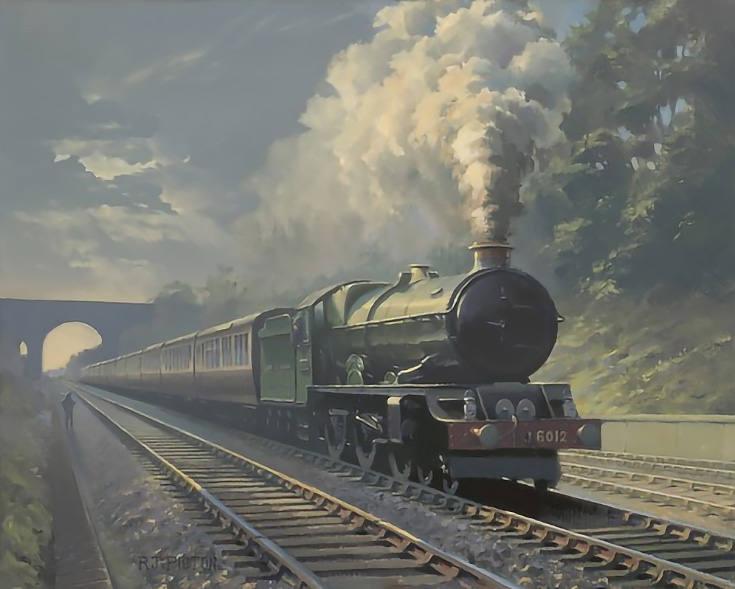
Derailing (and Re-Railing) The Train of Public Virtue
 Time for the Conservative Party to offer its own model of public virtue
Writing in an op/ed in the Ottawa Citizen, David Warren offers his take on Barry Cooper's recent opus It's the Regime, Stupid!.
Cooper is one of the better-kept secrets of Canadian political science: a paleo-conservative with one eye on Canada's past, another on its future, and his finger on the pulse of Canada's present.
Cooper's book offers a scathing critique of Laurenti-o-centric politics and where it has led the country:
"Looked at from another angle, we are the curious aggregate of 'two founding cultures' -- the combination of French Canadian nationalist whining and extortion, with the old English Canadian Loyalist junction and anti-American malice, in a kleptomanic welfare state -- fuelled by revenue appropriated from Western Canadian resources.Cooper's and Bercuson's argument circulated around the notion of the politics of public virtue. Although they argued that the politics of public virtue -- leaing Canada inexorably into the era of the welfare state -- actually originated with John Diefenbaker, who they identify as the first Prime Minister to govern with social justice as a central preoccupation (although the traces of this notion can be identified earlier at the provincial level, in the Saskatchewan government of Tommy Douglas and Alberta government of -- believe it or not -- William Aberhart), it was the fight against Quebec separatism that truly entrenched those ideals as central to Canadian governance.
This is not exactly my way of looking at post-war Canada, and perhaps an over-simplification of Cooper's, but there's a lot of truth in it all the same. A 'regime,' which we may fairly associate with the Liberal party (though spread through other parties by such mechanisms as the 'sacred trust' of our dysfunctional medicare system), has embedded itself in Canadian life, in the form of a self-interested and self-serving federal bureaucracy of extraordinary size.
The notion that Canada consists centrally of ourselves -- the Laurentianistas -- plus imperial extensions east, north, and west, would come very close to being the irritant that has inspired Cooper to produce his string of pearls on Canadian politics, the most memorable of which before the book now published was entitled, Deconfederation (1991), co-written with David Bercuson. It was a book that proposed to call Quebec's separatist bluff, by sketching out the benefits to the Rest of Canada over and above the transaction costs, if Quebec would only leave."
The Liberals struggles to find ways to fund their efforts to use democratic socialism to soften the demand for Quebec sovereignty often led to ham-fisted attempts to suck revenue out of the Western provinces, and often became as big a threat to national unity as anything imagined by Rene Levesque or Luicen Bouchard.
The growing public bureaucracy became a symbol to the west of the country financing Liberal attempts to pander to Quebec separatism at Western Canada's expense.
The election of (briefly) Joe Clark and Brian Mulroney as Prime Minister did little to stem this slide itno a bureaucratic and self-interested state. By the time Paul Martin -- who at times seemed to possess the will to turn the tide -- his party's own excesses in twisting Canadian governance to their own benefit finally bit him.
The election of Stephen Harper resulted not only from the nadir of the sense of entitlement born out of the Liberal party's vision of the politics of public virtue, but also of a slowly-emerging distaste for that particular status quo, and a desire for real change.
But, just as the Liberal vision of the politics of public virtue was fraught with peril, so is Warren's view of how Stephen Harper should proceed:
"My own view, that Harper's political strategy is simply to remain in power for as long as possible, governing with as much common sense as circumstances will allow, until the hegemony of the Liberal party recedes into memory, would probably answer to Cooper's requirements. Harper is a transitional figure; not the new regime but the man who allows one to emerge over time. He is astute in his grasp of his own limitations.Warren's view seems to be that the Conservative party should simply outwait the allegedly waning surge of environmentalism. But this may is an ultimately short-sighted view.
In particular, he must stay in power until the threat has passed of the Liberals replacing their old divide-and-conquer 'national unity' fraud, with a new divide-and-conquer environmentalist fraud. The global warming hysteria -- seized upon by bureaucrats all over the world as the means to advance and consolidate the Nanny State -- is itself receding. We must wait it out."
The enthusiasm for the apocalyptic view of environmentalism may indeed be waning -- it's usually difficult to tell for certain.
But to pretend that the Liberal party couldn't profit politically from a new environmental focus is naive. Even if Canadians stop fearing an environmental apocalypse, the environment is still central to the issue of quality of life.
This is the conservative angle on the environmental issue. Even if apocalyptic zealots are outraged at the very idea that an environmental catastrophe may not be as imminent as activist scientists have insisted it is.
The other issue with Warren's thesis is the notion of Stephen Harper needing to remain in power for as long as possible.
The strength of Cooper's thesis is that it reflects a change in the purpose of Canadian government. Retaining power for power's own sake -- or even out-waiting political changes that may favour his party -- doesn't reflect these changes away from aelf-serving politics of public virtue and toward more responsible and accountable government.
Harper achieved this by doing what Tom Flanagan described as "tightening the screws" on government -- not only through a program of tax cuts, but also by trimming old Liberal party-era social engineering projects, as embodied by the court challenges program and by the ideological direction of the Status of Women.
Some would have expected that Harper's re-adjustment of the Royal Commission for the Status of Women -- as well as suggestions that Harper has treated women as a "left-wing fringe group" -- it seems that female voters are continually softening toward Harper.
The termination of the Liberal agenda of social engineering via various pet projects doesn't seem nearly as threatening to many Canadians as left-wing Canadians would have the rest of us believe.
Last but not least, dismissing national unity and environmentalism as fraudulent is intellectually perilous. Canada came within less than a percentage point of breaking up during the 1995 Quebec sovereignty referendum because the Liberal government of Jean Chretien was inattentive to, and bungled, the national unity file. Not because concerns regarding national unity are fraudulent.
Brian Lee Crowley has recently noted (and Denis Stairs noted before him), demographic shifts within Quebec will soon take the teeth out of Quebec separatism. This will change the form the national unity debate takes in Canada, but it will not lay the issue to rest.
Likewise environmentalism is not fraudulent. Whether the action taken on preserving the environment is taken to head off an apocalypse or is taken simply to improve the quality of life of Canadians, the issue of the environment is crucial.
The Conservative party needs to stop short of abolishing the politics of public virtue, and instead offer Canadians an alternative to the tired version of it to which they had once resigned themselves.
A conservative version of the politics of public virtue will very likely share the most compelling elements of the Liberal version. The difference, of course, should be that the conservative model shouldn't rely on state action to achieve that vision, but rather make it possible for citizens to accomplish those goals on their own -- even if the state provides some help along the way.
Saturday, September 05, 2009
Stay Classy Gilles, Pauline
PQ, BQ leaders to attend reading of FLQ Manifesto
Admittedly, the Canadian attitude toward history can often seem a little peculiar.
While in most countries, being seen at an event at which terrorist literature will be recited would be political suicide, in Canada is can be A-OK. So long as you're a Quebec separatist.
The Government of Quebec recently withdrew its support for "Le Moulin a Paroles", an outdoor poetry and spoken-word reading after a recital of the Front du Liberation du Quebec Manifesto was added to the program.
“Our government doesn’t want to have anything to do with this event. At first, it was supposed to be about poetry, but now with the FLQ manifesto, we are closer to bombs and assassinations,” said Employmen Minister Sam Hamad.
“This brings us back to the October Crisis and we don’t think it’s a good idea,” Hamad added.
This isn't to say that the October Crisis should never be commemorated, but the event in question is intended to commemorate the 250th anniversary of the Battle of the Plains of Abraham.
“Now it’s become a political issue more than an historical event,” Hamad concluded.
The addition of the Manifesto reading is simply an attempt by Pequistes to hijack the event in favour of their political cause -- no wonder Gilles Duceppe and Pauline Marois are so eager to attend!
Sadly, their attendance at this event will likely do very to harm their political fortunes, even if it only goes further to show the rest of Canada who, precisely, these Quebec separatists truly are -- self-interested demagogues, adhering to a racial ideology and sympathizing with yesteryear's terrorists.
Admittedly, the Canadian attitude toward history can often seem a little peculiar.
While in most countries, being seen at an event at which terrorist literature will be recited would be political suicide, in Canada is can be A-OK. So long as you're a Quebec separatist.
The Government of Quebec recently withdrew its support for "Le Moulin a Paroles", an outdoor poetry and spoken-word reading after a recital of the Front du Liberation du Quebec Manifesto was added to the program.
“Our government doesn’t want to have anything to do with this event. At first, it was supposed to be about poetry, but now with the FLQ manifesto, we are closer to bombs and assassinations,” said Employmen Minister Sam Hamad.
“This brings us back to the October Crisis and we don’t think it’s a good idea,” Hamad added.
This isn't to say that the October Crisis should never be commemorated, but the event in question is intended to commemorate the 250th anniversary of the Battle of the Plains of Abraham.
“Now it’s become a political issue more than an historical event,” Hamad concluded.
The addition of the Manifesto reading is simply an attempt by Pequistes to hijack the event in favour of their political cause -- no wonder Gilles Duceppe and Pauline Marois are so eager to attend!
Sadly, their attendance at this event will likely do very to harm their political fortunes, even if it only goes further to show the rest of Canada who, precisely, these Quebec separatists truly are -- self-interested demagogues, adhering to a racial ideology and sympathizing with yesteryear's terrorists.
Friday, September 04, 2009
Bernard Landry: The Gift that Keeps on Giving
Landry to immigrants: "Fuck you"
Much like Bloc Quebecois leader Gille Duceppes' message to non-Quebecois francophones, former Quebec Premier Bernard Landry has a message for immigrants in La Belle Province:
"Go fuck yourself."
That was esentially what Landry had to say to Quebec immigrants today -- much to the likely chagrin of PQ leader Pauline Marois -- when he insisted that immigrants to Quebec and the children of immigrants to Quebec needed to be provided the option of attending French-only Universities -- or no post-secondary education at all.
Today, Landry insisted that the ever-popular Bill 101 needed to be extended to the provinces Colleges and Universities -- which would essentially make it unlawful to teach in any language other than French.
This, naturally, presents two problems for Marois:
Problem number one is that it simply reminds Quebeckers of the racist and retrograde nature of the Parti Quebecois, and the Quebec separatist movement as a whole. Landry's comments were a response to recent news that more allophones than uni-lingual francophones have been enrolling in schools in Montreal.
Apparently, for Landry, the notion that Quebec students would speak both of Canada's official languages is threatening to the primacy of French in Quebec.
The second problem is related to the second -- namely, that to achieve future electoral successes (let alone an affirmative sovereignty vote) the PQ needs significant support from immigrant communities.
Which, naturally, won't happen so long as Bernard Landry tells them that they may be educated in French and only French -- essentially telling linguistic and ethnic minorities to go fuck themselves in the name of francophone primacy.
So far as unwise and racialized politics go, this is about as bad as it gets.
Much like Bloc Quebecois leader Gille Duceppes' message to non-Quebecois francophones, former Quebec Premier Bernard Landry has a message for immigrants in La Belle Province:
"Go fuck yourself."
That was esentially what Landry had to say to Quebec immigrants today -- much to the likely chagrin of PQ leader Pauline Marois -- when he insisted that immigrants to Quebec and the children of immigrants to Quebec needed to be provided the option of attending French-only Universities -- or no post-secondary education at all.
Today, Landry insisted that the ever-popular Bill 101 needed to be extended to the provinces Colleges and Universities -- which would essentially make it unlawful to teach in any language other than French.
This, naturally, presents two problems for Marois:
Problem number one is that it simply reminds Quebeckers of the racist and retrograde nature of the Parti Quebecois, and the Quebec separatist movement as a whole. Landry's comments were a response to recent news that more allophones than uni-lingual francophones have been enrolling in schools in Montreal.
Apparently, for Landry, the notion that Quebec students would speak both of Canada's official languages is threatening to the primacy of French in Quebec.
The second problem is related to the second -- namely, that to achieve future electoral successes (let alone an affirmative sovereignty vote) the PQ needs significant support from immigrant communities.
Which, naturally, won't happen so long as Bernard Landry tells them that they may be educated in French and only French -- essentially telling linguistic and ethnic minorities to go fuck themselves in the name of francophone primacy.
So far as unwise and racialized politics go, this is about as bad as it gets.
Tuesday, August 11, 2009
Duceppe Rumours Not Going Away Quietly
Nor will Gilles Duceppe
Writing in a blog post on the National Post's Full Comment blog, Adam Daifallah addresses the rumour that Gilles Duceppe may resign as leader of the Bloc Quebecois.
A meeting Duceppe has scheduled with his aides for August 13th has fuelled rumours that Duceppe may step down as BQ leader. Naturally, the BQ has denied that Duceppe is planning to resign.
Daifallah draws an interesting conclusion from these rumours: if Duceppe decides to leave the Bloc, the Conservatives could break through in Quebec in a future election.
That such a "breakthrough" would, in Daifallah's words, merely be a "respectable" showing in Quebec still speaks volumes about the current state of the Conservative party. In the wake of a backlash against Prime Minister Stephen Harper in Quebec over arts funding, a Mulroney- or Diefenbaker-style Quebec landslide is clearly out of the question.
But Daifallah is right about a great many things: the Canadian electorate's honeymoon with Liberal leader Michael Ignatieff seems to be coming to a conclusion, and there may be room for the Conservatives to grow in Quebec.
Duceppe's departure from the Bloc Quebecois could only help the Tories in that regard.
As Daifallah notes, Duceppe may be for the Bloc Quebecois what Elizabeth May publicly fantasizes about being for the Green party -- it's greatest asset:
But Gerry Nicholls disagrees. He notes that many had predicted the BQ's political demise after Lucien Bouchard left the party. More than ten years later, the Bloc remains as strong as ever.
Nicholls surmises that the Bloc endures simply because its supporters don't consider themselves to be Canadian, and thus have "have no emotional connection to either the Liberals or Conservatives" who, he notes, are viewed as being "led by outsiders".
For the hardened Quebec separatist, this may certainly be true. Even Stephane Dion could be viewed by such individuals as an "outsider", being allegedly tainted by his authoring of the Clarity Act (or, rather, his re-authoring of Stephen Harper's similar proposed legislation).
But Quebec's provincial political climate seems to put the lie to Nicholls' sentiments. In the 2008 federal election, the Bloc won 49 of 75 seats in the Province -- a disheartening 65% of its ridings.
Yet in the Quebec Provincial election held later that year, the Bloc's provincial counterpart, the Parti Quebecois, won only 51 of 125 seats in the National Assembly -- the 41% of ridings won is still less than encouraging, but not as bad as the federal results.
If Stephane Dion could be branded an outsider for the clarity act, Jean Charest could be viewed as every bit the outsider for his involvement with the Charlottetown Accord -- which was rejected by 56% of Quebecers. Yet Jean Charest has not only not been branded an outsider, he's been Premier of Quebec since 2003.
And even as rumours that Duceppe is preparing to resign the leadership of the Bloc Quebecois, rumours also abide that Jean Charest is planning a return to federal politics. The combination of a Duceppe departure and Charest return would certainly make for some intriguing results.
But even in the here and now, a Duceppe departure would have tremendous implications for Canadian politics. As Gerry Nicholls admitts, Adam Daifallah may be right to predict big gains for the Conservative party should such an event transpire.
But, as it remains, the rumour of Duceppe's impending departure is precisely that -- a rumour. It isn't going away quietly. Nor would Gilles Duceppe.
Other bloggers writing about this topic:
Far and Wide - "Duceppe Leaving?"
Chucker Canuck - "The 24-Hour Retirement of Gilles Duceppe"
Writing in a blog post on the National Post's Full Comment blog, Adam Daifallah addresses the rumour that Gilles Duceppe may resign as leader of the Bloc Quebecois.
A meeting Duceppe has scheduled with his aides for August 13th has fuelled rumours that Duceppe may step down as BQ leader. Naturally, the BQ has denied that Duceppe is planning to resign.
Daifallah draws an interesting conclusion from these rumours: if Duceppe decides to leave the Bloc, the Conservatives could break through in Quebec in a future election.
That such a "breakthrough" would, in Daifallah's words, merely be a "respectable" showing in Quebec still speaks volumes about the current state of the Conservative party. In the wake of a backlash against Prime Minister Stephen Harper in Quebec over arts funding, a Mulroney- or Diefenbaker-style Quebec landslide is clearly out of the question.
But Daifallah is right about a great many things: the Canadian electorate's honeymoon with Liberal leader Michael Ignatieff seems to be coming to a conclusion, and there may be room for the Conservatives to grow in Quebec.
Duceppe's departure from the Bloc Quebecois could only help the Tories in that regard.
As Daifallah notes, Duceppe may be for the Bloc Quebecois what Elizabeth May publicly fantasizes about being for the Green party -- it's greatest asset:
"Duceppe is the Bloc's best asset by a country mile. He's universally respected, even outside Quebec. He has now fought five elections as party leader and knows the ins and outs of campaigning. He performs well in debates and has shown a knack for pushing the right buttons at the right time. Quebecers are comfortable with him -- they know what they are getting. Predictions that his and the Bloc's support would suffer after his embarrassing botched attempt to leave Ottawa and run for the Parti Quebecois leadership proved to be utterly wrong."Daifallah also notes that the Bloc lacks a credible successor to Duceppe:
"What's worse for the Bloc is that there is no obvious successor to Duceppe with the credibility to keep the party strong. The most likely next chief is Pierre Paquette, a socialist economist whose profile has steadily increased in the last couple of years. But Paquette has nothing close the same level of charisma as the current leader."With the well-liked and well-respected Duceppe out of the picture, Daifallah muses, Quebecers would likely reconsider the Harper Conservatives.
But Gerry Nicholls disagrees. He notes that many had predicted the BQ's political demise after Lucien Bouchard left the party. More than ten years later, the Bloc remains as strong as ever.
Nicholls surmises that the Bloc endures simply because its supporters don't consider themselves to be Canadian, and thus have "have no emotional connection to either the Liberals or Conservatives" who, he notes, are viewed as being "led by outsiders".
For the hardened Quebec separatist, this may certainly be true. Even Stephane Dion could be viewed by such individuals as an "outsider", being allegedly tainted by his authoring of the Clarity Act (or, rather, his re-authoring of Stephen Harper's similar proposed legislation).
But Quebec's provincial political climate seems to put the lie to Nicholls' sentiments. In the 2008 federal election, the Bloc won 49 of 75 seats in the Province -- a disheartening 65% of its ridings.
Yet in the Quebec Provincial election held later that year, the Bloc's provincial counterpart, the Parti Quebecois, won only 51 of 125 seats in the National Assembly -- the 41% of ridings won is still less than encouraging, but not as bad as the federal results.
If Stephane Dion could be branded an outsider for the clarity act, Jean Charest could be viewed as every bit the outsider for his involvement with the Charlottetown Accord -- which was rejected by 56% of Quebecers. Yet Jean Charest has not only not been branded an outsider, he's been Premier of Quebec since 2003.
And even as rumours that Duceppe is preparing to resign the leadership of the Bloc Quebecois, rumours also abide that Jean Charest is planning a return to federal politics. The combination of a Duceppe departure and Charest return would certainly make for some intriguing results.
But even in the here and now, a Duceppe departure would have tremendous implications for Canadian politics. As Gerry Nicholls admitts, Adam Daifallah may be right to predict big gains for the Conservative party should such an event transpire.
But, as it remains, the rumour of Duceppe's impending departure is precisely that -- a rumour. It isn't going away quietly. Nor would Gilles Duceppe.
Other bloggers writing about this topic:
Far and Wide - "Duceppe Leaving?"
Chucker Canuck - "The 24-Hour Retirement of Gilles Duceppe"
Thursday, June 25, 2009
You Say "Redneck" As If It's a Bad Thing
Gilles Duceppe helps rehabilitate an old slur
In the wake of Parti Quebecois leader Pauline Marois' recent four-point plan for Quebec sovereignty, only Bloc Quebecois leader Gilles Duceppe would dare criticize opponents of Quebec sovereignty for not agreeing to stick their heads in a noose.
As some may recall, one of Marois' plan points was to accrue extra power to Quebec over language policies.
Speaking at a St Jean Baptiste day event, Duceppe decried the Grit and Tory leaders' unwillingness to do precisely that by extending the powers of Bill 101 over federally-regulated industries in Quebec.
"They acted like rednecks," Duceppe complained.
"[Ignatieff and Harper], two leaders of the most important political parties in Canada, refused to admit that French should be the working language for institutions under the federal jurisdiction," he sniffed.
Of course, nothing could factually be further from the truth. In fact, Harper and Ignatieff have actually remembered what Duceppe has forgotten: that Canada has two official languages, French and English, from coast-to-coast, and that Quebec is no exception to this.
This is a point that likely isn't lost on Duceppe, but merely one that he chooses to overlook.
"They should take the example of the political leaders in Quebec who stand up for the rights instead of playing rednecks in Ottawa like they did a few days ago," Duceppe would later add.
Although Duceppe would decline to add what he really seems to be thinking -- that the federal government should decline to stand up for the rights of Canadians in Quebec if they should just so happen to be English-speaking Canadians.
Seriously, fuck them.
If standing up for the rights of all Qubeckers, French- and English-speaking alike, makes Stephen Harper and Michael Ignatieff rednecks, then Duceppe clearly has a skewed image of that stereotype: not of rednecks as ignorant or racist, but as individuals who don't pick and choose whose rights they stand up for. It's a label that they can wear with pride.
The racist ideology that lays at the heart of Duceppe's party, meanwhile, is a wart that he doesn't display with much pride, even on St Jean Baptiste Day. Unshockingly, Duceppe wants that to remain one of Quebec's better-kept secrets.
Other bloggers writing about this topic:
Chucker Canuck 2.0 - "Gilles Duceppe is a Sour, Old Geezer Who Needs the Pastures"
In the wake of Parti Quebecois leader Pauline Marois' recent four-point plan for Quebec sovereignty, only Bloc Quebecois leader Gilles Duceppe would dare criticize opponents of Quebec sovereignty for not agreeing to stick their heads in a noose.
As some may recall, one of Marois' plan points was to accrue extra power to Quebec over language policies.
Speaking at a St Jean Baptiste day event, Duceppe decried the Grit and Tory leaders' unwillingness to do precisely that by extending the powers of Bill 101 over federally-regulated industries in Quebec.
"They acted like rednecks," Duceppe complained.
"[Ignatieff and Harper], two leaders of the most important political parties in Canada, refused to admit that French should be the working language for institutions under the federal jurisdiction," he sniffed.
Of course, nothing could factually be further from the truth. In fact, Harper and Ignatieff have actually remembered what Duceppe has forgotten: that Canada has two official languages, French and English, from coast-to-coast, and that Quebec is no exception to this.
This is a point that likely isn't lost on Duceppe, but merely one that he chooses to overlook.
"They should take the example of the political leaders in Quebec who stand up for the rights instead of playing rednecks in Ottawa like they did a few days ago," Duceppe would later add.
Although Duceppe would decline to add what he really seems to be thinking -- that the federal government should decline to stand up for the rights of Canadians in Quebec if they should just so happen to be English-speaking Canadians.
Seriously, fuck them.
If standing up for the rights of all Qubeckers, French- and English-speaking alike, makes Stephen Harper and Michael Ignatieff rednecks, then Duceppe clearly has a skewed image of that stereotype: not of rednecks as ignorant or racist, but as individuals who don't pick and choose whose rights they stand up for. It's a label that they can wear with pride.
The racist ideology that lays at the heart of Duceppe's party, meanwhile, is a wart that he doesn't display with much pride, even on St Jean Baptiste Day. Unshockingly, Duceppe wants that to remain one of Quebec's better-kept secrets.
Other bloggers writing about this topic:
Chucker Canuck 2.0 - "Gilles Duceppe is a Sour, Old Geezer Who Needs the Pastures"
Subscribe to:
Posts (Atom)