Charest offers welcome to ADQ defectors
With the Action Democratique du Quebec still reeling after the departure of defeated leadership candidate Eric Caire and former house Marc Picard from its ranks, Jean Charest has evidently detected the opportunity to lay the ADQ to rest for good.
He's offered Picard and Caire -- as well as any other ADQ MNAs -- the opportunity to join the Liberal Party in the National Assembly.
"Politics is the art of inclusion," Charest announced. "For us the door has always been open, from all time. It is an open party and we will not change, but we will respect the choice of each MNA."
However, Charest has made no move to formally recruit Caire, Picard, or any other member of the ADQ.
"I can tell you from experience that if a member decides to make a change in his situation, whether to become an independent or to go elsewhere, if has to come from him," Charest added. "We are putting no pressure on the ADQ MNAs and yes we have known one another for a long time and that doesn’t prevent us from encouraging one another."
Not that Charest hasn't been talking to any of them.
"In fact I spoke to Mr Caire after his defeat," he said. "I also spoke to [Christian] Lévesque to congratulate him."
But one has to wonder whether or not all the members of the ADQ would be welcome to join Charest's caucus. After all, Charest has been threatening former ADQ interim leader Sylvie Roy with a libel suit for claiming that three of his cabinet ministers had met with a controversial construction magnate aboard the man's private yaught.
Then again, for the opportunity to put his conservative opposition to rest permanently, Charest may be willing to swallow his pride, and see if Roy is willing to do the same.
Rarely before has a long-established political party collapsed so quickly after managing to become the Official Opposition. But the ADQ has managed to accomplish this task.
The ADQ has evidently reached the end of its story, and Jean Charest is perfectly content to write its eulogy.

Showing posts with label Jean Charest. Show all posts
Showing posts with label Jean Charest. Show all posts
Tuesday, November 10, 2009


Thursday, August 27, 2009
The Great Conciliator?
Mulroney wants Tories to kiss and make up
When Conservatives gather to celebrate the 25th anniversary of Brian Mulroney's 1984 majority government victory -- one of only two for the party in the past quarter century, and only three in the past 60 years -- Mulroney wants the party to be more than simply a celebration of a past triumph.
He wants the Conservative party to kiss and make up.
 "It's in the interest of all Conservatives -- Progressive Conservatives and the latter-day group -- to come together in support of common principles," Mulroney recently told Canadian Press.
How welcome, precisely, Mulroney's call to reconcile is in the mind of Stephen Harper is likely only truly known to Harper himself -- who will not attend the party, as he will be in the United States on that day -- or perhaps his wife, Laureen.
But a reconciliation between the Harper wing of the Conservative party and Mulroney loyalists -- some of whom surely continue to harbour some grudges over the Meech Lake and Charlottetown Accords, and even after 20 years the feeling likely remains very much mutual -- would bear many dividends for the party.
For one thing, it would reunite the party with activists who unequivocally know how to win in Quebec.
For Conservatives wary of declining polling numbers in La Belle Province, Mulroney would urge them not to write the province off as a lost cause. "When I became leader [in 1983] we had one seat in Quebec," he said. "Our first election in 1984 we got 58 seats -- and 50 per cent of the popular vote. Then in 1988 we got 63 seats of the 74 here."
"We had quite a following here," Mulroney recalled. "We were able to do some things that people remember favourably."
A reconciliation with the Mulroney camp would expand the party's expertise in fighting elections in Quebec. Considering that Harper's Diefenbaker-esque dealings with Mario Dumont and the Action Democratique du Quebec haven't fully beared fruit -- likely due to the admittedly-woeful state of the ADQ -- the Conservative party could put that kind of experience to good use.
There is no modern-day Maurice Duplessis to help the party reap an electoral windfall in Quebec.
A reconciliation between the Harper and Mulroney camps could even help pave the way for an eventual return by current Quebec Premier Jean Charest to federal politics as a high-profile member -- and likely eventual leader -- of the party.
The Liberal party evidently never really knew what to do with the Stephane Dion package -- a dedicated separatist-fighter with solid credentials on the environment. It probably helped that the Dion package was never really legit, but with Charest it is undisputable. The Tories would do well to avail themselves of his potential return. A reconciliation would go a long way.
In Mulroney's mind, at least it isn't out of the question. He seems to bear Stephen Harper no ill will in regards to the issues that have emerged between them. In fact, he doesn't seem very distressed by it all.
"He severed relations with me, which, when you've been prime minister, doesn't really mean very much to you. There's nothing that I worry about [that] Mr Harper can or cannot do," Mulroney explained.
In fact, Mulroney seems to recognize much of himself in Stephen Harper.
"Because you can’t elect anybody based on that hard-core thing," Mulroney added. "Mr Harper was smart enough to realize that and to figure out how you get elected in this country."
"I was conservative -— right of centre —- on some important issues, which he is, and slightly left of centre, or centrist, on some important social issues."
Of course, it isn't merely in the interest of all conservatives to heal some of the remaining rifts in the Conservative party -- it's also in the interest of all Canadians.
Canada can't be governed on liberalism alone and, as paleoconservative political scientist Barry Cooper would note, the Harper government's turn away from contrived public virtue-based governance and back toward economic pragmatism should be considered a welcome one.
Anything that strengthens the Conservative party -- in fact, anything that strengthens almost any political party -- will, by extension, also be good for Canada.
Mulroney likely isn't being entirely unselfish in his motives for wanting to see the Conservative party kiss and make up. In the eyes of many, Mulroney was the greatest Conservative since sir John A MacDonald -- or at least since John Diefenbaker. Helping the Conservative party further unite itself under any banner would only further cement that legacy.
Brian Mulroney's precise motivation is actually irrelevant. All that really matters is getting the Conservative party back on track again, fully united.
When Conservatives gather to celebrate the 25th anniversary of Brian Mulroney's 1984 majority government victory -- one of only two for the party in the past quarter century, and only three in the past 60 years -- Mulroney wants the party to be more than simply a celebration of a past triumph.
He wants the Conservative party to kiss and make up.
 "It's in the interest of all Conservatives -- Progressive Conservatives and the latter-day group -- to come together in support of common principles," Mulroney recently told Canadian Press.
How welcome, precisely, Mulroney's call to reconcile is in the mind of Stephen Harper is likely only truly known to Harper himself -- who will not attend the party, as he will be in the United States on that day -- or perhaps his wife, Laureen.
But a reconciliation between the Harper wing of the Conservative party and Mulroney loyalists -- some of whom surely continue to harbour some grudges over the Meech Lake and Charlottetown Accords, and even after 20 years the feeling likely remains very much mutual -- would bear many dividends for the party.
For one thing, it would reunite the party with activists who unequivocally know how to win in Quebec.
For Conservatives wary of declining polling numbers in La Belle Province, Mulroney would urge them not to write the province off as a lost cause. "When I became leader [in 1983] we had one seat in Quebec," he said. "Our first election in 1984 we got 58 seats -- and 50 per cent of the popular vote. Then in 1988 we got 63 seats of the 74 here."
"We had quite a following here," Mulroney recalled. "We were able to do some things that people remember favourably."
A reconciliation with the Mulroney camp would expand the party's expertise in fighting elections in Quebec. Considering that Harper's Diefenbaker-esque dealings with Mario Dumont and the Action Democratique du Quebec haven't fully beared fruit -- likely due to the admittedly-woeful state of the ADQ -- the Conservative party could put that kind of experience to good use.
There is no modern-day Maurice Duplessis to help the party reap an electoral windfall in Quebec.
A reconciliation between the Harper and Mulroney camps could even help pave the way for an eventual return by current Quebec Premier Jean Charest to federal politics as a high-profile member -- and likely eventual leader -- of the party.
The Liberal party evidently never really knew what to do with the Stephane Dion package -- a dedicated separatist-fighter with solid credentials on the environment. It probably helped that the Dion package was never really legit, but with Charest it is undisputable. The Tories would do well to avail themselves of his potential return. A reconciliation would go a long way.
In Mulroney's mind, at least it isn't out of the question. He seems to bear Stephen Harper no ill will in regards to the issues that have emerged between them. In fact, he doesn't seem very distressed by it all.
"He severed relations with me, which, when you've been prime minister, doesn't really mean very much to you. There's nothing that I worry about [that] Mr Harper can or cannot do," Mulroney explained.
In fact, Mulroney seems to recognize much of himself in Stephen Harper.
"Because you can’t elect anybody based on that hard-core thing," Mulroney added. "Mr Harper was smart enough to realize that and to figure out how you get elected in this country."
"I was conservative -— right of centre —- on some important issues, which he is, and slightly left of centre, or centrist, on some important social issues."
Of course, it isn't merely in the interest of all conservatives to heal some of the remaining rifts in the Conservative party -- it's also in the interest of all Canadians.
Canada can't be governed on liberalism alone and, as paleoconservative political scientist Barry Cooper would note, the Harper government's turn away from contrived public virtue-based governance and back toward economic pragmatism should be considered a welcome one.
Anything that strengthens the Conservative party -- in fact, anything that strengthens almost any political party -- will, by extension, also be good for Canada.
Mulroney likely isn't being entirely unselfish in his motives for wanting to see the Conservative party kiss and make up. In the eyes of many, Mulroney was the greatest Conservative since sir John A MacDonald -- or at least since John Diefenbaker. Helping the Conservative party further unite itself under any banner would only further cement that legacy.
Brian Mulroney's precise motivation is actually irrelevant. All that really matters is getting the Conservative party back on track again, fully united.
Tuesday, August 11, 2009
Duceppe Rumours Not Going Away Quietly
Nor will Gilles Duceppe
Writing in a blog post on the National Post's Full Comment blog, Adam Daifallah addresses the rumour that Gilles Duceppe may resign as leader of the Bloc Quebecois.
A meeting Duceppe has scheduled with his aides for August 13th has fuelled rumours that Duceppe may step down as BQ leader. Naturally, the BQ has denied that Duceppe is planning to resign.
Daifallah draws an interesting conclusion from these rumours: if Duceppe decides to leave the Bloc, the Conservatives could break through in Quebec in a future election.
That such a "breakthrough" would, in Daifallah's words, merely be a "respectable" showing in Quebec still speaks volumes about the current state of the Conservative party. In the wake of a backlash against Prime Minister Stephen Harper in Quebec over arts funding, a Mulroney- or Diefenbaker-style Quebec landslide is clearly out of the question.
But Daifallah is right about a great many things: the Canadian electorate's honeymoon with Liberal leader Michael Ignatieff seems to be coming to a conclusion, and there may be room for the Conservatives to grow in Quebec.
Duceppe's departure from the Bloc Quebecois could only help the Tories in that regard.
As Daifallah notes, Duceppe may be for the Bloc Quebecois what Elizabeth May publicly fantasizes about being for the Green party -- it's greatest asset:
But Gerry Nicholls disagrees. He notes that many had predicted the BQ's political demise after Lucien Bouchard left the party. More than ten years later, the Bloc remains as strong as ever.
Nicholls surmises that the Bloc endures simply because its supporters don't consider themselves to be Canadian, and thus have "have no emotional connection to either the Liberals or Conservatives" who, he notes, are viewed as being "led by outsiders".
For the hardened Quebec separatist, this may certainly be true. Even Stephane Dion could be viewed by such individuals as an "outsider", being allegedly tainted by his authoring of the Clarity Act (or, rather, his re-authoring of Stephen Harper's similar proposed legislation).
But Quebec's provincial political climate seems to put the lie to Nicholls' sentiments. In the 2008 federal election, the Bloc won 49 of 75 seats in the Province -- a disheartening 65% of its ridings.
Yet in the Quebec Provincial election held later that year, the Bloc's provincial counterpart, the Parti Quebecois, won only 51 of 125 seats in the National Assembly -- the 41% of ridings won is still less than encouraging, but not as bad as the federal results.
If Stephane Dion could be branded an outsider for the clarity act, Jean Charest could be viewed as every bit the outsider for his involvement with the Charlottetown Accord -- which was rejected by 56% of Quebecers. Yet Jean Charest has not only not been branded an outsider, he's been Premier of Quebec since 2003.
And even as rumours that Duceppe is preparing to resign the leadership of the Bloc Quebecois, rumours also abide that Jean Charest is planning a return to federal politics. The combination of a Duceppe departure and Charest return would certainly make for some intriguing results.
But even in the here and now, a Duceppe departure would have tremendous implications for Canadian politics. As Gerry Nicholls admitts, Adam Daifallah may be right to predict big gains for the Conservative party should such an event transpire.
But, as it remains, the rumour of Duceppe's impending departure is precisely that -- a rumour. It isn't going away quietly. Nor would Gilles Duceppe.
Other bloggers writing about this topic:
Far and Wide - "Duceppe Leaving?"
Chucker Canuck - "The 24-Hour Retirement of Gilles Duceppe"
Writing in a blog post on the National Post's Full Comment blog, Adam Daifallah addresses the rumour that Gilles Duceppe may resign as leader of the Bloc Quebecois.
A meeting Duceppe has scheduled with his aides for August 13th has fuelled rumours that Duceppe may step down as BQ leader. Naturally, the BQ has denied that Duceppe is planning to resign.
Daifallah draws an interesting conclusion from these rumours: if Duceppe decides to leave the Bloc, the Conservatives could break through in Quebec in a future election.
That such a "breakthrough" would, in Daifallah's words, merely be a "respectable" showing in Quebec still speaks volumes about the current state of the Conservative party. In the wake of a backlash against Prime Minister Stephen Harper in Quebec over arts funding, a Mulroney- or Diefenbaker-style Quebec landslide is clearly out of the question.
But Daifallah is right about a great many things: the Canadian electorate's honeymoon with Liberal leader Michael Ignatieff seems to be coming to a conclusion, and there may be room for the Conservatives to grow in Quebec.
Duceppe's departure from the Bloc Quebecois could only help the Tories in that regard.
As Daifallah notes, Duceppe may be for the Bloc Quebecois what Elizabeth May publicly fantasizes about being for the Green party -- it's greatest asset:
"Duceppe is the Bloc's best asset by a country mile. He's universally respected, even outside Quebec. He has now fought five elections as party leader and knows the ins and outs of campaigning. He performs well in debates and has shown a knack for pushing the right buttons at the right time. Quebecers are comfortable with him -- they know what they are getting. Predictions that his and the Bloc's support would suffer after his embarrassing botched attempt to leave Ottawa and run for the Parti Quebecois leadership proved to be utterly wrong."Daifallah also notes that the Bloc lacks a credible successor to Duceppe:
"What's worse for the Bloc is that there is no obvious successor to Duceppe with the credibility to keep the party strong. The most likely next chief is Pierre Paquette, a socialist economist whose profile has steadily increased in the last couple of years. But Paquette has nothing close the same level of charisma as the current leader."With the well-liked and well-respected Duceppe out of the picture, Daifallah muses, Quebecers would likely reconsider the Harper Conservatives.
But Gerry Nicholls disagrees. He notes that many had predicted the BQ's political demise after Lucien Bouchard left the party. More than ten years later, the Bloc remains as strong as ever.
Nicholls surmises that the Bloc endures simply because its supporters don't consider themselves to be Canadian, and thus have "have no emotional connection to either the Liberals or Conservatives" who, he notes, are viewed as being "led by outsiders".
For the hardened Quebec separatist, this may certainly be true. Even Stephane Dion could be viewed by such individuals as an "outsider", being allegedly tainted by his authoring of the Clarity Act (or, rather, his re-authoring of Stephen Harper's similar proposed legislation).
But Quebec's provincial political climate seems to put the lie to Nicholls' sentiments. In the 2008 federal election, the Bloc won 49 of 75 seats in the Province -- a disheartening 65% of its ridings.
Yet in the Quebec Provincial election held later that year, the Bloc's provincial counterpart, the Parti Quebecois, won only 51 of 125 seats in the National Assembly -- the 41% of ridings won is still less than encouraging, but not as bad as the federal results.
If Stephane Dion could be branded an outsider for the clarity act, Jean Charest could be viewed as every bit the outsider for his involvement with the Charlottetown Accord -- which was rejected by 56% of Quebecers. Yet Jean Charest has not only not been branded an outsider, he's been Premier of Quebec since 2003.
And even as rumours that Duceppe is preparing to resign the leadership of the Bloc Quebecois, rumours also abide that Jean Charest is planning a return to federal politics. The combination of a Duceppe departure and Charest return would certainly make for some intriguing results.
But even in the here and now, a Duceppe departure would have tremendous implications for Canadian politics. As Gerry Nicholls admitts, Adam Daifallah may be right to predict big gains for the Conservative party should such an event transpire.
But, as it remains, the rumour of Duceppe's impending departure is precisely that -- a rumour. It isn't going away quietly. Nor would Gilles Duceppe.
Other bloggers writing about this topic:
Far and Wide - "Duceppe Leaving?"
Chucker Canuck - "The 24-Hour Retirement of Gilles Duceppe"
Saturday, August 08, 2009
Prime Minister Jean Charest?
Richard Cleroux forecasts Charest's return to Ottawa
In an op/ed column appearing in the Orleans Star, Richard Cleroux makes a bold prediction:
Jean Charest will not only return to Ottawa, but win the office of Prime Minister within the next five years.
It's a bold prediction for a number of reasons.
First off, despite a recent minority government setback (which was avenged with a majority government victory less than a year later) Jean Charest is firmly ensconsed in the office of Premier of Quebec, and the prospects of the Parti Quebecois or Action Democratique du Quebec of unseating him any time soon are rather slim.
Secondly, if Charest accomplished the feat he would be the first former Premier to win the office of Prime Minister in Canadian history -- Robert Stanfield, Tommy Douglas and John Bracken all tried and failed to accomplish this goal.
Thirdly, despite rumblings of a fall election, Charest would have to wait for Prime Minister Stephen Harper to (one way or another) vacate the Prime Minister's office before becoming Prime Minister himself.
While the third point naturally seems extremely obvious, there are actually numerous factors in play.
For one thing, there are certainly big questions regarding which party Charest would seek to lead upon returning to Ottawa. Charest led the Progressive Conservative party (now the Conservative party of Canada) out of the irrelevance of its post-Kim Campbell nadir before leaving the party to lead the Quebec Liberal party to victory over the Parti Quebecois.
Yet, as Cleroux notes, Charest was recently made the Chariman of the committee to plan the fesivities celebrating the 25th anniversary of Brian Mulroney's 1984 majority government.
Although Mulroney was instrumental in many of Charest's political successes -- even twice appointing him as a Cabinet Minister in his own government -- the optics of a Liberal Premier planning the celebration of a former Conservative Prime Minister, especially one who continues to dwell along the margins of Canada's political life, are very telling.
Few Liberals would dare unless they were deliberately leaving a door open to join the Conservative party.
This act even shows that Charest is above the internal frays currently troubling the Conservative party.
"Charest is different," Cleroux writes. "No internecine battles for him. He’s an old-time federal Conservative who became a provincial Quebec Liberal only because the boys in Ottawa wanted somebody who could stand up to the separatists in Quebec and save Canada for them – which he did."
In Jean Charest, Conservatives would be getting half of the Stephane Dion package that failed to materialize for the Liberal party.
Charest is a committed separatist fighter, who put his country ahead of his personal politics, and stuck to his guns. By contrast, Dion is a formerly-well-regarded separatist fighter who did a deal with the Bloc Quebecois in an attempt to become Prime Minister.
Electing Charest as leader of the Conservative party -- whether Stephen Harper decides to retire the leadership as Prime Minister or surrenders his leadership after an election defeat -- would instantly reenergize the party in Quebec.
As anyone who follows Canadian politics knows, a strong showing in Quebec is virtually a prerequisite for a majority government.
Charest could even be instrumental in reuniting the Conservative party with the people who helped it win its last majority government.
"Choosing to head the celebrations is smart," Cleroux muses. "It brings him back to the old Mulroney loyalists. They still count for lots in Quebec, and it doesn’t alienate his Liberal followers, who can be brought into his team later on."
While this all remains a bold prediction so long as Charest remains Premier of Quebec, the prospect of a Jean Charest return to the federal Conservative party should be an exciting prospect for many Canadian conservatives.
Other bloggers writing about this topic:
Roy Eappen - "Charest is Not a Lucid"
In an op/ed column appearing in the Orleans Star, Richard Cleroux makes a bold prediction:
Jean Charest will not only return to Ottawa, but win the office of Prime Minister within the next five years.
It's a bold prediction for a number of reasons.
First off, despite a recent minority government setback (which was avenged with a majority government victory less than a year later) Jean Charest is firmly ensconsed in the office of Premier of Quebec, and the prospects of the Parti Quebecois or Action Democratique du Quebec of unseating him any time soon are rather slim.
Secondly, if Charest accomplished the feat he would be the first former Premier to win the office of Prime Minister in Canadian history -- Robert Stanfield, Tommy Douglas and John Bracken all tried and failed to accomplish this goal.
Thirdly, despite rumblings of a fall election, Charest would have to wait for Prime Minister Stephen Harper to (one way or another) vacate the Prime Minister's office before becoming Prime Minister himself.
While the third point naturally seems extremely obvious, there are actually numerous factors in play.
For one thing, there are certainly big questions regarding which party Charest would seek to lead upon returning to Ottawa. Charest led the Progressive Conservative party (now the Conservative party of Canada) out of the irrelevance of its post-Kim Campbell nadir before leaving the party to lead the Quebec Liberal party to victory over the Parti Quebecois.
Yet, as Cleroux notes, Charest was recently made the Chariman of the committee to plan the fesivities celebrating the 25th anniversary of Brian Mulroney's 1984 majority government.
Although Mulroney was instrumental in many of Charest's political successes -- even twice appointing him as a Cabinet Minister in his own government -- the optics of a Liberal Premier planning the celebration of a former Conservative Prime Minister, especially one who continues to dwell along the margins of Canada's political life, are very telling.
Few Liberals would dare unless they were deliberately leaving a door open to join the Conservative party.
This act even shows that Charest is above the internal frays currently troubling the Conservative party.
"Charest is different," Cleroux writes. "No internecine battles for him. He’s an old-time federal Conservative who became a provincial Quebec Liberal only because the boys in Ottawa wanted somebody who could stand up to the separatists in Quebec and save Canada for them – which he did."
In Jean Charest, Conservatives would be getting half of the Stephane Dion package that failed to materialize for the Liberal party.
Charest is a committed separatist fighter, who put his country ahead of his personal politics, and stuck to his guns. By contrast, Dion is a formerly-well-regarded separatist fighter who did a deal with the Bloc Quebecois in an attempt to become Prime Minister.
Electing Charest as leader of the Conservative party -- whether Stephen Harper decides to retire the leadership as Prime Minister or surrenders his leadership after an election defeat -- would instantly reenergize the party in Quebec.
As anyone who follows Canadian politics knows, a strong showing in Quebec is virtually a prerequisite for a majority government.
Charest could even be instrumental in reuniting the Conservative party with the people who helped it win its last majority government.
"Choosing to head the celebrations is smart," Cleroux muses. "It brings him back to the old Mulroney loyalists. They still count for lots in Quebec, and it doesn’t alienate his Liberal followers, who can be brought into his team later on."
While this all remains a bold prediction so long as Charest remains Premier of Quebec, the prospect of a Jean Charest return to the federal Conservative party should be an exciting prospect for many Canadian conservatives.
Other bloggers writing about this topic:
Roy Eappen - "Charest is Not a Lucid"
Friday, June 12, 2009
The True, Unforgettable Face of Quebec Separatism
Parti Quebecois forever awaiting the next crisis
Parti Quebecois leader Pauline Marois was forced to do some damage control yesterday, as she insisted that the Parti Quebecois would not make a move to provoke a national unity crisis in its bid to separate Quebec from the rest of Canada.
 This follows comments by Jacques Parizeau, the old warhorse of the Quebec sovereigntist movement, insisting that "to bring about sovereignty, there has to be a crisis. Clearly, a referendum on a specific subject can create a crisis."
These comments certainly don't bode well for Marois, whose recently-revealed four-point plan for Quebec sovereignty includes calling referendums on the repatriation of various from the federal government.
Quebec's Liberal Premier, Jean Charest, took full advantage of Parizeau's comments.
"The real intention of the Parti Québécois is to provoke a crisis, to harm Quebec," Charest insisted. "It is unacceptable. It would hurt Quebec. We will expose it."
Recent polls have suggested that a crisis would be necessary just to make sovereignty seem feasible to Quebeckers. A recent Angus-Reid poll determined that 74% of Quebeckers felt that Quebec's chances of attaining sovereignty were slim to none.
To make matters worse for Marois and Parizeau, only 28% of polled Quebeckers stated that they wanted independence for Quebec.
Perhaps of the two prayers for Quebec sovereigntism, increased autonomy (favoured by another 30% of Quebeckers) and a crisis, the former would be more fruitful than the latter. Marois seems to have a sense of this, with a sovereignty plan that would try to hedge increased autonomy into an increased fervour for independence.
That is what makes the Parti Quebecois more dangerous than ever -- that Pauline Marois has finally realized that it's the Quebec preference for autonomy and de-centralization that could get Quebeckers thinking about sovereignty again.
Jacques Parizeau may be good for reminding Quebeckers -- in fact, all Canadians -- about the true face of the Pari Quebecois.
The true face of the Parti Quebecois is not that of a progressive political party. It's that of a retrograde borderline-revolutionary party founded on a racial ideology.
Pauline Marois may want Quebeckers to forget this. Sadly for her, Jacques Parizeau could never allow them to.
Other bloggers writing about this topic:
Angry French Guy - "Could a People that Can't Build a Highway Ever Build a Country?"
Parti Quebecois leader Pauline Marois was forced to do some damage control yesterday, as she insisted that the Parti Quebecois would not make a move to provoke a national unity crisis in its bid to separate Quebec from the rest of Canada.
 This follows comments by Jacques Parizeau, the old warhorse of the Quebec sovereigntist movement, insisting that "to bring about sovereignty, there has to be a crisis. Clearly, a referendum on a specific subject can create a crisis."
These comments certainly don't bode well for Marois, whose recently-revealed four-point plan for Quebec sovereignty includes calling referendums on the repatriation of various from the federal government.
Quebec's Liberal Premier, Jean Charest, took full advantage of Parizeau's comments.
"The real intention of the Parti Québécois is to provoke a crisis, to harm Quebec," Charest insisted. "It is unacceptable. It would hurt Quebec. We will expose it."
Recent polls have suggested that a crisis would be necessary just to make sovereignty seem feasible to Quebeckers. A recent Angus-Reid poll determined that 74% of Quebeckers felt that Quebec's chances of attaining sovereignty were slim to none.
To make matters worse for Marois and Parizeau, only 28% of polled Quebeckers stated that they wanted independence for Quebec.
Perhaps of the two prayers for Quebec sovereigntism, increased autonomy (favoured by another 30% of Quebeckers) and a crisis, the former would be more fruitful than the latter. Marois seems to have a sense of this, with a sovereignty plan that would try to hedge increased autonomy into an increased fervour for independence.
That is what makes the Parti Quebecois more dangerous than ever -- that Pauline Marois has finally realized that it's the Quebec preference for autonomy and de-centralization that could get Quebeckers thinking about sovereignty again.
Jacques Parizeau may be good for reminding Quebeckers -- in fact, all Canadians -- about the true face of the Pari Quebecois.
The true face of the Parti Quebecois is not that of a progressive political party. It's that of a retrograde borderline-revolutionary party founded on a racial ideology.
Pauline Marois may want Quebeckers to forget this. Sadly for her, Jacques Parizeau could never allow them to.
Other bloggers writing about this topic:
Angry French Guy - "Could a People that Can't Build a Highway Ever Build a Country?"
Sunday, November 16, 2008
F1 Burnout Leaves Charest's Olympic Promises in the Dust
Formula One bids Montreal, Charest's dreams of sporting glory, adieu
Last week, Quebec Jean Charest tried to scrounge additional support for his party in the Quebec City area by promoting a Quebec City Winter Olympics as a realistic goal.
The failure of other sports-related election-time gambits aside, the recent cancellation of Montreal's Canadian Grand Prix certainly doesn't bode well for Charest in this context.
When Edmonton, a city considered to be far less glamourous than Montreal, can run an Indy event successful enough to ensure its long-term survival, the inability of Charest to ensure the survival of a similar race in Montreal should be far less than encouraging.
 After all, a city like Montreal -- considered by many to be one of the world's cultural capitals, and rightfully so -- should have no trouble securing such an event. And if Montreal can't maintain a long-established spot on the Formula One schedule, Quebec City's ability to coordinate an event on a much grander scale simply has to be considered suspect.
Charest's failure to deliver a breakthrough in retaining the event is also, inevitably, a strike against his ability to deliver the Winter Olympics.
At least maybe now Charest can get down to focusing on real policy in this ill-considered provincial election.
Last week, Quebec Jean Charest tried to scrounge additional support for his party in the Quebec City area by promoting a Quebec City Winter Olympics as a realistic goal.
The failure of other sports-related election-time gambits aside, the recent cancellation of Montreal's Canadian Grand Prix certainly doesn't bode well for Charest in this context.
When Edmonton, a city considered to be far less glamourous than Montreal, can run an Indy event successful enough to ensure its long-term survival, the inability of Charest to ensure the survival of a similar race in Montreal should be far less than encouraging.
 After all, a city like Montreal -- considered by many to be one of the world's cultural capitals, and rightfully so -- should have no trouble securing such an event. And if Montreal can't maintain a long-established spot on the Formula One schedule, Quebec City's ability to coordinate an event on a much grander scale simply has to be considered suspect.
Charest's failure to deliver a breakthrough in retaining the event is also, inevitably, a strike against his ability to deliver the Winter Olympics.
At least maybe now Charest can get down to focusing on real policy in this ill-considered provincial election.
Friday, November 14, 2008
Charest Makes Olympic-Sized Pitch
Charest pledges to bring Winter Olympics to Quebec City
In a bid to round up support for his party in Quebec City, Premier Jean Charest has pledged to help the city put together a successful bid for a future Winter Olympics.
 "It's just common sense," Charest said of his "build it and they will come" approach.
The announcement comes coupled with $124 million in new spending in Quebec City, including $50 million towards a new hockey arena. He also wants to upgrade the Le Massif ski centre and improve the Gaetan Boucher speedskating ring.
To a certain extent, Charest's approach makes a lot of sense. Building facilities ahead of time would help prevent last-minute rushes to try to finish them on time -- something that has proven all too typical of far too many recent Olympics.
But at the same time, this pledge makes for deeply fickle politics -- fickle politics that Canadians have seen before.
Many Canadians likely still remember Manitoba Progressive Conservative leader Hugh McFadyen's promises to bring NHL hockey back to Winnipeg. It didn't work for McFadyen, and it's unlikely that Charest's Olympic gambit will win him any more seats in the Quebec City area.
In a bid to round up support for his party in Quebec City, Premier Jean Charest has pledged to help the city put together a successful bid for a future Winter Olympics.
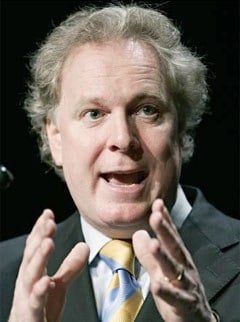 "It's just common sense," Charest said of his "build it and they will come" approach.
The announcement comes coupled with $124 million in new spending in Quebec City, including $50 million towards a new hockey arena. He also wants to upgrade the Le Massif ski centre and improve the Gaetan Boucher speedskating ring.
To a certain extent, Charest's approach makes a lot of sense. Building facilities ahead of time would help prevent last-minute rushes to try to finish them on time -- something that has proven all too typical of far too many recent Olympics.
But at the same time, this pledge makes for deeply fickle politics -- fickle politics that Canadians have seen before.
Many Canadians likely still remember Manitoba Progressive Conservative leader Hugh McFadyen's promises to bring NHL hockey back to Winnipeg. It didn't work for McFadyen, and it's unlikely that Charest's Olympic gambit will win him any more seats in the Quebec City area.
Thursday, November 13, 2008
Hopefully, Jean Charest Isn't a Poker Player
Charest gambles in Quebec election, and for what?
When Jean Charest left the federal Progressive Conservative party in 1998, it was widely accepted that he was doing so in order to advance the cause of national unity.
Public opinion polls of the time indicated that he was one of the few federalist Quebecers who could defeat then-Parti Quebecois Premier Lucien Bouchard in an election. Charest's change of venue from federal to provincial politics was not, it was assured, done to advance is own career.
Ten years later, it's Charest himself who has cast doubt on that claim with his call of a December election.
If current polls remain stable, this election should have two basic results:
First off, it would return Charest back to power with another minority government. Secondly, it would elevate Pauline Marois and her Parti Quebecois back into the role of the Official Opposition, at the expense of Mario Dumont and the ADQ.
The federalist ADQ.
After reaching the dizzying heights of Official Opposition status in the 2007 election, Dumont's ADQ has plummeted from the 31% of the popular vote they collected that night to 14% in recent polls.
Whether the ADQ's marked decline has more to do with an apparent re-disillusionment with conservative politics in Quebec or a decided improvement in the Parti Quebecois' leadership or disappointment with Dumont's performance as Opposition leader is a matter that will be open to a good deal of speculation in the coming weeks and months.
But there's simply no getting around the fact that Dumont, instead of taking full advantage of the electoral misfortune the Parti Quebecois suffered under Andre Boisclair, has instead called an election that will return them as the Official Opposition.
If Charest were well-situated to win a majority, that would be one thing. But current polls in Quebec have his party sitting at 41% public support. The Parti Quebecois trails with 31% -- a mere six-point difference in the polls.
Certainly, the party is tantalizingly close to a majority government, but could quite easily lose the election altogether. Marois and the PQ currently hold 39% support among Quebec's francophone voters. The Liberals trail them in this critical demographic with 34%.
Polling at the start of the election had the Liberals and PQ in a dead tie amongst francophones.
Not only did Charest not start the election in majority territory, but his party's support is slipping among the province's dominant demographic. All around, this election is not starting off well for Charest, and federalist Canadians, both inside and outside of Quebec, may be hoping in vain for a turn in his fortunes.
It leads one to question Charest's motivations in the first place. Either Charest's political judgment is highly suspect or this election was simply about trying to reclaim his dominant position on the federalist scene in Quebec.
In other words, Charest's jump to provincial politics may not have been about unity at all. Although a great many Canadians would like to think otherwise, Charest may have simply been out for himself.
Now, he's gambling with Canadian national unity. Hopefully, the hapless Charest Canadians are seeing right now is merely him wearing his poker face.
When Jean Charest left the federal Progressive Conservative party in 1998, it was widely accepted that he was doing so in order to advance the cause of national unity.
Public opinion polls of the time indicated that he was one of the few federalist Quebecers who could defeat then-Parti Quebecois Premier Lucien Bouchard in an election. Charest's change of venue from federal to provincial politics was not, it was assured, done to advance is own career.
Ten years later, it's Charest himself who has cast doubt on that claim with his call of a December election.
If current polls remain stable, this election should have two basic results:
First off, it would return Charest back to power with another minority government. Secondly, it would elevate Pauline Marois and her Parti Quebecois back into the role of the Official Opposition, at the expense of Mario Dumont and the ADQ.
The federalist ADQ.
After reaching the dizzying heights of Official Opposition status in the 2007 election, Dumont's ADQ has plummeted from the 31% of the popular vote they collected that night to 14% in recent polls.
Whether the ADQ's marked decline has more to do with an apparent re-disillusionment with conservative politics in Quebec or a decided improvement in the Parti Quebecois' leadership or disappointment with Dumont's performance as Opposition leader is a matter that will be open to a good deal of speculation in the coming weeks and months.
But there's simply no getting around the fact that Dumont, instead of taking full advantage of the electoral misfortune the Parti Quebecois suffered under Andre Boisclair, has instead called an election that will return them as the Official Opposition.
If Charest were well-situated to win a majority, that would be one thing. But current polls in Quebec have his party sitting at 41% public support. The Parti Quebecois trails with 31% -- a mere six-point difference in the polls.
Certainly, the party is tantalizingly close to a majority government, but could quite easily lose the election altogether. Marois and the PQ currently hold 39% support among Quebec's francophone voters. The Liberals trail them in this critical demographic with 34%.
Polling at the start of the election had the Liberals and PQ in a dead tie amongst francophones.
Not only did Charest not start the election in majority territory, but his party's support is slipping among the province's dominant demographic. All around, this election is not starting off well for Charest, and federalist Canadians, both inside and outside of Quebec, may be hoping in vain for a turn in his fortunes.
It leads one to question Charest's motivations in the first place. Either Charest's political judgment is highly suspect or this election was simply about trying to reclaim his dominant position on the federalist scene in Quebec.
In other words, Charest's jump to provincial politics may not have been about unity at all. Although a great many Canadians would like to think otherwise, Charest may have simply been out for himself.
Now, he's gambling with Canadian national unity. Hopefully, the hapless Charest Canadians are seeing right now is merely him wearing his poker face.
Tuesday, October 28, 2008
Jean Charest Playing With Fire?
Quebec Premier needs to consider perils of an election
The most recent rumblings out of La Belle Province are that Premier Jean Charest is going to have the National Assembly dissolved in favour of an 8 December election.
"It was quite clear from statements made by the ADQ and Parti Quebecois that they're not in a mood to co-operate with the government," Charest recently announced.
Of course, Charest insists that an election isn't necessarily his option of first choice.
"We think the only responsible thing for the this government -- and for this premier -- at this time is not to call an election, but to look for solutions to the crisis," he insisted.
Quebeckers -- and Canadians at large -- may be forgiven if that sounds familiar. It sounds remarkably similar to Stephen Harper's comments prior to dissolving Parliament and calling the recent election that won him a strengthened minority government.
With the provincial Liberal party approaching 38% public support in recent polls, Charest may have the opportunity to win a majority government.
Or, with the separatist Parti Quebecois holding a 21% lead over the current Official Opposition, the Mario Dumont-led Action Democratique du Quebec, Charest may find himself in a more uncomfortable position after the election -- in a minority government, facing a Pequiste Official Opposition.
Or, worse yet, an election that many view as unnecessary and launched only for partisan gain could swing enough support to the Parti Quebecois to help them regain power in the National Assembly -- and put a separation referendum back on the agenda.
As Chantale Hebert notes, "Before precipitating an election to achieve his dream of reducing Mario Dumont's ADQ to third place in the National Assembly, Jean Charest should ask himself whether a campaign that even some of his closest advisers think is unnecessary is worth the risk of finding himself, afterwards, on the opposition side of the legislature next to Mr Dumont.”
It's a very real possibility. A recent poll has shown that 70% of Quebeckers don't want an election -- and certainly not one this soon after a federal election that, in the eyes of many, still seems inconclusive.
Aside from this, time may seem right for Charest to call an election. His party caucus was recently bolstered by the defection of two ADQ members, Andre Riedl and Michel Auger to the Quebec Liberals.
It would also likely strengthen Charest's claims to definitive leadership of the federalist cause in Quebec, deflating the electoral fortunes of the ADQ -- even if it winds up weakening federalism overall by vaulting Parti Quebecois leader Pauline Marois into the office of the Official Opposition Leader.
If Jean Charest insists on playing with fire and calling an election, he may, like Stephen Harper, come away from it with a stronger mandate. But if he gets burned, he won't suffer alone.
Canada will surely get burned right alongside him -- or may simply get burned in his stead.
The most recent rumblings out of La Belle Province are that Premier Jean Charest is going to have the National Assembly dissolved in favour of an 8 December election.
"It was quite clear from statements made by the ADQ and Parti Quebecois that they're not in a mood to co-operate with the government," Charest recently announced.
Of course, Charest insists that an election isn't necessarily his option of first choice.
"We think the only responsible thing for the this government -- and for this premier -- at this time is not to call an election, but to look for solutions to the crisis," he insisted.
Quebeckers -- and Canadians at large -- may be forgiven if that sounds familiar. It sounds remarkably similar to Stephen Harper's comments prior to dissolving Parliament and calling the recent election that won him a strengthened minority government.
With the provincial Liberal party approaching 38% public support in recent polls, Charest may have the opportunity to win a majority government.
Or, with the separatist Parti Quebecois holding a 21% lead over the current Official Opposition, the Mario Dumont-led Action Democratique du Quebec, Charest may find himself in a more uncomfortable position after the election -- in a minority government, facing a Pequiste Official Opposition.
Or, worse yet, an election that many view as unnecessary and launched only for partisan gain could swing enough support to the Parti Quebecois to help them regain power in the National Assembly -- and put a separation referendum back on the agenda.
As Chantale Hebert notes, "Before precipitating an election to achieve his dream of reducing Mario Dumont's ADQ to third place in the National Assembly, Jean Charest should ask himself whether a campaign that even some of his closest advisers think is unnecessary is worth the risk of finding himself, afterwards, on the opposition side of the legislature next to Mr Dumont.”
It's a very real possibility. A recent poll has shown that 70% of Quebeckers don't want an election -- and certainly not one this soon after a federal election that, in the eyes of many, still seems inconclusive.
Aside from this, time may seem right for Charest to call an election. His party caucus was recently bolstered by the defection of two ADQ members, Andre Riedl and Michel Auger to the Quebec Liberals.
It would also likely strengthen Charest's claims to definitive leadership of the federalist cause in Quebec, deflating the electoral fortunes of the ADQ -- even if it winds up weakening federalism overall by vaulting Parti Quebecois leader Pauline Marois into the office of the Official Opposition Leader.
If Jean Charest insists on playing with fire and calling an election, he may, like Stephen Harper, come away from it with a stronger mandate. But if he gets burned, he won't suffer alone.
Canada will surely get burned right alongside him -- or may simply get burned in his stead.
Monday, August 25, 2008
Separatist Movement Continues to Splinter
Marois, Legault at odds over state of sovereigntist cause
In the year since the 2007 Quebec Provincial election, it has become increasingly evident that the Quebec sovereigntist movement is becoming increasingly splintered.
In the 2007 election, the Parti Quebecois was oustered from the seat of Official Opposition, replaced by Mario Dumont and the Action Democratique du Quebec. In the same year, the PQ lost their previous stronghold in Saguenay to a Conservative candidate.
Now, admidst piling electoral losses, the PQ are now facing dissention within their own ranks regarding the future of separatism.
 Veteran PQ MNA Francois Legault sewed some doubt about the prospects of a future referendum.
"You have to be realistic," Legault said, noting that Quebeckers are losing faith in politicians. "People are not ready to have collective projects proposed to them because they've lost confidence in politicians. If we want to be able to sell to people the importance of having one state, they have to have confidence in the state. Right now, I see a lot of cynicism."
For her own part, PQ leader Pauline Marois disagrees.
 "I don't feel that there is that cynicism," Marois argues. "On the contrary, I feel people are searching for new challenges, they yearn to mobilize around new projects that will lift them up."
For his own part, Legault imagines a two-part solution to the conundrum being faced by the separatist movement. "There's a loss of confidence in all the political class so, unfortunately, we have to perhaps go in two stages: re-build confidence, propose an alternative as government to deal with health problems and better deal with the economic slowdown," he says.
But the most recent polls demonstrate sagging support for the PQ's federal counterpart, the Bloc Quebecois.
 As such, Mario Dumont may be spot-on when he notes that "It sounds like Francois Legault listened to Quebecers better than his colleagues over the summer. When he turns up at his caucus saying Quebecers don't want a referendum and for us (politicians) to work on other things, I think Francois Legault has made an accurate assessment of what Quebeckers expect today."
With the separatist movement in Quebec clearly splintering, now may be the perfect time for federalist politicians at all levels of power -- Stephen Harper and Stephane Dion federally and Jean Charest and Dumont provincially -- to go on the offense against separatism in Quebec.
In the year since the 2007 Quebec Provincial election, it has become increasingly evident that the Quebec sovereigntist movement is becoming increasingly splintered.
In the 2007 election, the Parti Quebecois was oustered from the seat of Official Opposition, replaced by Mario Dumont and the Action Democratique du Quebec. In the same year, the PQ lost their previous stronghold in Saguenay to a Conservative candidate.
Now, admidst piling electoral losses, the PQ are now facing dissention within their own ranks regarding the future of separatism.
 Veteran PQ MNA Francois Legault sewed some doubt about the prospects of a future referendum.
"You have to be realistic," Legault said, noting that Quebeckers are losing faith in politicians. "People are not ready to have collective projects proposed to them because they've lost confidence in politicians. If we want to be able to sell to people the importance of having one state, they have to have confidence in the state. Right now, I see a lot of cynicism."
For her own part, PQ leader Pauline Marois disagrees.
 "I don't feel that there is that cynicism," Marois argues. "On the contrary, I feel people are searching for new challenges, they yearn to mobilize around new projects that will lift them up."
For his own part, Legault imagines a two-part solution to the conundrum being faced by the separatist movement. "There's a loss of confidence in all the political class so, unfortunately, we have to perhaps go in two stages: re-build confidence, propose an alternative as government to deal with health problems and better deal with the economic slowdown," he says.
But the most recent polls demonstrate sagging support for the PQ's federal counterpart, the Bloc Quebecois.
 As such, Mario Dumont may be spot-on when he notes that "It sounds like Francois Legault listened to Quebecers better than his colleagues over the summer. When he turns up at his caucus saying Quebecers don't want a referendum and for us (politicians) to work on other things, I think Francois Legault has made an accurate assessment of what Quebeckers expect today."
With the separatist movement in Quebec clearly splintering, now may be the perfect time for federalist politicians at all levels of power -- Stephen Harper and Stephane Dion federally and Jean Charest and Dumont provincially -- to go on the offense against separatism in Quebec.
Tuesday, August 21, 2007
Jean Charest the Leader Stephane Dion Isn't
Jean Charest goes against Liberal grain to defend Afghanistan mission
Following the death of private Simon Longtin, the first member of the Royal 22nd Regiment (The Van Doos) killed in Afghanistan, one could expect that Quebec’s Liberal premier, Jean Charest, would find it politically convenient to denounce Canada’s involvement in the war in Afghanistan.
With “entrenched” public opinion in Quebec (according to University of Montreal political scientist Pierre Martin) staunchly against the war in Afghanistan, one could almost understand if Charest found it necessary to denounce the war for political purposes (that is, understand it, but not respect it).
One could even understand if Charest gave in to such political pressures after being reduced from a majority to a minority government.
After all, it is what his federal counterparts have deigned to do (although they were reduced from a minority government to the official opposition).
But even if one could understand if Charest caved in, one must applaud him for showing the courage and conviction that he has opted for instead.
“We, as citizens of Quebec, have a duty to support the men and women who are there and who are doing this work in our name and are making the biggest sacrifice that can be asked of a human being,” Charest recently announced.
“We have to continue. We must not politicize [our] presence in Afghanistan. We must, on the contrary, especially at this time, remind all the soldiers that Quebecers are behind them in the mission they are conducting in our name in Afghanistan.”
Even Stephane Dion had supportive words in the wake of private Longtin’s death. “Today's loss serves as a reminder of the very real challenges the men and women of the Canadian Forces face every day as they undertake this mission, and I speak for all Canadians when I say that we greatly appreciate their sacrifices to help the people of Afghanistan and bring stability to the region."
Yet when compared to Dion’s overall stance on Afghanistan, this statement can’t help but come across as disingenuous. In fact, Dion wasn’t even yet Liberal leader when he announced his opposition to the mission, insisting that the mission was “ill-conceived and misguided”.
He has also indulged himself in polarizing this actually non-partisan war. “It is really sad what happened because Mr. Harper last spring played the macho the one who will be able to carry us out of Afghanistan. He copied the speeches of Mr. Bush, I think President Bush should request copyright from these speeches,'' Dion said in 2006.
Dion even found it in himself to criticize Stephen Harper for doing what the preceding Liberal governments wouldn’t, in giving parliament a say in extending the mission. “This decision belongs to the executive branch of government. Government must be accountable for it.”
Dion has more recently insisted that the consensus necessary to continue the mission (at least in its current form) will never exist. "This consensus will never exist," Dion insisted. "The prime minister should say to NATO right away that the combat mission will end in February 2009."
When one considers the fact that it was the Liberals who committed Canadian forces to Kandahar to begin with, it all comes across as very insincere, and tantamount to cannibalizing his own party’s foreign affairs record.
Apparently, such partisan politics seem to be below Charest, who has been steadfast in his support of the mission, and seems willing to pay the price politically, if necessary.
Stephane Dion, however, apparently knows a good divisive wedge issue when he sees it, and hasn’t been afraid to exploit it.
Dion’s stance on Afghanistan has given the Conservative party all the ammunition they’ll ever need to question whether or not Dion is a leader. Jean Charest, on the other hand, has proven himself to be precisely the kind of principled leader the Liberals could really use.
Stephane Dion is not a leader. Fortunately for Quebec Liberals, Jean Charest is.
Following the death of private Simon Longtin, the first member of the Royal 22nd Regiment (The Van Doos) killed in Afghanistan, one could expect that Quebec’s Liberal premier, Jean Charest, would find it politically convenient to denounce Canada’s involvement in the war in Afghanistan.
With “entrenched” public opinion in Quebec (according to University of Montreal political scientist Pierre Martin) staunchly against the war in Afghanistan, one could almost understand if Charest found it necessary to denounce the war for political purposes (that is, understand it, but not respect it).
One could even understand if Charest gave in to such political pressures after being reduced from a majority to a minority government.
After all, it is what his federal counterparts have deigned to do (although they were reduced from a minority government to the official opposition).
But even if one could understand if Charest caved in, one must applaud him for showing the courage and conviction that he has opted for instead.
“We, as citizens of Quebec, have a duty to support the men and women who are there and who are doing this work in our name and are making the biggest sacrifice that can be asked of a human being,” Charest recently announced.
“We have to continue. We must not politicize [our] presence in Afghanistan. We must, on the contrary, especially at this time, remind all the soldiers that Quebecers are behind them in the mission they are conducting in our name in Afghanistan.”
Even Stephane Dion had supportive words in the wake of private Longtin’s death. “Today's loss serves as a reminder of the very real challenges the men and women of the Canadian Forces face every day as they undertake this mission, and I speak for all Canadians when I say that we greatly appreciate their sacrifices to help the people of Afghanistan and bring stability to the region."
Yet when compared to Dion’s overall stance on Afghanistan, this statement can’t help but come across as disingenuous. In fact, Dion wasn’t even yet Liberal leader when he announced his opposition to the mission, insisting that the mission was “ill-conceived and misguided”.
He has also indulged himself in polarizing this actually non-partisan war. “It is really sad what happened because Mr. Harper last spring played the macho the one who will be able to carry us out of Afghanistan. He copied the speeches of Mr. Bush, I think President Bush should request copyright from these speeches,'' Dion said in 2006.
Dion even found it in himself to criticize Stephen Harper for doing what the preceding Liberal governments wouldn’t, in giving parliament a say in extending the mission. “This decision belongs to the executive branch of government. Government must be accountable for it.”
Dion has more recently insisted that the consensus necessary to continue the mission (at least in its current form) will never exist. "This consensus will never exist," Dion insisted. "The prime minister should say to NATO right away that the combat mission will end in February 2009."
When one considers the fact that it was the Liberals who committed Canadian forces to Kandahar to begin with, it all comes across as very insincere, and tantamount to cannibalizing his own party’s foreign affairs record.
Apparently, such partisan politics seem to be below Charest, who has been steadfast in his support of the mission, and seems willing to pay the price politically, if necessary.
Stephane Dion, however, apparently knows a good divisive wedge issue when he sees it, and hasn’t been afraid to exploit it.
Dion’s stance on Afghanistan has given the Conservative party all the ammunition they’ll ever need to question whether or not Dion is a leader. Jean Charest, on the other hand, has proven himself to be precisely the kind of principled leader the Liberals could really use.
Stephane Dion is not a leader. Fortunately for Quebec Liberals, Jean Charest is.
Monday, October 23, 2006
Believe it or Not, Duceppe Makes Good
Um... Wow...
Personally, I never thought I would say this.
BUT.
Good for Gilles Duceppe.
Holy shit. I can’t believe I just said that. Let’s take another look at that.
…
Good for Gilles Duceppe.
…
Holy shit! I really did just say that! Now, let’s take a closer look at why.
As most people have probably already heard, Gilles Duceppe has threatened to help topple the sitting Conservative minority government. With polling numbers suggesting the Liberal party could be in a position to potentially mount a spring 2007 election, the leader of the Bloc Quebecois has added a little fuel to the fire under Stephen Harper’s feet.
“Stephen Harper must now deliver the goods for Quebec, especially concerning the fiscal imbalance,” Duceppe announced. “If Stephen Harper breaks this promise, we will make his government fall.”
According to Duceppe, the government’s survival is contingent on an extra $3,9 billion for Quebec in the next federal budget.
To make matters worse, the Conservative party’s polling numbers in Quebec seem to have tanked. A recent poll has the Conservative party holding 17 points, trailing the Liberal party at 20, and the Bloc Quebecois at 47. The NDP and Green Party trail with eight points apiece.
Now to some, Duceppe might seem to simply be playing predatory politics at its worst.
But frankly, this is exactly what Duceppe’s constituents – as well as the members of his party – elected him to do. Stephen Harper, as most may recall, made a promise during the 2006 election to rectify the fiscal imbalance – the very fiscal imbalance the Liberal party refused to recognize.
Seven months and one federal budget later, Harper’s Conservatives have yet to make good.
Of course, Harper would likely be better off resolving the matter with Quebec Premier Jean Charest, rather than kowtowing to the separatist BQ.
But at the same time, Duceppe may want to be careful what he wishes for – keeping this key promise to Quebecers may be just the solution Stephen Harper’s support in Quebec desperately needs.
Personally, I never thought I would say this.
BUT.
Good for Gilles Duceppe.
Holy shit. I can’t believe I just said that. Let’s take another look at that.
…
Good for Gilles Duceppe.
…
Holy shit! I really did just say that! Now, let’s take a closer look at why.
As most people have probably already heard, Gilles Duceppe has threatened to help topple the sitting Conservative minority government. With polling numbers suggesting the Liberal party could be in a position to potentially mount a spring 2007 election, the leader of the Bloc Quebecois has added a little fuel to the fire under Stephen Harper’s feet.
“Stephen Harper must now deliver the goods for Quebec, especially concerning the fiscal imbalance,” Duceppe announced. “If Stephen Harper breaks this promise, we will make his government fall.”
According to Duceppe, the government’s survival is contingent on an extra $3,9 billion for Quebec in the next federal budget.
To make matters worse, the Conservative party’s polling numbers in Quebec seem to have tanked. A recent poll has the Conservative party holding 17 points, trailing the Liberal party at 20, and the Bloc Quebecois at 47. The NDP and Green Party trail with eight points apiece.
Now to some, Duceppe might seem to simply be playing predatory politics at its worst.
But frankly, this is exactly what Duceppe’s constituents – as well as the members of his party – elected him to do. Stephen Harper, as most may recall, made a promise during the 2006 election to rectify the fiscal imbalance – the very fiscal imbalance the Liberal party refused to recognize.
Seven months and one federal budget later, Harper’s Conservatives have yet to make good.
Of course, Harper would likely be better off resolving the matter with Quebec Premier Jean Charest, rather than kowtowing to the separatist BQ.
But at the same time, Duceppe may want to be careful what he wishes for – keeping this key promise to Quebecers may be just the solution Stephen Harper’s support in Quebec desperately needs.
Subscribe to:
Posts (Atom)