
Tuesday, May 12, 2009
The Un-Funniness of Non-Comedy
There's something comical about a reporter from FOX News, of all networks, complaining that someone on CNBC would allow political invective to go unchallenged.
But there's also something extremely comical about Janeane Garofalo. Recently she was confronted by Fox News' Griff Jenkins over her recent comments in which she insisted that all of those protesting Barack Obama's stimulus package with tea parties were motivated by racism alone.
When confronted by Jenkins, Garofalo put the rather dubious standard of evidence she used to reach that conclusion on display -- demanding to know where these individuals had been during the George W Bush Presidency when he was running the United States deeper into deficit and deeper into debt.
Although, one must point out, just as Sean Hannity does, that Bush was doing so at a quarter of the rate that Obama is now doing.
In actuality, this is actually stronger evidence in favour of suggesting that the Tea Parties were politically motivated out of partisan fervour -- a possibility that Garofalo herself previously rejected.
No. Apparently Garofalo's defining piece of evidence is a "What'chu talkin' about Willis?" sign held up by one of the protesters.
Yet Garofalo clearly overlooked the fact that "What'chu talkin' about Willis" is less a racial slur and more of a pop culture reference. For the uninitiated, Diff'rent Strokes was a show about black children being raised by a white family. For those familiar with Barack Obama's life story, the parallels are evident. Obama was raised by his mother -- a white woman -- who was aided by his grandparents -- who, also, are white.
It's generally uncouth to go after an elected official for the circumstances of their upbringing. But in terms of being evidentiary of racism, this sign is very thin gruel.
Garofalo actually backpedals when confronted, falling back to talking about the "racist element" at the Tea Party protests -- very different from labelling them all as racists, as she originally did -- only to backpedal on her own backpedalling.
One has to consider that these are actually the less inflammatory of her original comments -- her insistence that American conservatives are all mentally ill as a precondition of their political alignment is actually much more alarming.
Moreoever, they're clearly the kind of arguments formulated in an echo chamber, never intended to be defended. Garofalo's reaction to being challenged bear that particular observation out.
The utterly hilarious aspect of the entire affair is that, as a comedian, Janeane Garofalo has the ultimate back door out of the base stupidity of her original comments -- she could have just insisted she was joking.
But even if Garofalo were only joking, it still wasn't funny.


Monday, May 11, 2009
Ignatieff Making a Good Habit Out of Wise Decisions
Liberal leader recognizes (most of) problems with the coalition government
Regardless of what a Craig Oliver may have to say about it, comments made by Liberal leader Michael Ignatieff on Sunday weren't merely his closing argument at a divorce proceeding -- it was a eulogy.
Although Oliver argued that the coalition is very much alive and well under the guise of threatening to defeat the Tories if they decline to amp up Employment Insurance, there has been very little doubt that the coalition, in terms of a governing agreement, is dead and now buried.
Speaking in Montreal -- the source of newfound Liberal strength -- Ignatieff admitted that the coalition was divisive and too unstable to merit trying at a time of economic recession.
 "I'm in politics to unify people, not to divide them," Ignatieff explained.
"There was also a question concerning the legitimacy of the coalition that troubled me," Ignatieff continued, noting that the Liberals -- the leader of whom would become Prime Minister -- had just suffered their worst defeat in the 2008 federal election. It would be impossible to argue that the Canadian people had shown confidence in the Liberal party.
Even if the Liberal/NDP coalition commanded the confidence of the house, the outrage provoked would have led to a much more dangerous political crisis -- the loss of citizens' faith in the political system.
Ignatieff didn't seem to understand this particular danger when he insisted that the coalition wasn't undemocratic -- it's hard to have democracy when citizens utterly and completely lose faith in that system.
He did seem to understand the implicit instability of the coalition.
"I felt it was very difficult to guarantee the necessary political stability during a time of crisis with three partners in a formal coalition," he added. "That was my first doubt. I couldn't guarantee the long-term stability of the coalition under the circumstances."
It's evident that a repeat of the Liberal/NDP/Bloc coalition simply isn't in the cards -- not even in terms of defeating the government. With the Liberals leading polls partially at the expense of the NDP and Bloc, analysts of varying stripes have noted that it's unlikely that either of those parties would help the Liberals defeat the Conservative government -- not when an election would very likely bring them up short of their current seat totals.
Having instructing his party to prepare an election platform, it's very evident that Ignatieff is eager to fight an election.
But even in the absence of an election, preparing an election platform is still a very wise decision. It demonstrates to Canadians that the Liberals are prepared to govern and are preparing a program on which they would govern if elected -- notwithstanding the breaking of election promises that is common for all political parties.
Michael Ignatieff is making a habit of making wise decisions. Between doing away with the inevitably disastrous Liberal/NDP/Bloc coalition and preparing his party to seek government -- making them a much more credible alternative government -- Ignatieff is making a strong enough case for Prime Minister to make Canadians forget Stephane Dion and consider the Liberal party once again.
Although Ignatieff remains vulnerable on numerous fronts -- his time spent out-of-country, his initial support of the coalition government, the undemocratic way in which he became Liberal leader, and the fact that the ill-fated carbon tax was actually his idea -- Michael Ignatieff has proven to be the renewed strength of the Liberal party.
If he continues to make wise decisions it will be very difficult for Stephen Harper and the Conservatives to keep him out of 24 Sussex Drive.
Other bloggers writing about this topic:
Montreal Simon - "Michael Ignatieff and the Moral Quagmire"
Alberta Arvark - "Ignatieff, Flaky on the Coalition
Blogging a Dead Horse - "Ignatieff Knows Less Than a 9th Grader"
Regardless of what a Craig Oliver may have to say about it, comments made by Liberal leader Michael Ignatieff on Sunday weren't merely his closing argument at a divorce proceeding -- it was a eulogy.
Although Oliver argued that the coalition is very much alive and well under the guise of threatening to defeat the Tories if they decline to amp up Employment Insurance, there has been very little doubt that the coalition, in terms of a governing agreement, is dead and now buried.
Speaking in Montreal -- the source of newfound Liberal strength -- Ignatieff admitted that the coalition was divisive and too unstable to merit trying at a time of economic recession.
"I'm in politics to unify people, not to divide them," Ignatieff explained."There was also a question concerning the legitimacy of the coalition that troubled me," Ignatieff continued, noting that the Liberals -- the leader of whom would become Prime Minister -- had just suffered their worst defeat in the 2008 federal election. It would be impossible to argue that the Canadian people had shown confidence in the Liberal party.
Even if the Liberal/NDP coalition commanded the confidence of the house, the outrage provoked would have led to a much more dangerous political crisis -- the loss of citizens' faith in the political system.
Ignatieff didn't seem to understand this particular danger when he insisted that the coalition wasn't undemocratic -- it's hard to have democracy when citizens utterly and completely lose faith in that system.
He did seem to understand the implicit instability of the coalition.
"I felt it was very difficult to guarantee the necessary political stability during a time of crisis with three partners in a formal coalition," he added. "That was my first doubt. I couldn't guarantee the long-term stability of the coalition under the circumstances."
It's evident that a repeat of the Liberal/NDP/Bloc coalition simply isn't in the cards -- not even in terms of defeating the government. With the Liberals leading polls partially at the expense of the NDP and Bloc, analysts of varying stripes have noted that it's unlikely that either of those parties would help the Liberals defeat the Conservative government -- not when an election would very likely bring them up short of their current seat totals.
Having instructing his party to prepare an election platform, it's very evident that Ignatieff is eager to fight an election.
But even in the absence of an election, preparing an election platform is still a very wise decision. It demonstrates to Canadians that the Liberals are prepared to govern and are preparing a program on which they would govern if elected -- notwithstanding the breaking of election promises that is common for all political parties.
Michael Ignatieff is making a habit of making wise decisions. Between doing away with the inevitably disastrous Liberal/NDP/Bloc coalition and preparing his party to seek government -- making them a much more credible alternative government -- Ignatieff is making a strong enough case for Prime Minister to make Canadians forget Stephane Dion and consider the Liberal party once again.
Although Ignatieff remains vulnerable on numerous fronts -- his time spent out-of-country, his initial support of the coalition government, the undemocratic way in which he became Liberal leader, and the fact that the ill-fated carbon tax was actually his idea -- Michael Ignatieff has proven to be the renewed strength of the Liberal party.
If he continues to make wise decisions it will be very difficult for Stephen Harper and the Conservatives to keep him out of 24 Sussex Drive.
Other bloggers writing about this topic:
Montreal Simon - "Michael Ignatieff and the Moral Quagmire"
Alberta Arvark - "Ignatieff, Flaky on the Coalition
Blogging a Dead Horse - "Ignatieff Knows Less Than a 9th Grader"
The Battle Over the Defining Face of the New GOP
Bill Bennet favours McCain over Palin
Speaking on CNN recently, senior Republican Bill Bennet frames with unequivocal clarity the choice that lays before the National Committee for a New America, the organization providing the thrust behind the efforts to re-brand the GOP.
That choice is very simple: rebuild the party around a Palin-esque image, or rebuild the party around a McCain-esque image. No matter what Rush Limbaugh may have to say about it, not rebuilding the party at all is not an option.
With equally unequivocal clarity, Bennet also has his own preference in terms of the identity the party should pursue -- a youth-oriented moderate image, as best exemplified by Meghan McCain.
However, Bennet contends that the media isn't doing the Republican party any favours by continuing to focus on figures like Palin.
“One of the things the media could do – some of the media – is to move the debate off Sarah Palin and Rush Limbaugh,” Bennett said. “This is probably not the future of the Republican Party."
"It could talk about a Paul Ryan or a Mike Pence," Bennet continued. "It could talk about a Bobby Jindal. It could talk even about a John Kyl or a David Petraeus. You know, there’s a lot of talent in this party."
"I ran into Meghan McCain last night," Bennet added. "And I have to tell you, Bill, she’s refreshing, she’s honest and she’s a face that could really help them galvanize young people and independents."
Despite what the most extreme conservative ideologues seem to insist, the Republican party very much does need to be able to reach out to independents and to fiscally conservative Democrats.
Sarah Palin herself seems to understand the need to rebuild the party for the 21st century -- something that should have been taking place in 1999 as opposed to 2009 -- as suggested by her recent membership in the NCNA. However, whether Palin intends to contribute to an effort to moderate the Republican party in the interest of being politically competitive or is merely looking for another political venue in which to hang her star is another matter altogether.
Saturday, May 09, 2009
Harbinger of Democracy?
In Metal: A Headbanger's Journey, Canadian anthropoligist Sam Dunn traces the history of heavy metal music and compares its historical cultural overtones to the outrage expressed against it by those who consider themselves a cultural elite.
In Global Metal Dunn takes his studies to the rest of the world and uncovers a startling and intriguing motif: heavy metal as a force for democracy.
In Brazil, Carlos Lopes of Dorsal Atlantica provides an intriguing thesis -- of heavy metal as a sound of Brazilian democracy. He relates the tale of how Brazil emerged from under the dictatorship of Marshal Emilio Garrastazu Médici and embraced heavy metal as a symbol that Brazil had finally become a free country. He and others treat the staging of a massive heavy metal festival in Rio Di Janeiro featuring Iron Maiden helped symbolize the arrival of freedom and democracy there.
Like democracy, heavy metal can be a potent vehicle for mobilizing nationalisms. In Brazil, Sepultura has become "the flag of Brazilian heavy metal". They accomplished this partially by embracing tradition Brazilian culture within their music. On Roots, Sepultura incorporated tribal Brazilian drumming into their music, coagulating specifically Brazilian cultural passions within their fan base.
Just as politicians can endear themselves to voters by embracing tenets of traditionalized culture -- or, in the case of multicultural Canada, cultures -- musicians can endear themselves to their fans by embracing their traditional culture.
Few things are as democratic as an icon. By nature of the mass embrace of the populace, individuals can become larger than life, and begin to represent more than even their music may symbolize.
In Jamaica, Bob Marley is precisely such an icon. Marley was already beloved by the Jamaican populace before 1976 due to his strict adherence to Rastafarian culture. However, Marley ascended to icon status when he appeared at the Smile Jamaica concert even after having been shot by extremists who opposed an end to the violence between factions from Edward Seaga's Jamaican Labour Party and Michael Manley's People's National Party.
By agreeing to play the concert, factions from the JLP believed Marley was siding with the PNP in a forthcoming election Manley and the PNP would win. (However, in 1980 Seaga and the JLP would win government.)
Two days before the concert PNP gunmen attacked Marley at his home. Legend has it that Marley was shot in the chest and survived, giving rise to his iconic status. In actuality, a bullet grazed his chest, coming within inches of his heart. While Marley never in his life formally declared support for the PNP or any other political party -- he rejected politics as not part of Rastafarian culture -- many credit the Smile Jamaica concert with helping the PNP win the 1976 election.
Marley's true purpose in playing the Smile Jamaica concert was in uniting the Jamaican people. Marley succeeded in bringing Jamaica together, but the concert did not overhwelmingly unite the country under one political flag. The margin of victory for the PNP in the 1976 election was 13% -- far from a political single-mindedness.
The character of Marley's music certainly helps account for its power as a force of unity.
Sepultura has rarely addressed politics as part of its music, but one particular song - "Refuse/Resist" speaks distinctly about Brazil under the military regime, and cements it as a voice for democracy in Brazil.
In China, meanwhile, heavy metal represents an intriguing break toward broader democratization. In the film, the proprietors of a shop in China that sells heavy metal music and T-shirts explains that traditionally, Chinese people have a tendency to listen to what they are told. But heavy metal provides those who feel so inclined with an opportunity to actually speak.
Considering the central importance of freedom of speech to democracy, the democratic significance of heavy metal in China cannot be overlooked.
In Indonesia, a country formally governed by an Islamic theocracy, heavy metal serves to highlight many of the injustices of their society.
Former Sepultura lead singer Max Cavalera (now of Soulfly) remarks about the brutality of the Indonesian regime, and about how seeing it first-hand surprised even him -- someone who had lived under a military dictatorship.
At a Metallica concert in Jakarta, a riot broke out when police confronted heavy metal listeners, whom they denounced as "communists". The government would respond to the riot by banning all heavy metal concerts in Indonesia, judging them to be far too much like political rallies for their liking.
The denial of freedom of assembly -- even for something as mundane as a rock concert -- seems to underscore precisely how threatening the theocracy finds the music. Indonesian heavy metal bands sing about political and social issues.
Not all bands are explicitly critical of the theocracy.
One band, Tengkorak, criticizes capitalism and Indonesia's treatment by the rest of the world. They even play a song entitled "Destroy Zionism", in which they insist that the goal of the Jewish people is to destroy Islam, and so Zionism must be destroyed. Many Indonesian metalheads interviewed seem reluctant to embrace Tengkorak's message.
While this may seem to be at odds with the argued democratizing motifs of heavy metal, one has to also remember that the right to agree with the government -- even undemocratic governments -- is actually a democratic right.
In Israel, some heavy metal bands fuse traditional Jewish instruments with Muslim vocal stylings. According to one metal musician interviewed, this is intended to represent Israel -- and Jarusalem -- in terms of cultural harmony, even as the ongoing conflict between Israelis and Palestinians continues to rage around them.
Many Israeli metal musicians play their music as a refusal to conform to, and participate in, this ongoing conflict. They demand a peaceful resolution to the conflict -- the peaceful resolution of conflicts (wherever possible) is the ultimate democratic demand.
They can also challenge perceptions of what is and is not acceptable speech. Salem, an Israeli metal band, drew criticisms from a member of the Knesset because they played a song about the Holocaust, which that individual argued is "sacred", and so cannot be played about in a heavy metal song. Fortunately, a Knesset colleague disagreed, and appreciated heavy metal as a vehicle for teaching about the Holocaust.
The same band nearly received a mail bomb from Vark Vikernes -- the famed murderer and church burner in Norway -- took issue with Salem for playing a song about the Holocaust. Sadly, heavy metal can become a vehicle for undemocratic political violence as well as democracy. As Vikernes demonstrates, heavy metal can become a vehicle for bigotry as well.
Iran is another country where the democratic motifs of heavy metal has found itself at odds with a theocracy. The Iranian regime will not allow heavy metal CDs or T-shirts to be sold in the country. Even merely having long hair can attract the attention of police. In many cases, fans have to travel to places like Dubai and Turkey in order to listen to the music they enjoy.
As one listener notes, the Iranian regime considers heavy metal to be anti-moralistic -- the same charge levelled against the music by Tipper Gore and the PMRC.
Heavy metal isn't the only genre of music oppressed in Iran. All forms of western music are outlawed in Iran. Dubai, marketing itself as one of the world's top tourist destinations, has embraced heavy metal as a tourist industry. Through concerts in places like Dubai -- one place to which many Iranians are allowed to travel freely -- heavy metal is slowly seeping into Iran.
When considering that downloading is the only method of receiving heavy metal music in places like Iran, Metallica drummer Lars Ulrich actually becomes quite supportive. Downloading heavy metal in a country where it's forbidden is certainly an act of political resistance. Iranian fans find in metal an opportunity to speak out in a country that offers very few opportunities for them to do so.
One has to wonder how Iranian President Mahmoud Ahmadinejad would react to an Iranian metalhead listening to Salem.
Heavy music has brought together millions of people -- not just within countries, but internationally as well. Iron Maiden's Bruce Dickenson notes that he shouldn't be surprised at this, but admits to often being astonished at the ability of his music to unite diverse groups of people.
In an increasingly globalized work, using tools such as the internet and export music catalogues, heavy metal can disseminate its democratizing message across the world and across varying cultures.
Heavy metal may only be one sound of democracy, but it is rapidly becoming part of a global rumble toward this noble ideal. This, in defiance of the music's reputation of being "unsophisticated" and "stupid".
Thursday, May 07, 2009
Canadian Feistiness is Nothing New
We just might be finding a new venue for it
A new poll conducted by the Association of Canadian Studies suggests that Canadians may be shifting their attitudes in regard to international issues.
According to the poll, a majority of Canadians are willing to risk conflict with other countries in the pursuit of Canada's goals on the international stage. By contrast, in 2003 a bare minority -- 49% as compared to 67% -- had agreed that Canada should pursue its goals even at risk of international friction.
The study notes that Canadians have "grown feistier when it comes to defending their interests on the international front."
While this may be true, the feistiness itself is actually nothing new.
Canadians have always been particularly feisty about the things they care about. While Canadians have historically tended to care little about the things that go on in the international community -- although the wars Canada have fought provide momentary exceptions to this general rule -- Canadians have always cared about hockey.
Incidents such as the famed Punch-Out in Piestany -- a bench-clearing brawl between Team Canada and the Soviet Union at the 1987 World Junior Hockey Championships -- demonstrate just how seriously Canadians have always taken hockey. When Team Canada decided they didn't like the way the Soviets were playing in a poorly-refereed game -- a surplus of stickwork by the Russian team continually ratcheted up tensions in the contest -- a line brawl on the ice quickly escalated into an all-out donnybrook between both teams.
The brawl wound up with both teams being disqualified from that year's tournament. But that same feistiness had previously emerged on numerous occasions, rarely more famously than in the 1972 Summit Series.
Canadian diplomatic officials in Moscow helped negotiate the Summit Series as part of their "hockey diplomacy" program. This unofficial diplomatic policy had, until that point, mostly entailed teams of Canadian diplomats -- sometimes with their rosters rounded out by American and European diplomats -- playing against their Russian counterparts. This team would eventually become known (although not well known) as the Moscow Maple Leafs.
These officials' plans to use the Summit Series as a goodwill-building exercise between Canada and the Soviet Union didn't go as well as they had hoped. On-ice tensions often spilled off the ice, including one incident in which Alan Eagleson was nearly arrested by a Soviet guard who didn't know who he was.
Phil Esposito would pose a particular problem for Canadian diplomats. Esposito, perhaps more than any other player, took the politically ideological undertones of the series to heart. His fierce on-ice play was matched by his confrontational attitude toward Soviet officials -- at one point even blowing Soviet Premier Aleksei Kosygin a kiss.
The behaviour of Canadian hockey fans particularly vexed diplomats. The Canadian cheering section made it difficult for Soviet officials to make use of the series for propaganda purposes. Soviet officials even attempted to spread Canadian fans out across the arena, believing isolating them from one another would temper their enthusiasm and boisterousness.
Instead, the invidual Canadians only cheered louder. In game seven, when Soviet officiating seemed to threaten the series, Canadian fans filled the arena with a chant of "let's go home".
One Canadian fan even managed to be arrested by Soviet guards and wound up having his foot tattooed with the markings usually used to identify Soviet prisoners. Quick work by Canadian diplomats secured his release, and he wound up expelled from the country will little more than his new tattoo.
This "hockey diplomacy" program was certainly less than a rousing success with Soviet officials. But in many other Soviet-bloc countries the matter was very different.
Canadian teams were immensely popular at tournaments played in other countries behind the Iron Curtain. Canada was viewed as the one country that could defeat the Soviet team, and as such enjoyed tremendous goodwill in countries where Soviet oppression had been especially harsh -- countries like Czechoslovakia and Hungary.
When Team Canada locked horns with the Soviets in Piestany, the Czech fans whistled raucously in support of the Canadian squad.
Canadian feistiness toward hockey has certainly has its dark side in the past as well. It's hard to forget what Bobby Clarke was willing to do to Valeri Kharlamov in order to win the '72 Summit Series.
Canadian disinterest in foreign affairs certainly has yet to completely dissipate -- Romeo Dallaire noted this much during the 2008 election, but there have been signs that more and more Canadians are becoming interested in foreign affairs, as more and more Canadians support intervention in the Sudan, or demand intervention in Sri Lanka.
Once Canadians become interested in foreign policy it's likely only natural that they would become feisty about it. Doing anything less than whole-heartedly simply isn't in the Canadian character.
Al Gore and the Climate of Extremes
Featured on YouTube via TED Talks, former US Vice President Al Gore speaks about some alarming new signs of global warming.
In the video Gore talks about the alleged spread of oxygen-depleted "dead zones" in the oceans, and about methane emissions from lakes, including a video where some scientists set these methane emissions on fire. He then finishes up by debuting some campaign ads directed against clean coal technology.
Yet as it turns out, Al Gore is not at all a reliable source of information about global warming -- or as alarmists re-term it when challenged about the lack of a demonstrable warming trend, climate change.
Speaking via ForaTV, UN Inter-government Panel on Climate Change member Patrick Michaels demonstrates how quickly Gore's sensationalist rhetoric can be exposed for what it truly is.
It quickly undermines any faith in nearly anything that comes out of the former Vice President's mouth, and reminds viewers that while individuals like Gore want to insist climate change will be the end of the world, and that we should all be extremely terrified of it, there's more afoot than these alarmists would have us realize.
It's difficult to overlook the extent to which climate change alarmism is being treated as a pretext for various political programs.
In Canada, Liberal MP Ken Boschoff let a wealth-transferring agenda slip when talking about Stephane Dion (and Michael Ignatieff's) carbon tax.
George Monbiot has been amongst the most extreme of the alarmists, writing a book that insists that climate change will reach a "point of no return" if not stopped as immediately as possible. Monbiot, who is not a climatologist, had also previously spoken on CBC's Ideas radio program about the need for a global Parliament -- something that legally-binding climate treaties like the Kyoto protocol could arguably (but not necessarily) lead to.
On the other side of the coin there are those who deny climate change outright. As Gore rightly notes, many of them profit from oil and coal -- just as those who profit from oil and coal will rightly note that Gore has a political agenda that is served by climate change alarmism.
It would be foolish to deny that climate change is a problem. At the very least, it would be foolish to deny that there aren't countless other good reasons to reduce carbon emissions and other industrial emissions -- air quality being paramount among them.
But to allow Al Gore and his extremist cohorts to terrify people ignores both the tendency of these people to promote alarmism at the expense of scientific fact, and the political agendas they seek to promote.
Patrick Michaels is absolutely right. People need to stop feeding the climate of extremes.
Wednesday, May 06, 2009
Someone Get Rachel Maddow a Sandwich
Rachel Maddow has shown a bizarre fascination with the meals of politicians recently -- from mocking the National Committee for a New America for holding a town hall meeting at a pizza parlour to practically swooning over Barack Obama and Joe Biden treating a bunch of White House press pool reporters to lunch at a burger joint (an obvious photo op if there ever was one).
One would wonder what to make of this fascination if the answer weren't plainly obvious -- she's just very, very hungry.
Someone get that poor woman a cookie or something.
Pragmatism Is No Excuse
Democracy in short order in Conservative party
The Conservative party has surrendered any democratic high ground it may have had today, as all of its sitting MPs have been automatically renominated for Canada's next federal election -- whenever that may be.
The party had sent mail-in ballots to all of its members to ask them whether or not they wished to challenge the nomination of their local MP. A two-thirds "yes" vote was necessary in order to challenge.
Conservative party President Don Plett and sometimes-Tory strategist Tom Flanagan have both defended this move based on pragmatism.
 "In a minority Parliament situation, our MPs were forever looking over their [shoulder] to try to figure out whether they were going to be challenged in a nomination and couldn't properly do their job they were elected to do," Plett explained.
"Politics isn't like mathematics," Flanagan mused about the decision, which is a departure from traditional Conservative party policy on nominations. "[it's] not a realm of eternal truths. When circumstances change radically you may have to change some of your organizing principles."
Yet when one of those organizing principles is a fundamental principle of your party -- in this case the populism championed by Reform party and Canadian Alliance founder Preston Manning -- compromising on it is a very bad idea.
In this case, the move has left the Conservative party facing a very severe democratic deficit within its own ranks.
NDP MP Judy Wasylycia-Leis hits the nail on the head when he suggested that, for any party with the ambition to lead democratically, democracy must begin within the party itself.
"Every nomination race is a challenge to the sitting MP to prove that they've still got the support of their riding's members," she said.
Which is a very important point. Even if the Tories wanted to reserve nomination contests for when they're truly necessary, a simple majority vote would be a much more democratic margin than a two-thirds margin.
Even Canadian Christian Coaliton President Charles McVety has his share of concerns about the move. "The democratic deficit in this country is already large enough," he said. "We don't need the governing party to be sinking deeper into ... a culture of entitlement."
Pragmatim is no excuse for a political party undermining its own fundamental principles -- particularly when one of thoe principles is supposed to be grassroots democracy.
Other bloggers writing about this topic:
Richard Evans - "Fiddlefudging by the Conservative Party"
Views from the Lake, eh? - "Where 'No' Means 'Yes'"
The Conservative party has surrendered any democratic high ground it may have had today, as all of its sitting MPs have been automatically renominated for Canada's next federal election -- whenever that may be.
The party had sent mail-in ballots to all of its members to ask them whether or not they wished to challenge the nomination of their local MP. A two-thirds "yes" vote was necessary in order to challenge.
Conservative party President Don Plett and sometimes-Tory strategist Tom Flanagan have both defended this move based on pragmatism.
"In a minority Parliament situation, our MPs were forever looking over their [shoulder] to try to figure out whether they were going to be challenged in a nomination and couldn't properly do their job they were elected to do," Plett explained."Politics isn't like mathematics," Flanagan mused about the decision, which is a departure from traditional Conservative party policy on nominations. "[it's] not a realm of eternal truths. When circumstances change radically you may have to change some of your organizing principles."
Yet when one of those organizing principles is a fundamental principle of your party -- in this case the populism championed by Reform party and Canadian Alliance founder Preston Manning -- compromising on it is a very bad idea.
In this case, the move has left the Conservative party facing a very severe democratic deficit within its own ranks.
NDP MP Judy Wasylycia-Leis hits the nail on the head when he suggested that, for any party with the ambition to lead democratically, democracy must begin within the party itself.
"Every nomination race is a challenge to the sitting MP to prove that they've still got the support of their riding's members," she said.
Which is a very important point. Even if the Tories wanted to reserve nomination contests for when they're truly necessary, a simple majority vote would be a much more democratic margin than a two-thirds margin.
Even Canadian Christian Coaliton President Charles McVety has his share of concerns about the move. "The democratic deficit in this country is already large enough," he said. "We don't need the governing party to be sinking deeper into ... a culture of entitlement."
Pragmatim is no excuse for a political party undermining its own fundamental principles -- particularly when one of thoe principles is supposed to be grassroots democracy.
Other bloggers writing about this topic:
Richard Evans - "Fiddlefudging by the Conservative Party"
Views from the Lake, eh? - "Where 'No' Means 'Yes'"
Tuesday, May 05, 2009
Opportunism Defined
American left out to crucify someone -- and they've chosen Carrie Prejean
For anyone who ever bought the myth that only the right-wing in America delights in destroying people who provoke their ire, the events that continue to swirl around Carrie Prejean prove differently. In this event the bloodthirstiness of the American left is on full display, and it seems very much equal to the non-mythical bloodthirstiness of the American right.
The Huffington Post rather gleefully jumped on a recent revelation that Prejean has had breast implants.
These people have slipped so deeply into folly that they've even managed to make one of America's perrenial wrong clocks, Laura Ingraham, right about something.
Substituting for Bill O'Reilly on the O'Reilly Factor, Ingraham contronted feminist Gloria Feldt over the body image-oriented attacks on Prejean.
At issue was a segment of Keith Olbermann's Countdown in which a gay writer launched into a long tirade of personal and body-oriented attacks on Prejean.
"I am thinking to myself, where are the feminists?" Ingraham asked. "Are feminists not going to say, wait a second. You do not go there with a young woman."
"I think now she is fair game. She is now fair game because she is a national spokesperson for a group that opposes marriage equality," Feldt replied. She evidently failed to perceive the irony.
But Ingraham did.
"This is great!" Ingraham said. "A feminist is attacking a woman for how she looks. This is great. You guys have come full circle here in the United States of America. Now it is OK for feminists to ridicule women for the way they look."
Just as many American feminists threw thousands of pregnant teenagers under the bus in order to get at Sarah Palin through her daughter, many American feminists -- certainly not all and hopefully not even a majority of them -- are now throwing the thousands of women who are insecure enough about their body image to get breast implants under the bus.
But an even deeper irony seems to rest on the Miss California organization's inability to properly define "opportunism".
In an April 30 press release, Miss California spokespeople wrote: "We are deeply saddened Carrie Prejean has forgotten her platform of the Special Olympics, her commitment to all Californians, and solidified her legacy as one that goes beyond the right to voice her beliefs and instead reveals her opportunistic agenda."
They may want to double-check the meaning of opportunism.
Levelling charges of opportunism against Prejean suggests that she went looking for this controversy. Yet those familiar with the overall story know the truth is very different. Prejean didn't go out of her way to find an opportunity to voice her opinion on same-sex marriage.
Rather, she was asked that question by Perez Hilton, who was looking for an opportunity to politicize the Miss USA proceedings.
While no one is obligated to agree with Prejean's opinion -- this author has previously expressed his disagreement -- one at the very least has to respect the fact that Prejean chose to answer the question honestly. She gave her true opinion, and has since been unflinching and unrepentant about that.
Certainly, one could raise the argument that Prejean could have offered the same "no comment" answer as she has used to respond to questions about her breast implants. Then again, one also has to keep in mind that one of Hilton's complaints is that Prejean allegedly didn't answer the question.
As soon as Hilton asked that question, there was no way that Prejean could escape the onslaught of public attack she's been subject to ever since with her integrity intact. She could either lie about her opinion and escape unattacked, or tell the truth and endure it.
She chose to do the former, and history has since largely spoken for itself.
Now that their elected representatives are firmly in control of the country, the American left is out to absolutely destroy someone. They've chosen Carrie Prejean.
In Defense of Hyphenated Conservatism
Many strains of conservatism are necessary to build a movement
In an (admittedly) older post on the National Post's Full Comment blog, a speech given by Tom Long sheds some light on some of the deeper conflicts within Canadian conservatism, particularly in Ontario.
As Long explains, this conflict is between the hyphenated progressive conservative strain, and what he describes as an "unhyphenated" strain of pure conservatism.
It's hard to believe that Ontarian conservatism wouldn't feature libertarians, social conservatives or neo-conservatives. The presence of a Reform party of Ontario suggests that there are more than a few reformers in the province.
Even for the existence of two dominant strains in Ontarian conservatism requires acknowledgment of that pluralism. While social conservatism and neo-conservatism may fold neatly into one stream -- one poorly described as "unhyphenated conservatism" -- libertarianism and red toryism can be folded into another, more progressive stream.
As Long notes, the ideological flexibility of progressive strains of conservatism gives them a significant political advantage over more ideologically rigid strains.
Progressive conservatism can only remain conservatism so long as it continues to stand on conservative values. Rent control policies have proven to fail under any conditions other than the greatest duress, and can be shown to actually reduce the availability of rental housing, and severely harming the ability to find low-cost housing of the people who need it most.
To submit to the inevitability of socialist policies that are doomed to failure is to fail to stand on conservative principles. Principled conservatives would be brave enough to fight an election, if need be, based on rent control. At least then when such policies fail they won't have any conservative fingerprints on them.
Aside from this, it's very important that Canadian conservatism learn to moderate itself not according to mere pragnatism -- what could be done -- rather than what should be done.
To moderate conservatism merely according to the things that can be done is to risk acting on conservative principles only when it is convenient. Sometimes conservative principles must be observed when it might be politically inconvenient.
One leader who was unafraid to act on conservative principles was former Ontario Premier Mike Harris.
Initially, Harris' Common Sense Revolution was successful in controlling militancy among public sector unions and in bringing provincial spending under control. However, he would later have to increase health care funding in the wake of transfer cuts by the Liberal federal government of the day.
However, Harris' push toward replacing government-funded services with community-based volunteer services turned out to be a failure, mostly because Harris' government never implemented any kind of programming to provide an incentive for volunteerism.
Justin Trudeau's proposed national volunteerism program may ironically provide the infrastructure necessary for conservative reforms such as Harris' to be successful in future, but only if conservative politicians perceive the wisdom of his private members' bill and support it.
The electoral coalition Mike Harris used to get elected proved not to be sustainable over time. Upon his resignation his successor, Ernie Eves, lost the next election to now-Ontario Premier Dalton McGuinty.
Not only was that coalition not sustainable enough to help the Ontario Tories hold the government, it has yet to be rebuilt in the six years since their defeat in the 2003 election.
Even if it were true that the progressive conservative strain has become dominant within Ontarian politics, the answer certainly is not to push it away as Long seems to think the progressive conservatives have done to his so-called "unhyphenated" conservatives.
Rather the answer is for Ontarian conservatives to come together and do what Preston Manning spent the '90s trying to get federal Progressive Conservatives and Reformers to do -- come together to establish a conservative consensus, consisting of agreement on key conservative goals, and ongoing negotiation regarding what secondary goals Ontarian conservatives will pursue.
The answer for Ontarian conservatism is the same as the answer for Canadian conservatism at the federal level.
In an (admittedly) older post on the National Post's Full Comment blog, a speech given by Tom Long sheds some light on some of the deeper conflicts within Canadian conservatism, particularly in Ontario.
As Long explains, this conflict is between the hyphenated progressive conservative strain, and what he describes as an "unhyphenated" strain of pure conservatism.
"What does conservatism mean in a province which is as geographically dispersed, as highly urbanized and as diverse as Ontario? In the political timeline that I have been active, our conservatism has resolved itself into two major streams. One is a progressive strain and the other is an unhyphenated conservatism strain."Long is very likely underestimating the pluralism within conservatism in Ontario.
It's hard to believe that Ontarian conservatism wouldn't feature libertarians, social conservatives or neo-conservatives. The presence of a Reform party of Ontario suggests that there are more than a few reformers in the province.
Even for the existence of two dominant strains in Ontarian conservatism requires acknowledgment of that pluralism. While social conservatism and neo-conservatism may fold neatly into one stream -- one poorly described as "unhyphenated conservatism" -- libertarianism and red toryism can be folded into another, more progressive stream.
As Long notes, the ideological flexibility of progressive strains of conservatism gives them a significant political advantage over more ideologically rigid strains.
"The progressive strain has been the dominant strain in provincial politics for a long time. For 42 years we conservatives were the government of the province of Ontario and had largely a progressive point of view. Progressives make some fundamental assumptions. The first assumption is that there is going to be an inexorable drift in terms of public policy making to the left. And our job is to inject some prudence into that process. The best example I can give you is before we lost majority government in 1975 and the Stephen Lewis New Democrats held the balance of power.But with that ideological flexibility comes evident risk.
We were very quick to implement rent controls in Ontario. Privately, the senior members of the Progressive Conservative government were quite clear that they had no faith that rent controls work. But, they said, rent controls are inevitable and it is much better if we are in power and we are the ones implementing them than if we let the other guys do it."
Progressive conservatism can only remain conservatism so long as it continues to stand on conservative values. Rent control policies have proven to fail under any conditions other than the greatest duress, and can be shown to actually reduce the availability of rental housing, and severely harming the ability to find low-cost housing of the people who need it most.
To submit to the inevitability of socialist policies that are doomed to failure is to fail to stand on conservative principles. Principled conservatives would be brave enough to fight an election, if need be, based on rent control. At least then when such policies fail they won't have any conservative fingerprints on them.
"The second assumption progressives have made in our movement in Ontario is that all voters are in the centre and the way to political victory is to tie down the right but then move as quickly as you can to the centre to force the Liberals left. Senator Hugh Segal used to tell the story of how premier Bill Davis, when he got the sense that the right wing was getting a little cranky, used to go out and declare that the monarchy was under attack and then he’d organize a province-wide campaign to defend it."It's very unlikely that any Conservative would find an abundance of defenders for the monarchy today.
Aside from this, it's very important that Canadian conservatism learn to moderate itself not according to mere pragnatism -- what could be done -- rather than what should be done.
To moderate conservatism merely according to the things that can be done is to risk acting on conservative principles only when it is convenient. Sometimes conservative principles must be observed when it might be politically inconvenient.
One leader who was unafraid to act on conservative principles was former Ontario Premier Mike Harris.
"We saw brief flashes of the other strain of conservatism in Ontario, the unhyphenated conservatism, in the 1980s. But it was really tested from 1990 through 2002 when Mike Harris was leader of the party. The assumptions that this strain of conservatism makes are fundamentally different from the ones the progressive strain of conservatism would make.Harris proved to be successful in some regards, and unsuccessful in others.
In the Harris years, the first assumption we made is that conservative ideas are not only politically viable but they are absolutely necessary to ensure that our province is put on the path to prosperity. There was considerable effort not only to identify policies but to ensure we were prepared to do the heavy lifting necessary to go out and sell them. So the policies that I would highlight would be injecting quality into public education and health care, powerful tax cuts to create economic growth and jobs, an end to unfair hiring quotas, a repeal of Bob Rae’s labour legislation and respect for the institutions of law and order in the province."
Initially, Harris' Common Sense Revolution was successful in controlling militancy among public sector unions and in bringing provincial spending under control. However, he would later have to increase health care funding in the wake of transfer cuts by the Liberal federal government of the day.
However, Harris' push toward replacing government-funded services with community-based volunteer services turned out to be a failure, mostly because Harris' government never implemented any kind of programming to provide an incentive for volunteerism.
Justin Trudeau's proposed national volunteerism program may ironically provide the infrastructure necessary for conservative reforms such as Harris' to be successful in future, but only if conservative politicians perceive the wisdom of his private members' bill and support it.
"The second assumption that we made is that there is a viable conservative coalition in the province of Ontario that can deliver a majority government and is sustainable over time. That required a realignment of political thinking in Ontario and political identification in Ontario. That meant seizing the agenda. This strain of conservatism believes that specificity is your friend and being bold and clear, and being prepared to stand up and sell these ideas, is the way to political success."When evaluated according to Ontario's more recent political history, this assumption turns out to be a poor one.
The electoral coalition Mike Harris used to get elected proved not to be sustainable over time. Upon his resignation his successor, Ernie Eves, lost the next election to now-Ontario Premier Dalton McGuinty.
Not only was that coalition not sustainable enough to help the Ontario Tories hold the government, it has yet to be rebuilt in the six years since their defeat in the 2003 election.
"The two strains have typically come together and clashed within our party over the argument of who can make our party relevant in terms of urban voters, female voters and visible minority voters. For 42 years our party has taken tremendous efforts to attract all of these voters. Under Mike Harris we were able to win 45% of the vote in two successful campaigns. In 1995 we won one half of the seats in the '416' area — the core Toronto part of the GTA. In 1999 after four years of government, and after a lot of controversy and a hard fought campaign, Mike Harris held on to one third of the seats. We have won none of those seats since Mike Harris has been premier despite the fact that we have had two leaders from the progressive wing of the party who ran on the idea that only they could make us relevant."The idea, of course, should not be that these two strains of conservatism clash. Rather, the idea should be that all the strains of conservatism, all of which are hyphenated according to their specific differences, should work together.
Even if it were true that the progressive conservative strain has become dominant within Ontarian politics, the answer certainly is not to push it away as Long seems to think the progressive conservatives have done to his so-called "unhyphenated" conservatives.
Rather the answer is for Ontarian conservatives to come together and do what Preston Manning spent the '90s trying to get federal Progressive Conservatives and Reformers to do -- come together to establish a conservative consensus, consisting of agreement on key conservative goals, and ongoing negotiation regarding what secondary goals Ontarian conservatives will pursue.
The answer for Ontarian conservatism is the same as the answer for Canadian conservatism at the federal level.
Monday, May 04, 2009
An Interesting New Puzzle Piece
Sarah Palin joins GOP rebuilding effort
Rush Limbaugh is an incredible ass.
Limbaugh is such an incredible ass that he all too often fails to understand who is on his side, who isn't, and generally what's really going on.
Such must have been his shock when he learned that former Vice-Presidential nominee Sarah Palin has officially joined efforts to re-brand the Republican party, mere hours after Limbaugh insisted that the GOP leadership is afraid of her.
Oops.
"Something else you have to understand is these people hate Palin too," Limbaugh had mused. "They despise Sarah Palin, they fear Sarah Palin, they don't like her either. She's, according to them she's embarrassing. McCain said, 'I was there with Ronald Reagan'…. No Reagan voter ever believed McCain was a Reaganite."
"And I think… a lot of this is aimed at Sarah Palin," he continued. "When you strip all the talk — It's 'the Reagan era is over, stop all this nostalgia and stuff.' Clearly, in last year's campaign, the most prominent, articulate voice for standard run-of the mill good old fashioned American conservatism was Sarah Palin. Now, everybody on this [NCNA] Speak to America tour has presidential perspirations [sic]. Mitt Romney there, he wants to be president again. Jeb may someday. Eric Cantor, some of the others, McCain — I don't think he does, but you never know. So this is an early campaign event, 2012 presidential campaign, primary campaign, with everybody there but Sarah Palin."
Now, the National Committee for a New America -- a committee name that seems to oddly ring of Preston Manning's The New Canada -- has contradicted Limbaugh in delicious fashion, and added some level of intrigue to the affair.
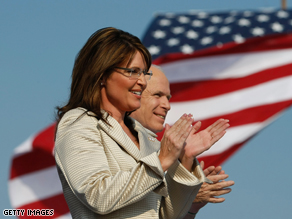 Palin, after all, is held up by many as an example of the antiquated social conservative policies the Republican party has become so closely associated with. Even though her stances on most of these issues aren't nearly as extreme as many of her opponents insist -- for example, her views on abortion actually promote the kind of alternatives to an abortion that pro-abortion activists often insist they would support -- Palin's participation in the NCNA will allow the party's detractors to denounce the process as putting a new shade of lipstick on a pig.
But if a rebranded, rejuvinated Republican party is to be successful it will have to find a place in it for those who hold socially conservative values. While that place shouldn't grant these individuals the dominant position over policy making that they've previously enjoyed, their ongoing participation in the Republican party will remain important.
Certainly many social conservatives -- especially proponents of the religious right -- would reject a Republican party that didn't grant them an extraordinary amount of influence over party policy.
Moving away from these particular social conservatives is one of the most important things the new Republican party could do for itself.
For those social conservatives who are willing to collaborate with those who don't share their views in order to establish a consensus that more effectively reflects the modern-day values of the American people, Sarah Palin's influence on the Republican party will be important in terms of maintaining the Republican party as a party they, too, can call home.
It will be a party that Rush Limbaugh probably won't like very much anymore. Then again, that alone will be of immense value to the new GOP.
Rush Limbaugh is an incredible ass.
Limbaugh is such an incredible ass that he all too often fails to understand who is on his side, who isn't, and generally what's really going on.
Such must have been his shock when he learned that former Vice-Presidential nominee Sarah Palin has officially joined efforts to re-brand the Republican party, mere hours after Limbaugh insisted that the GOP leadership is afraid of her.
Oops.
"Something else you have to understand is these people hate Palin too," Limbaugh had mused. "They despise Sarah Palin, they fear Sarah Palin, they don't like her either. She's, according to them she's embarrassing. McCain said, 'I was there with Ronald Reagan'…. No Reagan voter ever believed McCain was a Reaganite."
"And I think… a lot of this is aimed at Sarah Palin," he continued. "When you strip all the talk — It's 'the Reagan era is over, stop all this nostalgia and stuff.' Clearly, in last year's campaign, the most prominent, articulate voice for standard run-of the mill good old fashioned American conservatism was Sarah Palin. Now, everybody on this [NCNA] Speak to America tour has presidential perspirations [sic]. Mitt Romney there, he wants to be president again. Jeb may someday. Eric Cantor, some of the others, McCain — I don't think he does, but you never know. So this is an early campaign event, 2012 presidential campaign, primary campaign, with everybody there but Sarah Palin."
Now, the National Committee for a New America -- a committee name that seems to oddly ring of Preston Manning's The New Canada -- has contradicted Limbaugh in delicious fashion, and added some level of intrigue to the affair.
Palin, after all, is held up by many as an example of the antiquated social conservative policies the Republican party has become so closely associated with. Even though her stances on most of these issues aren't nearly as extreme as many of her opponents insist -- for example, her views on abortion actually promote the kind of alternatives to an abortion that pro-abortion activists often insist they would support -- Palin's participation in the NCNA will allow the party's detractors to denounce the process as putting a new shade of lipstick on a pig.But if a rebranded, rejuvinated Republican party is to be successful it will have to find a place in it for those who hold socially conservative values. While that place shouldn't grant these individuals the dominant position over policy making that they've previously enjoyed, their ongoing participation in the Republican party will remain important.
Certainly many social conservatives -- especially proponents of the religious right -- would reject a Republican party that didn't grant them an extraordinary amount of influence over party policy.
Moving away from these particular social conservatives is one of the most important things the new Republican party could do for itself.
For those social conservatives who are willing to collaborate with those who don't share their views in order to establish a consensus that more effectively reflects the modern-day values of the American people, Sarah Palin's influence on the Republican party will be important in terms of maintaining the Republican party as a party they, too, can call home.
It will be a party that Rush Limbaugh probably won't like very much anymore. Then again, that alone will be of immense value to the new GOP.
Sunday, May 03, 2009
And Therein Lies the Problem
Ultra-secretive environment of Canadian politics keeps too many mysteries
Bob Woodward's journalism has transformed him into an American icon.
Not in the mold of Walter Kronkite or Walter Lippmann, but rather in the mold of an enterprising muckraker.
Woodward was the man who broke the story about Richard Nixon's misdeeds in the infamous Watergate affair -- the scandal that has become the prototypical American political scandal.
Woodward can make it all sound terribly easy. At a recent speaking engagement in Calgary, University of Calgary political scientist Tom Flanagan was amazed at precisely how.
"Your career in Canada would be inconceivable," Flanagan mused. "No Prime Minister in Canada would give you seven minutes, let alone seven hours. And the thought that you would get all these hundreds of interviews with underlings, and meetings, it just wouldn't happen. There's like light years of difference between Canada and the United States."
"From the evidence I have, I think that's true," Woodward agreed, suggesting that Canada may have a unique national character trait as a result of its decidedly non-revolutionary nature.
While American history was forged out of the challenging of authority figures, Canadian history has emerged out of respect for, and deference to, authority as the independent Canadian state emerged slowly and steadily out of British colonialism.
Flanagan notes that an affair like the lingering Brian Mulroney/Karlheinz Schreiber affair could never have occurred in the United States.
"We have a judicial commission appointed to investigate things that Brian Mulroney did in the final years of his administration 15 years ago and we still don't know the truth, and we probably won't know the truth even after this commission is finished," Flanagan said. "I imagine in the United States, the truth would have been published at the time on the front page of the Washington Post."
In Canada, the first inklings of the Sponsorship Scandal were detected as early as 2000. Yet it took until 2005 for a judicial inquiry to begin to establish responsibility for the scandal.
In the United States, it took only two years for the Watergate Hotel break-in to lead to Richard Nixon's resignation.
This difference in response time to scandals allows for time to obscure the facts and dodge responsibility. Then-Prime Minister Jean Chretien continues to evade the scope of his responsibility for the Sponsorship Scandal despite the fact that the Spnsorship Program was run out of the Prime Minister's office, and run by his staff.
The Sponsorship Scandal isn't the only Canadian scandal to be obscured by time. The tainted blood scandal concluded with a stonewalling compensation package rammed through the House of Commons that left thousands of blood-injured Canadians uncompensated.
The federal government had collaborated with several provincial governments to force a compensation package through Parliament that had set a largely-arbitrary cut-off date for victims' eligibility for compensation.
These are only three of numerous scandals that have never been exposed to the full light of day. The low standard of transparency in Canadian politics should be alarming to many Canadians.
Woodward's words should give nearly any Canadian pause.
"Democracies die in darkness."
"Dirty" Moderates
McCains call for space for moderates within GOP
When Arlen Specter left the Republican party for the Democrats, Rush Limbaugh had one request for him:
"Well, Specter, take McCain with you. And his daughter."
Limbaugh's words underscore what has become an increasingly-hostile environment toward moderate conservatives in the Republican party -- a trend that began in the 1990s as the Republican party increasingly courted the religious right. Demagogues more interested in ideological purity than the pragmatic nuts-and-bolts of politics have increasingly led the Republican party astray.
John and Meghan McCain want to lead it back to the centre -- a task increasingly difficult with individuals like Limbaugh and Ann Coulter trying to drag the party even further to the right, and insisting that anyone unwilling to collaborate to that end be cast out of the party.
 "I just wish that moderates like myself — more moderate Republicans and more socially liberal Republicans — weren’t looked at as, ‘Get rid of the dirty moderates. Get rid of them,’" Meghan recently complained, pointing to the Democrats' success in moderating itself.
“We need to be an inclusive party," she continued. "We need to be an umbrella party. We need to inspire 20-somethings, which is something the Obama campaign did very well.”
“And it’s not that I think that our message is neither good nor bad — I just think it’s that the Democrats package their message better, and I think if we could be able to communicate with my generation, the Republican Party can really rebuild itself,” she concluded.
 The elder McCain, who seems to have accepted that his time to lead the Republican party is passing, impressed upon the need to embrace both youth and newer technologies. “By Twitter, by Internet, by all the things that frankly, the Obama campaign did a very good job at," he added. "That’s why we need lots of young people involved. If you are young, give us a call.”
McCain continued on the importance of mixing older conservative principles with these newer technological communication means. “I think we go back to old principles — and that’s less government, lower taxes, national security, etc, but we have to also have a new set of ideas and policies to implement and bring our principles into the 21st century.”
In order to find those ideas and principles the Republican party desperately needs to embrace moderate conservatives.
The Republican party's inability to accomodate moderates within its ranks have already cost it dearly. Once Al Franken is seated in the Senate -- and as the inconsistencies surrounding the Minnesota Senate election are cleared up it appears that he very much will win -- the Republicans will be seated across from a filibuster-proof Senate.
While all of this takes place, fools like Rush Limbaugh continue to sneer in the face of political reality. Faced with the fact that the world refuses to conform to their fantasies of ideological purity, individuals like Limbaugh have been revealed for the dinosaurs they really are.
Unfortunately they seem intent on leading the Republican party into extinction alongside them. Fortuantely, individuals like the McCains refuse to let them.
When Arlen Specter left the Republican party for the Democrats, Rush Limbaugh had one request for him:
"Well, Specter, take McCain with you. And his daughter."
Limbaugh's words underscore what has become an increasingly-hostile environment toward moderate conservatives in the Republican party -- a trend that began in the 1990s as the Republican party increasingly courted the religious right. Demagogues more interested in ideological purity than the pragmatic nuts-and-bolts of politics have increasingly led the Republican party astray.
John and Meghan McCain want to lead it back to the centre -- a task increasingly difficult with individuals like Limbaugh and Ann Coulter trying to drag the party even further to the right, and insisting that anyone unwilling to collaborate to that end be cast out of the party.
"I just wish that moderates like myself — more moderate Republicans and more socially liberal Republicans — weren’t looked at as, ‘Get rid of the dirty moderates. Get rid of them,’" Meghan recently complained, pointing to the Democrats' success in moderating itself.“We need to be an inclusive party," she continued. "We need to be an umbrella party. We need to inspire 20-somethings, which is something the Obama campaign did very well.”
“And it’s not that I think that our message is neither good nor bad — I just think it’s that the Democrats package their message better, and I think if we could be able to communicate with my generation, the Republican Party can really rebuild itself,” she concluded.
The elder McCain, who seems to have accepted that his time to lead the Republican party is passing, impressed upon the need to embrace both youth and newer technologies. “By Twitter, by Internet, by all the things that frankly, the Obama campaign did a very good job at," he added. "That’s why we need lots of young people involved. If you are young, give us a call.”McCain continued on the importance of mixing older conservative principles with these newer technological communication means. “I think we go back to old principles — and that’s less government, lower taxes, national security, etc, but we have to also have a new set of ideas and policies to implement and bring our principles into the 21st century.”
In order to find those ideas and principles the Republican party desperately needs to embrace moderate conservatives.
The Republican party's inability to accomodate moderates within its ranks have already cost it dearly. Once Al Franken is seated in the Senate -- and as the inconsistencies surrounding the Minnesota Senate election are cleared up it appears that he very much will win -- the Republicans will be seated across from a filibuster-proof Senate.
While all of this takes place, fools like Rush Limbaugh continue to sneer in the face of political reality. Faced with the fact that the world refuses to conform to their fantasies of ideological purity, individuals like Limbaugh have been revealed for the dinosaurs they really are.
Unfortunately they seem intent on leading the Republican party into extinction alongside them. Fortuantely, individuals like the McCains refuse to let them.
Saturday, May 02, 2009
The Case For Canadian Conservatism
Hugh Segal insists Canadian conservatism is unique
When most people think about conservatism they think about Margaret Thatcher, Ronald Reagan or Dwight Eisenhower.
Conservative Senator Hugh Segal would like to add a few figures to the iconography of conservatism -- a few Canadians like sir John A MacDonald, John Diefenbaker or Bill Davis.
In order to do this, Segal understands that he must make the case that Canadian conservatism is unique.
 "Canadian conservatism is about Canadian values, not about American values or British values," Segal explained during a recent speech in Regina. "It's shaped by our feeling for community and the rights of local groups to do things in their own way. It's shaped by our strong belief in the Crown as a strong constitution structure that protects our democracy and as such, it's one of the reasons that we have a separate identity in this country from the United States who are such a powerful cultural force."
Unlike in the United States, where conservative politicians can build quick electoral coalitions then drift away from them while in office, Canadian conservatives must keep in touch with the conservative movement.
"The Conservative government in any province or the Conservative government in Ottawa is only successful when it reaches out to embrace all the brands of conservatism," Segal continued. "They all are welcome in the Tory family and this Prime Minister is doing a pretty good job of that in difficult economic times."
Intriguingly, this may have a lot to do with the never-ending American election cycles. In the United States, one third of all Senators -- the more powerful house of the American Congress -- are elected every two years.
This means that American conservative Senators are effectively granted political cover by another looming election. Even if they fail to make good on promises to conservative voters, odds are that there will quickly be another election to distract them. This allows them to quickly rebuild an electoral coalition under the guise of being a conservative.
In order to be successful, Canadian conservatives need to actually govern as conservatives.
But embracing all of the various camps of the conservative movement -- from deep blue conservatives, libertarians, reformers and progressive conservatives -- can sometimes lead to policies that don't appear conservative to people with simplistic views on the concept.
Therein lies the dilemma.
Stephen Harper's gradual program of tax reform -- a program Tom Flanagan has described as "tightening the screws" on government -- is clearly a Conservative policy, even if the stimulus-spending produced deficit obscures this considerably.
Once one gets into the issue of social policy, the matter becomes even more obscure.
"That's really the message. We have a unique brand of conservatism that those people who think that it's all simply American-brand George (W.) Bush conservatism I think got a lesson or got a different view of the kind of moderate brand of conservatism," added Johnson-Shoyama Graduate School of Public Policy director Ken Rasumussen.
"I think there is a debate within conservatism about what it is and of course, Senator Segal represents a strain, certainly the traditional strain, about the moderate brand of conservatism that's necessary to appeal to Canadians and I think that's the message he gave," Rasmussen continued.
Of course, the importance of the moderate, progressive strain of conservatism goes deeper than simply appealing to Canadians. It reflects the importance of respecting Canadian values, which have always been moderate and progressive in nature.
That's the ultimate litmus test for Canadian conservatism: it must be progressive in order to survive. Even if John Diefenbaker didn't fully understand this when he opposed renaming the Conservative party as the Progressive Conservatives, his understanding of this was demonstrated by his policies.
When most people think about conservatism they think about Margaret Thatcher, Ronald Reagan or Dwight Eisenhower.
Conservative Senator Hugh Segal would like to add a few figures to the iconography of conservatism -- a few Canadians like sir John A MacDonald, John Diefenbaker or Bill Davis.
In order to do this, Segal understands that he must make the case that Canadian conservatism is unique.
"Canadian conservatism is about Canadian values, not about American values or British values," Segal explained during a recent speech in Regina. "It's shaped by our feeling for community and the rights of local groups to do things in their own way. It's shaped by our strong belief in the Crown as a strong constitution structure that protects our democracy and as such, it's one of the reasons that we have a separate identity in this country from the United States who are such a powerful cultural force."Unlike in the United States, where conservative politicians can build quick electoral coalitions then drift away from them while in office, Canadian conservatives must keep in touch with the conservative movement.
"The Conservative government in any province or the Conservative government in Ottawa is only successful when it reaches out to embrace all the brands of conservatism," Segal continued. "They all are welcome in the Tory family and this Prime Minister is doing a pretty good job of that in difficult economic times."
Intriguingly, this may have a lot to do with the never-ending American election cycles. In the United States, one third of all Senators -- the more powerful house of the American Congress -- are elected every two years.
This means that American conservative Senators are effectively granted political cover by another looming election. Even if they fail to make good on promises to conservative voters, odds are that there will quickly be another election to distract them. This allows them to quickly rebuild an electoral coalition under the guise of being a conservative.
In order to be successful, Canadian conservatives need to actually govern as conservatives.
But embracing all of the various camps of the conservative movement -- from deep blue conservatives, libertarians, reformers and progressive conservatives -- can sometimes lead to policies that don't appear conservative to people with simplistic views on the concept.
Therein lies the dilemma.
Stephen Harper's gradual program of tax reform -- a program Tom Flanagan has described as "tightening the screws" on government -- is clearly a Conservative policy, even if the stimulus-spending produced deficit obscures this considerably.
Once one gets into the issue of social policy, the matter becomes even more obscure.
"That's really the message. We have a unique brand of conservatism that those people who think that it's all simply American-brand George (W.) Bush conservatism I think got a lesson or got a different view of the kind of moderate brand of conservatism," added Johnson-Shoyama Graduate School of Public Policy director Ken Rasumussen.
"I think there is a debate within conservatism about what it is and of course, Senator Segal represents a strain, certainly the traditional strain, about the moderate brand of conservatism that's necessary to appeal to Canadians and I think that's the message he gave," Rasmussen continued.
Of course, the importance of the moderate, progressive strain of conservatism goes deeper than simply appealing to Canadians. It reflects the importance of respecting Canadian values, which have always been moderate and progressive in nature.
That's the ultimate litmus test for Canadian conservatism: it must be progressive in order to survive. Even if John Diefenbaker didn't fully understand this when he opposed renaming the Conservative party as the Progressive Conservatives, his understanding of this was demonstrated by his policies.
Oh Dear God, He Thinks He's Trudeau
Michael Ignatieff pulls most predictable Liberal card
In a speech at the Liberal party convention, Michael Ignatieff has taken to comparing himself to Pierre Trudeau.
Quelle Suprise.
The comparison of the Liberal leader of the day to the prototypical Liberal political myth has become so utterly predictable that one has to wonder if Canadians ever bother to take notice anymore.
 "You have to indulge an old guy like me, but this is the feeling that I felt in 1968 at the great convention that chose Pierre Elliott Trudeau as our prime minister," Ignatieff crowed to an under-attended Liberal convention. "I had a feeling for the first time in my life that I wasn't a spectator, that I wasn't a bystander, that I was there, in my tiny way, making the history of my country. And this is what the Liberal party offers you, that sense, that belief, that faith, that together we make the history of this great country."
Funny that Michael Ignatieff would feel like more than a spectator at the Liberal convention at which he became leader. But the thousands of Liberals across Canada who just witnessed Ignatieff get amalgamated as leader without anything other than the preliminary pretences of a leadership campaign, it's likely that fewer Liberals share his sentiments than he would like Canadians to believe.
Ignatieff seems rather quick to overlook the fact that, unlike himself, Pierre Trudeau had to win the Liberal leadership. The 1968 convention he alludes to required no fewer than four ballots to elect Trudeau leader. Trudeau's leaderhsip was actually the most contested in Liberal party history.
Trudeau overcame Mitchell Sharp, Paul Hellyer, Robert Winters, Allan MacEachern, and Ernst Zundel (yes, that Ernst Zundel) to win the Liberal leadership.
Ignatieff's ascension to the leadership of the party, meanwhile, was abetted by the withdrawal of Bob Rae and Dominic LeBlanc from the leadership contest.
There's a world of difference between the two.
Even with the Liberal embrace of the one-member-one-vote system, Liberal leadership races will mean absolutely nothing in the absence of actual competition.
Ignatieff also falls far short of Trudeau on one other key count: Trudeau was unafraid to run and govern based on big ideas. As The Economist has previously noted Ignatieff has yet to take a stand on any particular issue that suggests that he stands for anything -- not even his own ideas.
It's far from shocking that Ignatieff would be so eager to hoist himself up to Trudeau's status. Trudeau's legacy -- for good or ill -- has been the Liberal party's most successful election tactic. The number of Liberals gutsy enough to try to identify Ignatieff as "the father of Canada" is equal parts bemusing and befuddling -- apparently they've entirely forgotten about a man by the name of Sir John A MacDonald.
Mythology has been the strong point of the Liberal party for decades. It's unsurprising that Ignatieff would ignore historical context to try to appeal to it now.
In a speech at the Liberal party convention, Michael Ignatieff has taken to comparing himself to Pierre Trudeau.
Quelle Suprise.
The comparison of the Liberal leader of the day to the prototypical Liberal political myth has become so utterly predictable that one has to wonder if Canadians ever bother to take notice anymore.
"You have to indulge an old guy like me, but this is the feeling that I felt in 1968 at the great convention that chose Pierre Elliott Trudeau as our prime minister," Ignatieff crowed to an under-attended Liberal convention. "I had a feeling for the first time in my life that I wasn't a spectator, that I wasn't a bystander, that I was there, in my tiny way, making the history of my country. And this is what the Liberal party offers you, that sense, that belief, that faith, that together we make the history of this great country."Funny that Michael Ignatieff would feel like more than a spectator at the Liberal convention at which he became leader. But the thousands of Liberals across Canada who just witnessed Ignatieff get amalgamated as leader without anything other than the preliminary pretences of a leadership campaign, it's likely that fewer Liberals share his sentiments than he would like Canadians to believe.
Ignatieff seems rather quick to overlook the fact that, unlike himself, Pierre Trudeau had to win the Liberal leadership. The 1968 convention he alludes to required no fewer than four ballots to elect Trudeau leader. Trudeau's leaderhsip was actually the most contested in Liberal party history.
Trudeau overcame Mitchell Sharp, Paul Hellyer, Robert Winters, Allan MacEachern, and Ernst Zundel (yes, that Ernst Zundel) to win the Liberal leadership.
Ignatieff's ascension to the leadership of the party, meanwhile, was abetted by the withdrawal of Bob Rae and Dominic LeBlanc from the leadership contest.
There's a world of difference between the two.
Even with the Liberal embrace of the one-member-one-vote system, Liberal leadership races will mean absolutely nothing in the absence of actual competition.
Ignatieff also falls far short of Trudeau on one other key count: Trudeau was unafraid to run and govern based on big ideas. As The Economist has previously noted Ignatieff has yet to take a stand on any particular issue that suggests that he stands for anything -- not even his own ideas.
It's far from shocking that Ignatieff would be so eager to hoist himself up to Trudeau's status. Trudeau's legacy -- for good or ill -- has been the Liberal party's most successful election tactic. The number of Liberals gutsy enough to try to identify Ignatieff as "the father of Canada" is equal parts bemusing and befuddling -- apparently they've entirely forgotten about a man by the name of Sir John A MacDonald.
Mythology has been the strong point of the Liberal party for decades. It's unsurprising that Ignatieff would ignore historical context to try to appeal to it now.
Heavy Metal and the Culture of Censorship
In Metal: A Headbanger's Journey, Canadian film maker Sam Dunne traces the historical development of heavy metal music. Applying the discipline of anthropology to heavy metal, Dunne turns up some intriguing elements to this music long wrongfully written off as "unsophisticated" and "stupid".
While its amusing to hear Dunne describe Val Halen as metal, and even more amusing for Dunne to treat Victoria, BC as some kind of musical backwater, Dunne turns up intriguing links with more standard "sophisticated" fare like Wagner or Beethoven.
Considering the nature of heavy metal, the film should also provoke deep questions about the nature of the censorship directed at it.
Many would have people believe that conservatives are the driving force behind censorship. But the involvement of Tipper Gore -- while her husband, future Vice President and future Democratic Presidential nominee, Al stood quietly by -- puts the lie to this.
In fact, the Parents' Music Resource Centre, the group under which Gore organized her famed campaign against heavy metal -- which, interestingly enough, drew the ire of John Denver of all people -- was formed by Tipper Gore, Susan Baker (wife of Reagan-era Republican James Baker), Pam Howar and Sally Nevius.
The PMRC was largely a non-partisan affair. And while conservatives would later target artists like the Dixie Chicks for political purposes, and liberal activists would frequently target Ted Nugent, Gore made it apparent that it isn't merely conservative partisans who raise the flag of family values.
It can even be said that the moral panic that Tipper Gore raised over heavy metal staged something of a prequel for the moralization of the climate change panic that her husband would later promote.
Unlike the targeting of musicians like Ted Nugent and the Dixie Chicks was based on issue politics -- the Dixie Chicks drew ire for appealing to the anti-war movement, and Nugent continues to draw ire for his opposition to gun control -- the censorship directed at heavy metal must go deeper. This is because heavy metal is more than just music -- for many people it's a lifestyle. In countless ways the music is almost cult-like. More than a mere subculture, heavy metal is a culture all its own.
Because the subject matter of heavy metal is so intense and so extreme, it's simultaneously incomprehensible and threatening to people who don't share that intensity. When heavy metal bands make political statements, they make them in terms so extreme that the message can often be lost. Few individuals who aren't frequent listeners of Metallica recognize the anti-war message at the heart of "One". If not for the music video, featuring clips from Johnny Got His Gun, even some regular listeners may have missed the message. Many may still.
Not that the stereotypes don't have any credibility. Many of the bands featured in Headbanger's Journey play directly into the sterotypes that characterize shows like Metalocalypse, such as Mayhem, who wear necklaces made of skull fragments from their former lead singer, who killed himself with a shotgun.
Certainly, these bands do appear to lend credence to the condemnation of reactionaries. But to judge an entire culture based on its most extreme few examples always leads to the folly of narrow profiling.
Censorship is always based on whatever culture aspires to dominance, and is an effort to try to enforce those values on other cultures that don't share them. It's the last sad act of reactionaries who cannot tolerate cultural dissent.
Thursday, April 30, 2009
Michael Byers Shows Uncharacteristic Grit
Tough stance on piracy out of step for Byers
Michael Byers either really doesn't like pirates or really doesn't like Stephen Harper.
Despite having previously made comments that seemed to portray Somali pirates as victims, Byers has recently made some comments that suggest he favours taking a much tougher approach to piracy.
Then again, it may not be the priacy that necessarily bothers Byers.
Byers' comments come after news that the Canadian navy is releasing Somali pirates because the Canadian government feels it doesn't have the authority to prosecute them.
"Its ludicrous for the Harper government to claim that it can't arrest and prosecute pirates,” Byers fumes. “Canada has a legal obligation under the United Nations and international law to bring pirates to justice.”
One does wonder how Byers would have the government weigh this obligation against its obligations to UN-sanctioned state building efforts in Afghanistan -- which involves a war against the Taliban that Michael Byers opposes. But that is off topic.
“Catch and release only encourages pirates to grow bigger and bolder,” says Byers, although he notes that prosecuting teenage pirates doesn't help the issue. He doesn't suggest releasing them -- and in fact doesn't seem to have much to say on how to deal with teenaged pirates.
Byers is certainly right about catch and release, and about the Canadian government's ability to turn captured pirates over to an international tribunal established in Kenya.
But considering Byers' earlier take on piracy and his constant take on the Harper government -- that absolutely nothing the Harper government does can be allowed to seem tolerable -- one has to wonder how much of Byers' recent take on the issue has to do with piracy and how much of it has to do with a simple opportunity to denounce the Harper Conservatives yet again.
At this point it's hard to tell with Michael Byers.
Michael's Choice
Rebuilding the party a necessary step
At the Liberal party national convention in Vancouver, Michael Ignatieff has been provided with a stark choice:
Rebuild the party from the bottom up or rebuild the party from the top down. Not rebuilding the party at all is simply not an option.
Speaking at a meeting of Liberal party riding presidents, former Prime Minister John Turner made his preference on the manner of this rebuilding abundantly clear.
 Turner insisted that the Liberal party “will not be rebuilt from the top down. It has to be rebuilt from the bottom up.”
"I don’t want to see any leader-appointed candidates across the country,” he added. “I believe riding-by-riding is how this party should be reconstructed, how this country should be run."
Turner is clearly taking side with the people behind Liberal 308, an enterprising effort to rebuild and renew the Liberal party across the country on a riding-by-riding basis.
Ignatieff responded to Turner by agreeing -- somehwat.
“I believe very strongly and I’ve said since I became leader, I want to open nominations in every [riding] in the country, I want to rebuild the party from the grassroots up," Ignatieff replied. “But I cannot abandon the prerogative of a leader to make those appointments that I deem necessary.”
In other words, Ignatieff will allow individual riding associations to nominate their own candidates so long as its convenient for himself. If Ignatieff has trouble finding a riding for a new star candidate, all bets are likely off.
Many Canadians likely still remember Stephane Dion's star-candidate adventurism when he installed Joan Beatty as a Liberal candidate over David Orchard, the candidate duly elected by that riding's Liberal riding association.
Dion's move came after a promise to use the leader's prerogative to appoint more women as candidates.
Unsurprisingly, National Liberal Women's Commission President Nicole Foster Woollatt was in favour of Ignatieff retaining the power to appoint candidates.
“It’s not something you want to use frequently," he mused. "But it can be important."
Particularly, one supposes, if the Liberal leader is using that power to appoint female candidates, even in ridings were a riding-elected candidate is already in place.
For those supporting the Liberal 308 initiative -- and it certainly deserves support -- Ignatieff's stand on this particular issue is not very promising, but this shouldn't be so surprising.
After all, Ignatieff's abrupt ascension to the Liberal leadership dismembered that renewal process from the leadership campaign -- two things that optimally should have been conducted together.
Other bloggers writing about this topic:
Jeff Jedras - "John Turner at Council of Presidents"
Challenging the Commonplace - "Telling Early Moment May Top LPC Convention"
At the Liberal party national convention in Vancouver, Michael Ignatieff has been provided with a stark choice:
Rebuild the party from the bottom up or rebuild the party from the top down. Not rebuilding the party at all is simply not an option.
Speaking at a meeting of Liberal party riding presidents, former Prime Minister John Turner made his preference on the manner of this rebuilding abundantly clear.
Turner insisted that the Liberal party “will not be rebuilt from the top down. It has to be rebuilt from the bottom up.”"I don’t want to see any leader-appointed candidates across the country,” he added. “I believe riding-by-riding is how this party should be reconstructed, how this country should be run."
Turner is clearly taking side with the people behind Liberal 308, an enterprising effort to rebuild and renew the Liberal party across the country on a riding-by-riding basis.
Ignatieff responded to Turner by agreeing -- somehwat.
“I believe very strongly and I’ve said since I became leader, I want to open nominations in every [riding] in the country, I want to rebuild the party from the grassroots up," Ignatieff replied. “But I cannot abandon the prerogative of a leader to make those appointments that I deem necessary.”
In other words, Ignatieff will allow individual riding associations to nominate their own candidates so long as its convenient for himself. If Ignatieff has trouble finding a riding for a new star candidate, all bets are likely off.
Many Canadians likely still remember Stephane Dion's star-candidate adventurism when he installed Joan Beatty as a Liberal candidate over David Orchard, the candidate duly elected by that riding's Liberal riding association.
Dion's move came after a promise to use the leader's prerogative to appoint more women as candidates.
Unsurprisingly, National Liberal Women's Commission President Nicole Foster Woollatt was in favour of Ignatieff retaining the power to appoint candidates.
“It’s not something you want to use frequently," he mused. "But it can be important."
Particularly, one supposes, if the Liberal leader is using that power to appoint female candidates, even in ridings were a riding-elected candidate is already in place.
For those supporting the Liberal 308 initiative -- and it certainly deserves support -- Ignatieff's stand on this particular issue is not very promising, but this shouldn't be so surprising.
After all, Ignatieff's abrupt ascension to the Liberal leadership dismembered that renewal process from the leadership campaign -- two things that optimally should have been conducted together.
Other bloggers writing about this topic:
Jeff Jedras - "John Turner at Council of Presidents"
Challenging the Commonplace - "Telling Early Moment May Top LPC Convention"
Picking an Atheist Battle in Hip Hop
Greydon Square gains traction among atheist crowd on strength of Dawkins endorsement
Seasoned Richard Dawkins watchers may remember "Beware the Believers", a rap video parodying Richard Dawkins.
They may even remember a briefer follow-up to the video in which its creators revealed it as a mutual mockery of both Dawkins and some of his most diligent detractors -- notably Expelled creator Ben Stein.
The video was particularly hilarious due to the hysterical notion of Dawkins being bothered to even look at a rap CD, let alone actually listen to one.
That stodgy impression of Dawkins may not have been entirely accurate. Dawkins has recently taken to promoting a rapper by the name of Greydon Square.
Greydon Square admits freely to having a confrontational style. That naturally has to be a given, considering the aggressive and confrontational nature of hip hop.
"I'm confrontational with people who are, by nature, confrontational with their ideology," he says. "You can't run around and tell people that they're going to hell because they don't believe in the same sky God as you. Are you serious? I will confront you over that."
Greydon Square wants to approach hip hop in a way that's rarely been attempted before. He wants to approach hip hop as a debate -- an interesting take on battle rap, one that's rarely been embraced.
"See, what I did was I looked at hip hop beefs and noticed that it deteriorated when people started calling each other bitches and ho's and basically stopped formulating arguments," he continues. "They stopped showing the ability, the skill, and just started talking shit. I brought it back to presenting a position. Now you can call me whatever you want, but until you argue a position, you're wack."
But Greydon Square's approach has one singular fatal flaw: in hip hop, winners and losers are normally decided not based on who produces the best argument, but based on who is lyrically superior.
Rappers are starkly divided between two main religious camps -- Christianity, and Islam. Louis Farrakhan and the Nation of Islam has often sought to establish leadership over the hip hop community. In fact Farrakhan has called hip hop summits and has convened personal meetings between rappers in order to squash potentially violent beefs.
Greydon Square would have a difficult time competing lyrically with many rappers of religious faith. DMX, Kanye West and Reverend Run are not only deeply spiritual Christians, but are also dominant battle rappers.
KRS-One, Common and Mos Def are dominant battle rappers who are Muslim.
Any rapper would have difficulty standing against any of these performers in a battle rap. But even so far as dogmatism goes, Greydon Square is unlikely to find suitable targets among the hip hop community.
Many deeply faithful rappers have come from a background that doesn't grant them the luxury of being self-righteous or dogmatic. Due to the very nature of the lives they've lived, these people are sinners who have sought, and continue to seek, redemption -- the most powerful promise of religion.
As a result, the religious beliefs of rappers by their very nature have to be considerably flexible.
If Greydon Square is itching for an opportunity to promote atheism by beefing with other rappers not only is he not terribly likely to win, but he's unlikely to find a target that suits him.
Whether or not Greydon Square will embrace the atheist tactic of inventing a dogmatic opponent where one may not actually exist remains yet to be seen.
Wednesday, April 29, 2009
ADQ Leadership Race Heats Up
Gilles Tailon announces leadership bid
Just a few short months ago, the Action Democratique du Quebec were in extremely dire straights.
They had just finished absorbing a whopping defeat in the 2008 Quebec election, their leader, Mario Dumont, had just quit, and no contenders were lining up to bid for his vacated post.
What a difference a few months can make.
As of yesterday, three candidates have declared their candidacy to become the next leader of the ADQ.
Gilles Tailon has formally declared his candidacy. He says he plans to focus on economic issues.
Eric Caire, the National Assembly Member for La Peltrie and another former MNA, Christian Levesque.
At 63 years of age, Tailon is the oldest candidate to join the field. He'd certainly be a significant change from the young, dynamic Dumont. His best asset is a stint as the President of the Conseil du Patronat du Québec, an association of business people. He was the president of the CPQ for eight years between 1998 and 2006.
Caire was first elected in his riding of La Peltrie in 2007 by 51% of the vote. Since then he's advocated the abolition of public school boards and the introduction of a school vouchers program.
Levesque has some international credentials, having previously been President of General Textiles International, which is based in Paris. In a party that has to lead toward French Canadian nationalism, such links to France could be a real asset for both Levesque and the ADQ.
Any of these candidates would be hard-pressed to replace Mario Dumont, but with the sharp turn in the party's electoral fortunes the ADQ is well-poised for the kind of change in direction a new leader could bring.
Subscribe to:
Posts (Atom)