Desperate, pathetic McGuinty cries 'hidden agenda'
The Toronto Star calls it "feisty". Anyone with a memory of what transpired in Canadian politics over the past 20 years will recognize it for precisely what it is: pathetic.
Of course, Ontario Premier Dalton McGuinty must expect that Ontarians have a short memory. How else to explain his desperate "hidden agenda" gambit?
Canadians are very familar with the "hidden agenda" gambit. It was a fear tactic, invoked by former Prime Minister Paul Martin, suggesting current Prime Minister Stephen Harper had a "hidden agenda".
How did the story end? The train wreck of corruption that was the Liberal Party became unigorable in the eyes of Canadians, Martin's government was rightly found wanting, his desperation recognized, and Martin was rightly sent packing, never to return.
Four years later, another embattled Liberal -- McGuinty -- has resorted to this pathetic and transparent gambit, just as his opposition seems poised to relegate him to the opposition benches.
This time it's Ontario Progressive Conservative leader Tim Hudak, and it comes as Hudak points to the increasing burden McGuinty's government has become to the citizens of Ontario.
“After seven years it has become very clear Premier McGuinty believes in his heart that Ontario families have an infinite capacity to pay for every idea that your team dreams up,” Hudak announced. “They can’t keep up with your hydro bills, they can’t keep up with your HST increase, they can’t keep up with your eco taxes. Families need a break.”
For his own part, McGuinty predictably wanted to change the subject -- to health care.
“Ontario families better ask themselves what’s their secret agenda when it comes to health care," McGuinty announced. "What’s going to happen to their hospitals, their nurses and doctors?”
Of course, the switch to health care wasn't by any means a random change of topic. It was deliberate. Nothing so frightens Canadians as the prospect of deep cuts to health care -- even as health care becomes more and more unsustainable, as governments such as McGuinty's continue to allow it to slide.
“We have a broader, and I think more intelligent understanding of what Ontario families’ concerns are," McGuinty preened. "Yes they’re concerned about their expenses ... levels of taxation.”
“But we will not take our eye off the ball of those other concerns families have,” he continued.
Yet it seems that as support for the Progressive Conservative Party strengthens, and support for the Liberal Party erodes, more and more Ontarians are questioning the broadness or the intelligence of McGuinty's purported understanding of their concerns.
So the Ontario Liberal Party's option of choice is to rewind to yesterday -- regurgitate the "hidden agenda". Run against Mike Harris rather than against Tim Hudak.
It won't work any better for Dalton McGuinty than it did for Paul Martin.
While the Toronto Star may applaud it as "feisty", Ontarians will surely recognize it for what it really is: desperate and pathetic.

Showing posts with label Mike Harris. Show all posts
Showing posts with label Mike Harris. Show all posts
Wednesday, September 15, 2010


Wednesday, August 19, 2009
Could Sue-Ann Levy Curb Liberal Election Plans?
A Tory win would signal trouble in Toronto for Liberals
To say that Toronto has been a Conservative party wasteland for the last 10 years would be an understatement.
Since Mike Harris merged the various municipalities surrounding Toronto into the modern "megacity" of Toronto, the Conservative party has never elected a single candidate in the city -- neither provincially nor federally.
The nomination of Sue-Ann Levy -- a "married lesbian" and frequent critic of Toronto mayor David Miller -- seems to have given the Ontario Progressive Conservative party a very real opportunity to break the long shut out suffered by Conservatives in the city.
Even as federal Liberal leader Michael Ignatieff insists his party hasn't yet decided whether or not to defeat Stephen Harper's government in September, the implications of a Levy victory in the September 17 by-election would likely force Ignatieff to blink.
Recent calls for Premier Dalton McGunity to delay the by-election have led many to speculate that the provincial Liberals are worried they may lose the contest.
Coming from the Toronto Sun, one would be tempted to discard that kind of speculation. But when it appears in the Toronto Star, it quickly becomes apparent that the hype may well be real.
Levy has a variety of issues she can attack the McGuinty government on. Before one even looks at the eHealth scandal, there are the matters of a slew of new municipal taxes for which Levy blames the provincial government.
There also seems to be a lack of faith in Liberal candidate Dr Eric Hoskins' will to match Levy blow-for-blow.
"It's a smart candidate for Hudak," admitted a Liberal insider. "She'll be a puncher and will Hoskins be a counterpuncher? I don't know."
 There is also the matter of Dr Hoskins' defeat in his 2008 bid to become the Member of Parliament for Haldmand-Norfolk, a contest he lost to Diane Finley. There are also questions about whether or not Dr Hoskins' previous work -- he's a co-founder and the current President of War Child Canada -- will be of use in Queen's Park.
If Levy manages to emerge victorious from the September 17 vote Canadians can expect Michael Ignatieff to think twice about making a play for a fall election. But at least he'll be better off than Dalton McGuinty. For the current Ontario Premier, that could prove to be the beginning of the end.
Other bloggers writing about this topic:
MJ Murphy - "The Downside of Sue-Ann Levy"
Dr Roy Eappen - "Sue-Ann Levy"
To say that Toronto has been a Conservative party wasteland for the last 10 years would be an understatement.
Since Mike Harris merged the various municipalities surrounding Toronto into the modern "megacity" of Toronto, the Conservative party has never elected a single candidate in the city -- neither provincially nor federally.
The nomination of Sue-Ann Levy -- a "married lesbian" and frequent critic of Toronto mayor David Miller -- seems to have given the Ontario Progressive Conservative party a very real opportunity to break the long shut out suffered by Conservatives in the city.
Even as federal Liberal leader Michael Ignatieff insists his party hasn't yet decided whether or not to defeat Stephen Harper's government in September, the implications of a Levy victory in the September 17 by-election would likely force Ignatieff to blink.
Recent calls for Premier Dalton McGunity to delay the by-election have led many to speculate that the provincial Liberals are worried they may lose the contest.
Coming from the Toronto Sun, one would be tempted to discard that kind of speculation. But when it appears in the Toronto Star, it quickly becomes apparent that the hype may well be real.
Levy has a variety of issues she can attack the McGuinty government on. Before one even looks at the eHealth scandal, there are the matters of a slew of new municipal taxes for which Levy blames the provincial government.
There also seems to be a lack of faith in Liberal candidate Dr Eric Hoskins' will to match Levy blow-for-blow.
"It's a smart candidate for Hudak," admitted a Liberal insider. "She'll be a puncher and will Hoskins be a counterpuncher? I don't know."
There is also the matter of Dr Hoskins' defeat in his 2008 bid to become the Member of Parliament for Haldmand-Norfolk, a contest he lost to Diane Finley. There are also questions about whether or not Dr Hoskins' previous work -- he's a co-founder and the current President of War Child Canada -- will be of use in Queen's Park.If Levy manages to emerge victorious from the September 17 vote Canadians can expect Michael Ignatieff to think twice about making a play for a fall election. But at least he'll be better off than Dalton McGuinty. For the current Ontario Premier, that could prove to be the beginning of the end.
Other bloggers writing about this topic:
MJ Murphy - "The Downside of Sue-Ann Levy"
Dr Roy Eappen - "Sue-Ann Levy"
Thursday, July 09, 2009
Canadian Conservatism Needs to Save Itself
Adam Daifallah annoints Tim Hudak as conservative saviour
Writing in a blog post on the National Post's Full Comment blog, Adam Daifallah all but annoints Tim Hudak as the saviour of conservatism not only in Ontario, but perhaps in all of Canada:
That being said, it's unreasonable to overlook the fact that, as leaders, Tory and Eves had to work with what Harris had left behind him when he resigned as leader. It wasn't a pretty sight.
Mike Harris left behind him an extremely unpopular incumbent party, which had failed to deliver on its espoused fiscally conservative principles, had made controversial moves in relation to education and relations with municipal governments, and had often stirred up a wasp's nest of public protest against it.
To saddle Tory and Eves firmly with the failure of the Ontario Tories to retain power -- or win it back from Dalton McGuinty in the years since -- is partially unfair. While one cannot overlook their own failures as leaders, one also has to remember the position Harris had left them in.
Yet Daifallah seems to believe that only a leader practically hand-picked by Harris can deliver the Ontario Tories from the ignominous position they currently find themselves in.
Hudak used that policy as a method to determine those who were, allegedly, true conservatives from those who were simply "Liberal lite" -- a label he applied to both Elliott and Klees.
Distancing himself from Harris will be a difficult act for someone who enjoyed such fervent support from Harris to do. And, really, one may wonder what reason Hudak would have to want to distance himself from who has proven to be his most valuable supporter.
Yet Daifallah already seems to have Hudak pegged as a successor to Stephen Harper's leadership of Canadian conservatism, particularly fiscal conservatism:
That is, when Liberal governments reign in Ottawa, Conservatives tend to win power in Provincial elections. When Conservative governments are in power in Ottawa, Liberals and the NDP tend to win in the provinces.
While the Saskatchewan party claimed victory in the first post-Harper election in the Land of Living Skies and Danny Williams' Progressive Conservatives won in Newfoundland, it's worth noting that Rodney MacDonald's Conservatives were defeated by the NDP, Gordon Campbell's Liberals retained power in British Columbia and Gary Doer's NDP won the 2007 vote in Manitoba.
To expect that Hudak alone will be enough to buck this trend in Ontario and deliver salvation to the federal Tories is, in and of itself, a bit of a pipe dream. Hudak has to be up to the task, and we have yet to see if he actually is.
Lloyd Mackey provides a reasonable list of the differing philosophical strains on conservatism. He classifies them as following:
1. Fiscal conservatism - This is the strain of conservatism that prefers controls on government taxation and spending. This is also the very strain of conservatism that Daifallah seems to appeal to most in this article.
2. Social conservatism - Social conservatives prefer family-friendly policies and government regulation -- if not outright prohibition -- of abortion. This particular strain of conservatism has found itself at odds with Human Rights Commissions as many of its most vociferous proponents find themselves paraded before them on an ongoing basis.
3. Democratic populism - Democratic populism insists that the spirit of democracy is found in the will of the people. It favours the "common sense of common people", and has been most strongly represented nationally by Preston Manning.
4. Progressive Conservatism - Progressive conservatism, as embodied by leaders such as Joe Clark, John Diefenbaker and the late Robert Stanfield, advocates using conservatism to moderate political and social change.
5. British Toryism - Proponents of British Toryism favour the preservation of existing institutions, including current parliamentary structures and offices such as Canada's various vice-regal offices such as the Governor General and Lieutenant Governors.
6. Libertarianism - Libertarians prefer that government stay out of the lives of its citizens as much as possible. Libertarians favour as much freedom as possible for citizens, and tend to be the strongest voices in favour of small government.
Of Mackey's six strains of Canadian conservatism, only one -- British Toryism -- arguably sets the table to favour the salvation of Canadian conservatism by a single leader.
Where the other strains of conservatism -- notably libertarianism and democratic populism -- weigh in on this topic, they weigh in against such an option.
Where Daifallah would argue that Tim Hudak is the one man who can save conservatism in Canada, democratic populists would rebel against the notion of any single leader leading Canadian conservatism without a strong consensus to back his direction. That was the act that Preston Manning accomplished so masterfully as leader of the Reform party.
Libertarians would point out the sheer scope of the power, influence and authority conservatives would have to grant such an individual upon being annointed as a conservative "messiah". Libertarians would reject such a notion outright.
Small-p, small-c progressive conservatives would find the urge to reject Hudak as a conservative saviour almost irresistable. To such individuals, Hudak represents the kind of ideologically-isolated neoconservatism that is utterly offensive to their particular values, even as fiscal and social conservatives would likely react favourably to Hudak in such a role.
Contrary to whatever Adam Daifallah may like to believe about Tim Hudak, no one man can save conservatism. Not in Ontario, and not in the rest of Canada. Rather, conservatives must save conservatism together by maintaining the common bonds between its varying -- although often over-simplified, by Lloyd Mackey's own admission -- strains.
Conservatism must save itself.
Writing in a blog post on the National Post's Full Comment blog, Adam Daifallah all but annoints Tim Hudak as the saviour of conservatism not only in Ontario, but perhaps in all of Canada:
"Tim Hudak's ascension to the leadership of the Progressive Conservative Party of Ontario is an important development in the Canadian conservative movement for several reasons. Most importantly, it represents a clean break from the rudderless and inept leadership that has guided the party for more than five years. Let's not mince words: Ernie Eves and John Tory were unmitigated disasters as leaders. Hudak represents a clear return to the conviction-based politics that vaulted the Tories to power -- and kept them there -- in the 1990s."It would be unreasonable to suggest that Tory and Eves, as leaders, could not have done more.
That being said, it's unreasonable to overlook the fact that, as leaders, Tory and Eves had to work with what Harris had left behind him when he resigned as leader. It wasn't a pretty sight.
Mike Harris left behind him an extremely unpopular incumbent party, which had failed to deliver on its espoused fiscally conservative principles, had made controversial moves in relation to education and relations with municipal governments, and had often stirred up a wasp's nest of public protest against it.
To saddle Tory and Eves firmly with the failure of the Ontario Tories to retain power -- or win it back from Dalton McGuinty in the years since -- is partially unfair. While one cannot overlook their own failures as leaders, one also has to remember the position Harris had left them in.
Yet Daifallah seems to believe that only a leader practically hand-picked by Harris can deliver the Ontario Tories from the ignominous position they currently find themselves in.
"For the first time in recent memory, during the course of the leadership race no candidate ran on an explicitly centre-left platform. Hudak, runner-up Frank Klees and maverick Randy Hillier all staked out clear conservative ground. Christine Elliott ran a formidable campaign and was essentially forced into positioning herself as the centrist candidate due to crowding on the right. (Frequent cheerleading from the Toronto Star also helped burnish her image in that regard.)"Daifallah seems to do everything but label Elliott Liberal-lite.
"Elliott miscalculated in making the policy of abolishing the Ontario Human Rights Commission -- a cause championed by Hudak and Hiller -- a wedge issue. This didn't sit well with Hudak's and Hillier's supporters, whose second-choice votes she needed to gain in the preferential ballot voting system. Her announcement that she would implement a flat tax if elected -- effectively outflanking Hudak on the right -- sent an electroshock through the other camps. In the end, Elliott proved to be a master of the air war, but lacked the ground game necessary to mount a serious challenge."But Daifallah would be foolish to insist that the policy of abolishing the Ontario Human Rights Commission was not, in and of itself, designed to be a wedge issue.
Hudak used that policy as a method to determine those who were, allegedly, true conservatives from those who were simply "Liberal lite" -- a label he applied to both Elliott and Klees.
"The significance of the Hudak victory should not be downplayed. The Ontario Tories now have a leader who, unlike his predecessor, won't shy away from drawing clear distinctions between himself and the McGuinty Liberals. Hudak believes in ideas -- he won't be afraid of making bold proposals going forward. His mandate of presenting policies that respect conservative principles yet recognize the current difficult economic context will neutralize Liberal attempts to paint him as a reincarnation of Mike Harris."And yet Hudak's branding of himself as a "common sense conservative" has already done so much to accomplish this very act.
Distancing himself from Harris will be a difficult act for someone who enjoyed such fervent support from Harris to do. And, really, one may wonder what reason Hudak would have to want to distance himself from who has proven to be his most valuable supporter.
"The McGuinty government is vulnerable on almost every important issue: Ontario's economy is in shambles, taxes are up, spending has soared with no correlative improvement in service quality, unemployment is skyrocketing and the deficit and debt have ballooned. Admittedly, not all of these problems are Dalton McGuinty's own fault, but in politics, the party in power wears the good news and the bad, regardless of its cause.Hudak has yet to accomplish anything during his (to date short) audition to be Premier of Ontario.
The next provincial election is still more than two years away. Anything can happen in that time, and it is still unknown whether McGuinty will run for a third term. But if he does, he will be ripe for defeat as an out-of-touch, tired leader who bungled the economy. In the meantime, the way Hudak conducts himself as opposition leader will have important ramifications far beyond Ontario politics."
Yet Daifallah already seems to have Hudak pegged as a successor to Stephen Harper's leadership of Canadian conservatism, particularly fiscal conservatism:
"Small-c conservatives across the country are disheartened by the Harper government's numerous capitulations on a whole host of red-meat issues. They are desperately looking for a new champion for the conservative cause. If Hudak can make conservative policies stick and bring the Ontario Tories up in the polls -- and, in the unlikely event that the 2011 election occurs before the next federal campaign, win a government -- it will give great comfort to principled conservatives to know that their ideas still have traction. It would also discredit the Harper government's calculation that the public is only interested in statist solutions to the current economic situation."Yet Daifallah seems to be overlooking what the historical trend in Canadian politics has tended to be.
That is, when Liberal governments reign in Ottawa, Conservatives tend to win power in Provincial elections. When Conservative governments are in power in Ottawa, Liberals and the NDP tend to win in the provinces.
While the Saskatchewan party claimed victory in the first post-Harper election in the Land of Living Skies and Danny Williams' Progressive Conservatives won in Newfoundland, it's worth noting that Rodney MacDonald's Conservatives were defeated by the NDP, Gordon Campbell's Liberals retained power in British Columbia and Gary Doer's NDP won the 2007 vote in Manitoba.
To expect that Hudak alone will be enough to buck this trend in Ontario and deliver salvation to the federal Tories is, in and of itself, a bit of a pipe dream. Hudak has to be up to the task, and we have yet to see if he actually is.
"Tim Hudak as Canadian conservatism's saviour? Someone needs to assume the role, and I know he would relish it."Not only does Daifallah's analysis of Hudak's emerging role within Canadian conservatism seem overly Wagnerian, it's also deftly out of touch with the roots of the conservative movement in Canada.
Lloyd Mackey provides a reasonable list of the differing philosophical strains on conservatism. He classifies them as following:
1. Fiscal conservatism - This is the strain of conservatism that prefers controls on government taxation and spending. This is also the very strain of conservatism that Daifallah seems to appeal to most in this article.
2. Social conservatism - Social conservatives prefer family-friendly policies and government regulation -- if not outright prohibition -- of abortion. This particular strain of conservatism has found itself at odds with Human Rights Commissions as many of its most vociferous proponents find themselves paraded before them on an ongoing basis.
3. Democratic populism - Democratic populism insists that the spirit of democracy is found in the will of the people. It favours the "common sense of common people", and has been most strongly represented nationally by Preston Manning.
4. Progressive Conservatism - Progressive conservatism, as embodied by leaders such as Joe Clark, John Diefenbaker and the late Robert Stanfield, advocates using conservatism to moderate political and social change.
5. British Toryism - Proponents of British Toryism favour the preservation of existing institutions, including current parliamentary structures and offices such as Canada's various vice-regal offices such as the Governor General and Lieutenant Governors.
6. Libertarianism - Libertarians prefer that government stay out of the lives of its citizens as much as possible. Libertarians favour as much freedom as possible for citizens, and tend to be the strongest voices in favour of small government.
Of Mackey's six strains of Canadian conservatism, only one -- British Toryism -- arguably sets the table to favour the salvation of Canadian conservatism by a single leader.
Where the other strains of conservatism -- notably libertarianism and democratic populism -- weigh in on this topic, they weigh in against such an option.
Where Daifallah would argue that Tim Hudak is the one man who can save conservatism in Canada, democratic populists would rebel against the notion of any single leader leading Canadian conservatism without a strong consensus to back his direction. That was the act that Preston Manning accomplished so masterfully as leader of the Reform party.
Libertarians would point out the sheer scope of the power, influence and authority conservatives would have to grant such an individual upon being annointed as a conservative "messiah". Libertarians would reject such a notion outright.
Small-p, small-c progressive conservatives would find the urge to reject Hudak as a conservative saviour almost irresistable. To such individuals, Hudak represents the kind of ideologically-isolated neoconservatism that is utterly offensive to their particular values, even as fiscal and social conservatives would likely react favourably to Hudak in such a role.
Contrary to whatever Adam Daifallah may like to believe about Tim Hudak, no one man can save conservatism. Not in Ontario, and not in the rest of Canada. Rather, conservatives must save conservatism together by maintaining the common bonds between its varying -- although often over-simplified, by Lloyd Mackey's own admission -- strains.
Conservatism must save itself.
Wednesday, July 08, 2009
But The Problem Is That He Allegedly Is Mike Harris
Tim Hudak's "common sense conservatism" could be his greatest asset, greatest weakness
In an editorial appearing in the Welland Tribune, Kalvin Reid writes that "Tim Hudak must prove he's not Mike Harris":
In fact, he ran for the leadership under the pretenses that he was Harris' annointed successor to John Tory.
Hudak may be right to note that Harris, as close to an ideological neoconservative as Canadian politics has to offer, is the last man to have successfully led the Ontario PCs to any sort of election victory at all -- let alone a majority government. Tom Long, who helped Hudak with his leadership campaign, certainly seems to think so.
Moreover, Hudak owes a great deal to Harris. Harris not only issued an emphatic endorsement of Hudak, but also organized behind-the-scenes to help Hudak's victory on a much more practical level.
To think that Hudak would now turn his back on the man who played kingmaker in his ascension to the Ontario Tory leadership is rather absurd.
But many other Ontarians remember Harris rather well. Many of them have been crystal clear about where they stand on Harris' record.
Tim Hudak's "common sense conservatism" -- an obvious take-off of Harris' Common Sense Revolution -- may play well for fiscal and social conservatives in Ontario. It won't play well for those who count themselves among Harris' critics.
But should Hudak decide he wants to prove to Ontarians that he isn't Mike Harris, he will have plenty of time to do it. As Kalvein Reid notes:
To think that Tim Hudak will go out of his way to distance himself from Mike Harris simply defies credulity -- even if he probably should.
Other bloggers writing about this topic:
Sandy Crux - "Attn Tim Hudak: Does “B i l l-177″ thwart trustees?"
Joseph Uranowski - "Career Politician. Intellectual Lightweight. Puppet. Blast From The Past."
In an editorial appearing in the Welland Tribune, Kalvin Reid writes that "Tim Hudak must prove he's not Mike Harris":
"It will be a challenge for Hudak to translate that success across the province, but there is no question he is up to the task. The 41-year-old is already dealing with accusations that he is a clone of former premier Mike Harris and will replicate the divisive policies of that regime.The problem, of course, is that Hudak didn't campaign for the Progressive Conservative leadership under the pretenses that he isn't Mike Harris.
But this is politics, a cutthroat game, and that is to be expected.
Hudak will have to prove to Ontario that he is more pragmatic and, as he said repeatedly during the leadership campaign, a different man in a different time than Harris."
In fact, he ran for the leadership under the pretenses that he was Harris' annointed successor to John Tory.
Hudak may be right to note that Harris, as close to an ideological neoconservative as Canadian politics has to offer, is the last man to have successfully led the Ontario PCs to any sort of election victory at all -- let alone a majority government. Tom Long, who helped Hudak with his leadership campaign, certainly seems to think so.
Moreover, Hudak owes a great deal to Harris. Harris not only issued an emphatic endorsement of Hudak, but also organized behind-the-scenes to help Hudak's victory on a much more practical level.
To think that Hudak would now turn his back on the man who played kingmaker in his ascension to the Ontario Tory leadership is rather absurd.
But many other Ontarians remember Harris rather well. Many of them have been crystal clear about where they stand on Harris' record.
Tim Hudak's "common sense conservatism" -- an obvious take-off of Harris' Common Sense Revolution -- may play well for fiscal and social conservatives in Ontario. It won't play well for those who count themselves among Harris' critics.
But should Hudak decide he wants to prove to Ontarians that he isn't Mike Harris, he will have plenty of time to do it. As Kalvein Reid notes:
"Time is on his side. With a provincial election a little more than a two years away, Hudak has a mulligan. If he pulls off a victory in 2011, great for him and the party. But barring a PC meltdown in that vote, he will get a chance to lead the party into the 2015 election. That is six years to step out of the shadow of the man who first put him in cabinet and carve his own niche in Ontario politics."But counting on a man who campaigned for the PC leadership on the promise of Harris-style ideological neoconservatism to move to the centre is likely to be a long wait for a ship that never comes.
To think that Tim Hudak will go out of his way to distance himself from Mike Harris simply defies credulity -- even if he probably should.
Other bloggers writing about this topic:
Sandy Crux - "Attn Tim Hudak: Does “B i l l-177″ thwart trustees?"
Joseph Uranowski - "Career Politician. Intellectual Lightweight. Puppet. Blast From The Past."
Sunday, June 28, 2009
Christine Elliott and the (Alleged) Nadir of Red Toryism
Despite Elliott's leadership setback, red toryism will survive
If politics were merely about being nice, Christine Elliott probably would have won the Ontario Progressive Conservative leadership hands-down.
Conservative Senator Hugh Segal's endorsement of Elliott reinforces this. Segal has often focused on praising the humanity and civility of political leaders. To Seal, these are important values.
Of course, politics is not merely about being nice. Few Canadians, inside or outside of Ontario, would pretend that former Premier Mike Harris is an implicitly nice individual. Yet his endorsement of now-PC leader Tim Hudak certainly went a long way toward establishing his credentials as a "common sense conservative".
Mike Harris won two majority governments in Ontario. Hugh Segal wound up runner-up to former Prime Minister Joe Clark in the 1998 federal Progressive Conservative leadership contest.
Perhaps the lesson is that perhaps, in politics, nice guys really do finish last -- or at least that in politics, as in life, people who are too nice invariably finish last.
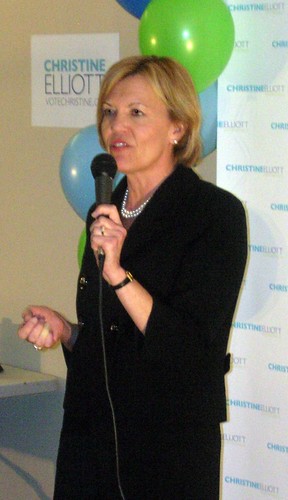 In the wake of Elliott's defeat in the Progressive Conservative leadership contest, many people -- like the Globe and Mail's Adam Radwanski --- are wondering if conservatism in Ontario, formerly a bastion of Canadian red toryism, has irrevocably taken what Brooke Jeffrey once referred to as a hard right turn.
(Jeffrey, for her own part, actually seemed perplexed by her inability to win election by labelling all of her would-be constituents in a riding she was parachuted into as racists, so maybe one should carefully consider the source.)
Hudak's ascension to the leadership of the Ontario Conservative party has many people wondering if perhaps speculation that harder forms of conservatism are needed to prevail in Ontario.
In recent years, the failures of leaders such as John Tory have largely spoken for themselves. There's a real question regarding whether or not red toryism can flourish in Ontario -- or Canada -- any longer, or if it's simply become too "Liberal-lite" to be palatable to conservative voters.
Yet those reputed to be red tories who have gotten closest to the Liberal party have shown their true political colours. In the case of Garth Turner, those colours turned out to be red. In the end however, it turned out that he wasn't a Tory.
When the former Halton MP joined the Liberal party in 2007, then-Liberal leader Stephane Dion crowed that "Tories were becoming Liberals".
Yet, as it turned out, Turner was far from a proper red tory. He lacked that key combination of fiscal conservatism and social principle that has forever properly characterized the red tory. When he finally got his first opportunity to campaign against the Harper Conservatives he chose to embrace divisive fear-based campaigning.
Prior to that, Turner attempted to divide Canadians by attempting to invent a separatist threat in Alberta.
Red toryism has forever held at its core an organic conceptualization of society -- one wherein social tradition is balanced against the public good.
Fear mongering and the creation of artificial -- and largely non-existent -- enemies is as great an insult to the principles of red toryism as one can possibly manage.
Turner had been preceded in joining the Liberal ranks by David Orchard, who had his nomination in a Saskatchewan riding overturned by Dion in favour of a hand-picked candidate who subsequently lost to Conservative Rob Clarke. When Orchard finally got his own turn in 2008, he lost as well -- and lost amidst his own fear-based attempts to campaign against the RCMP.
David Orchard, as many may recall, conceded the federal PC leadership to Peter MacKay only under the condition that MacKay wouldn't discuss unification of that party with the then-Canadian Alliance.
Orchard, for his own part, failed to recognize the value in allowing an organic political bond to develop between Canada's conservatives, and would have rather allowed the Liberal party to govern Canada in perpetuity than be caught dead dealing with the "wrong" conservatives.
If Canadian red toryism has truly reached its nadir it isn't in the defeat of Christine Elliott. Rather, it reached that nadir when those who consider themselves red tories failed to put their political principles ahead of their political vanity.
Whether or not Elliott will turn the tide of this unfortunate trend by working together with her party's new leader, and whether the hard conservatism of Tim Hudak and Mike Harris can lead the Ontario Progressive Conservative party to victory in the next election has yet to be seen.
If Hudak possesses the wisdom to make Elliott a part of his leadership plans for the party, and if Elliott can, in turn, soften the hard conservatism of Hudak and company also has yet to be seen. But it will be interesting to see.
Politics may not necessarily be merely about being nice. But it couldn't hurt to have a nice guy -- or gal -- on side, either.
If politics were merely about being nice, Christine Elliott probably would have won the Ontario Progressive Conservative leadership hands-down.
Conservative Senator Hugh Segal's endorsement of Elliott reinforces this. Segal has often focused on praising the humanity and civility of political leaders. To Seal, these are important values.
Of course, politics is not merely about being nice. Few Canadians, inside or outside of Ontario, would pretend that former Premier Mike Harris is an implicitly nice individual. Yet his endorsement of now-PC leader Tim Hudak certainly went a long way toward establishing his credentials as a "common sense conservative".
Mike Harris won two majority governments in Ontario. Hugh Segal wound up runner-up to former Prime Minister Joe Clark in the 1998 federal Progressive Conservative leadership contest.
Perhaps the lesson is that perhaps, in politics, nice guys really do finish last -- or at least that in politics, as in life, people who are too nice invariably finish last.
In the wake of Elliott's defeat in the Progressive Conservative leadership contest, many people -- like the Globe and Mail's Adam Radwanski --- are wondering if conservatism in Ontario, formerly a bastion of Canadian red toryism, has irrevocably taken what Brooke Jeffrey once referred to as a hard right turn.(Jeffrey, for her own part, actually seemed perplexed by her inability to win election by labelling all of her would-be constituents in a riding she was parachuted into as racists, so maybe one should carefully consider the source.)
Hudak's ascension to the leadership of the Ontario Conservative party has many people wondering if perhaps speculation that harder forms of conservatism are needed to prevail in Ontario.
In recent years, the failures of leaders such as John Tory have largely spoken for themselves. There's a real question regarding whether or not red toryism can flourish in Ontario -- or Canada -- any longer, or if it's simply become too "Liberal-lite" to be palatable to conservative voters.
Yet those reputed to be red tories who have gotten closest to the Liberal party have shown their true political colours. In the case of Garth Turner, those colours turned out to be red. In the end however, it turned out that he wasn't a Tory.
When the former Halton MP joined the Liberal party in 2007, then-Liberal leader Stephane Dion crowed that "Tories were becoming Liberals".
Yet, as it turned out, Turner was far from a proper red tory. He lacked that key combination of fiscal conservatism and social principle that has forever properly characterized the red tory. When he finally got his first opportunity to campaign against the Harper Conservatives he chose to embrace divisive fear-based campaigning.
Prior to that, Turner attempted to divide Canadians by attempting to invent a separatist threat in Alberta.
Red toryism has forever held at its core an organic conceptualization of society -- one wherein social tradition is balanced against the public good.
Fear mongering and the creation of artificial -- and largely non-existent -- enemies is as great an insult to the principles of red toryism as one can possibly manage.
Turner had been preceded in joining the Liberal ranks by David Orchard, who had his nomination in a Saskatchewan riding overturned by Dion in favour of a hand-picked candidate who subsequently lost to Conservative Rob Clarke. When Orchard finally got his own turn in 2008, he lost as well -- and lost amidst his own fear-based attempts to campaign against the RCMP.
David Orchard, as many may recall, conceded the federal PC leadership to Peter MacKay only under the condition that MacKay wouldn't discuss unification of that party with the then-Canadian Alliance.
Orchard, for his own part, failed to recognize the value in allowing an organic political bond to develop between Canada's conservatives, and would have rather allowed the Liberal party to govern Canada in perpetuity than be caught dead dealing with the "wrong" conservatives.
If Canadian red toryism has truly reached its nadir it isn't in the defeat of Christine Elliott. Rather, it reached that nadir when those who consider themselves red tories failed to put their political principles ahead of their political vanity.
Whether or not Elliott will turn the tide of this unfortunate trend by working together with her party's new leader, and whether the hard conservatism of Tim Hudak and Mike Harris can lead the Ontario Progressive Conservative party to victory in the next election has yet to be seen.
If Hudak possesses the wisdom to make Elliott a part of his leadership plans for the party, and if Elliott can, in turn, soften the hard conservatism of Hudak and company also has yet to be seen. But it will be interesting to see.
Politics may not necessarily be merely about being nice. But it couldn't hurt to have a nice guy -- or gal -- on side, either.
Thursday, June 11, 2009
Progressive Conservatism Is Not "Standing for Nothing"
Randy Hillier embraces small tent conservatism
When the Ontario Progressive Conservative party leadership candidates locked horns in a leader's debate at the University of Ottawa, it couldn't have possibly become any clearer that the 2009 Ontario PC leadership race is a battle for the very heart and soul of the party.
The battle lines seem to be drawn: Tim Hudak and Randy Hillier firmly favouring the socons, and Christine Elliott and Frank Klees carrying the banner for procons.
Perhaps no one in the field has embraced this apparent internal culture war as Hillier, who told Elliott that "watered-down conservatism" will not lead the party to victory, and power.
 "When we stand for nothing, we lose everything," Hillier insisted.
Elliott had previously described herself as a "compassionate" conservative.
Hillier seemed to be thinking in a similar vein as Tom Long, who recently gave a speech to the Manning Institute's Networking Conference in which he took note of the fact that, in recent history, hardline Mike Harris' fiscal conservatism has been more successful than its more progressive counterpart -- as recently represented in leadership by John Tory.
Such ideas stand in stark contrast to the widely-disseminated beliefs of Conservative Senator Hugh Segal, who continues to insist that building consensus between the various strains of conservatism -- usually defined in Canada as fiscal conservatism, social conservatism, democratic populism, progressive conservatism, British Toryism and libertarianism -- in order to be truly successful. Segal has often added that the best way to do so is within a "nation and enterprise" model in which government collaborates with society's various institutions in order to produce an environment in which free markets can provide for the needs of Canadians.
As Lloyd Mackey noted of David Orchard -- who ceded the leadership of the federal Progressive Conservative party to Peter MacKay only under the condition that he refused to merge the party with the stronger Canadian Alliance -- people like Hillier and Long represent a sense that their particular brand of conservatism is the only truly "pure" brand of conservatism. Consider the rhetorical implications of Long's description of his favoured strain of conservatism as "unhyphenated" conservatism.
Mackey brilliantly describes individuals with such small-tent notions of conservatism, such as Orchard and Hillier, as virtual mirror images of each other.
Hillier's particular brand of conservatism is best described as a fusion of fiscal conservatism with libertarianism -- a stark contrast to Elliott's mix of fiscal conservatism and progressive conservatism.
Whether Hillier agrees with it or not, Elliott's progressive conservatism is necessary to strike a balance with his particular brand of conservatism. Even though Long may disagree, the only conservatism that has ever proven sustainable in Ontario was a conservatism respectful of progressive values.
Though Long may not understand it, Mike Harris' hard fiscal conservative coalition was not sustainable without its progressive counterparts. If it had been, Ontario wouldn't be governed by the Dalton McGuinty Liberal party right now.
Randy Hillier's and Christine Elliott's strains of conservatism need each other. It's rather unfortunate that Hillier doesn't seem to have the wisdom to recognize this.
Other bloggers writing about this topic:
Lumpy, Grumpy and Frumpy - "Randy Hillier for Premier"
When the Ontario Progressive Conservative party leadership candidates locked horns in a leader's debate at the University of Ottawa, it couldn't have possibly become any clearer that the 2009 Ontario PC leadership race is a battle for the very heart and soul of the party.
The battle lines seem to be drawn: Tim Hudak and Randy Hillier firmly favouring the socons, and Christine Elliott and Frank Klees carrying the banner for procons.
Perhaps no one in the field has embraced this apparent internal culture war as Hillier, who told Elliott that "watered-down conservatism" will not lead the party to victory, and power.
"When we stand for nothing, we lose everything," Hillier insisted.Elliott had previously described herself as a "compassionate" conservative.
Hillier seemed to be thinking in a similar vein as Tom Long, who recently gave a speech to the Manning Institute's Networking Conference in which he took note of the fact that, in recent history, hardline Mike Harris' fiscal conservatism has been more successful than its more progressive counterpart -- as recently represented in leadership by John Tory.
Such ideas stand in stark contrast to the widely-disseminated beliefs of Conservative Senator Hugh Segal, who continues to insist that building consensus between the various strains of conservatism -- usually defined in Canada as fiscal conservatism, social conservatism, democratic populism, progressive conservatism, British Toryism and libertarianism -- in order to be truly successful. Segal has often added that the best way to do so is within a "nation and enterprise" model in which government collaborates with society's various institutions in order to produce an environment in which free markets can provide for the needs of Canadians.
As Lloyd Mackey noted of David Orchard -- who ceded the leadership of the federal Progressive Conservative party to Peter MacKay only under the condition that he refused to merge the party with the stronger Canadian Alliance -- people like Hillier and Long represent a sense that their particular brand of conservatism is the only truly "pure" brand of conservatism. Consider the rhetorical implications of Long's description of his favoured strain of conservatism as "unhyphenated" conservatism.
Mackey brilliantly describes individuals with such small-tent notions of conservatism, such as Orchard and Hillier, as virtual mirror images of each other.
Hillier's particular brand of conservatism is best described as a fusion of fiscal conservatism with libertarianism -- a stark contrast to Elliott's mix of fiscal conservatism and progressive conservatism.
Whether Hillier agrees with it or not, Elliott's progressive conservatism is necessary to strike a balance with his particular brand of conservatism. Even though Long may disagree, the only conservatism that has ever proven sustainable in Ontario was a conservatism respectful of progressive values.
Though Long may not understand it, Mike Harris' hard fiscal conservative coalition was not sustainable without its progressive counterparts. If it had been, Ontario wouldn't be governed by the Dalton McGuinty Liberal party right now.
Randy Hillier's and Christine Elliott's strains of conservatism need each other. It's rather unfortunate that Hillier doesn't seem to have the wisdom to recognize this.
Other bloggers writing about this topic:
Lumpy, Grumpy and Frumpy - "Randy Hillier for Premier"
Wednesday, June 03, 2009
Simply Too Close to Call
No clear front-runner in Ontario PC leadership campaign
As Ontario Progressive Conservatives weigh their leadership candidates ahead of the leadership convention later this month, it seems that the jury is still out on the matter of leadership.
In a recent poll of Ontario Tories Tim Hudak narrowly leads the pack with 26% of decided voters, with Christine Elliott trailing by four points, at 22%. Frank Klees is sitting third with 17% and Frank Hillier trails the pack with 14%.
19% of Ontario's Progressive Conservatives remain undecided.
Considering that no one candidate has enough support to break the 50% barrier on the first ballot even if all undecided voters were to gravitate to their candidacy, second choices will become very important in this contest.
Christine Elliott is the top second choice with 17%, leading Hudak by a single point in this category. Klees follows by yet another single point at 15%, and Hillier again trails the pack as the second choice of 7% of decided Progressive Conservatives.
In the closest position that passes for front-runner status in this campaign, Hudak enjoys the benefit of an endorsement by Mike Harris, the last Progressive Conservative to lead his party to a majority government in Queen's Park -- even if the first of the two was an unlikely majority.
Yet the National Post's Dan Arnold notes that Hudak may be suffering the same affliction that Alberta PC leadership candidate Jim Dinning succumbed to. Dinning, along with Ted Morton, eventually compromised the campaign to Ed "Stalemate" Stelmach.
As the presumed frontrunner, Hudak's campaign has suffered from a lack of tangible policy. Hudak's policy centrepiece, a bid to abolish the Ontario Human Rights Commission, is believed to have driven support away from his campaign to that of Elliott, his presumed primary rival in this contest.
With these particular conditions, one can likely expect a stalemate to emerge at the June 27 PC leadership convention. Under those kinds of conditions, one may expect Frank Klees to replicate Ed Stelmach's feat, and emerge as a brokered leader.
This may not be such a bad thing. Stelmach went on to win one of the most dominant majority governments in the history of Alberta.
Then again, Ontario is an incredibly far cry from Alberta. As Tory leader Frank Klees may have to struggle to find life, let alone be assured a long tenure in the Premier's Office.
As Ontario Progressive Conservatives weigh their leadership candidates ahead of the leadership convention later this month, it seems that the jury is still out on the matter of leadership.
In a recent poll of Ontario Tories Tim Hudak narrowly leads the pack with 26% of decided voters, with Christine Elliott trailing by four points, at 22%. Frank Klees is sitting third with 17% and Frank Hillier trails the pack with 14%.
19% of Ontario's Progressive Conservatives remain undecided.
Considering that no one candidate has enough support to break the 50% barrier on the first ballot even if all undecided voters were to gravitate to their candidacy, second choices will become very important in this contest.
Christine Elliott is the top second choice with 17%, leading Hudak by a single point in this category. Klees follows by yet another single point at 15%, and Hillier again trails the pack as the second choice of 7% of decided Progressive Conservatives.
In the closest position that passes for front-runner status in this campaign, Hudak enjoys the benefit of an endorsement by Mike Harris, the last Progressive Conservative to lead his party to a majority government in Queen's Park -- even if the first of the two was an unlikely majority.
Yet the National Post's Dan Arnold notes that Hudak may be suffering the same affliction that Alberta PC leadership candidate Jim Dinning succumbed to. Dinning, along with Ted Morton, eventually compromised the campaign to Ed "Stalemate" Stelmach.
As the presumed frontrunner, Hudak's campaign has suffered from a lack of tangible policy. Hudak's policy centrepiece, a bid to abolish the Ontario Human Rights Commission, is believed to have driven support away from his campaign to that of Elliott, his presumed primary rival in this contest.
With these particular conditions, one can likely expect a stalemate to emerge at the June 27 PC leadership convention. Under those kinds of conditions, one may expect Frank Klees to replicate Ed Stelmach's feat, and emerge as a brokered leader.
This may not be such a bad thing. Stelmach went on to win one of the most dominant majority governments in the history of Alberta.
Then again, Ontario is an incredibly far cry from Alberta. As Tory leader Frank Klees may have to struggle to find life, let alone be assured a long tenure in the Premier's Office.
Tuesday, May 05, 2009
In Defense of Hyphenated Conservatism
Many strains of conservatism are necessary to build a movement
In an (admittedly) older post on the National Post's Full Comment blog, a speech given by Tom Long sheds some light on some of the deeper conflicts within Canadian conservatism, particularly in Ontario.
As Long explains, this conflict is between the hyphenated progressive conservative strain, and what he describes as an "unhyphenated" strain of pure conservatism.
It's hard to believe that Ontarian conservatism wouldn't feature libertarians, social conservatives or neo-conservatives. The presence of a Reform party of Ontario suggests that there are more than a few reformers in the province.
Even for the existence of two dominant strains in Ontarian conservatism requires acknowledgment of that pluralism. While social conservatism and neo-conservatism may fold neatly into one stream -- one poorly described as "unhyphenated conservatism" -- libertarianism and red toryism can be folded into another, more progressive stream.
As Long notes, the ideological flexibility of progressive strains of conservatism gives them a significant political advantage over more ideologically rigid strains.
Progressive conservatism can only remain conservatism so long as it continues to stand on conservative values. Rent control policies have proven to fail under any conditions other than the greatest duress, and can be shown to actually reduce the availability of rental housing, and severely harming the ability to find low-cost housing of the people who need it most.
To submit to the inevitability of socialist policies that are doomed to failure is to fail to stand on conservative principles. Principled conservatives would be brave enough to fight an election, if need be, based on rent control. At least then when such policies fail they won't have any conservative fingerprints on them.
Aside from this, it's very important that Canadian conservatism learn to moderate itself not according to mere pragnatism -- what could be done -- rather than what should be done.
To moderate conservatism merely according to the things that can be done is to risk acting on conservative principles only when it is convenient. Sometimes conservative principles must be observed when it might be politically inconvenient.
One leader who was unafraid to act on conservative principles was former Ontario Premier Mike Harris.
Initially, Harris' Common Sense Revolution was successful in controlling militancy among public sector unions and in bringing provincial spending under control. However, he would later have to increase health care funding in the wake of transfer cuts by the Liberal federal government of the day.
However, Harris' push toward replacing government-funded services with community-based volunteer services turned out to be a failure, mostly because Harris' government never implemented any kind of programming to provide an incentive for volunteerism.
Justin Trudeau's proposed national volunteerism program may ironically provide the infrastructure necessary for conservative reforms such as Harris' to be successful in future, but only if conservative politicians perceive the wisdom of his private members' bill and support it.
The electoral coalition Mike Harris used to get elected proved not to be sustainable over time. Upon his resignation his successor, Ernie Eves, lost the next election to now-Ontario Premier Dalton McGuinty.
Not only was that coalition not sustainable enough to help the Ontario Tories hold the government, it has yet to be rebuilt in the six years since their defeat in the 2003 election.
Even if it were true that the progressive conservative strain has become dominant within Ontarian politics, the answer certainly is not to push it away as Long seems to think the progressive conservatives have done to his so-called "unhyphenated" conservatives.
Rather the answer is for Ontarian conservatives to come together and do what Preston Manning spent the '90s trying to get federal Progressive Conservatives and Reformers to do -- come together to establish a conservative consensus, consisting of agreement on key conservative goals, and ongoing negotiation regarding what secondary goals Ontarian conservatives will pursue.
The answer for Ontarian conservatism is the same as the answer for Canadian conservatism at the federal level.
In an (admittedly) older post on the National Post's Full Comment blog, a speech given by Tom Long sheds some light on some of the deeper conflicts within Canadian conservatism, particularly in Ontario.
As Long explains, this conflict is between the hyphenated progressive conservative strain, and what he describes as an "unhyphenated" strain of pure conservatism.
"What does conservatism mean in a province which is as geographically dispersed, as highly urbanized and as diverse as Ontario? In the political timeline that I have been active, our conservatism has resolved itself into two major streams. One is a progressive strain and the other is an unhyphenated conservatism strain."Long is very likely underestimating the pluralism within conservatism in Ontario.
It's hard to believe that Ontarian conservatism wouldn't feature libertarians, social conservatives or neo-conservatives. The presence of a Reform party of Ontario suggests that there are more than a few reformers in the province.
Even for the existence of two dominant strains in Ontarian conservatism requires acknowledgment of that pluralism. While social conservatism and neo-conservatism may fold neatly into one stream -- one poorly described as "unhyphenated conservatism" -- libertarianism and red toryism can be folded into another, more progressive stream.
As Long notes, the ideological flexibility of progressive strains of conservatism gives them a significant political advantage over more ideologically rigid strains.
"The progressive strain has been the dominant strain in provincial politics for a long time. For 42 years we conservatives were the government of the province of Ontario and had largely a progressive point of view. Progressives make some fundamental assumptions. The first assumption is that there is going to be an inexorable drift in terms of public policy making to the left. And our job is to inject some prudence into that process. The best example I can give you is before we lost majority government in 1975 and the Stephen Lewis New Democrats held the balance of power.But with that ideological flexibility comes evident risk.
We were very quick to implement rent controls in Ontario. Privately, the senior members of the Progressive Conservative government were quite clear that they had no faith that rent controls work. But, they said, rent controls are inevitable and it is much better if we are in power and we are the ones implementing them than if we let the other guys do it."
Progressive conservatism can only remain conservatism so long as it continues to stand on conservative values. Rent control policies have proven to fail under any conditions other than the greatest duress, and can be shown to actually reduce the availability of rental housing, and severely harming the ability to find low-cost housing of the people who need it most.
To submit to the inevitability of socialist policies that are doomed to failure is to fail to stand on conservative principles. Principled conservatives would be brave enough to fight an election, if need be, based on rent control. At least then when such policies fail they won't have any conservative fingerprints on them.
"The second assumption progressives have made in our movement in Ontario is that all voters are in the centre and the way to political victory is to tie down the right but then move as quickly as you can to the centre to force the Liberals left. Senator Hugh Segal used to tell the story of how premier Bill Davis, when he got the sense that the right wing was getting a little cranky, used to go out and declare that the monarchy was under attack and then he’d organize a province-wide campaign to defend it."It's very unlikely that any Conservative would find an abundance of defenders for the monarchy today.
Aside from this, it's very important that Canadian conservatism learn to moderate itself not according to mere pragnatism -- what could be done -- rather than what should be done.
To moderate conservatism merely according to the things that can be done is to risk acting on conservative principles only when it is convenient. Sometimes conservative principles must be observed when it might be politically inconvenient.
One leader who was unafraid to act on conservative principles was former Ontario Premier Mike Harris.
"We saw brief flashes of the other strain of conservatism in Ontario, the unhyphenated conservatism, in the 1980s. But it was really tested from 1990 through 2002 when Mike Harris was leader of the party. The assumptions that this strain of conservatism makes are fundamentally different from the ones the progressive strain of conservatism would make.Harris proved to be successful in some regards, and unsuccessful in others.
In the Harris years, the first assumption we made is that conservative ideas are not only politically viable but they are absolutely necessary to ensure that our province is put on the path to prosperity. There was considerable effort not only to identify policies but to ensure we were prepared to do the heavy lifting necessary to go out and sell them. So the policies that I would highlight would be injecting quality into public education and health care, powerful tax cuts to create economic growth and jobs, an end to unfair hiring quotas, a repeal of Bob Rae’s labour legislation and respect for the institutions of law and order in the province."
Initially, Harris' Common Sense Revolution was successful in controlling militancy among public sector unions and in bringing provincial spending under control. However, he would later have to increase health care funding in the wake of transfer cuts by the Liberal federal government of the day.
However, Harris' push toward replacing government-funded services with community-based volunteer services turned out to be a failure, mostly because Harris' government never implemented any kind of programming to provide an incentive for volunteerism.
Justin Trudeau's proposed national volunteerism program may ironically provide the infrastructure necessary for conservative reforms such as Harris' to be successful in future, but only if conservative politicians perceive the wisdom of his private members' bill and support it.
"The second assumption that we made is that there is a viable conservative coalition in the province of Ontario that can deliver a majority government and is sustainable over time. That required a realignment of political thinking in Ontario and political identification in Ontario. That meant seizing the agenda. This strain of conservatism believes that specificity is your friend and being bold and clear, and being prepared to stand up and sell these ideas, is the way to political success."When evaluated according to Ontario's more recent political history, this assumption turns out to be a poor one.
The electoral coalition Mike Harris used to get elected proved not to be sustainable over time. Upon his resignation his successor, Ernie Eves, lost the next election to now-Ontario Premier Dalton McGuinty.
Not only was that coalition not sustainable enough to help the Ontario Tories hold the government, it has yet to be rebuilt in the six years since their defeat in the 2003 election.
"The two strains have typically come together and clashed within our party over the argument of who can make our party relevant in terms of urban voters, female voters and visible minority voters. For 42 years our party has taken tremendous efforts to attract all of these voters. Under Mike Harris we were able to win 45% of the vote in two successful campaigns. In 1995 we won one half of the seats in the '416' area — the core Toronto part of the GTA. In 1999 after four years of government, and after a lot of controversy and a hard fought campaign, Mike Harris held on to one third of the seats. We have won none of those seats since Mike Harris has been premier despite the fact that we have had two leaders from the progressive wing of the party who ran on the idea that only they could make us relevant."The idea, of course, should not be that these two strains of conservatism clash. Rather, the idea should be that all the strains of conservatism, all of which are hyphenated according to their specific differences, should work together.
Even if it were true that the progressive conservative strain has become dominant within Ontarian politics, the answer certainly is not to push it away as Long seems to think the progressive conservatives have done to his so-called "unhyphenated" conservatives.
Rather the answer is for Ontarian conservatives to come together and do what Preston Manning spent the '90s trying to get federal Progressive Conservatives and Reformers to do -- come together to establish a conservative consensus, consisting of agreement on key conservative goals, and ongoing negotiation regarding what secondary goals Ontarian conservatives will pursue.
The answer for Ontarian conservatism is the same as the answer for Canadian conservatism at the federal level.
Saturday, February 28, 2009
Ask Not What Your Country Can Do For You
But what you can do for your democracy
One of the under-covered stories of the past week was Justin Trudeau's first bill in Parliament -- a private member's bill calling for a national policy on volunteerism.
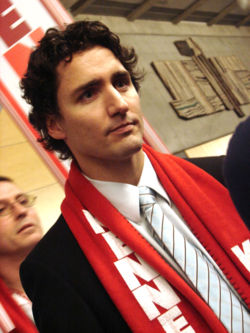 "Young people get a bad rap, often, for being apathetic, disconnected and cynical about the world," Trudeau said after tabling his bill. "It's not because they don't care about the world. On the contrary; it's because they care so much that they're deeply frustrated that they don't have ways to make the world a better place. They don't have a voice that gets heard to shape the world that will be theirs someday, they keep getting told."
The bill would call for public hearings on the topic of volunteerism as well as a study of how governments support volunteerism in other countries.
Although his lineage makes Justin Trudeau a natural target for conservatives, Trudeau's private member's bill is actually a dream for almost any small-c conservative who is truly faithful to the philosophy.
One of the key tenets of former Progressive Conservative premier of Ontario Mike Harris' Common Sense Revolution was the idea that volunteer efforts were going to replace state activism in many key areas. This never took place because Harris' government never made any real effort to help foster a stronger infrastructure of Civil Society Organizations.
Such an effort, by its very nature, relies on citizens to stand up, determine their own interests, then contribute their efforts toward the service of those interests. Trudeau's bill exemplifies Benjamin Barber's vision of strong democracy -- one wherein citizenship is treated more like a public office than as a passive relationship with the state.
Trudeau's bill fits snugly into Barber's blueprint of a do-it-yourself democracy, one wherein individual autonomy and citizenship is enhanced by diminishing reliance on the state.
Successfully building a volunteer infrastructure in Canada could allow conservative governments to reduce and refocus spending like never before.
While the idyllic days of church-operated hospitals funded by private donations and private fundraising efforts are likely to never return -- the cost of modern healthcare is prohibitive to a pure volunteer approach and government involvement will always remain necessary -- Trudeau's bill, if properly implemented, could lead to a much healthier and stronger democracy in Canada, predicated on a model of strong citizenship.
Unfortunately there are some who don't share Trudeau's wisdom. Bloc Quebecois MP Nicolas Dufor accused Trudeau's bill of fostering "federalist propaganda".
It's unsurprising that the Bloc would oppose Trudeau's bill. Any government policy that helped the development of volunteer organizations could very easily be used by citizens who oppose separatism to organize their own, federalist organizations.
One can only wonder if separatists would enjoy similar good fortune.
If the Liberal party were wise it would adopt Trudeau's private member's bill as an opposition bill. Likewise, if the governing Conservatives were wise they would adopt Trudeau's bill as governmental policy.
Private member's bills don't often make the full transition fron introduction to being implemented, but the base wisdom of Justin Trudeau's bill is impossible to overlook.
Justin Trudeau may yet turn out to be a stronger democrat than his father ever pretended to be.
One of the under-covered stories of the past week was Justin Trudeau's first bill in Parliament -- a private member's bill calling for a national policy on volunteerism.
"Young people get a bad rap, often, for being apathetic, disconnected and cynical about the world," Trudeau said after tabling his bill. "It's not because they don't care about the world. On the contrary; it's because they care so much that they're deeply frustrated that they don't have ways to make the world a better place. They don't have a voice that gets heard to shape the world that will be theirs someday, they keep getting told."The bill would call for public hearings on the topic of volunteerism as well as a study of how governments support volunteerism in other countries.
Although his lineage makes Justin Trudeau a natural target for conservatives, Trudeau's private member's bill is actually a dream for almost any small-c conservative who is truly faithful to the philosophy.
One of the key tenets of former Progressive Conservative premier of Ontario Mike Harris' Common Sense Revolution was the idea that volunteer efforts were going to replace state activism in many key areas. This never took place because Harris' government never made any real effort to help foster a stronger infrastructure of Civil Society Organizations.
Such an effort, by its very nature, relies on citizens to stand up, determine their own interests, then contribute their efforts toward the service of those interests. Trudeau's bill exemplifies Benjamin Barber's vision of strong democracy -- one wherein citizenship is treated more like a public office than as a passive relationship with the state.
Trudeau's bill fits snugly into Barber's blueprint of a do-it-yourself democracy, one wherein individual autonomy and citizenship is enhanced by diminishing reliance on the state.
Successfully building a volunteer infrastructure in Canada could allow conservative governments to reduce and refocus spending like never before.
While the idyllic days of church-operated hospitals funded by private donations and private fundraising efforts are likely to never return -- the cost of modern healthcare is prohibitive to a pure volunteer approach and government involvement will always remain necessary -- Trudeau's bill, if properly implemented, could lead to a much healthier and stronger democracy in Canada, predicated on a model of strong citizenship.
Unfortunately there are some who don't share Trudeau's wisdom. Bloc Quebecois MP Nicolas Dufor accused Trudeau's bill of fostering "federalist propaganda".
It's unsurprising that the Bloc would oppose Trudeau's bill. Any government policy that helped the development of volunteer organizations could very easily be used by citizens who oppose separatism to organize their own, federalist organizations.
One can only wonder if separatists would enjoy similar good fortune.
If the Liberal party were wise it would adopt Trudeau's private member's bill as an opposition bill. Likewise, if the governing Conservatives were wise they would adopt Trudeau's bill as governmental policy.
Private member's bills don't often make the full transition fron introduction to being implemented, but the base wisdom of Justin Trudeau's bill is impossible to overlook.
Justin Trudeau may yet turn out to be a stronger democrat than his father ever pretended to be.
Thursday, January 15, 2009
Ontario Reform Party: Not-So-Giant Killers?
Ontario Reform party targeting John Tory in by-election
After the Ontario Provincial election of 2007, Ontario Progressive Conservative leader John Tory has been weighing his political options for more than a year.
 In that election, Tory lost in his riding of Don Valley West. Now, more than a year later, Tory has decided to seek election in a by-election in Haliburton-Kawartha Lakes-Brock, a contest in which Premier Dalton McGuinty has (wisely) opted to delay in order for other parties to nominate candidates.
The Ontario Liberals -- who in 2005 contested the last by-election Tory won -- have yet to announce whether or not they'll contest this riding.
The Reform party of Ontario, however, has announced they'll be running a candidate against Tory. They just haven't announced who.
"We were going to run a candidate wherever John Tory was going run," announced Reform party leader Brad Harness.
That being said, one shouldn't underestimate the Reform party's desire to defeat Tory. Harness has referred to Tory as an "urbanite", and as a member of "the Canadian establishment, the moneyed establishment".
Certainly, there may be more to Harness' focus on defeating John Tory than simply that.
The Reform party of Ontario attempts to fuse Preston Manning's focus on populism with former Ontario Premier Mike Harris' fiscal conservatism. The official party doctrine appears to be a combination between Manning's "new Canada" and Harris' "common sense revolution".
Targeting John Tory is, similarly, a combination of two pages out of Preston Manning's old political playbook.
When the federal Reform party contested their first election in 1984, Manning himself attempted to defeat Clark in his riding of Yellowhead. Among the memorable events of that election was a horseback posse formed to confront Clark about his policies at the dedication of a railway museum in the riding -- a dedication that Clark wound up skipping.
The media stunt was staged complete with wanted posters accusing Clark of failing to represent the interests of his constituents.
The other strategy Harness is emulating here is in allowing a candidate nominated from within the riding to contest the by-election against Tory. Preston Manning did this when he declined to run in a 1989 by-election in Beaver River. Instead Deborah Grey -- the Reform party's first ever MP -- ran in that election and won.
It's hard to believe that Brad Harness didn't closely consider these two examples before making the decision to attempt to defeat Tory in Haliburton-Kawartha Lakes-Brock.
The idea is clearly to try to establish himself as an anti-establishment figure, taking on the province's established political leaders while also establishing himself as a leader with deep faith in the grassroots of his party.
But considering the chilly reception the federal Reform party received in Ontario, it will be far more difficult for Harness to establish such credentials for himself in Ontario than it was for Preston Manning and the federal Reformers to do so in Alberta.
To make Harness' strategy further dubious is the fact that John Tory isn't nearly the political giant in Ontario that Joe Clark had established himself as in Alberta -- at least at the time. There's a difference between taking on a federal Minister and former Prime Minister and taking on a Progressive Conservative leader who can't even win his own seat.
In other words, John Tory isn't so giant, and the Ontario Reform party may not be able to 'kill' him.
After the Ontario Provincial election of 2007, Ontario Progressive Conservative leader John Tory has been weighing his political options for more than a year.
In that election, Tory lost in his riding of Don Valley West. Now, more than a year later, Tory has decided to seek election in a by-election in Haliburton-Kawartha Lakes-Brock, a contest in which Premier Dalton McGuinty has (wisely) opted to delay in order for other parties to nominate candidates.The Ontario Liberals -- who in 2005 contested the last by-election Tory won -- have yet to announce whether or not they'll contest this riding.
The Reform party of Ontario, however, has announced they'll be running a candidate against Tory. They just haven't announced who.
"We were going to run a candidate wherever John Tory was going run," announced Reform party leader Brad Harness.
That being said, one shouldn't underestimate the Reform party's desire to defeat Tory. Harness has referred to Tory as an "urbanite", and as a member of "the Canadian establishment, the moneyed establishment".
Certainly, there may be more to Harness' focus on defeating John Tory than simply that.
The Reform party of Ontario attempts to fuse Preston Manning's focus on populism with former Ontario Premier Mike Harris' fiscal conservatism. The official party doctrine appears to be a combination between Manning's "new Canada" and Harris' "common sense revolution".
Targeting John Tory is, similarly, a combination of two pages out of Preston Manning's old political playbook.
When the federal Reform party contested their first election in 1984, Manning himself attempted to defeat Clark in his riding of Yellowhead. Among the memorable events of that election was a horseback posse formed to confront Clark about his policies at the dedication of a railway museum in the riding -- a dedication that Clark wound up skipping.
The media stunt was staged complete with wanted posters accusing Clark of failing to represent the interests of his constituents.
The other strategy Harness is emulating here is in allowing a candidate nominated from within the riding to contest the by-election against Tory. Preston Manning did this when he declined to run in a 1989 by-election in Beaver River. Instead Deborah Grey -- the Reform party's first ever MP -- ran in that election and won.
It's hard to believe that Brad Harness didn't closely consider these two examples before making the decision to attempt to defeat Tory in Haliburton-Kawartha Lakes-Brock.
The idea is clearly to try to establish himself as an anti-establishment figure, taking on the province's established political leaders while also establishing himself as a leader with deep faith in the grassroots of his party.
But considering the chilly reception the federal Reform party received in Ontario, it will be far more difficult for Harness to establish such credentials for himself in Ontario than it was for Preston Manning and the federal Reformers to do so in Alberta.
To make Harness' strategy further dubious is the fact that John Tory isn't nearly the political giant in Ontario that Joe Clark had established himself as in Alberta -- at least at the time. There's a difference between taking on a federal Minister and former Prime Minister and taking on a Progressive Conservative leader who can't even win his own seat.
In other words, John Tory isn't so giant, and the Ontario Reform party may not be able to 'kill' him.
Subscribe to:
Posts (Atom)