
Showing posts with label Tim Hudak. Show all posts
Showing posts with label Tim Hudak. Show all posts
Tuesday, October 04, 2011
TDSB on Parents: Screw You. Does the Ontario Liberal Party Agree?
TDSB refuses to hear concerns of parents on anti-discrimination curriculum
As the Ontario election showly plods toward its conclusion, it seems that the Liberal Party has become increasingly frustrated with its inability to take a lead and put this election away.
Now, they're resorting to their typical tactic of last resort: accusing their opponents of bigotry.
The Ontario Progressive Conservative Party has taken up the issue of the Toronto District School Board's anti-discrimination curriculum, placing it at the centre of the election. And rightfully so.
The Liberal Party and various far-left groups have predictably declared a new flier being distributed by the Tories to be "homophobic". It's typical far-left bully language, trying to intimidate their opponents into silence.
It was tried once before. When a controversial sex education program was proposed by the McGuinty government, any who objected to the education of Grade 6 students in matters such as anal sex were declared to be homophobic. Contrary to the intention of activist groups to intimidate religious groups, and ordinary parents, out of the debate, public pressure instead built until McGuinty's government was forced to postpone the changes for further consideration.
The TDSB apparently had no appetite for "further consideration", or even for public consideration at all. As reported by Michael Coren, the Equity Advisory Committee of the TDSB decided that public consultation was unnecessary.
One member of the committee who attempted to raise objections to the curriculum was shouted down and declared a homophobe by other members of the committee. The committee, when contacted by producers of Coren's show, were told that this woman was "only a parent." They also accused her of being "singularly destructive."
Nothing could make the attitude of these people toward parents any more clear: the concerns of parents are not to be heard, are not to be considered, are not even to be taken seriously.
They believe they have all the power, and it's their clear intention to deny any modicum of power to parents; at least to those who don't blindly support their extreme agenda.
It isn't that fighting bullying in schools through education is an extreme agenda. However, subjecting children to demagogic (not pedagogic) far-left reeducation programs over the objections of parents very clearly is.
Not everything within the TDSB anti-discrimination curriculum is extreme and outrageous. For example, teaching kids about different family structures is entirely reasonable; many of these children are already growing up in non-conventional family units, so this is very much a live issue for them.
The question of whether or not they're a boy or a girl, however, and the curriculum's teachings on transgendered persons, is not a live issue for these kids. And the recent case of Thomas Lobel, a California child who has apparently decided, on a whim, that he would rather be a girl than a boy.
His adoptive parents have decided to indulge this whim by putting him on hormone blockers, hoping that he can decide by puberty whether or not he wants to be a boy or a girl.
Anyone who imagines a child, even at age 14, is psychologically qualified to make that kind of life-defining decision, is simply out of their minds.
This case underscores precisely what is so irresponsible and reckless about what the TDSB wants to teach young children; planting the question in their heads about whether they are a boy or a girl long before they can be expected to make such a decision while understanding the gravity of the choice.
Contrary to claims by the Ontario Liberal Party, there is nothing inaccurate about the flier. It accurately reflects how eager the TDSB is to trample parental rights in their well-intentioned desire to stop the bullying of gay, lesbian and transgendered people in society.
It's not their intentions that are misguided; it's their actions.
The Toronto District School Board is apparently more than content to thumb its nose at the rights of parents. In jumping all over this issue, the Liberal Party seems to be sending a message to the parents of Ontario that it's willing to do the same.
They should not be rewarded at the polls for this. Quite the contrary: they should be punished with the loss of their government until such a time that they are willing to approach these issues responsibly.


Monday, May 09, 2011
Tim Hudak Flip-Flopping on Human Rights Commissions?
Tim Hudak to play Mr Fix-it with human rights commissions
When the Ontario Progressive Conservative party was choosing its leader in 2009, a quiet battle was waged over the future of Ontario's Human Rights Commission.
Randy Hillier had promised to scrap the tribunals altogether. Fellow contender Christine Elliott offered a more sobered program of reform.
Hillier wound up supporting Hudak after he promised to support his position on the matter. But now it seems that Hudak has changed his mind.
Speaking in Ottawa, Hudak promised reforms that would reduce the backlog of cases before the human rights tribunal and reduce the number of frivolous complaints. He would also institute rules of procedure closer to those of an actual court of law.
For many of those who accept that human rights commissions have a legitimate role to play in Canada, this is a welcome development. However, many of those who were enthused by Hudak embracing Hillier's policy promise are now feeling betrayed; among them is, unsurprisingly, Sun TV's Ezra Levant.
Interestingly enough, Hillier himself doesn't seem to feel betrayed.
On one hand, there seems to be a real air of pragmatism under Hudak's seeming shift. With an election expected to be held in autumn 2011, the McGuinty Liberals can be expected to campaign hard on this issue, fear-mongering the entire way.
On the other hand, Hillier gathered a great deal of support on the back of his promise to shut down the Ontario Human Rights Tribunal for good. Those who backed Hillier -- then Hudak -- on the strength of that promise may feel that Hudak is turning his back on them.
Moreover, considering some of the ridiculous rulings to come out of Human Rights Tribunals across Canada -- the Guy Earle case is just one recent example -- support for abolishing these institutions outright is almost certain to grow. Hudak may be preemptively acting to cut himself off from those supporters.
In the long run, Ezra Levant may not be the only one angry about Tim Hudak's change of heart.
When the Ontario Progressive Conservative party was choosing its leader in 2009, a quiet battle was waged over the future of Ontario's Human Rights Commission.
Randy Hillier had promised to scrap the tribunals altogether. Fellow contender Christine Elliott offered a more sobered program of reform.
Hillier wound up supporting Hudak after he promised to support his position on the matter. But now it seems that Hudak has changed his mind.
Speaking in Ottawa, Hudak promised reforms that would reduce the backlog of cases before the human rights tribunal and reduce the number of frivolous complaints. He would also institute rules of procedure closer to those of an actual court of law.
For many of those who accept that human rights commissions have a legitimate role to play in Canada, this is a welcome development. However, many of those who were enthused by Hudak embracing Hillier's policy promise are now feeling betrayed; among them is, unsurprisingly, Sun TV's Ezra Levant.
Interestingly enough, Hillier himself doesn't seem to feel betrayed.
On one hand, there seems to be a real air of pragmatism under Hudak's seeming shift. With an election expected to be held in autumn 2011, the McGuinty Liberals can be expected to campaign hard on this issue, fear-mongering the entire way.
On the other hand, Hillier gathered a great deal of support on the back of his promise to shut down the Ontario Human Rights Tribunal for good. Those who backed Hillier -- then Hudak -- on the strength of that promise may feel that Hudak is turning his back on them.
Moreover, considering some of the ridiculous rulings to come out of Human Rights Tribunals across Canada -- the Guy Earle case is just one recent example -- support for abolishing these institutions outright is almost certain to grow. Hudak may be preemptively acting to cut himself off from those supporters.
In the long run, Ezra Levant may not be the only one angry about Tim Hudak's change of heart.
Friday, April 08, 2011
The Elephant in Ontario Classrooms
Catholic teachers campaigning on who their bosses will be
As Ontario inches closer and closer to an expected provincial election in which the Dalton McGuinty government will fight for its political life, an elephant has crept into the room.
And not just the political room. Into the classroom.
The Ontario English Catholic Teachers' Association is charging its members a mandatory $60 political levy to campaign against Tim Hudak and the Progressive Conservative Party. They plan to assemble a warchest of $3 million.
“Our goal is to elect an education-friendly legislature in order to protect the gains in education made over the past eight years,” OECTA President James Ryan said in a statement.
What Ryan basically means by this is that they'll work to elect a government that will enshrine their interests in education policy.
“When we hear words like merit pay, we think of the Tea Party states in the United States, who have all gone to that and are having massive disruptions in their systems,” he continued, blowing the far-left dog whistle. “We look at Mr Hudak’s statement that there has to be cuts to balance the budget and the only thing he’s willing to protect is front-line health care. Well education isn’t in there.”
But Ryan doesn't have his entire union behind him on this matter. Muted voices of dissent are slowly starting to trickle out from concerned union members. Tim Hudak should know; he's been hearing from them.
“We’re receiving a lot of emails and calls from individual teachers who are quite upset to see their union dues being used in this way, as part of the Working Families Coalition,” Hudak reported.
MPP Lisa MacLeod is deeply concerned about the position dissident teachers have been placed in.
“We’re looking at about $3 million which will go towards ads to defeat Tim Hudak, myself, other PC candidates,” MacLeod said. “And there’s no opportunity for my supporters or any teacher who doesn’t agree with this tactic to opt out. And I think that’s unfair.”
She's precisely right. And it's not just unfair to the teachers.
In the Toronto Sun, Christina Blizzard describes the move as political blackmail. And she's precisely right. It's absolutely perverse that any government employee, in any regard, could campaign on essentially who their bosses will be.
It's doubly perverse that they're doing it before the election is even called.
It's a stark reminder of some of the reforms needed in Canadian election laws; in no province in Canada -- or at the federal level -- should it be legal for public sector unions to campaign during an election. It's a stark and unacceptable conflict of interest.
This elephant cannot be tolerated in classrooms anywhere in Canada. It's time for it to stop.
As Ontario inches closer and closer to an expected provincial election in which the Dalton McGuinty government will fight for its political life, an elephant has crept into the room.
And not just the political room. Into the classroom.
The Ontario English Catholic Teachers' Association is charging its members a mandatory $60 political levy to campaign against Tim Hudak and the Progressive Conservative Party. They plan to assemble a warchest of $3 million.
“Our goal is to elect an education-friendly legislature in order to protect the gains in education made over the past eight years,” OECTA President James Ryan said in a statement.
What Ryan basically means by this is that they'll work to elect a government that will enshrine their interests in education policy.
“When we hear words like merit pay, we think of the Tea Party states in the United States, who have all gone to that and are having massive disruptions in their systems,” he continued, blowing the far-left dog whistle. “We look at Mr Hudak’s statement that there has to be cuts to balance the budget and the only thing he’s willing to protect is front-line health care. Well education isn’t in there.”
But Ryan doesn't have his entire union behind him on this matter. Muted voices of dissent are slowly starting to trickle out from concerned union members. Tim Hudak should know; he's been hearing from them.
“We’re receiving a lot of emails and calls from individual teachers who are quite upset to see their union dues being used in this way, as part of the Working Families Coalition,” Hudak reported.
MPP Lisa MacLeod is deeply concerned about the position dissident teachers have been placed in.
“We’re looking at about $3 million which will go towards ads to defeat Tim Hudak, myself, other PC candidates,” MacLeod said. “And there’s no opportunity for my supporters or any teacher who doesn’t agree with this tactic to opt out. And I think that’s unfair.”
She's precisely right. And it's not just unfair to the teachers.
In the Toronto Sun, Christina Blizzard describes the move as political blackmail. And she's precisely right. It's absolutely perverse that any government employee, in any regard, could campaign on essentially who their bosses will be.
It's doubly perverse that they're doing it before the election is even called.
It's a stark reminder of some of the reforms needed in Canadian election laws; in no province in Canada -- or at the federal level -- should it be legal for public sector unions to campaign during an election. It's a stark and unacceptable conflict of interest.
This elephant cannot be tolerated in classrooms anywhere in Canada. It's time for it to stop.
Wednesday, September 15, 2010
Dalton McGuinty: Yesterday's Man Renewed
Desperate, pathetic McGuinty cries 'hidden agenda'
The Toronto Star calls it "feisty". Anyone with a memory of what transpired in Canadian politics over the past 20 years will recognize it for precisely what it is: pathetic.
Of course, Ontario Premier Dalton McGuinty must expect that Ontarians have a short memory. How else to explain his desperate "hidden agenda" gambit?
Canadians are very familar with the "hidden agenda" gambit. It was a fear tactic, invoked by former Prime Minister Paul Martin, suggesting current Prime Minister Stephen Harper had a "hidden agenda".
How did the story end? The train wreck of corruption that was the Liberal Party became unigorable in the eyes of Canadians, Martin's government was rightly found wanting, his desperation recognized, and Martin was rightly sent packing, never to return.
Four years later, another embattled Liberal -- McGuinty -- has resorted to this pathetic and transparent gambit, just as his opposition seems poised to relegate him to the opposition benches.
This time it's Ontario Progressive Conservative leader Tim Hudak, and it comes as Hudak points to the increasing burden McGuinty's government has become to the citizens of Ontario.
“After seven years it has become very clear Premier McGuinty believes in his heart that Ontario families have an infinite capacity to pay for every idea that your team dreams up,” Hudak announced. “They can’t keep up with your hydro bills, they can’t keep up with your HST increase, they can’t keep up with your eco taxes. Families need a break.”
For his own part, McGuinty predictably wanted to change the subject -- to health care.
“Ontario families better ask themselves what’s their secret agenda when it comes to health care," McGuinty announced. "What’s going to happen to their hospitals, their nurses and doctors?”
Of course, the switch to health care wasn't by any means a random change of topic. It was deliberate. Nothing so frightens Canadians as the prospect of deep cuts to health care -- even as health care becomes more and more unsustainable, as governments such as McGuinty's continue to allow it to slide.
“We have a broader, and I think more intelligent understanding of what Ontario families’ concerns are," McGuinty preened. "Yes they’re concerned about their expenses ... levels of taxation.”
“But we will not take our eye off the ball of those other concerns families have,” he continued.
Yet it seems that as support for the Progressive Conservative Party strengthens, and support for the Liberal Party erodes, more and more Ontarians are questioning the broadness or the intelligence of McGuinty's purported understanding of their concerns.
So the Ontario Liberal Party's option of choice is to rewind to yesterday -- regurgitate the "hidden agenda". Run against Mike Harris rather than against Tim Hudak.
It won't work any better for Dalton McGuinty than it did for Paul Martin.
While the Toronto Star may applaud it as "feisty", Ontarians will surely recognize it for what it really is: desperate and pathetic.
The Toronto Star calls it "feisty". Anyone with a memory of what transpired in Canadian politics over the past 20 years will recognize it for precisely what it is: pathetic.
Of course, Ontario Premier Dalton McGuinty must expect that Ontarians have a short memory. How else to explain his desperate "hidden agenda" gambit?
Canadians are very familar with the "hidden agenda" gambit. It was a fear tactic, invoked by former Prime Minister Paul Martin, suggesting current Prime Minister Stephen Harper had a "hidden agenda".
How did the story end? The train wreck of corruption that was the Liberal Party became unigorable in the eyes of Canadians, Martin's government was rightly found wanting, his desperation recognized, and Martin was rightly sent packing, never to return.
Four years later, another embattled Liberal -- McGuinty -- has resorted to this pathetic and transparent gambit, just as his opposition seems poised to relegate him to the opposition benches.
This time it's Ontario Progressive Conservative leader Tim Hudak, and it comes as Hudak points to the increasing burden McGuinty's government has become to the citizens of Ontario.
“After seven years it has become very clear Premier McGuinty believes in his heart that Ontario families have an infinite capacity to pay for every idea that your team dreams up,” Hudak announced. “They can’t keep up with your hydro bills, they can’t keep up with your HST increase, they can’t keep up with your eco taxes. Families need a break.”
For his own part, McGuinty predictably wanted to change the subject -- to health care.
“Ontario families better ask themselves what’s their secret agenda when it comes to health care," McGuinty announced. "What’s going to happen to their hospitals, their nurses and doctors?”
Of course, the switch to health care wasn't by any means a random change of topic. It was deliberate. Nothing so frightens Canadians as the prospect of deep cuts to health care -- even as health care becomes more and more unsustainable, as governments such as McGuinty's continue to allow it to slide.
“We have a broader, and I think more intelligent understanding of what Ontario families’ concerns are," McGuinty preened. "Yes they’re concerned about their expenses ... levels of taxation.”
“But we will not take our eye off the ball of those other concerns families have,” he continued.
Yet it seems that as support for the Progressive Conservative Party strengthens, and support for the Liberal Party erodes, more and more Ontarians are questioning the broadness or the intelligence of McGuinty's purported understanding of their concerns.
So the Ontario Liberal Party's option of choice is to rewind to yesterday -- regurgitate the "hidden agenda". Run against Mike Harris rather than against Tim Hudak.
It won't work any better for Dalton McGuinty than it did for Paul Martin.
While the Toronto Star may applaud it as "feisty", Ontarians will surely recognize it for what it really is: desperate and pathetic.
Tuesday, July 20, 2010
Another Case For Uniting Ontario's Right
Ontario PCs and Reform Party dupilicating efforts
Led by Brad Harness, the Reform Party of Ontario has declared its intent to revive the Reform Party as a provincial force in the province of Ontario.
Whenever Ontario holds its next election, Harness and the Reform Party want to run candidates in half of Ontario's ridings, and be a major player in a handful.
“We want to make a real impact in 15 to 20 ridings,” Harness insists.
But the problem for Harness is that the Progressive Conservative Party Ontario is already championing many of the definitive causes of the Reform Party.
Under the guidance of MPP Steve Clark, the Tim Hudak-led Ontario Tories will explore options such as electoral recall and veto referendum legislation, to be enacted upon winning government in a future election.
“Clearly, we need to have stronger tools to put in the hands of Ontario families,” Hudak said. “I do like the notion of citizen-initiated referendum... It is an essential check on governments who often grow too arrogant and out of touch while in office.”
Clark plans to begin by exploring the kinds of options already available in BC and the US. He said his constituents are particularly aware of the options offered in BC, where a provincial legislator can be recalled after 18 months in office.
“A number of them have talked to me and emailed me since talking about what’s happening in BC and why can’t we have some citizen-led process in Ontario,” Clark explained.
In BC, petitions to remove an MLA are subject to approval by the Chief Electoral Officer. Any canvassers must be registered with Elections BC.
If Brad Harness and the Reform Party of Ontario are really serious about advancing the old Reform Party agenda, one would suggest they would be much better off by joining the efforts of the party best situated to advance that agenda -- and, indeed, has already embraced it.
Until they do, they'll simply be splitting the vote between PC and Reform candidates, for a best case scneario in which the Progressive Conservatives and a small caucus of Reform MPPs effectively duplicate each other's efforts.
Led by Brad Harness, the Reform Party of Ontario has declared its intent to revive the Reform Party as a provincial force in the province of Ontario.
Whenever Ontario holds its next election, Harness and the Reform Party want to run candidates in half of Ontario's ridings, and be a major player in a handful.
“We want to make a real impact in 15 to 20 ridings,” Harness insists.
But the problem for Harness is that the Progressive Conservative Party Ontario is already championing many of the definitive causes of the Reform Party.
Under the guidance of MPP Steve Clark, the Tim Hudak-led Ontario Tories will explore options such as electoral recall and veto referendum legislation, to be enacted upon winning government in a future election.
“Clearly, we need to have stronger tools to put in the hands of Ontario families,” Hudak said. “I do like the notion of citizen-initiated referendum... It is an essential check on governments who often grow too arrogant and out of touch while in office.”
Clark plans to begin by exploring the kinds of options already available in BC and the US. He said his constituents are particularly aware of the options offered in BC, where a provincial legislator can be recalled after 18 months in office.
“A number of them have talked to me and emailed me since talking about what’s happening in BC and why can’t we have some citizen-led process in Ontario,” Clark explained.
In BC, petitions to remove an MLA are subject to approval by the Chief Electoral Officer. Any canvassers must be registered with Elections BC.
If Brad Harness and the Reform Party of Ontario are really serious about advancing the old Reform Party agenda, one would suggest they would be much better off by joining the efforts of the party best situated to advance that agenda -- and, indeed, has already embraced it.
Until they do, they'll simply be splitting the vote between PC and Reform candidates, for a best case scneario in which the Progressive Conservatives and a small caucus of Reform MPPs effectively duplicate each other's efforts.
Monday, February 01, 2010
What Bob Runciman's Appointment Really Means for Tim Hudak

Runciman appointment poses new HST-related trouble for Tory leader
After MPP Bob Runciman was appointed to the Senate, Tim Hudak issued a sparkling statement about Runciman's contributions to the Province of Ontario and to his party.
"Losing one of the most effective and tenacious MPPs in a generation, the Ontario Legislature will be a much quieter place without Bob Runciman," Hudak said. “As a Member of Provincial Parliament, senior cabinet minister and Interim Leader, Bob has been a consistent and determined champion for victims of crime, front-line police officers, the law enforcement community, and hard working Ontario families."
"While his commanding presence will be missed in the Legislature, his many accomplishments including 1,000 new front-line police officers and establishing a Survivor’s Tuition Fund for families of fallen police officers bode very well for advancing the federal government’s initiatives to fight crime and strengthen the young offenders system."
One couldn't expect anything but such a sparkling statement from Runciman's party leader.
But as Hudak continues to face off with Ontario Premier Dalton McGuinty over the recently-passed HST, he will likely face continuing difficulties over the issue, as his former deputy leader will likely vote to support it in the Senate.
“I’m particularly keen to have a fellow proponent of the HST up on Parliament Hill," noted Premier Dalton McGuinty. "Bob’s been a longtime backer, so it will be great to have him in a position of influence up there."
Although Runciman had previously voiced his support -- in principle -- for the HST, he also criticized the lack of public consulation over the controversial matter.
Runciman isn't the only federal politician to differ with close provincial colleagues over the matter. Christine Elliott and federal Finance Minister Jim Flaherty are husband and wife, although it hasn't affected their home life.
If Runciman does vote in favour of Harmonizing the GST and Ontario's PST, it will almost certainly take some of the fire out of Hudak's attack on the matter in Queen's Park. This is rather unfortunate, as there are as many reasons to oppose the HST as there are to back it.
Sunday, November 29, 2009
Dalton McGuinty Tightening the Screws on Government
 HST would eliminate options for an incoming government
A frequent criticism of Stephen Harper's government in Ottawa has been accusations that they're "tightening the screws" on government.
These were actually
the words of Tom Flanagan, who argued that the Conservative Party's tax cuts would limit the ability of future governments to start new programs.
Now, with Dalton McGuinty's Liberal government about to harmonize their provincial sales tax with the federal Goods and Services Tax -- with the help of Harper's federal government -- the Ontario Progressive Conservative Party, led by Tim Hudak, is opposing the move.
McGuinty seems to have found what he thinks will be his answer to the matter: challenge the Hudak Conservatives to commit to overturning the Harmonized Sales Tax should they form the government after Ontario's next election.
"I think Ontarians would be interested in knowing why it is that the leader of the Official Opposition is not prepared to repeal the HST," McGuinty recently told Queen's Park.
Of course, what McGuinty isn't giving the HST issue credit for is that, if implemented, it represents a negotiated tax agreement between the federal and provincial government. Each government receives a share.
Because the tax represents an agreement between the two government, it hampers the ability of either government to make reductions in that tax.
So, in its own sense, the passage of the HST -- whether it's a sound econcomic policy or not -- represents a tightening of the screws on government, committing the provincee to a particular taxation regime.
There's a very good reason why Tim Hudak and the Progressive Conservatives can't commit to abolishing the HST -- it's because the collaborative nature of the tax limits the options to do so.
Wednesday, September 23, 2009
The HST: The Great Divider
Political tensions over HST have intriguing implications
One benefit Canada's recently-averted election holds for Liberal leader Michael Ignatieff is the freedom to flip-flop on his own rhetoric without any serious consequences.
Take, for example, a recent Ignatieff flip-flop on the issue of the Harmonized Sales Tax.
For those not in the know, a Harmonized Sales Tax is a fusion of Provincial Sales Taxes (PST) the federal government's Goods and Services Tax (GST). The argument being raised in favour of these taxes is that they're good for business, making it easier and less costly for business to remit these taxes to the government.
The argument against these taxes -- and a very persuasive argument at that -- is that these taxes are bad for consumers, and would apply sales taxes to transactions to which they hadn't previously applied, such as grocery and housing bills.
Needless to say, the matter has been very controversial in provinces that are planning to implement the HST -- chiefly British Columbia and Ontario. There's been an intriguing federal-provincial political dynamic at play in the affair, in which both major provincial and federal parties seem to be at odds with one another over the issue.
The Stephen Harper government in Ottawa has been instrumental in decisions to implement the HST, offering billions of dollars in short-term help to provinces that decide to implement the tax.
Ignatieff has publicly derided the HST, referring to it as the "Harper Sales Tax".
Finance Minister Jim Flaherty admits that the HST would be bad for Canadians in the short term, but it insists it would be good for the country in the long run.
"It's good longterm economic policy for the people of Canada," Flaherty insisted, noting that this is a provincial matter. "The decision to harmonize is always up to the individual province whether they choose to do it or not."
When pressed on whether or not he was "picking a fight" with Ontario Premier Dalton McGuinty (or BC Premier Gordon Campbell for that matter, also a Liberal), Ignatieff seemed to shift his position away from using it to score cheap political points and closer to the position being taken by the government.
"Our position from the beginning has been that this is a matter between the Harper government and the provincial governments concerned. Period," Ignatieff insisted. "I'm the leader of the Opposition. I've got no position to clarify. It's between those two governments. And when I become Prime Minister I'll have other decisions to take."
Ignatieff has apparently moved to reassure McGuinty that his party's federal cousins wouldn't kill the HST deal just to maintain their own rhetoric.
"I assured him that the Liberal Party of Canada is a party of government," Ignatieff said. "We don't rip up agreements that have been duly negotiated by previous administrations, and I made that clear to him and I think we're on the same page on this issue."
That's an obvious shot across Harper's bow in regards to various issues such as the Kelowna Accord and the national daycare program. (Unfortuantely for Ignatieff, the Canadian public at least seems to be largely comfortable with these particular decisions.)
However, Ignatieff and McGuinty aren't the only ones to be at odds over the HST.
Ontario Progressive Conservative leader Tim Hudak has been vocal in his opposition to the HST, paying little mind to the governing federal party's effective sponsorship of the tax. Although Hudak has a different name for it than Ignatieff's -- he calls it the Dalton Sales Tax.
"[Toronto Dominion] Economics shows the 'Dalton Sales Tax' is just that - a permanent tax grab that will result in higher prices on the things we buy with no immediate benefit to consumers despite the premier's promises," Hudak publicly fumed. "[Premier] Dalton McGuinty has taken the idea of reducing red tape for business and turned it into a massive tax grab on Ontario's families in the midst of a recession."
Any direct tensions between Hudak and Stephen Harper on the matter must certainly be minimal -- Harper has had very little to say about the HST, and simply allowed his Finance Minister to carry that particular football.
But Hudak's deputy leader, Christine Elliott, is married to Jim Flaherty. Whatever political tensions subsist between the two over the matter are likely being contested -- perhaps silently -- over the dinner table.
"As Christine said to me on the weekend ... we'll remain married of course, and the children are very happy with that, but we're non-harmonized," Flaherty recently joked.
So if the Flaherty-Elliott marriage isn't at risk over the issue, the Liberal party faces a much more serious dilemma.
One way or another the HST is an issue that may harm the Liberal party significantly. Liberal MPs are worried that they'll be the ones to suffer the political consequences for the HST should they have to face a federal election before the Campbell Liberals face a provincial vote.
That particular dilemma for the Liberals could be as immediate as Jack Layton and Gilles Duceppe decide it should be.
However this federal-provincial political dynamic plays out -- with the actions of provincial parties harming the prospects of federal parties, and vice versa -- the HST could be a largely-peripheral issue that could interest Canadian political scholars for years.
One benefit Canada's recently-averted election holds for Liberal leader Michael Ignatieff is the freedom to flip-flop on his own rhetoric without any serious consequences.
Take, for example, a recent Ignatieff flip-flop on the issue of the Harmonized Sales Tax.
For those not in the know, a Harmonized Sales Tax is a fusion of Provincial Sales Taxes (PST) the federal government's Goods and Services Tax (GST). The argument being raised in favour of these taxes is that they're good for business, making it easier and less costly for business to remit these taxes to the government.
The argument against these taxes -- and a very persuasive argument at that -- is that these taxes are bad for consumers, and would apply sales taxes to transactions to which they hadn't previously applied, such as grocery and housing bills.
Needless to say, the matter has been very controversial in provinces that are planning to implement the HST -- chiefly British Columbia and Ontario. There's been an intriguing federal-provincial political dynamic at play in the affair, in which both major provincial and federal parties seem to be at odds with one another over the issue.
The Stephen Harper government in Ottawa has been instrumental in decisions to implement the HST, offering billions of dollars in short-term help to provinces that decide to implement the tax.
Ignatieff has publicly derided the HST, referring to it as the "Harper Sales Tax".
Finance Minister Jim Flaherty admits that the HST would be bad for Canadians in the short term, but it insists it would be good for the country in the long run.
"It's good longterm economic policy for the people of Canada," Flaherty insisted, noting that this is a provincial matter. "The decision to harmonize is always up to the individual province whether they choose to do it or not."
When pressed on whether or not he was "picking a fight" with Ontario Premier Dalton McGuinty (or BC Premier Gordon Campbell for that matter, also a Liberal), Ignatieff seemed to shift his position away from using it to score cheap political points and closer to the position being taken by the government.
"Our position from the beginning has been that this is a matter between the Harper government and the provincial governments concerned. Period," Ignatieff insisted. "I'm the leader of the Opposition. I've got no position to clarify. It's between those two governments. And when I become Prime Minister I'll have other decisions to take."
Ignatieff has apparently moved to reassure McGuinty that his party's federal cousins wouldn't kill the HST deal just to maintain their own rhetoric.
"I assured him that the Liberal Party of Canada is a party of government," Ignatieff said. "We don't rip up agreements that have been duly negotiated by previous administrations, and I made that clear to him and I think we're on the same page on this issue."
That's an obvious shot across Harper's bow in regards to various issues such as the Kelowna Accord and the national daycare program. (Unfortuantely for Ignatieff, the Canadian public at least seems to be largely comfortable with these particular decisions.)
However, Ignatieff and McGuinty aren't the only ones to be at odds over the HST.
Ontario Progressive Conservative leader Tim Hudak has been vocal in his opposition to the HST, paying little mind to the governing federal party's effective sponsorship of the tax. Although Hudak has a different name for it than Ignatieff's -- he calls it the Dalton Sales Tax.
"[Toronto Dominion] Economics shows the 'Dalton Sales Tax' is just that - a permanent tax grab that will result in higher prices on the things we buy with no immediate benefit to consumers despite the premier's promises," Hudak publicly fumed. "[Premier] Dalton McGuinty has taken the idea of reducing red tape for business and turned it into a massive tax grab on Ontario's families in the midst of a recession."
Any direct tensions between Hudak and Stephen Harper on the matter must certainly be minimal -- Harper has had very little to say about the HST, and simply allowed his Finance Minister to carry that particular football.
But Hudak's deputy leader, Christine Elliott, is married to Jim Flaherty. Whatever political tensions subsist between the two over the matter are likely being contested -- perhaps silently -- over the dinner table.
"As Christine said to me on the weekend ... we'll remain married of course, and the children are very happy with that, but we're non-harmonized," Flaherty recently joked.
So if the Flaherty-Elliott marriage isn't at risk over the issue, the Liberal party faces a much more serious dilemma.
One way or another the HST is an issue that may harm the Liberal party significantly. Liberal MPs are worried that they'll be the ones to suffer the political consequences for the HST should they have to face a federal election before the Campbell Liberals face a provincial vote.
That particular dilemma for the Liberals could be as immediate as Jack Layton and Gilles Duceppe decide it should be.
However this federal-provincial political dynamic plays out -- with the actions of provincial parties harming the prospects of federal parties, and vice versa -- the HST could be a largely-peripheral issue that could interest Canadian political scholars for years.
Sunday, September 20, 2009
Randy Hillier: Kingmaker in Cattle Country?
 Hillier picks a horse in Wildrose Alliance race
Fresh out of helping Tim Hudak become the leader of the Ontario Progressive Conservative party, Randy Hillier has apparently decided to try his hand at kingmaking in another province.
Hillier has endorced Mark Dyrholm for the leadership of the Wildrose Alliance.
The Wildrose Alliance has been steadily picking up steam as the polish continues to wear off the governing Progressive Conservative party of Alberta. Four hundred people showed up to witness a debate in Calgary this week, as the party continues to collect supporters like Tom Flanagan, Phil Klein, and possibly another MLA in Guy Boutilier.
The Western Standard's Hugh MacIntyre reports that Hillier has sent emails endorsing Mark Dyrholm for the leadership of the party.
It may not seem intuitive to suggest that Randy Hillier may be able to exert some pull in this race. However, many observers of the Ontario PC leadership campaign credited Hillier for making the Ontario Human Rights Commission an issue Tim Hudak could capitalize on.
The Alberta Human Rights Commission is, likewise, an issue of some controversy among Albertan conservative circles. The Alberta Tories have provoked displasure among conservatives by conributing further material support for the activities of the AHRC, including the services of government-employed lawyers.
Dyrholm's principal opponent in the leadership contest, Danielle Smith, has taken a stance on the matter that seems very similar to the position that Christine Elliott took, favouring reform over abolition.
She has, however, offered far greater detail regarding what her reforms would entail, calling for an end to the censorship powers detailed in section three of the Alberta Human Rights Act.
 "Now it's been perverted so that the human rights commission is delving into an area they shouldn't," said Smith. "They need to be reined in and get back to their original mandate."
Smith is also critical of Bill 44 -- the human rights legislation that would allow parents to withdraw their children from classrooms where religion or sexuality are being taught.
"The Minister [Lindsay Blackett] started out trying to make the human rights commission less powerful and ended up making it more powerful," Smith explained. "You'd think Alberta would be a leader in things like free speech, citizen participation in decision-making and democratic reform. But recent developments like Bill 44 suggest just the opposite."
Mark Dyrholm's position on Alberta's Human Rights Tribunal seems a little more ambiguous. He criticises section three, but doesn't seem to offer any particular prescription for how the HRC issue should be handled.
This, naturally, should make many Albertans wonder if Hillier has been in touch with Dyrholm on the subject and knows something about his position that the rest of Alberta doesn't.
To pretend that Randy Hillier's endorsement is going to decide the Wildrose Alliance leadership race is likely excessive. But it could certainly become a factor.
Just as Hillier helped Tim Hudak win the Ontario PC leadership by virtue of second-choice preference, Hillier could well help Mark Dyrholm win the Wildrose Alliance leadership on the strength of the Human Rights Commission controversy.
Other bloggers writing about this topic:
Brian Dell - "Canadian Teabaggers"
MJ Murphy - "WAP Leadership Wannabe Endorsed By Rural Separatist"
Maybe That's What the Problem Is
Ontarians may just not object to McGuinty's culture of entitlement
Reporting on the aftermath of the Ontario Liberal party's recent by-election victory in St Paul's, Toronto Star columnist Royson James has phrased the matter rather succinctly.
"Either the St Paul's riding is incurably Liberal, as defeated Conservative Sue-Ann Levy says, or voters are content with life in Ontari-ari-ari-o," he muses.
And therein could lay the problem -- that Ontario voters have simply become accustomed to scandal to the point where they don't even blink when a seemingly unending flood of it bursts forth.
And indeed these scandals do seem unending.
Yet another contract tendering scandal has emerged, this time in London hospitals. According to accounts, up to $3 million in contracts were awarded untendered, at a cost to taxpayers of $1500 per day. According to these accounts, these contracts were issued to a single consultant.
To make matters worse, the contract was signed by a hospital administrator who lacked the authority to make the deal. The consultant in question was a former employee of the hospital.
"Giving an un-tendered contract to a former colleague — at first glance, it doesn't look very good," said Progressive Conservative party deputy leader Christine Elliott. "We need a full investigation."
"“We have had this culture fostered over six years by the [Dalton] McGuinty liberals. It’s ok not to tender a contract. It’s ok — nod, nod, wink, wink — to give contracts to your insider friends,” said provincial NDP leader Andrea Horwath.
Horwath echoed the words of Tory leader Tim Hudak in predicting yet more scandals to come.
“It’s really the tip of the iceberg,” she insisted. “There are all sorts of insider sweetheart deals. We haven’t even scratched the surface.”
"It’s outrageous. It’s just another example of the lack of oversight ... and insiders getting sweetheart deals," Horwath added.
Observers of Ontarian politics know by now that this episode isn't an isolated incident. It follows scandals at eHealth, the Ontario Lottery Gaming Corporation, and the Municipal Property Assessment Corporation, as well as complaints that Dalton McGuinty misled Queen's Park when he announced that he had paid a retainer to an investigating firm when no such retainer had been paid.
To date, Hudak and Horwath's prediction has unfolded as foretold. There's little reason to think it's going to stop any time soon.
So, if Royson James' assessment rings true, and Ontarian voters remain perfectly comfortable with Dalton McGuinty's government, it's pretty clear that there are very deep problems in Ontario.
As some Canadians may recall, the Liberal party vote in the 2004 federal election remained strong in Ontario despite widespread knowledge of the sponsorship scandal. While the specific scope of the scandal was not yet known to voters -- but would be in 2006 -- the nuts and bolts of the scandal itself were widely known.
Yet Ontario returned 75 Liberals to Ottawa. In 2006, even in the wake of full public knowledge of the scandal -- knowledge that was obtained over the objections of the Liberal party -- Ontario elected 54 Liberals, a majority of the seats in that province.
It may not be unfair to theorize that Ontarian voters are unusually tolerant of scandal. It seems that the politics of self-service -- the ugly handmaiden of what Barry Cooper would describe as the politics of public virtue -- may have taken root deeply in Ontario.
To make matters more disturbing yet, the politics of public virtue may have become deeply distorted in Ontario. One would expect that the politics of public virtue would have room within its enclave for honest, accountable, and responsible government -- government that doesn't allow its various agencies to run wild spending public monies, and doesn't mislead the legislature and cancel independent investigations.
Yet even amidst all of these shenanigans in Ontario, the Liberals were able to walk away with what many considered to be a key by-election in Toronto. If voters in St Paul's had taken a thoughtful appraisal of their government, one would have at least expected a closer race.
It's possible that this assessment may not be entirely fair. Dr Eric Hoskins may well have won the riding based on the strength of his own candidacy. But based on evaluations of the matter by Chris Selley, that doesn't seem entirely likely.
Perhaps voters in "Ontari-ari-ari-o" are simply very comfortable with millions of taxpayers dollars being handed out by people with no authority to do so without so much as a contract tendering.
Perhaps this is more exclusive to voters in St Paul's.
One way or the other, the matter bodes very poorly for Ontarian politics. Then again, perhaps Ontarians will surprise their fellow Canadians by throwing the derelict McGuinty government out in 2011.
Reporting on the aftermath of the Ontario Liberal party's recent by-election victory in St Paul's, Toronto Star columnist Royson James has phrased the matter rather succinctly.
"Either the St Paul's riding is incurably Liberal, as defeated Conservative Sue-Ann Levy says, or voters are content with life in Ontari-ari-ari-o," he muses.
And therein could lay the problem -- that Ontario voters have simply become accustomed to scandal to the point where they don't even blink when a seemingly unending flood of it bursts forth.
And indeed these scandals do seem unending.
Yet another contract tendering scandal has emerged, this time in London hospitals. According to accounts, up to $3 million in contracts were awarded untendered, at a cost to taxpayers of $1500 per day. According to these accounts, these contracts were issued to a single consultant.
To make matters worse, the contract was signed by a hospital administrator who lacked the authority to make the deal. The consultant in question was a former employee of the hospital.
"Giving an un-tendered contract to a former colleague — at first glance, it doesn't look very good," said Progressive Conservative party deputy leader Christine Elliott. "We need a full investigation."
"“We have had this culture fostered over six years by the [Dalton] McGuinty liberals. It’s ok not to tender a contract. It’s ok — nod, nod, wink, wink — to give contracts to your insider friends,” said provincial NDP leader Andrea Horwath.
Horwath echoed the words of Tory leader Tim Hudak in predicting yet more scandals to come.
“It’s really the tip of the iceberg,” she insisted. “There are all sorts of insider sweetheart deals. We haven’t even scratched the surface.”
"It’s outrageous. It’s just another example of the lack of oversight ... and insiders getting sweetheart deals," Horwath added.
Observers of Ontarian politics know by now that this episode isn't an isolated incident. It follows scandals at eHealth, the Ontario Lottery Gaming Corporation, and the Municipal Property Assessment Corporation, as well as complaints that Dalton McGuinty misled Queen's Park when he announced that he had paid a retainer to an investigating firm when no such retainer had been paid.
To date, Hudak and Horwath's prediction has unfolded as foretold. There's little reason to think it's going to stop any time soon.
So, if Royson James' assessment rings true, and Ontarian voters remain perfectly comfortable with Dalton McGuinty's government, it's pretty clear that there are very deep problems in Ontario.
As some Canadians may recall, the Liberal party vote in the 2004 federal election remained strong in Ontario despite widespread knowledge of the sponsorship scandal. While the specific scope of the scandal was not yet known to voters -- but would be in 2006 -- the nuts and bolts of the scandal itself were widely known.
Yet Ontario returned 75 Liberals to Ottawa. In 2006, even in the wake of full public knowledge of the scandal -- knowledge that was obtained over the objections of the Liberal party -- Ontario elected 54 Liberals, a majority of the seats in that province.
It may not be unfair to theorize that Ontarian voters are unusually tolerant of scandal. It seems that the politics of self-service -- the ugly handmaiden of what Barry Cooper would describe as the politics of public virtue -- may have taken root deeply in Ontario.
To make matters more disturbing yet, the politics of public virtue may have become deeply distorted in Ontario. One would expect that the politics of public virtue would have room within its enclave for honest, accountable, and responsible government -- government that doesn't allow its various agencies to run wild spending public monies, and doesn't mislead the legislature and cancel independent investigations.
Yet even amidst all of these shenanigans in Ontario, the Liberals were able to walk away with what many considered to be a key by-election in Toronto. If voters in St Paul's had taken a thoughtful appraisal of their government, one would have at least expected a closer race.
It's possible that this assessment may not be entirely fair. Dr Eric Hoskins may well have won the riding based on the strength of his own candidacy. But based on evaluations of the matter by Chris Selley, that doesn't seem entirely likely.
Perhaps voters in "Ontari-ari-ari-o" are simply very comfortable with millions of taxpayers dollars being handed out by people with no authority to do so without so much as a contract tendering.
Perhaps this is more exclusive to voters in St Paul's.
One way or the other, the matter bodes very poorly for Ontarian politics. Then again, perhaps Ontarians will surprise their fellow Canadians by throwing the derelict McGuinty government out in 2011.
Thursday, September 17, 2009
Sue-Ann Levy's Campaign Strategy: Anger
Levy hopes primal emotion will delvier her victory
Progressive Conservative leader Tim Hudak's candidate in today's by election in St Paul's seems to have found a thematic niche for her campaign:
People are very, very angry.
“When I do go out, there is a lot of anger about David Miller. I have even had people say to me, ‘If you are a critic of David Miller then I am voting for you,’” Levy says. “There is still resentment about the garbage strike to be sure.”
Others, of course, are angry about the ongoing eHealth, Ontario Lottery Gaming Corporation and Property Assessment Corporation scandals.
For his own part, Dr Eric Hoskins, the Liberal candidate in the contest, seems to understand this. He even seemed to echo Hudak's accusations of a culture of entitlement (an accusation that itself echoed Stephen Harper's treatment of Paul Martin).
“Both with eHealth and OLG what happened was unacceptable and in the case of eHealth, mistakes were made. In the case of OLG I think a culture was allowed to develop there and be sustained over a long period of time,” Dr Hoskins said.
If these scandals aren't what the by-election is about, Dr Hoskins isn't about to force that issue. He'd rather let St Paul's residents decide what the by-election is about for themselves.
“I’m so respectful of the views and the opinions of the residents that live here that I am not going to try to presuppose what this by-election is or should be about,” he continued. “I think it is most important that the residents of St Paul’s themselves decide.”
Even with all the anger bubbling toward Ontario's scandal-beleaguered government, Dr Hoskins may be choosing the better part of valour in not making it an issue himself. As Chris Selley suggests, Levy might not have a chance of winning this election.
"[Joe] Friesen’s description of Ms Levy standing on a streetcorner in Forest Hill Village complaining about the excesses of the “nanny state” illustrates the problem beautifully," Selley writes. "I grew up with the people of St Paul’s. This is not libertarian country. This is the very spiritual home of Ontario’s nanny state. Helmets, knee pads, mouth guards, booster seats, organic milk and EpiPens for everyone."
Selley notes that anger over the recent scandals, the Harmonized Sales Tax, and David miller may not be enough to decisively tip the polls.
"Heading into the new session at Queen’s Park, there has certainly been a lot of talk in the media that Dalton McGuinty is losing purchase," Selley concedes. "But the last poll of provincial voting intentions I’m aware of was taken in late July -- before the latest lottery scandal broke, but in the depths of the e-Health fiasco and considerable economic turmoil. Of those polled, 45% said they’d vote Liberal."
But that was before the OLGC scandal. That was before the Property Assessment Corporation scandal.
Anything can happen in the St Paul's by-election, but it may be the first verdict delivered on the stream of scandal enveloping the McGuinty government. Anger may be enough to help Sue-Ann Levy give Dalton McGuinty a shock.
Progressive Conservative leader Tim Hudak's candidate in today's by election in St Paul's seems to have found a thematic niche for her campaign:
People are very, very angry.
“When I do go out, there is a lot of anger about David Miller. I have even had people say to me, ‘If you are a critic of David Miller then I am voting for you,’” Levy says. “There is still resentment about the garbage strike to be sure.”
Others, of course, are angry about the ongoing eHealth, Ontario Lottery Gaming Corporation and Property Assessment Corporation scandals.
For his own part, Dr Eric Hoskins, the Liberal candidate in the contest, seems to understand this. He even seemed to echo Hudak's accusations of a culture of entitlement (an accusation that itself echoed Stephen Harper's treatment of Paul Martin).
“Both with eHealth and OLG what happened was unacceptable and in the case of eHealth, mistakes were made. In the case of OLG I think a culture was allowed to develop there and be sustained over a long period of time,” Dr Hoskins said.
If these scandals aren't what the by-election is about, Dr Hoskins isn't about to force that issue. He'd rather let St Paul's residents decide what the by-election is about for themselves.
“I’m so respectful of the views and the opinions of the residents that live here that I am not going to try to presuppose what this by-election is or should be about,” he continued. “I think it is most important that the residents of St Paul’s themselves decide.”
Even with all the anger bubbling toward Ontario's scandal-beleaguered government, Dr Hoskins may be choosing the better part of valour in not making it an issue himself. As Chris Selley suggests, Levy might not have a chance of winning this election.
"[Joe] Friesen’s description of Ms Levy standing on a streetcorner in Forest Hill Village complaining about the excesses of the “nanny state” illustrates the problem beautifully," Selley writes. "I grew up with the people of St Paul’s. This is not libertarian country. This is the very spiritual home of Ontario’s nanny state. Helmets, knee pads, mouth guards, booster seats, organic milk and EpiPens for everyone."
Selley notes that anger over the recent scandals, the Harmonized Sales Tax, and David miller may not be enough to decisively tip the polls.
"Heading into the new session at Queen’s Park, there has certainly been a lot of talk in the media that Dalton McGuinty is losing purchase," Selley concedes. "But the last poll of provincial voting intentions I’m aware of was taken in late July -- before the latest lottery scandal broke, but in the depths of the e-Health fiasco and considerable economic turmoil. Of those polled, 45% said they’d vote Liberal."
But that was before the OLGC scandal. That was before the Property Assessment Corporation scandal.
Anything can happen in the St Paul's by-election, but it may be the first verdict delivered on the stream of scandal enveloping the McGuinty government. Anger may be enough to help Sue-Ann Levy give Dalton McGuinty a shock.
Wednesday, September 16, 2009
The Great MisLeader?
 McGuinty accused of misleading Queen's park, impeding access to information
Ontario Progressive Conservative leader Tim Hudak and NDP leader Andrea Horwath have gone after the throat of Ontario Premier Dalton McGuinty by filing a complaint with the Office of the Speaker of the House accusing McGuinty of misleading both the public and Queen's Park.
At the heart of the matter is the Premier's claim that PriceWaterhouseCoopers had been hired to conduct an independent investigation of the spending scandals at eHealth. Instead, McGuinty cancelled the probe.
 “Not only did Dalton McGuinty do nothing to stop the spending abuses at eHealth, he misled Ontarians when he said he had any interest in getting to the bottom of the scandal. It is clear that Ontarians cannot trust him to fix the culture of entitlement that he himself created,” said Hudak.
“He misled Ontarians,” he added. “It is clear that Ontarians cannot trust him to fix the culture of entitlement that he himself created.”
If this weren't bad enough, today the NDP claimed that McGuinty's office was impeding Access to Information requests.
According to the NDP, McGuinty's office staff delayed the release of thousands of pages of Ontario Lottery Gaming Corporation financial records dealing with expense claims.
"This appears to be political interference of the highest order, with direct connection right back to the premier's office," Horwath said. "Clearly, [McGuinty] and his office were desperately, desperately trying to manage their way out of yet another expense scandal."
The source of the most recent accusation practically comes out of the mouth of Kelly McDougald, the fired CEO of the OLGC, who is claiming she was scapegoated and has launched a multi-million dollar lawsuit against the government of Ontario.
"The Minister [Finance Minister Dwight Duncan] advised ...that the government could not delay the release of the records any further," McDougald alleged in her statement of claim.
"It certainly paints a very disturbing picture about the role of the finance minister and the deputy chief of staff to the premier in intervening in the FOI process," said Hudak.
 The problem, according to Horwath, is that this is very much becoming the modus operandi of McGuinty's government. "It's quite clear from the documents from Ms McDougald ... that the premiers' office and the minister's office made every effort possible to hold back the information," she announced. "It's really obvious that although the premier talks about transparency and accountability, what comes out of his actions is exactly the opposite."
Horwath couldn't have said it any better -- if the events themselves hadn't already spoken loud and clear.
McGuinty promises an independent investigation into the eHealth scandal, and even claims his government has paid a retainer to a high-profile investigating agency -- then cancels the investigation. McGuinty's staff, knowing full well that the opposition is examining government documents for signs of further scandal, impede access to information.
If the "summer of scandal" (as Hudak has cleverly dubbed it) is making McGuinty's government look more and more like Paul Martin's disgraced government, that isn't coincidental.
Those who have followed recent writings by Barry Cooper may recognize a similarity between McGuinty's obstruction of Access to Iformation and a senior government bureaucrat's attempts to prevent the release of the minutes from a Liberal cabinet meeting in which "strengthening the Liberal party in Quebec" should be a priority of the federal government.
This is characteristic of the kind of scandal that emerges in a government where the culture of self-service and its close friend, the culture of entitlement, have begun to run rampant.
Dalton McGuinty has some serious questions to answer. He needs to start by firing his Health Minister, David Caplan, and his Finance Minister. Then he needs to seriously consider resigning as Premier.
From the archives:
September 1, 2009 - "It's the Regime, Dalton"
Tuesday, September 01, 2009
It's the Regime, Dalton
Regime change overdue in Ontario
If Ontario Premier Dalton McGuinty were beginning to look an awful lot like former Prime Minister Paul Martin, it isn't simply because each is at the head of a seemingly well-entrenched Liberal government.
When it comes to the undeniable ability of each man's government to rack up considerable political standard, one could easily be forgiven for having trouble telling the two apart.
The emerging story of the Dalton McGuinty government appears to be rather similar to the story of the fall of the Paul Martin government. Like the latter, the former is unlikely to have an entirely happy ending.
Meanwhile, if Ontario Progressive Conservative leader Tim Hudak is beginning to look an awful lot like former Opposition Leader Stephen Harper (who, it becomes more and more apparent month by month, was actually a very different entity than Prime Minister Stephen Harper), it isn't simply because each has been offered a delectable meal of political scandal by the governments they oppose. It isn't only because each man clearly intends to feast.
Hudak, as some may recall, has been described by some as a potential conservative saviour. Harper came to the leadership of the Conservative party amidst similar sentiments.
Each man, however, seems to be encountering a government entrenched within a political regime that has become prone to scandal. Accordingly, the challenge each man faces -- one that Harper has begun to meet, and that Hudak must yet face -- is nothing less than changing the institutional political culture of their respective (in Harper's case) and prospective (in Hudak's case) state.
In It's the Regime, Stupid! Barry Cooper theorizes that the political regime of any country -- which he defines as the common notions of who is entitled to govern, to what ends, and by what means -- tends to centre around the economic centre of any particular state.
Cooper's argument, as it pertains to the federal government, is that the economic power of the west has drawn Canada's political regime into the influence of western values.
In the book, he surmises that the ultimate significance of Stephen Harper's tenure of Prime Minister is his slow diversion of Canadian governance from the politics of public virtue and toward more pragmatic ends and means.
In Cooper's account, this was as much out of necessity as out of any yearning by Canadians for a different style of governance. He notes that the sponsorship scandal represented the nadir of the politics of public virtue -- as he argues was actually ironically introduced to Canadian government by John Diefenbaker.
Cooper muses that the sponsorship scandal represented in utmost clarity the extent to which the politics of self service had dribbled into the politics of public virtue. Among the other sponsorship scandal-related episodes he focuses on is a particularly telling episode in which a high-ranking public servant -- an employee of the state -- attempted to withhold the minutes of a cabinet meeting from the Gomery Commission in which those present had suggested that strengthening the Liberal party in Quebec should be a primary goal of the federal government in its fight against Quebec separatism.
The infection of the politics of public virtue by the politics of self service had allowed the government of the day to dress up their petty partisan interests as the interests of the state itself.
Cooper further surmises that this infection -- which he suggests is nearly inevitable -- allows partisan-minded civil servants to come to view themselves as entitled to raid the state for their own benefit. They begin to view themselves as entitled to their entitlements.
This "culture of entitlement", Cooper argues, is very much the political culture of the politics of self service.
Those who paid attention to the events of 2004-2006 in Canadian politics are well aware of what transpired during that period of time. Rumblings about the corrupt nature of the sponsorship program first began in 2000, when it was first discovered that Alfonso Gagliano had been awarding sponsorship contracts to companies that subcontracted printing to his son's company. It was a tiny -- and seemingly trivial -- taste of things to come.
In 2002, the ugly truth slowly began to emerge. By 2004, Canadians had a disturbing picture of what was transpiring within that program. An election fought in that year returned Paul Martin's Liberal government not with the overwhelming majority Martin had expected to win, but a minority government.
By 2005, Justice John Gomery finally decided that Canadians were entitled to the full picture, and lifted the media blackout on his Commission's proceedings. Canadians finally got the full picture, and it was decidedly not a pretty one.
The sponsorship scandal should have been destructive enough to Martin's Liberal government. But it took an RCMP investigation into leaks regarding Income Trust taxation policy to turn the tide.
Many particularly partisan Liberals continue to complain that the RCMP was blatantly interfering in the election taking place at that time. But they forget that Martin's Finance Minister, Ralph Goodale, declined to investigate the leaks in question, and thus made the RCMP's involvement necessary.
If one thing can be said about Dalton McGuinty, he is doing a much better job of addressing the political sins of his government.
McGuinty's Finance Minister Dwight Duncan recently fired Ontario Lottery Gaming Corporation CEO Kelly McDougald amidst the resignations of its entire board of directors. At issue were findings that OLGC board members had used OLG expense accounts for their own personal benefit, including for golf club fees and bar tabs.
This is only the most recent scandal involving the OLGC. In past concerns have been voiced about how the OLGC investigates fraudulent winnings, and the reported use of subliminal messaging in slot machines in Provincially-operated Casinos.
The Ontario government had previously fired Duncan Brown for the clearly inept discharge of his duties.
However, it now seems that the problems at the OLGC have certainly gone deeper than its CEO, and possibly even deeper than its Board of Directors.
Like Martin, McGuinty's latest troubles come hot on the heels of the eHealth scandal, one that involved some of McGuinty's aides. At the centre of the scandal was hundreds of thousands of dollars in contracts issued untendered and without sufficient documentation.
Although McGuinty promptly issued new directives for the management of public contracts, his government shut down an independent investigation of the matter.
When one looks into the past troubles with the OLGC, however, one finds the same individual as at the heart of the eHealth Scandal: then-Minister responsible for the OLGC and current Health Minister David Caplan.
The political regime in Ontario has become so bereft of accountability that a Minister who has proven to be utterly inept at overseeing the OLGC not only did not face any consequences for that failure, but actually received a considerable promotion.
This is the challenge that Tim Hudak must face. If scandals continue to emerge, and continue to be addressed as the eHealth scandal has, defeating Dalton McGunity in the next provincial election will not be Hudak's greatest challenge.
Hudak's greatest challenge will be in turning Ontario away from the evidently polluted politics of public virtue that has led to these scandals, and back toward Cooper's described politics of pragmatic ends and means.
Tim Hudak's challenge will be to change the Ontarian regime. With no newly emerging centre of the Ontarian economy, Hudak's work will be cut out for him. Then again, Dalton McGuinty may have enough bullets left in his gun to shoot himself in the foot until his government bleeds to death.
If Ontario Premier Dalton McGuinty were beginning to look an awful lot like former Prime Minister Paul Martin, it isn't simply because each is at the head of a seemingly well-entrenched Liberal government.
When it comes to the undeniable ability of each man's government to rack up considerable political standard, one could easily be forgiven for having trouble telling the two apart.
The emerging story of the Dalton McGuinty government appears to be rather similar to the story of the fall of the Paul Martin government. Like the latter, the former is unlikely to have an entirely happy ending.
Meanwhile, if Ontario Progressive Conservative leader Tim Hudak is beginning to look an awful lot like former Opposition Leader Stephen Harper (who, it becomes more and more apparent month by month, was actually a very different entity than Prime Minister Stephen Harper), it isn't simply because each has been offered a delectable meal of political scandal by the governments they oppose. It isn't only because each man clearly intends to feast.
Hudak, as some may recall, has been described by some as a potential conservative saviour. Harper came to the leadership of the Conservative party amidst similar sentiments.
Each man, however, seems to be encountering a government entrenched within a political regime that has become prone to scandal. Accordingly, the challenge each man faces -- one that Harper has begun to meet, and that Hudak must yet face -- is nothing less than changing the institutional political culture of their respective (in Harper's case) and prospective (in Hudak's case) state.
In It's the Regime, Stupid! Barry Cooper theorizes that the political regime of any country -- which he defines as the common notions of who is entitled to govern, to what ends, and by what means -- tends to centre around the economic centre of any particular state.
Cooper's argument, as it pertains to the federal government, is that the economic power of the west has drawn Canada's political regime into the influence of western values.
In the book, he surmises that the ultimate significance of Stephen Harper's tenure of Prime Minister is his slow diversion of Canadian governance from the politics of public virtue and toward more pragmatic ends and means.
In Cooper's account, this was as much out of necessity as out of any yearning by Canadians for a different style of governance. He notes that the sponsorship scandal represented the nadir of the politics of public virtue -- as he argues was actually ironically introduced to Canadian government by John Diefenbaker.
Cooper muses that the sponsorship scandal represented in utmost clarity the extent to which the politics of self service had dribbled into the politics of public virtue. Among the other sponsorship scandal-related episodes he focuses on is a particularly telling episode in which a high-ranking public servant -- an employee of the state -- attempted to withhold the minutes of a cabinet meeting from the Gomery Commission in which those present had suggested that strengthening the Liberal party in Quebec should be a primary goal of the federal government in its fight against Quebec separatism.
The infection of the politics of public virtue by the politics of self service had allowed the government of the day to dress up their petty partisan interests as the interests of the state itself.
Cooper further surmises that this infection -- which he suggests is nearly inevitable -- allows partisan-minded civil servants to come to view themselves as entitled to raid the state for their own benefit. They begin to view themselves as entitled to their entitlements.
This "culture of entitlement", Cooper argues, is very much the political culture of the politics of self service.
Those who paid attention to the events of 2004-2006 in Canadian politics are well aware of what transpired during that period of time. Rumblings about the corrupt nature of the sponsorship program first began in 2000, when it was first discovered that Alfonso Gagliano had been awarding sponsorship contracts to companies that subcontracted printing to his son's company. It was a tiny -- and seemingly trivial -- taste of things to come.
In 2002, the ugly truth slowly began to emerge. By 2004, Canadians had a disturbing picture of what was transpiring within that program. An election fought in that year returned Paul Martin's Liberal government not with the overwhelming majority Martin had expected to win, but a minority government.
By 2005, Justice John Gomery finally decided that Canadians were entitled to the full picture, and lifted the media blackout on his Commission's proceedings. Canadians finally got the full picture, and it was decidedly not a pretty one.
The sponsorship scandal should have been destructive enough to Martin's Liberal government. But it took an RCMP investigation into leaks regarding Income Trust taxation policy to turn the tide.
Many particularly partisan Liberals continue to complain that the RCMP was blatantly interfering in the election taking place at that time. But they forget that Martin's Finance Minister, Ralph Goodale, declined to investigate the leaks in question, and thus made the RCMP's involvement necessary.
If one thing can be said about Dalton McGuinty, he is doing a much better job of addressing the political sins of his government.
McGuinty's Finance Minister Dwight Duncan recently fired Ontario Lottery Gaming Corporation CEO Kelly McDougald amidst the resignations of its entire board of directors. At issue were findings that OLGC board members had used OLG expense accounts for their own personal benefit, including for golf club fees and bar tabs.
This is only the most recent scandal involving the OLGC. In past concerns have been voiced about how the OLGC investigates fraudulent winnings, and the reported use of subliminal messaging in slot machines in Provincially-operated Casinos.
The Ontario government had previously fired Duncan Brown for the clearly inept discharge of his duties.
However, it now seems that the problems at the OLGC have certainly gone deeper than its CEO, and possibly even deeper than its Board of Directors.
Like Martin, McGuinty's latest troubles come hot on the heels of the eHealth scandal, one that involved some of McGuinty's aides. At the centre of the scandal was hundreds of thousands of dollars in contracts issued untendered and without sufficient documentation.
Although McGuinty promptly issued new directives for the management of public contracts, his government shut down an independent investigation of the matter.
When one looks into the past troubles with the OLGC, however, one finds the same individual as at the heart of the eHealth Scandal: then-Minister responsible for the OLGC and current Health Minister David Caplan.
The political regime in Ontario has become so bereft of accountability that a Minister who has proven to be utterly inept at overseeing the OLGC not only did not face any consequences for that failure, but actually received a considerable promotion.
This is the challenge that Tim Hudak must face. If scandals continue to emerge, and continue to be addressed as the eHealth scandal has, defeating Dalton McGunity in the next provincial election will not be Hudak's greatest challenge.
Hudak's greatest challenge will be in turning Ontario away from the evidently polluted politics of public virtue that has led to these scandals, and back toward Cooper's described politics of pragmatic ends and means.
Tim Hudak's challenge will be to change the Ontarian regime. With no newly emerging centre of the Ontarian economy, Hudak's work will be cut out for him. Then again, Dalton McGuinty may have enough bullets left in his gun to shoot himself in the foot until his government bleeds to death.
Wednesday, August 19, 2009
Could Sue-Ann Levy Curb Liberal Election Plans?
A Tory win would signal trouble in Toronto for Liberals
To say that Toronto has been a Conservative party wasteland for the last 10 years would be an understatement.
Since Mike Harris merged the various municipalities surrounding Toronto into the modern "megacity" of Toronto, the Conservative party has never elected a single candidate in the city -- neither provincially nor federally.
The nomination of Sue-Ann Levy -- a "married lesbian" and frequent critic of Toronto mayor David Miller -- seems to have given the Ontario Progressive Conservative party a very real opportunity to break the long shut out suffered by Conservatives in the city.
Even as federal Liberal leader Michael Ignatieff insists his party hasn't yet decided whether or not to defeat Stephen Harper's government in September, the implications of a Levy victory in the September 17 by-election would likely force Ignatieff to blink.
Recent calls for Premier Dalton McGunity to delay the by-election have led many to speculate that the provincial Liberals are worried they may lose the contest.
Coming from the Toronto Sun, one would be tempted to discard that kind of speculation. But when it appears in the Toronto Star, it quickly becomes apparent that the hype may well be real.
Levy has a variety of issues she can attack the McGuinty government on. Before one even looks at the eHealth scandal, there are the matters of a slew of new municipal taxes for which Levy blames the provincial government.
There also seems to be a lack of faith in Liberal candidate Dr Eric Hoskins' will to match Levy blow-for-blow.
"It's a smart candidate for Hudak," admitted a Liberal insider. "She'll be a puncher and will Hoskins be a counterpuncher? I don't know."
 There is also the matter of Dr Hoskins' defeat in his 2008 bid to become the Member of Parliament for Haldmand-Norfolk, a contest he lost to Diane Finley. There are also questions about whether or not Dr Hoskins' previous work -- he's a co-founder and the current President of War Child Canada -- will be of use in Queen's Park.
If Levy manages to emerge victorious from the September 17 vote Canadians can expect Michael Ignatieff to think twice about making a play for a fall election. But at least he'll be better off than Dalton McGuinty. For the current Ontario Premier, that could prove to be the beginning of the end.
Other bloggers writing about this topic:
MJ Murphy - "The Downside of Sue-Ann Levy"
Dr Roy Eappen - "Sue-Ann Levy"
To say that Toronto has been a Conservative party wasteland for the last 10 years would be an understatement.
Since Mike Harris merged the various municipalities surrounding Toronto into the modern "megacity" of Toronto, the Conservative party has never elected a single candidate in the city -- neither provincially nor federally.
The nomination of Sue-Ann Levy -- a "married lesbian" and frequent critic of Toronto mayor David Miller -- seems to have given the Ontario Progressive Conservative party a very real opportunity to break the long shut out suffered by Conservatives in the city.
Even as federal Liberal leader Michael Ignatieff insists his party hasn't yet decided whether or not to defeat Stephen Harper's government in September, the implications of a Levy victory in the September 17 by-election would likely force Ignatieff to blink.
Recent calls for Premier Dalton McGunity to delay the by-election have led many to speculate that the provincial Liberals are worried they may lose the contest.
Coming from the Toronto Sun, one would be tempted to discard that kind of speculation. But when it appears in the Toronto Star, it quickly becomes apparent that the hype may well be real.
Levy has a variety of issues she can attack the McGuinty government on. Before one even looks at the eHealth scandal, there are the matters of a slew of new municipal taxes for which Levy blames the provincial government.
There also seems to be a lack of faith in Liberal candidate Dr Eric Hoskins' will to match Levy blow-for-blow.
"It's a smart candidate for Hudak," admitted a Liberal insider. "She'll be a puncher and will Hoskins be a counterpuncher? I don't know."
 There is also the matter of Dr Hoskins' defeat in his 2008 bid to become the Member of Parliament for Haldmand-Norfolk, a contest he lost to Diane Finley. There are also questions about whether or not Dr Hoskins' previous work -- he's a co-founder and the current President of War Child Canada -- will be of use in Queen's Park.
If Levy manages to emerge victorious from the September 17 vote Canadians can expect Michael Ignatieff to think twice about making a play for a fall election. But at least he'll be better off than Dalton McGuinty. For the current Ontario Premier, that could prove to be the beginning of the end.
Other bloggers writing about this topic:
MJ Murphy - "The Downside of Sue-Ann Levy"
Dr Roy Eappen - "Sue-Ann Levy"
Tuesday, August 18, 2009
The Unseen Side of the Levy Candidacy
Columnist's Tory candidacy provides outlet for inter-caucus tensions
There are actually a variety of different takes on Sue-Ann Levy's decision to run in the upcoming by-election in St Paul's.
Some have hailed Levy as a dream candidate. Some have insisted Levy's candidacy will be embarrassing for the party. Some have merely panned it as surprising.
While running a "married lesbian" under the umbrella of a party led by someone who came into his leadership on the strength of former Premier Mike Harris' support certainly helps to soften the party image, there's also a much-overlooked underside to Levy's candidacy.
The Levy candidacy provides the party with a release valve for internal tensions over whether or not the party should involve itself in municipal politics.
Earlier this month, a spat took place within the Progressive Conservative caucus when MPP Bill Murdoch spoke out against Norm Sterling's proposal that the party advocate for the extension of party politics to municipal government.
 "I think the problem in big cities is that they do not have political party structure. The councillors never present a vision for the city. They talk about stop signs, they talk about playgrounds, they talk about bus stops. They each have their own little fiefdoms, and they tend to those fiefdoms. Councillors do not have an interest in the whole, only in their own bailiwick," Sterling suggested. "We have to have party politics because there is nothing to force individual councillors to take a position on the general direction of the city as a whole. We don’t see strong government under the current system."
Sterling had even proposed using powers granted provincial governments under the Constitution to impose this change.
"The provincial governments have constitutional authority and mandate to deal with municipalities and it is incumbent on us to look at some different models and see if we can do better than we are doing now," he added.
Murdoch denounced the proposal, suggesting it "takes away the right of the members [city councillors] to think for themselves." Murdoch mused that getting political parties involved in municipal politics could lead to city councillors taking directions from party officials.
Hudak chose not to get directly involved in the debate, simply noting that the Ontario PC party has no policy on the matter. He did, however, Appoint Murdoch to his shadow cabinet as critic for Municipal Affairs (rural). That could certainly be viewed as an implicit endorsement of Murdoch's views.
Levy is known as a vociferous critic of Toronto Mayor David Miller. Her candidacy could be interpreted as an olive branch to Sterling and his supporters who believe the party should be involved in municipal politics -- at least to the extent that the party would have a much stronger voice.
It should be noted that the Sterling/Murdoch dispute has had previous episodes -- Sterling was previously offended by Murdoch's opposition to John Tory's policy regarding religious school funding -- but has been relatively quiet since this most recent confrontation.
But if Sue-Ann Levy's nomination can soothe some of the bruised egos over the party's policies on Municipal Affairs, that's merely another benefit Hudak will reap from her candidacy.
Considering the anxiety of many St Paul's Liberals over the by-election, this is likely just the icing on the cake. But hey. Icing's icing.
Other bloggers writing about this topic:
Matt Guerin - "Sue-Ann Levy's candidacy doesn't mean Tim Hudak's gone centrist..."
Dr Roy Eappen - "Ontario Grits scared?"
There are actually a variety of different takes on Sue-Ann Levy's decision to run in the upcoming by-election in St Paul's.
Some have hailed Levy as a dream candidate. Some have insisted Levy's candidacy will be embarrassing for the party. Some have merely panned it as surprising.
While running a "married lesbian" under the umbrella of a party led by someone who came into his leadership on the strength of former Premier Mike Harris' support certainly helps to soften the party image, there's also a much-overlooked underside to Levy's candidacy.
The Levy candidacy provides the party with a release valve for internal tensions over whether or not the party should involve itself in municipal politics.
Earlier this month, a spat took place within the Progressive Conservative caucus when MPP Bill Murdoch spoke out against Norm Sterling's proposal that the party advocate for the extension of party politics to municipal government.
 "I think the problem in big cities is that they do not have political party structure. The councillors never present a vision for the city. They talk about stop signs, they talk about playgrounds, they talk about bus stops. They each have their own little fiefdoms, and they tend to those fiefdoms. Councillors do not have an interest in the whole, only in their own bailiwick," Sterling suggested. "We have to have party politics because there is nothing to force individual councillors to take a position on the general direction of the city as a whole. We don’t see strong government under the current system."
Sterling had even proposed using powers granted provincial governments under the Constitution to impose this change.
"The provincial governments have constitutional authority and mandate to deal with municipalities and it is incumbent on us to look at some different models and see if we can do better than we are doing now," he added.
Murdoch denounced the proposal, suggesting it "takes away the right of the members [city councillors] to think for themselves." Murdoch mused that getting political parties involved in municipal politics could lead to city councillors taking directions from party officials.
Hudak chose not to get directly involved in the debate, simply noting that the Ontario PC party has no policy on the matter. He did, however, Appoint Murdoch to his shadow cabinet as critic for Municipal Affairs (rural). That could certainly be viewed as an implicit endorsement of Murdoch's views.
Levy is known as a vociferous critic of Toronto Mayor David Miller. Her candidacy could be interpreted as an olive branch to Sterling and his supporters who believe the party should be involved in municipal politics -- at least to the extent that the party would have a much stronger voice.
It should be noted that the Sterling/Murdoch dispute has had previous episodes -- Sterling was previously offended by Murdoch's opposition to John Tory's policy regarding religious school funding -- but has been relatively quiet since this most recent confrontation.
But if Sue-Ann Levy's nomination can soothe some of the bruised egos over the party's policies on Municipal Affairs, that's merely another benefit Hudak will reap from her candidacy.
Considering the anxiety of many St Paul's Liberals over the by-election, this is likely just the icing on the cake. But hey. Icing's icing.
Other bloggers writing about this topic:
Matt Guerin - "Sue-Ann Levy's candidacy doesn't mean Tim Hudak's gone centrist..."
Dr Roy Eappen - "Ontario Grits scared?"
Wednesday, August 12, 2009
Hudak Having Trouble Navigating a Hard Right Turn?
Or is there more to Tim Hudak than meets the eye?
When Tim Hudak recently won the leadership of the Ontario Progressive Conservative party, many people expected to see that party take a hard right turn.
Bearing the support of former Ontario Premier Mike Harris, hailing himself as a "common sense conservative", and having set the Ontario Human Rights Commission in his gun sights, many expected to see a solid social conservative platform to emerge out of Hudak's leadership.
What is emerging seems to be very different.
After giving his leadership rivals Christine Elliott and Frank Klees -- whom he had described as "Liberal lite" -- positions in his Shadow Cabinet, what seems to be emerging is an Ontario PC party that is continuing to make efforts to be more of a "big tent" conservative coalition.
Just as his shadow cabinet appointments seem to contradict the expectations of a socially conservative direction for his party, the Ontario PCs courting of newspaper columnist Sue-Ann Levy seems to add further contradiction -- and further hope for those wishing for a big tent conservative party.
There's certainly nothing unsurprising about the PCs wanting to recruit a Toronto Sun columnist -- especially one who is such a vociferous critic of Toronto Mayor David Miller.
But aside from being a stalwart fiscal conservative, Levy is also gay. In fact, she marked Toronto Pride week 2007 by coming out with a front-page column.
She could also help shore up Jewish support in the St Paul's riding.
The riding is coming up for a by-election, as longtime Liberal MPP Michael Bryant left for a job in the private sector.
Bryant was previously involved with the controversial "No Gun, No Funeral" campaign, making winning his former riding a very enticing prize for the Tories.
With Sue-Ann Levy as their candidate, the Conservatives may have a very real shot (pun definitely not intended) at winning this riding. They would definitely have a very real shot (pun still unintended) at re-branding their party and their new leader as a kinder, gentler Conservative party.
Other bloggers writing about this topic:
MJ Murphy - "A Nightmare is Also a Dream"
Walker Morrow - "The Secret World of the HRCs"
When Tim Hudak recently won the leadership of the Ontario Progressive Conservative party, many people expected to see that party take a hard right turn.
Bearing the support of former Ontario Premier Mike Harris, hailing himself as a "common sense conservative", and having set the Ontario Human Rights Commission in his gun sights, many expected to see a solid social conservative platform to emerge out of Hudak's leadership.
What is emerging seems to be very different.
After giving his leadership rivals Christine Elliott and Frank Klees -- whom he had described as "Liberal lite" -- positions in his Shadow Cabinet, what seems to be emerging is an Ontario PC party that is continuing to make efforts to be more of a "big tent" conservative coalition.
Just as his shadow cabinet appointments seem to contradict the expectations of a socially conservative direction for his party, the Ontario PCs courting of newspaper columnist Sue-Ann Levy seems to add further contradiction -- and further hope for those wishing for a big tent conservative party.
There's certainly nothing unsurprising about the PCs wanting to recruit a Toronto Sun columnist -- especially one who is such a vociferous critic of Toronto Mayor David Miller.
But aside from being a stalwart fiscal conservative, Levy is also gay. In fact, she marked Toronto Pride week 2007 by coming out with a front-page column.
She could also help shore up Jewish support in the St Paul's riding.
The riding is coming up for a by-election, as longtime Liberal MPP Michael Bryant left for a job in the private sector.
Bryant was previously involved with the controversial "No Gun, No Funeral" campaign, making winning his former riding a very enticing prize for the Tories.
With Sue-Ann Levy as their candidate, the Conservatives may have a very real shot (pun definitely not intended) at winning this riding. They would definitely have a very real shot (pun still unintended) at re-branding their party and their new leader as a kinder, gentler Conservative party.
Other bloggers writing about this topic:
MJ Murphy - "A Nightmare is Also a Dream"
Walker Morrow - "The Secret World of the HRCs"
Wednesday, July 29, 2009
Tim Hudak Charts His Course Forward
Includes Elliott, Klees in shadow cabinet
While the lack of emotional fireworks during the recent Ontario Progressive Conservative party leadership campaign hardly belied it, deep issues were at stake in the contest.
More than merely the privilege to decide what the party's policy on issues such as the Ontario Human Rights Commission will be, the battle for the Ontario PC leadership was, to some, a debate over the soul of the party itself.
Whatever direction the Ontario Tories move in from here, it is self-evident that the soul of the party is largely intact.
When Hudak recently released his shadow cabinet, he found room in it for all three of his leadership opponents.
Christine Elliott -- who many had pegged as the top threat to Hudak's leadership hopes -- has been named the party's critic for Health and Long-Term Care. She has also been made the deputy leader of the party.
Frank Klees -- who wound up actually being the top threat to Hudak's leadership hopes -- has been named the party's critic for Infrastructure and
Transportation.
The two will often face off against Liberal Ministers David Caplan and Jim Bradley, respectively.
Many eyes in the PC caucus will almost certainly turn to Elliott as she confronts Dalton McGuinty's Liberal government over the eHealth scandal. In June, in the midst of the Tory leadership campaign, the McGuinty Liberals quietly put the breaks on an external investigation of eHealth. The provincial NDP have recently demanded that investigations continue.
A much more controversial move will likely be Randy Hillier's appointment to be critic of Rural Affairs. This will be in addition to his already-held post of critic of Agriculture and Food.
Hillier has long been known to be a critic of land claims settlements. His new role as the voice of rural Ontarians otherwise not heard by the Ontario government will give the McGuinty Liberals ample opportunity to draw public attention to Hillier's positions on this matter.
No one should expect the Ontario Progressive Conservative party to be able to move forward out of a contentious leadership campaign without its fair share of hiccups. But with the entire slate of leadership candidates accounted for within his shadow cabinet, Tim Hudak has set the stage for the party to move forward unified, as opposed to divided.
It's a wise course to chart.
While the lack of emotional fireworks during the recent Ontario Progressive Conservative party leadership campaign hardly belied it, deep issues were at stake in the contest.
More than merely the privilege to decide what the party's policy on issues such as the Ontario Human Rights Commission will be, the battle for the Ontario PC leadership was, to some, a debate over the soul of the party itself.
Whatever direction the Ontario Tories move in from here, it is self-evident that the soul of the party is largely intact.
When Hudak recently released his shadow cabinet, he found room in it for all three of his leadership opponents.
Christine Elliott -- who many had pegged as the top threat to Hudak's leadership hopes -- has been named the party's critic for Health and Long-Term Care. She has also been made the deputy leader of the party.
Frank Klees -- who wound up actually being the top threat to Hudak's leadership hopes -- has been named the party's critic for Infrastructure and
Transportation.
The two will often face off against Liberal Ministers David Caplan and Jim Bradley, respectively.
Many eyes in the PC caucus will almost certainly turn to Elliott as she confronts Dalton McGuinty's Liberal government over the eHealth scandal. In June, in the midst of the Tory leadership campaign, the McGuinty Liberals quietly put the breaks on an external investigation of eHealth. The provincial NDP have recently demanded that investigations continue.
A much more controversial move will likely be Randy Hillier's appointment to be critic of Rural Affairs. This will be in addition to his already-held post of critic of Agriculture and Food.
Hillier has long been known to be a critic of land claims settlements. His new role as the voice of rural Ontarians otherwise not heard by the Ontario government will give the McGuinty Liberals ample opportunity to draw public attention to Hillier's positions on this matter.
No one should expect the Ontario Progressive Conservative party to be able to move forward out of a contentious leadership campaign without its fair share of hiccups. But with the entire slate of leadership candidates accounted for within his shadow cabinet, Tim Hudak has set the stage for the party to move forward unified, as opposed to divided.
It's a wise course to chart.
Thursday, July 09, 2009
Canadian Conservatism Needs to Save Itself
Adam Daifallah annoints Tim Hudak as conservative saviour
Writing in a blog post on the National Post's Full Comment blog, Adam Daifallah all but annoints Tim Hudak as the saviour of conservatism not only in Ontario, but perhaps in all of Canada:
That being said, it's unreasonable to overlook the fact that, as leaders, Tory and Eves had to work with what Harris had left behind him when he resigned as leader. It wasn't a pretty sight.
Mike Harris left behind him an extremely unpopular incumbent party, which had failed to deliver on its espoused fiscally conservative principles, had made controversial moves in relation to education and relations with municipal governments, and had often stirred up a wasp's nest of public protest against it.
To saddle Tory and Eves firmly with the failure of the Ontario Tories to retain power -- or win it back from Dalton McGuinty in the years since -- is partially unfair. While one cannot overlook their own failures as leaders, one also has to remember the position Harris had left them in.
Yet Daifallah seems to believe that only a leader practically hand-picked by Harris can deliver the Ontario Tories from the ignominous position they currently find themselves in.
Hudak used that policy as a method to determine those who were, allegedly, true conservatives from those who were simply "Liberal lite" -- a label he applied to both Elliott and Klees.
Distancing himself from Harris will be a difficult act for someone who enjoyed such fervent support from Harris to do. And, really, one may wonder what reason Hudak would have to want to distance himself from who has proven to be his most valuable supporter.
Yet Daifallah already seems to have Hudak pegged as a successor to Stephen Harper's leadership of Canadian conservatism, particularly fiscal conservatism:
That is, when Liberal governments reign in Ottawa, Conservatives tend to win power in Provincial elections. When Conservative governments are in power in Ottawa, Liberals and the NDP tend to win in the provinces.
While the Saskatchewan party claimed victory in the first post-Harper election in the Land of Living Skies and Danny Williams' Progressive Conservatives won in Newfoundland, it's worth noting that Rodney MacDonald's Conservatives were defeated by the NDP, Gordon Campbell's Liberals retained power in British Columbia and Gary Doer's NDP won the 2007 vote in Manitoba.
To expect that Hudak alone will be enough to buck this trend in Ontario and deliver salvation to the federal Tories is, in and of itself, a bit of a pipe dream. Hudak has to be up to the task, and we have yet to see if he actually is.
Lloyd Mackey provides a reasonable list of the differing philosophical strains on conservatism. He classifies them as following:
1. Fiscal conservatism - This is the strain of conservatism that prefers controls on government taxation and spending. This is also the very strain of conservatism that Daifallah seems to appeal to most in this article.
2. Social conservatism - Social conservatives prefer family-friendly policies and government regulation -- if not outright prohibition -- of abortion. This particular strain of conservatism has found itself at odds with Human Rights Commissions as many of its most vociferous proponents find themselves paraded before them on an ongoing basis.
3. Democratic populism - Democratic populism insists that the spirit of democracy is found in the will of the people. It favours the "common sense of common people", and has been most strongly represented nationally by Preston Manning.
4. Progressive Conservatism - Progressive conservatism, as embodied by leaders such as Joe Clark, John Diefenbaker and the late Robert Stanfield, advocates using conservatism to moderate political and social change.
5. British Toryism - Proponents of British Toryism favour the preservation of existing institutions, including current parliamentary structures and offices such as Canada's various vice-regal offices such as the Governor General and Lieutenant Governors.
6. Libertarianism - Libertarians prefer that government stay out of the lives of its citizens as much as possible. Libertarians favour as much freedom as possible for citizens, and tend to be the strongest voices in favour of small government.
Of Mackey's six strains of Canadian conservatism, only one -- British Toryism -- arguably sets the table to favour the salvation of Canadian conservatism by a single leader.
Where the other strains of conservatism -- notably libertarianism and democratic populism -- weigh in on this topic, they weigh in against such an option.
Where Daifallah would argue that Tim Hudak is the one man who can save conservatism in Canada, democratic populists would rebel against the notion of any single leader leading Canadian conservatism without a strong consensus to back his direction. That was the act that Preston Manning accomplished so masterfully as leader of the Reform party.
Libertarians would point out the sheer scope of the power, influence and authority conservatives would have to grant such an individual upon being annointed as a conservative "messiah". Libertarians would reject such a notion outright.
Small-p, small-c progressive conservatives would find the urge to reject Hudak as a conservative saviour almost irresistable. To such individuals, Hudak represents the kind of ideologically-isolated neoconservatism that is utterly offensive to their particular values, even as fiscal and social conservatives would likely react favourably to Hudak in such a role.
Contrary to whatever Adam Daifallah may like to believe about Tim Hudak, no one man can save conservatism. Not in Ontario, and not in the rest of Canada. Rather, conservatives must save conservatism together by maintaining the common bonds between its varying -- although often over-simplified, by Lloyd Mackey's own admission -- strains.
Conservatism must save itself.
Writing in a blog post on the National Post's Full Comment blog, Adam Daifallah all but annoints Tim Hudak as the saviour of conservatism not only in Ontario, but perhaps in all of Canada:
"Tim Hudak's ascension to the leadership of the Progressive Conservative Party of Ontario is an important development in the Canadian conservative movement for several reasons. Most importantly, it represents a clean break from the rudderless and inept leadership that has guided the party for more than five years. Let's not mince words: Ernie Eves and John Tory were unmitigated disasters as leaders. Hudak represents a clear return to the conviction-based politics that vaulted the Tories to power -- and kept them there -- in the 1990s."It would be unreasonable to suggest that Tory and Eves, as leaders, could not have done more.
That being said, it's unreasonable to overlook the fact that, as leaders, Tory and Eves had to work with what Harris had left behind him when he resigned as leader. It wasn't a pretty sight.
Mike Harris left behind him an extremely unpopular incumbent party, which had failed to deliver on its espoused fiscally conservative principles, had made controversial moves in relation to education and relations with municipal governments, and had often stirred up a wasp's nest of public protest against it.
To saddle Tory and Eves firmly with the failure of the Ontario Tories to retain power -- or win it back from Dalton McGuinty in the years since -- is partially unfair. While one cannot overlook their own failures as leaders, one also has to remember the position Harris had left them in.
Yet Daifallah seems to believe that only a leader practically hand-picked by Harris can deliver the Ontario Tories from the ignominous position they currently find themselves in.
"For the first time in recent memory, during the course of the leadership race no candidate ran on an explicitly centre-left platform. Hudak, runner-up Frank Klees and maverick Randy Hillier all staked out clear conservative ground. Christine Elliott ran a formidable campaign and was essentially forced into positioning herself as the centrist candidate due to crowding on the right. (Frequent cheerleading from the Toronto Star also helped burnish her image in that regard.)"Daifallah seems to do everything but label Elliott Liberal-lite.
"Elliott miscalculated in making the policy of abolishing the Ontario Human Rights Commission -- a cause championed by Hudak and Hiller -- a wedge issue. This didn't sit well with Hudak's and Hillier's supporters, whose second-choice votes she needed to gain in the preferential ballot voting system. Her announcement that she would implement a flat tax if elected -- effectively outflanking Hudak on the right -- sent an electroshock through the other camps. In the end, Elliott proved to be a master of the air war, but lacked the ground game necessary to mount a serious challenge."But Daifallah would be foolish to insist that the policy of abolishing the Ontario Human Rights Commission was not, in and of itself, designed to be a wedge issue.
Hudak used that policy as a method to determine those who were, allegedly, true conservatives from those who were simply "Liberal lite" -- a label he applied to both Elliott and Klees.
"The significance of the Hudak victory should not be downplayed. The Ontario Tories now have a leader who, unlike his predecessor, won't shy away from drawing clear distinctions between himself and the McGuinty Liberals. Hudak believes in ideas -- he won't be afraid of making bold proposals going forward. His mandate of presenting policies that respect conservative principles yet recognize the current difficult economic context will neutralize Liberal attempts to paint him as a reincarnation of Mike Harris."And yet Hudak's branding of himself as a "common sense conservative" has already done so much to accomplish this very act.
Distancing himself from Harris will be a difficult act for someone who enjoyed such fervent support from Harris to do. And, really, one may wonder what reason Hudak would have to want to distance himself from who has proven to be his most valuable supporter.
"The McGuinty government is vulnerable on almost every important issue: Ontario's economy is in shambles, taxes are up, spending has soared with no correlative improvement in service quality, unemployment is skyrocketing and the deficit and debt have ballooned. Admittedly, not all of these problems are Dalton McGuinty's own fault, but in politics, the party in power wears the good news and the bad, regardless of its cause.Hudak has yet to accomplish anything during his (to date short) audition to be Premier of Ontario.
The next provincial election is still more than two years away. Anything can happen in that time, and it is still unknown whether McGuinty will run for a third term. But if he does, he will be ripe for defeat as an out-of-touch, tired leader who bungled the economy. In the meantime, the way Hudak conducts himself as opposition leader will have important ramifications far beyond Ontario politics."
Yet Daifallah already seems to have Hudak pegged as a successor to Stephen Harper's leadership of Canadian conservatism, particularly fiscal conservatism:
"Small-c conservatives across the country are disheartened by the Harper government's numerous capitulations on a whole host of red-meat issues. They are desperately looking for a new champion for the conservative cause. If Hudak can make conservative policies stick and bring the Ontario Tories up in the polls -- and, in the unlikely event that the 2011 election occurs before the next federal campaign, win a government -- it will give great comfort to principled conservatives to know that their ideas still have traction. It would also discredit the Harper government's calculation that the public is only interested in statist solutions to the current economic situation."Yet Daifallah seems to be overlooking what the historical trend in Canadian politics has tended to be.
That is, when Liberal governments reign in Ottawa, Conservatives tend to win power in Provincial elections. When Conservative governments are in power in Ottawa, Liberals and the NDP tend to win in the provinces.
While the Saskatchewan party claimed victory in the first post-Harper election in the Land of Living Skies and Danny Williams' Progressive Conservatives won in Newfoundland, it's worth noting that Rodney MacDonald's Conservatives were defeated by the NDP, Gordon Campbell's Liberals retained power in British Columbia and Gary Doer's NDP won the 2007 vote in Manitoba.
To expect that Hudak alone will be enough to buck this trend in Ontario and deliver salvation to the federal Tories is, in and of itself, a bit of a pipe dream. Hudak has to be up to the task, and we have yet to see if he actually is.
"Tim Hudak as Canadian conservatism's saviour? Someone needs to assume the role, and I know he would relish it."Not only does Daifallah's analysis of Hudak's emerging role within Canadian conservatism seem overly Wagnerian, it's also deftly out of touch with the roots of the conservative movement in Canada.
Lloyd Mackey provides a reasonable list of the differing philosophical strains on conservatism. He classifies them as following:
1. Fiscal conservatism - This is the strain of conservatism that prefers controls on government taxation and spending. This is also the very strain of conservatism that Daifallah seems to appeal to most in this article.
2. Social conservatism - Social conservatives prefer family-friendly policies and government regulation -- if not outright prohibition -- of abortion. This particular strain of conservatism has found itself at odds with Human Rights Commissions as many of its most vociferous proponents find themselves paraded before them on an ongoing basis.
3. Democratic populism - Democratic populism insists that the spirit of democracy is found in the will of the people. It favours the "common sense of common people", and has been most strongly represented nationally by Preston Manning.
4. Progressive Conservatism - Progressive conservatism, as embodied by leaders such as Joe Clark, John Diefenbaker and the late Robert Stanfield, advocates using conservatism to moderate political and social change.
5. British Toryism - Proponents of British Toryism favour the preservation of existing institutions, including current parliamentary structures and offices such as Canada's various vice-regal offices such as the Governor General and Lieutenant Governors.
6. Libertarianism - Libertarians prefer that government stay out of the lives of its citizens as much as possible. Libertarians favour as much freedom as possible for citizens, and tend to be the strongest voices in favour of small government.
Of Mackey's six strains of Canadian conservatism, only one -- British Toryism -- arguably sets the table to favour the salvation of Canadian conservatism by a single leader.
Where the other strains of conservatism -- notably libertarianism and democratic populism -- weigh in on this topic, they weigh in against such an option.
Where Daifallah would argue that Tim Hudak is the one man who can save conservatism in Canada, democratic populists would rebel against the notion of any single leader leading Canadian conservatism without a strong consensus to back his direction. That was the act that Preston Manning accomplished so masterfully as leader of the Reform party.
Libertarians would point out the sheer scope of the power, influence and authority conservatives would have to grant such an individual upon being annointed as a conservative "messiah". Libertarians would reject such a notion outright.
Small-p, small-c progressive conservatives would find the urge to reject Hudak as a conservative saviour almost irresistable. To such individuals, Hudak represents the kind of ideologically-isolated neoconservatism that is utterly offensive to their particular values, even as fiscal and social conservatives would likely react favourably to Hudak in such a role.
Contrary to whatever Adam Daifallah may like to believe about Tim Hudak, no one man can save conservatism. Not in Ontario, and not in the rest of Canada. Rather, conservatives must save conservatism together by maintaining the common bonds between its varying -- although often over-simplified, by Lloyd Mackey's own admission -- strains.
Conservatism must save itself.
Wednesday, July 08, 2009
But The Problem Is That He Allegedly Is Mike Harris
Tim Hudak's "common sense conservatism" could be his greatest asset, greatest weakness
In an editorial appearing in the Welland Tribune, Kalvin Reid writes that "Tim Hudak must prove he's not Mike Harris":
In fact, he ran for the leadership under the pretenses that he was Harris' annointed successor to John Tory.
Hudak may be right to note that Harris, as close to an ideological neoconservative as Canadian politics has to offer, is the last man to have successfully led the Ontario PCs to any sort of election victory at all -- let alone a majority government. Tom Long, who helped Hudak with his leadership campaign, certainly seems to think so.
Moreover, Hudak owes a great deal to Harris. Harris not only issued an emphatic endorsement of Hudak, but also organized behind-the-scenes to help Hudak's victory on a much more practical level.
To think that Hudak would now turn his back on the man who played kingmaker in his ascension to the Ontario Tory leadership is rather absurd.
But many other Ontarians remember Harris rather well. Many of them have been crystal clear about where they stand on Harris' record.
Tim Hudak's "common sense conservatism" -- an obvious take-off of Harris' Common Sense Revolution -- may play well for fiscal and social conservatives in Ontario. It won't play well for those who count themselves among Harris' critics.
But should Hudak decide he wants to prove to Ontarians that he isn't Mike Harris, he will have plenty of time to do it. As Kalvein Reid notes:
To think that Tim Hudak will go out of his way to distance himself from Mike Harris simply defies credulity -- even if he probably should.
Other bloggers writing about this topic:
Sandy Crux - "Attn Tim Hudak: Does “B i l l-177″ thwart trustees?"
Joseph Uranowski - "Career Politician. Intellectual Lightweight. Puppet. Blast From The Past."
In an editorial appearing in the Welland Tribune, Kalvin Reid writes that "Tim Hudak must prove he's not Mike Harris":
"It will be a challenge for Hudak to translate that success across the province, but there is no question he is up to the task. The 41-year-old is already dealing with accusations that he is a clone of former premier Mike Harris and will replicate the divisive policies of that regime.The problem, of course, is that Hudak didn't campaign for the Progressive Conservative leadership under the pretenses that he isn't Mike Harris.
But this is politics, a cutthroat game, and that is to be expected.
Hudak will have to prove to Ontario that he is more pragmatic and, as he said repeatedly during the leadership campaign, a different man in a different time than Harris."
In fact, he ran for the leadership under the pretenses that he was Harris' annointed successor to John Tory.
Hudak may be right to note that Harris, as close to an ideological neoconservative as Canadian politics has to offer, is the last man to have successfully led the Ontario PCs to any sort of election victory at all -- let alone a majority government. Tom Long, who helped Hudak with his leadership campaign, certainly seems to think so.
Moreover, Hudak owes a great deal to Harris. Harris not only issued an emphatic endorsement of Hudak, but also organized behind-the-scenes to help Hudak's victory on a much more practical level.
To think that Hudak would now turn his back on the man who played kingmaker in his ascension to the Ontario Tory leadership is rather absurd.
But many other Ontarians remember Harris rather well. Many of them have been crystal clear about where they stand on Harris' record.
Tim Hudak's "common sense conservatism" -- an obvious take-off of Harris' Common Sense Revolution -- may play well for fiscal and social conservatives in Ontario. It won't play well for those who count themselves among Harris' critics.
But should Hudak decide he wants to prove to Ontarians that he isn't Mike Harris, he will have plenty of time to do it. As Kalvein Reid notes:
"Time is on his side. With a provincial election a little more than a two years away, Hudak has a mulligan. If he pulls off a victory in 2011, great for him and the party. But barring a PC meltdown in that vote, he will get a chance to lead the party into the 2015 election. That is six years to step out of the shadow of the man who first put him in cabinet and carve his own niche in Ontario politics."But counting on a man who campaigned for the PC leadership on the promise of Harris-style ideological neoconservatism to move to the centre is likely to be a long wait for a ship that never comes.
To think that Tim Hudak will go out of his way to distance himself from Mike Harris simply defies credulity -- even if he probably should.
Other bloggers writing about this topic:
Sandy Crux - "Attn Tim Hudak: Does “B i l l-177″ thwart trustees?"
Joseph Uranowski - "Career Politician. Intellectual Lightweight. Puppet. Blast From The Past."
Sunday, June 28, 2009
Christine Elliott and the (Alleged) Nadir of Red Toryism
Despite Elliott's leadership setback, red toryism will survive
If politics were merely about being nice, Christine Elliott probably would have won the Ontario Progressive Conservative leadership hands-down.
Conservative Senator Hugh Segal's endorsement of Elliott reinforces this. Segal has often focused on praising the humanity and civility of political leaders. To Seal, these are important values.
Of course, politics is not merely about being nice. Few Canadians, inside or outside of Ontario, would pretend that former Premier Mike Harris is an implicitly nice individual. Yet his endorsement of now-PC leader Tim Hudak certainly went a long way toward establishing his credentials as a "common sense conservative".
Mike Harris won two majority governments in Ontario. Hugh Segal wound up runner-up to former Prime Minister Joe Clark in the 1998 federal Progressive Conservative leadership contest.
Perhaps the lesson is that perhaps, in politics, nice guys really do finish last -- or at least that in politics, as in life, people who are too nice invariably finish last.
 In the wake of Elliott's defeat in the Progressive Conservative leadership contest, many people -- like the Globe and Mail's Adam Radwanski --- are wondering if conservatism in Ontario, formerly a bastion of Canadian red toryism, has irrevocably taken what Brooke Jeffrey once referred to as a hard right turn.
(Jeffrey, for her own part, actually seemed perplexed by her inability to win election by labelling all of her would-be constituents in a riding she was parachuted into as racists, so maybe one should carefully consider the source.)
Hudak's ascension to the leadership of the Ontario Conservative party has many people wondering if perhaps speculation that harder forms of conservatism are needed to prevail in Ontario.
In recent years, the failures of leaders such as John Tory have largely spoken for themselves. There's a real question regarding whether or not red toryism can flourish in Ontario -- or Canada -- any longer, or if it's simply become too "Liberal-lite" to be palatable to conservative voters.
Yet those reputed to be red tories who have gotten closest to the Liberal party have shown their true political colours. In the case of Garth Turner, those colours turned out to be red. In the end however, it turned out that he wasn't a Tory.
When the former Halton MP joined the Liberal party in 2007, then-Liberal leader Stephane Dion crowed that "Tories were becoming Liberals".
Yet, as it turned out, Turner was far from a proper red tory. He lacked that key combination of fiscal conservatism and social principle that has forever properly characterized the red tory. When he finally got his first opportunity to campaign against the Harper Conservatives he chose to embrace divisive fear-based campaigning.
Prior to that, Turner attempted to divide Canadians by attempting to invent a separatist threat in Alberta.
Red toryism has forever held at its core an organic conceptualization of society -- one wherein social tradition is balanced against the public good.
Fear mongering and the creation of artificial -- and largely non-existent -- enemies is as great an insult to the principles of red toryism as one can possibly manage.
Turner had been preceded in joining the Liberal ranks by David Orchard, who had his nomination in a Saskatchewan riding overturned by Dion in favour of a hand-picked candidate who subsequently lost to Conservative Rob Clarke. When Orchard finally got his own turn in 2008, he lost as well -- and lost amidst his own fear-based attempts to campaign against the RCMP.
David Orchard, as many may recall, conceded the federal PC leadership to Peter MacKay only under the condition that MacKay wouldn't discuss unification of that party with the then-Canadian Alliance.
Orchard, for his own part, failed to recognize the value in allowing an organic political bond to develop between Canada's conservatives, and would have rather allowed the Liberal party to govern Canada in perpetuity than be caught dead dealing with the "wrong" conservatives.
If Canadian red toryism has truly reached its nadir it isn't in the defeat of Christine Elliott. Rather, it reached that nadir when those who consider themselves red tories failed to put their political principles ahead of their political vanity.
Whether or not Elliott will turn the tide of this unfortunate trend by working together with her party's new leader, and whether the hard conservatism of Tim Hudak and Mike Harris can lead the Ontario Progressive Conservative party to victory in the next election has yet to be seen.
If Hudak possesses the wisdom to make Elliott a part of his leadership plans for the party, and if Elliott can, in turn, soften the hard conservatism of Hudak and company also has yet to be seen. But it will be interesting to see.
Politics may not necessarily be merely about being nice. But it couldn't hurt to have a nice guy -- or gal -- on side, either.
If politics were merely about being nice, Christine Elliott probably would have won the Ontario Progressive Conservative leadership hands-down.
Conservative Senator Hugh Segal's endorsement of Elliott reinforces this. Segal has often focused on praising the humanity and civility of political leaders. To Seal, these are important values.
Of course, politics is not merely about being nice. Few Canadians, inside or outside of Ontario, would pretend that former Premier Mike Harris is an implicitly nice individual. Yet his endorsement of now-PC leader Tim Hudak certainly went a long way toward establishing his credentials as a "common sense conservative".
Mike Harris won two majority governments in Ontario. Hugh Segal wound up runner-up to former Prime Minister Joe Clark in the 1998 federal Progressive Conservative leadership contest.
Perhaps the lesson is that perhaps, in politics, nice guys really do finish last -- or at least that in politics, as in life, people who are too nice invariably finish last.
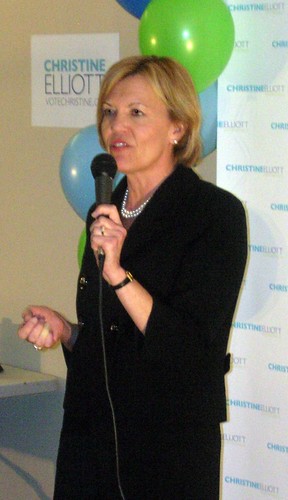 In the wake of Elliott's defeat in the Progressive Conservative leadership contest, many people -- like the Globe and Mail's Adam Radwanski --- are wondering if conservatism in Ontario, formerly a bastion of Canadian red toryism, has irrevocably taken what Brooke Jeffrey once referred to as a hard right turn.
(Jeffrey, for her own part, actually seemed perplexed by her inability to win election by labelling all of her would-be constituents in a riding she was parachuted into as racists, so maybe one should carefully consider the source.)
Hudak's ascension to the leadership of the Ontario Conservative party has many people wondering if perhaps speculation that harder forms of conservatism are needed to prevail in Ontario.
In recent years, the failures of leaders such as John Tory have largely spoken for themselves. There's a real question regarding whether or not red toryism can flourish in Ontario -- or Canada -- any longer, or if it's simply become too "Liberal-lite" to be palatable to conservative voters.
Yet those reputed to be red tories who have gotten closest to the Liberal party have shown their true political colours. In the case of Garth Turner, those colours turned out to be red. In the end however, it turned out that he wasn't a Tory.
When the former Halton MP joined the Liberal party in 2007, then-Liberal leader Stephane Dion crowed that "Tories were becoming Liberals".
Yet, as it turned out, Turner was far from a proper red tory. He lacked that key combination of fiscal conservatism and social principle that has forever properly characterized the red tory. When he finally got his first opportunity to campaign against the Harper Conservatives he chose to embrace divisive fear-based campaigning.
Prior to that, Turner attempted to divide Canadians by attempting to invent a separatist threat in Alberta.
Red toryism has forever held at its core an organic conceptualization of society -- one wherein social tradition is balanced against the public good.
Fear mongering and the creation of artificial -- and largely non-existent -- enemies is as great an insult to the principles of red toryism as one can possibly manage.
Turner had been preceded in joining the Liberal ranks by David Orchard, who had his nomination in a Saskatchewan riding overturned by Dion in favour of a hand-picked candidate who subsequently lost to Conservative Rob Clarke. When Orchard finally got his own turn in 2008, he lost as well -- and lost amidst his own fear-based attempts to campaign against the RCMP.
David Orchard, as many may recall, conceded the federal PC leadership to Peter MacKay only under the condition that MacKay wouldn't discuss unification of that party with the then-Canadian Alliance.
Orchard, for his own part, failed to recognize the value in allowing an organic political bond to develop between Canada's conservatives, and would have rather allowed the Liberal party to govern Canada in perpetuity than be caught dead dealing with the "wrong" conservatives.
If Canadian red toryism has truly reached its nadir it isn't in the defeat of Christine Elliott. Rather, it reached that nadir when those who consider themselves red tories failed to put their political principles ahead of their political vanity.
Whether or not Elliott will turn the tide of this unfortunate trend by working together with her party's new leader, and whether the hard conservatism of Tim Hudak and Mike Harris can lead the Ontario Progressive Conservative party to victory in the next election has yet to be seen.
If Hudak possesses the wisdom to make Elliott a part of his leadership plans for the party, and if Elliott can, in turn, soften the hard conservatism of Hudak and company also has yet to be seen. But it will be interesting to see.
Politics may not necessarily be merely about being nice. But it couldn't hurt to have a nice guy -- or gal -- on side, either.
Subscribe to:
Posts (Atom)