Is Lagarde, not Brown: Cameron, Osborne
With campaigning to replace the outgoing Managing Director of the International Monetary Fund mounting, many Britons are expecting their government to back a fellow Briton to fill that job.
For now, they will be disappointed.
Speculation has held that former Prime Minister and former Chancellor of the Exchequer Gordon Brown has been quietly campaigning for his shot at the job. Yet current Prime Minister David Cameron and current Chancellor George Osborne seem to have made themselves fairly clear: Brown is not "the best person for the job".
Apparently, according to Cameron and Osborne, the best person for the job may be French Finance Minister Christine Lagarde.
"I believe Christine is the outstanding candidate for the IMF – and that's why Britain will back her," Osborne declared. "I also personally think it would be a very good thing to see the first female managing director of the IMF in its 60-year history."
Lagarde's greatest strength, in Osborne's mind, is that she's in favour of developing countries bringing their budgets under control.
"She has been a strong advocate for countries tackling high budget deficits and living within their means," Osborne noted.
That applies to financial institutions just as much as it does to entire countries. While many western countries were rolling out fat bailout packages for banks, Lagarde was publicly taking them to task, particularly at the World Economic Forum in Davos.
"The best way for the banking sector to say thank you would be to actually have good financing of the economy, sensible compensation systems in place and reinforcement of their capital," Lagarde told Barclay's Bank chief executive Bob Diamond.
As if to offer some substance to Osborne's remarks about a having a woman in charge of the IMF, Lagarde has suggested that the global economy could use a woman's touch, particularly in terms of stock trading.
"In gender-dominated environments, men have a tendency to show how hairy chested they are, compared with the man who's sitting next to them. I honestly think that there should never be too much testosterone in one room."
Brown himself has also taken a sticter stance toward banks. He, like Lagarde, backed an international bank tax.
Unlike Brown, however, Lagarde seems to understand that the best fix for the global economy is for sensible reform and regulation to begin within the board rooms of the institutions themselves. It's time for banks to cut back on their unsecured loans, cut back on the unjustifiably-lavish and self-serving compensation for their execs, and put sustainable profit at the forefront of their agendas.
As the mortgage crisis in the United States clearly demonstrates -- as banks took advantage of lax regulatory schemes put in place by George W Bush as a means to manage the impact of toxic loans mandated by the Bill Clinton administration -- no government can force financial institutions to regulate themselves, nor can they really do so in their place; those set on abusing the system for short-term and unsustainable profit will find a way.
It's hard to say whether David Cameron and George Osborne are correct and Christine Lagarde really is the best person for the job. But one thing remains abundantly clear: she's much better for it than Gordon Brown.

Showing posts with label Gordon Brown. Show all posts
Showing posts with label Gordon Brown. Show all posts
Sunday, May 22, 2011


Friday, April 15, 2011
Gordon Brown Seeking Posh New Job

When Gordon Brown was defeated as Prime Minister, then promptly replaced as leader of the Labour Party, many naturally wondered what would come next.
Now we seem to know. A year after moving out of No 10 Downing Street, Brown is poised to take on an advisory role at the World Economic Forum. Speculation holds that he intends to spin this into leadership of the International Monetary Fund.
At the WEM, Brown would be responsible for overseeing 72 Econcomic Councils. As former Prime Minister of Britain, he is uniquely prepared for such a responsibility.
But he should by no means considered a shoo-in for the job.
After all, some had pegged Tony Blair to be a favourite to assume the office of President of the European Union. Instead, backlash against Blair's involvement in the Iraq War held Blair back.
Brown could face some obstacles of his own. One of them is related to the Iraq War. The other is due to Gordon's handling of Britain's finances as Chancellor of the Exchequer. Brown has frequently been publicly savaged for his failure to manage the British public debt.
In fact, as it turned out Brown's government excelled at concealing its mounting public debt. Essentially, Brown's government, under Brown's fiscal leadership, ran up billions of Pounds Sterling in deferred debt by financing projects as Private Finance Initiatives.
This allowed the Labour government to spend today, committing each British government for the next 30 years to make fixed payments on these projects.
In essence, the Blair/Brown government uploaded billions of Pounds Sterling in debt to future generations of Britons. It enabled the Blair/Brown government to inflate its short-run political popularity at the long-run expense of the British citizenry.
They did what they wanted to do, and left the hard decisions to future British governments.
It isn't as if Labour only organized one or two projects under the PFI structure. It isn't as if they only organized five or six. They ran 630 projects under this structure. That's the cost of 630 projects spread out over a 30-year period.
It gets even worse when one considers the scope of the cost spread out over that period: 110 billion Pounds Sterling. In Canadian dollars, the PFI debt load added by Brown was $172 billion.
It's difficult to believe that a leader as casual about assuming debt on the behalf of future generations could become the managing director of the IMF. But Brown may have yet one more advantage at his disposal.
In the United States, the Barack Obama administration has shared Brown's irresponsible approach to public debt. Moreover, the Obama administration has some diplomatic bridges to mend with Britain, and may choose to mend them by helping Brown ascend the IMF mountain.
By all rights, Gordon Brown probably shouldn't become the director of the International Monetary Fund. But for good or ill -- very likely for ill -- he just may.
Tuesday, April 05, 2011
Labour's Immigration Dilemma
Labour Party still self-consciously clueless about immigration policy
It was a defining moment of the 2010 British election: Gordon Brown, after conversing with British everywoman Gillian Duffy, declared her to be "a bigoted woman".
Duffy, a lifelong Labour supporter, challenged Brown about his ability to tackle the UK's national debt while demand for welfare continued to be driven by immigration.
"We had it drummed in when I was a child … it was education, health service and looking after the people who are vulnerable," Duffy had declared. "But there's too many people now who are vulnerable but they can claim and people who are vulnerable can't get claim, can't get it."
"But they shouldn't be doing that, there is no life on the dole for people any more," Brown argued. "If you are unemployed you've got to go back to work. It's six months…"
"You can't say anything about the immigrants," Duffy complained. "But all these eastern European that are coming in, where are they flocking from?"
Brown replied that while one million immigrants were arriving from Eastern Europe, one million Britons had emmigrated elsewhere.
In frustration, Brown would later declare Duffy to be "a bigoted woman". He was still wearing a Sky News Microphone and had forgotten about it. It was a defining gaffe of the election for Labour.
The message -- which is still causing deep anxieties within Labour ranks -- was very simple: Britons were not yet prepared to accept multiculturalism as inevitable; at least not with what they had already seen.
As it pertains to multiculturalism, many countries have experienced some growing pains. But it seems that Britain has had it far worse than some other countries.
Britain is one of the only countries in the western world where Sharia courts were actually allowed to take root. The rot has penetrated so deeply that even the Archbishop of Canterbury has described the implementation of Sharia law as "inevitable".
It's on this general note that social patterns such as the troubling upswing in support for organizations like the British National Party have emerged. Many Britons, it seems, no longer recognize their own country when radical Islamists so frequently take to the streets to declare their intentions to bring the totality of British society under their extreme political ideology, which masquerades as Islam.
This is not a challenge that the British government will be able to tackle easily. Before the Labour Party will be ready to return to government, it will need to conquer its Gillian Duffy-related demons, and prepare a vigorous response to the troubled state of British multiculturalism.
It was a defining moment of the 2010 British election: Gordon Brown, after conversing with British everywoman Gillian Duffy, declared her to be "a bigoted woman".
Duffy, a lifelong Labour supporter, challenged Brown about his ability to tackle the UK's national debt while demand for welfare continued to be driven by immigration.
"We had it drummed in when I was a child … it was education, health service and looking after the people who are vulnerable," Duffy had declared. "But there's too many people now who are vulnerable but they can claim and people who are vulnerable can't get claim, can't get it."
"But they shouldn't be doing that, there is no life on the dole for people any more," Brown argued. "If you are unemployed you've got to go back to work. It's six months…"
"You can't say anything about the immigrants," Duffy complained. "But all these eastern European that are coming in, where are they flocking from?"
Brown replied that while one million immigrants were arriving from Eastern Europe, one million Britons had emmigrated elsewhere.
In frustration, Brown would later declare Duffy to be "a bigoted woman". He was still wearing a Sky News Microphone and had forgotten about it. It was a defining gaffe of the election for Labour.
The message -- which is still causing deep anxieties within Labour ranks -- was very simple: Britons were not yet prepared to accept multiculturalism as inevitable; at least not with what they had already seen.
As it pertains to multiculturalism, many countries have experienced some growing pains. But it seems that Britain has had it far worse than some other countries.
Britain is one of the only countries in the western world where Sharia courts were actually allowed to take root. The rot has penetrated so deeply that even the Archbishop of Canterbury has described the implementation of Sharia law as "inevitable".
It's on this general note that social patterns such as the troubling upswing in support for organizations like the British National Party have emerged. Many Britons, it seems, no longer recognize their own country when radical Islamists so frequently take to the streets to declare their intentions to bring the totality of British society under their extreme political ideology, which masquerades as Islam.
This is not a challenge that the British government will be able to tackle easily. Before the Labour Party will be ready to return to government, it will need to conquer its Gillian Duffy-related demons, and prepare a vigorous response to the troubled state of British multiculturalism.
Monday, October 11, 2010
Ed Miliband Swearing Off Class Warfare?
Labour leader reaffirms commitment to universality
When it became evident that former British Prime Minister Gordon Brown stood little chance of winning the 2010 election (well beforehand), he resorted to what some would consider to be a fairly typical Labour Party tactic:
He picked on British Conservative Party leader (and now Prime Minister) David Cameron's Eton Hall education.
Needless to say, it didn't work. David Cameron and the Tories marched onto victory in the 2010 election and partnered with the Nick Clegg-led Liberal Democratic Party to form a government.
Brown's successor, Ed Miliband has eschewed class warfare by addressing one of the core principles of the welfare state: that of universality. Under universality, social programs are expected to pay out to all citizens, even those who are much, much more well off than their fellows.
Including millionaires, who Miliband insists would continue to receive child benefits under a Labour government.
"I'm in favour of that yes, and I'm in favour of it because it's a cornerstone of our system to have universal benefits, and frankly there aren't that many millionaires in this country," Miliband explained, although he doesn't deny that the benefit is primarily meant for the poor.
"Families on £45,000 need child benefit in my view and it's a way that society recognises the costs of having kids," he continued.
And though he plans to ensure that even the wealthiest would keep such benefits under a Labour government, he isn't planning to take his foot off the taxation pedal. Rather, he plans to levy higher taxes on banks and raise additional revenues by pursuing tax evaders (although the latter will itself require a generous investment of resources into investigative agencies).
One presumes that Miliband's imagined bank tax hike will be in addition to the global bank tax accepted by Prime Minister Cameron. So even as Miliband promises not to tax the wealthy while denying them benefit, he clearly still plans to squeeze them for as much tax revenue as he can imagine; this to avoid programming cuts.
While Ed Miliband clearly wants to avoid publicly declaring war on the wealthy, he isn't shying away from calling on them to fund programs that will offer them comparatively meagre benefits.
Is it class warfare of another variety? It will be up to Britons to decide.
When it became evident that former British Prime Minister Gordon Brown stood little chance of winning the 2010 election (well beforehand), he resorted to what some would consider to be a fairly typical Labour Party tactic:
He picked on British Conservative Party leader (and now Prime Minister) David Cameron's Eton Hall education.
Needless to say, it didn't work. David Cameron and the Tories marched onto victory in the 2010 election and partnered with the Nick Clegg-led Liberal Democratic Party to form a government.
Brown's successor, Ed Miliband has eschewed class warfare by addressing one of the core principles of the welfare state: that of universality. Under universality, social programs are expected to pay out to all citizens, even those who are much, much more well off than their fellows.
Including millionaires, who Miliband insists would continue to receive child benefits under a Labour government.
"I'm in favour of that yes, and I'm in favour of it because it's a cornerstone of our system to have universal benefits, and frankly there aren't that many millionaires in this country," Miliband explained, although he doesn't deny that the benefit is primarily meant for the poor.
"Families on £45,000 need child benefit in my view and it's a way that society recognises the costs of having kids," he continued.
And though he plans to ensure that even the wealthiest would keep such benefits under a Labour government, he isn't planning to take his foot off the taxation pedal. Rather, he plans to levy higher taxes on banks and raise additional revenues by pursuing tax evaders (although the latter will itself require a generous investment of resources into investigative agencies).
One presumes that Miliband's imagined bank tax hike will be in addition to the global bank tax accepted by Prime Minister Cameron. So even as Miliband promises not to tax the wealthy while denying them benefit, he clearly still plans to squeeze them for as much tax revenue as he can imagine; this to avoid programming cuts.
While Ed Miliband clearly wants to avoid publicly declaring war on the wealthy, he isn't shying away from calling on them to fund programs that will offer them comparatively meagre benefits.
Is it class warfare of another variety? It will be up to Britons to decide.
Saturday, May 22, 2010
Ed Miliband to Come Up the Middle?
Labour may ditch Blair/Brown baggage with compromise candidate
With the slate of candidates for the Labour leadership contest filling up, David Miliband remains the odds-on favourite to win. Ed Balls seems to be viewed as the number two man in the race.
But as Andrew Grice suggests, the dynamics that are so often at play in political leadership contests may give the winning edge to a third candidate: Ed Miliband.
As Grice notes, David Miliband was a staunch supporter of Tony Blair. In turn, Blair helped champion his careeer. Ed Balls is a close contemporary of Gordon Brown who, in Paul Martin-esque fashion, applied relentless pressure to help spur Blair's departure from office.
Balls will be saddled with memories of that relentless push.
Like any political party in need of unity, Labour members would very much like to put the Blair/Brown divide behind them.
For Ed Miliband, matters are rather different. He isn't seen as particularly close to Blair or Brown, despite having served in Brown's cabinet.
The differences between the two Milibands also seem be paramount in the minds of Ed Miliband's supporters.
"Ed Miliband's supporters do not like comparing him to his brother and there is a noticeable absence of war (and major policy differences)," Grice writes. "When pressed, they say David offers brains without charisma while Ed offers both and can therefore reconnect with Labour's lost supporters while uniting the party."
"Ed Miliband's critics claim he lacks the experience or instant judgement to handle unexpected events and would offer compromises rather than strong leadership – more Neil Kinnock (one of his main sponsors) than Mr Blair," Grice continues. "Mr Brown is said to have described Ed Miliband as 'a cross between an academic and a preacher'. Quite a lot of Labour members may like the sermon."
Last but not least, the preferential ballotting system used in Labour Party leadership votes may facilitate the younger Miliband in emerging as a compromise between his older brother and Ed Balls.
While Labour could stand to break from the bitter divisiveness of the Blair/Brown struggles, it would adopt a risk in electing Ed Miliband as a figure of compromise.
Compromise candidates are often perceived by the public as not having been fully imparted with their authority by the party membership.
For a party coming off of a catastrophic election loss, that could prove to be even more devastating than the loss itself. The Labour Party will need to weigh its options very carefully before making that kind of decision. Unfortunately, the preferential ballot may actually deprive them of the opportunity to do that.
With the slate of candidates for the Labour leadership contest filling up, David Miliband remains the odds-on favourite to win. Ed Balls seems to be viewed as the number two man in the race.
But as Andrew Grice suggests, the dynamics that are so often at play in political leadership contests may give the winning edge to a third candidate: Ed Miliband.
As Grice notes, David Miliband was a staunch supporter of Tony Blair. In turn, Blair helped champion his careeer. Ed Balls is a close contemporary of Gordon Brown who, in Paul Martin-esque fashion, applied relentless pressure to help spur Blair's departure from office.
Balls will be saddled with memories of that relentless push.
Like any political party in need of unity, Labour members would very much like to put the Blair/Brown divide behind them.
For Ed Miliband, matters are rather different. He isn't seen as particularly close to Blair or Brown, despite having served in Brown's cabinet.
The differences between the two Milibands also seem be paramount in the minds of Ed Miliband's supporters.
"Ed Miliband's supporters do not like comparing him to his brother and there is a noticeable absence of war (and major policy differences)," Grice writes. "When pressed, they say David offers brains without charisma while Ed offers both and can therefore reconnect with Labour's lost supporters while uniting the party."
"Ed Miliband's critics claim he lacks the experience or instant judgement to handle unexpected events and would offer compromises rather than strong leadership – more Neil Kinnock (one of his main sponsors) than Mr Blair," Grice continues. "Mr Brown is said to have described Ed Miliband as 'a cross between an academic and a preacher'. Quite a lot of Labour members may like the sermon."
Last but not least, the preferential ballotting system used in Labour Party leadership votes may facilitate the younger Miliband in emerging as a compromise between his older brother and Ed Balls.
While Labour could stand to break from the bitter divisiveness of the Blair/Brown struggles, it would adopt a risk in electing Ed Miliband as a figure of compromise.
Compromise candidates are often perceived by the public as not having been fully imparted with their authority by the party membership.
For a party coming off of a catastrophic election loss, that could prove to be even more devastating than the loss itself. The Labour Party will need to weigh its options very carefully before making that kind of decision. Unfortunately, the preferential ballot may actually deprive them of the opportunity to do that.
Thursday, May 20, 2010
Balls Deep for Labour Leadership
Ed Balls declares candidacy for Labour leadership
Youth is clearly the flavour of the campaign to replace Gordon Brown as the leader of the Labour Party.
David Miliband is 45 years old. His brother Ed is 40.
The newest candidate to declare for the Labour leadership, Ed Balls, finds himself in the middle at 43 years of age.
As leader, Balls would seek to build a party that listens to the people of Britain.
 "I think it's really important we don't just talk to ourselves, we've got to go out and hear what the public say," Balls declared. If Labour had listened to its supporters, Balls seems to contend that it may not have suffered its recent defeat.
Perhaps Labour would have recognized what Balls contends to be a shift away from traditional Labour policy.
"I believe [New Labour] lost the moral basis of the Labour Party as it was founded ... the creation of a fair and just and peaceful and equal society," Balls remarked.
Balls, the Miliband brothers and any as-yet-uncontested candidates will compete for the leadership of the Labour Party over a four month period. Labour will decide the leadership on September 14, 2010.
The only thing that marks the difference between what this leadership contest is and what would have transpired had the party won the May 6 election is that the party would have been choosing not only a new party leader, but a new Prime Minister.
Gordon Brown had intended to resign as Labour leader within a year of the election.
So in the long run, this leadership contest means very little for Labour. Ed Balls will have to work very hard to be the one of this to-date young lot to emerge as the new Labour leader.
Youth is clearly the flavour of the campaign to replace Gordon Brown as the leader of the Labour Party.
David Miliband is 45 years old. His brother Ed is 40.
The newest candidate to declare for the Labour leadership, Ed Balls, finds himself in the middle at 43 years of age.
As leader, Balls would seek to build a party that listens to the people of Britain.
Perhaps Labour would have recognized what Balls contends to be a shift away from traditional Labour policy.
"I believe [New Labour] lost the moral basis of the Labour Party as it was founded ... the creation of a fair and just and peaceful and equal society," Balls remarked.
Balls, the Miliband brothers and any as-yet-uncontested candidates will compete for the leadership of the Labour Party over a four month period. Labour will decide the leadership on September 14, 2010.
The only thing that marks the difference between what this leadership contest is and what would have transpired had the party won the May 6 election is that the party would have been choosing not only a new party leader, but a new Prime Minister.
Gordon Brown had intended to resign as Labour leader within a year of the election.
So in the long run, this leadership contest means very little for Labour. Ed Balls will have to work very hard to be the one of this to-date young lot to emerge as the new Labour leader.
Tuesday, May 11, 2010
The Door Only Opens From the Inside

The door of Number 10 Downing Street only opens from the inside. Today, it finally opened for Conservative Party leader David Cameron.
The deal-making with Nick Clegg and the Liberal Democrats isn't yet quite complete.
A few days ago, outgoing Prime Minister Gordon Brown resigned as Labour Party leader. Today, he resigned as Prime Minister.
"Only those who have held the office of prime minister can understand the full weight of its responsibilities and its great capacity for good," he announced. "I have been privileged to learn much about the very best in human nature, and a fair amount, too, about its frailties, including my own."
Cameron has offered the Liberal Democrats a full coalition government, with Lib Dems joining Cameron's cabinet. George Orsborne will assume the office of Chancellor of the Exchequer, and William Hague will become Foreign Secretary, but other than that there are to be up to four Cabinet jobs offered to the Lib Dems, including the office of Deputy Prime Minister, which will fall to Nick Clegg.
"This is going to be hard and difficult work. A coalition will throw up all sorts of challenges. But I believe together we can provide that strong and stable government that our country needs," Cameron announced.
What David Cameron does from here on out will tell the tale of his government, and of his political future. Coalition with the Liberal Democrats will be tricky for Cameron to walk, but if he can manage the trick, he may yet be rewarded in a future election.
Gordon Brown Concedes Labour Leadership
Brown resigns as Labour leader, but not as PM -- yet
As Britain continues to wait to find out who will assume the role of government, and who will be Prime Minister following the May 6 election, one question surrounding the vote has been answered.
Gordon Brown has resigned as the leader of the Labour Party.
He conceded that Labour's failure to decisively win the 2010 General Election was a direct judgement on his leadership.
"I therefore intend to ask the Labour Party to set in train the processes needed for its own leadership election," Brown announced. "I would hope that it would be completed in time for the new leader to be in post by the time of the Labour Party conference."
Even while contenders line up to replace him, Brown will not support any of the candidates.
"I will play no part in that contest, I will back no individual candidate," he explained.
This comes at a most inopportune time for Labour, as their negotiators have been meeting with the Liberal Democrats to make their bid to form a government.
This places Labour in a quandry: if their overtures to the Lib Dems are to be successful, they'll have to promise a quality leader.
The candidates are already lining up.
Foreign Secretary David Miliband and Education Secretary Ed Balls are reportedly set to launch their leadership campaigns. Hull West-Hessle MP Alan Johnson is also being strongly pressured to join the contest.
David Miliband seems to be the favourite to become the next Labour leader. But contests like these seldom produce the self-evident winner. And with the prize at stake potentially being the privilege of occupying Number 10 Downing Street, one can expect that the contest will be fiercely contested.
As Britain continues to wait to find out who will assume the role of government, and who will be Prime Minister following the May 6 election, one question surrounding the vote has been answered.
Gordon Brown has resigned as the leader of the Labour Party.
He conceded that Labour's failure to decisively win the 2010 General Election was a direct judgement on his leadership.
"I therefore intend to ask the Labour Party to set in train the processes needed for its own leadership election," Brown announced. "I would hope that it would be completed in time for the new leader to be in post by the time of the Labour Party conference."
Even while contenders line up to replace him, Brown will not support any of the candidates.
"I will play no part in that contest, I will back no individual candidate," he explained.
This comes at a most inopportune time for Labour, as their negotiators have been meeting with the Liberal Democrats to make their bid to form a government.
This places Labour in a quandry: if their overtures to the Lib Dems are to be successful, they'll have to promise a quality leader.
The candidates are already lining up.
Foreign Secretary David Miliband and Education Secretary Ed Balls are reportedly set to launch their leadership campaigns. Hull West-Hessle MP Alan Johnson is also being strongly pressured to join the contest.
David Miliband seems to be the favourite to become the next Labour leader. But contests like these seldom produce the self-evident winner. And with the prize at stake potentially being the privilege of occupying Number 10 Downing Street, one can expect that the contest will be fiercely contested.
Monday, May 10, 2010
Alex Salmond and the Puzzle of Measuring a Mandate
Alex Salmond, SNP claim mandate for "progressive alliance"
In the wake of a Kevin Maguire insisting that David Cameron and the Conservative Party have no mandate for austerity following Britain's 2010 general election comes a predictable turn in the post-election wrangling over who will be Prime Minister.
Scottish National Party leader Alex Salmond has called upon Liberal Democrat leader Nick Clegg and Labour Party leader Gordon Brown to join the SNP and Plaid Cymru in a "progressive alliance" as an alternative to the David Cameron Conservatives.
"There are alternative and more progressive options available if politicians have the will to seize the moment," Salmond announced. "The SNP and Plaid are indicating that we do."
The overture carries a clear resemblence to the ill-fated attempt to establish a coalition government in Canada -- although the separatist Bloc Quebecois was a more powerful element within that coalition than the Welsh separatist Plaid Cymru (who have only three Parliamentary seats).
The SNP and Plaid Cymru could put Labour and the Lib Dems over the top for a narrow overall majority -- something that Britons clearly expect that any government must have -- of 330 seats.
Altogether, Labour, the Lib Dems, the SNP and Plaid Cymru received the votes of 54% of Britons. Culmulatively, that could very well be interpreted as a mandate to govern.
But as discussed previously, interpreting a mandate can be extremely tricky.
In an arrangement such as the one that Salmond is recommending, Gordon Brown would clearly be the Prime Minister. Without Labour's 258 seats there is not even the foundation of a government.
But one must ask the question of whether or not Labour can realistically be a partner in such a coalition, or if Labour would be the kind of partner that Salmond imagines.
As previously noted, Labour has promised to cut the public budget more deeply than Margaret Thatcher did.
As Nick Robinson points out, this poses a challenge for the very notion of a progressive coalition.
"An arrangement between Labour, the Lib Dems, the SNP and Plaid could command a majority in the House of Commons (see the figures below)," Robinson writes. "The nationalist parties would, of course, extract financial and political concessions from Westminster."
But considering that Labour, holding the largest portion of seats in such a coalition, actually has an individual mandate for austerity, it quickly becomes apparent that these four parties would not possess a monolithic overall mandate.
Rather, such a progressive alliance would possess a diffuse overall mandate that would pit themselves at odds over key issues. The public chequebook is the most important of these issues, but only one.
Plaid Cymru, for example, has won an individual mandate to lead Wales out of the United Kingdom.
Just as Labour's austerity mandate is at odds with the individual mandates of the other three parties in the proposed coalition, so would Plaid Cymru's individual mandate be at odds with the others.
As Robinson notes, this renders such a progressive alliance inherently unstable. Clegg's push for electoral and political reform would be threatened by this instability.
"The key question Liberal Democrats have to consider is how stable such an arrangement would prove to be. Legislating for a referendum on electoral reform, staging it and implementing the necessary boundary changes could take over two years." Robinson continues. "So, if PR is the main goal for many Lib Dems they'd have to be sure that 'the progressive alliance' would last that long."
Moreover, Robinson notes that the electoral reform issue will bring some regional divides within Britain to the forefront.
"If it does come about it would highlight one little talked about but significant development in this election - the growing gulf between England and the rest of the UK," he explains. "In England the Tories secured almost 40% of the vote and 297 seats whilst Labour got just 28% and 191 seats."
Under such conditions, electoral reform could inflame regional tensions within Britain. Inflaming regional tensions while a separatist party sits within the government could not even begin to be a good or responsible idea.
It's on this note that Plaid Cymru's separatist mandate would challenge the Liberal Democrats' electoral reform mandate.
Whether or not Nick Clegg will opt for a "progressive alliance" will remain up to him. Whether or not he should is up to Britons to decide.
But whatever happens, such a progressive alliance could not claim to share a single mandate to govern. It's crystal clear that, within a Westminster Parliament, mandates aren't nearly that simple.
In the wake of a Kevin Maguire insisting that David Cameron and the Conservative Party have no mandate for austerity following Britain's 2010 general election comes a predictable turn in the post-election wrangling over who will be Prime Minister.
Scottish National Party leader Alex Salmond has called upon Liberal Democrat leader Nick Clegg and Labour Party leader Gordon Brown to join the SNP and Plaid Cymru in a "progressive alliance" as an alternative to the David Cameron Conservatives.
"There are alternative and more progressive options available if politicians have the will to seize the moment," Salmond announced. "The SNP and Plaid are indicating that we do."
The overture carries a clear resemblence to the ill-fated attempt to establish a coalition government in Canada -- although the separatist Bloc Quebecois was a more powerful element within that coalition than the Welsh separatist Plaid Cymru (who have only three Parliamentary seats).
The SNP and Plaid Cymru could put Labour and the Lib Dems over the top for a narrow overall majority -- something that Britons clearly expect that any government must have -- of 330 seats.
Altogether, Labour, the Lib Dems, the SNP and Plaid Cymru received the votes of 54% of Britons. Culmulatively, that could very well be interpreted as a mandate to govern.
But as discussed previously, interpreting a mandate can be extremely tricky.
In an arrangement such as the one that Salmond is recommending, Gordon Brown would clearly be the Prime Minister. Without Labour's 258 seats there is not even the foundation of a government.
But one must ask the question of whether or not Labour can realistically be a partner in such a coalition, or if Labour would be the kind of partner that Salmond imagines.
As previously noted, Labour has promised to cut the public budget more deeply than Margaret Thatcher did.
As Nick Robinson points out, this poses a challenge for the very notion of a progressive coalition.
"An arrangement between Labour, the Lib Dems, the SNP and Plaid could command a majority in the House of Commons (see the figures below)," Robinson writes. "The nationalist parties would, of course, extract financial and political concessions from Westminster."
But considering that Labour, holding the largest portion of seats in such a coalition, actually has an individual mandate for austerity, it quickly becomes apparent that these four parties would not possess a monolithic overall mandate.
Rather, such a progressive alliance would possess a diffuse overall mandate that would pit themselves at odds over key issues. The public chequebook is the most important of these issues, but only one.
Plaid Cymru, for example, has won an individual mandate to lead Wales out of the United Kingdom.
Just as Labour's austerity mandate is at odds with the individual mandates of the other three parties in the proposed coalition, so would Plaid Cymru's individual mandate be at odds with the others.
As Robinson notes, this renders such a progressive alliance inherently unstable. Clegg's push for electoral and political reform would be threatened by this instability.
"The key question Liberal Democrats have to consider is how stable such an arrangement would prove to be. Legislating for a referendum on electoral reform, staging it and implementing the necessary boundary changes could take over two years." Robinson continues. "So, if PR is the main goal for many Lib Dems they'd have to be sure that 'the progressive alliance' would last that long."
Moreover, Robinson notes that the electoral reform issue will bring some regional divides within Britain to the forefront.
"If it does come about it would highlight one little talked about but significant development in this election - the growing gulf between England and the rest of the UK," he explains. "In England the Tories secured almost 40% of the vote and 297 seats whilst Labour got just 28% and 191 seats."
Under such conditions, electoral reform could inflame regional tensions within Britain. Inflaming regional tensions while a separatist party sits within the government could not even begin to be a good or responsible idea.
It's on this note that Plaid Cymru's separatist mandate would challenge the Liberal Democrats' electoral reform mandate.
Whether or not Nick Clegg will opt for a "progressive alliance" will remain up to him. Whether or not he should is up to Britons to decide.
But whatever happens, such a progressive alliance could not claim to share a single mandate to govern. It's crystal clear that, within a Westminster Parliament, mandates aren't nearly that simple.
Tuesday, May 04, 2010
Define "Full Responsibility", If You Will

As Britain chugs towards balloting in the 2010 General election, it's becoming increasingly clear that the Labour Party will not win.
It's equally clear that David Cameron and the Conservative Party will not win a majority, despite being poised to win a sweeping majority less than one year ago.
This has introduced an overwhelming amount of uncertainty about the country's immediate political future.
But fear not, Britain: Prime Minister Gordon Brown has already promised to take "full responsibility" if his party loses the election.
"I'll have to take responsibility and I will take full responsibility if anything happens," Brown insisted.
And as it becomes apparent that the Tories will win a plurality in the May 6 election, Labour's focus has seemingly turned not to trying to win the election themselves, but in trying to stop the Conservatives from winning.
"People should act with their heads and not with their hearts to make sure they don't wake up ... with a Conservative MP and a Conservative government," insisted Peter Hain, Labour's Secretary for Wales.
Yet under Britain's framework of Constitutional convention, Brown will not be compelled to resign as Prime Minister should his party fail to win a plurality of seats, and can attempt to continue governing unless defeated by Parliament.
That is the easiest way for Labour to keep the Tories out.
Which leads one to wonder what, precisely, Prime Minister Brown means by taking "full responsibility".
One thing is already certain: Brown's party will hold him fully responsible.
Manish Sood, one of Labour's candidates, has already denounced Brown as the worst Prime Minister Britain has ever had.
Sood insisted that Brown "owes an apology to the people and the Queen".
"What he is doing is basically making things worse and worse," he continued. "At the end of the day if he can't do the job properly, he should give it to someone else. It is as simple as that."
This led the chairman of the North West Norfolk Labour association to turn on Sood -- the constituency's candidate.
"Manish has been divorced from this campaign for some time, but clearly determined to get as much attention for himself as possible," spat David Collis. "Despite having such a dreadful candidate, loyal Labour members will continue to put the case for Gordon Brown as the best man to take Britain forward."
If Sood's comments were merely meant to garner himself attention, it's certainly worked; Sood's comments have made headlines across the UK.
But this only deepens the question of Brown's definition of taking "full responsibility". Having been denounced by one of his own candidates as the worst British Prime Minister ever, will taking "full responsibility" mean, for Brown, resigning as Prime Minister on May 6?
Considering the sorry state of his party leadership, many observers will rightly question his ability to continue as Prime Minister.
Friday, April 23, 2010
A Hung Parliament Will Hang the Government
Gordon Brown must turn election around, or resign as PM
With the British election chugging toward its May 6 conclusion, the looming near-certainty of a hung Parliament has Britons wondering precisely who will reside in Number 10 Downing Street come May 7.
With the most recent polls having Labour slide behind the Liberal Democratic Party for second place in this election, 27% to 29% -- with the Conservatives continuing to narrowly lead at 33%.
This clouds the question of who -- current Prime Minister Gordon Brown, David Cameron or Nick Clegg -- will be Prime Minister.
According to British Constitutional Convention, Brown would retain the office of Prime Minister under a hung Parliament, and Labour would receive the first opportunity to seek the confidence of Parliament.
That means that, if Brown can't turn his electoral fortunes around and David Cameron can't find a way to restore a strong lead, Labour could come in third in the election and retain government.
The tenuous position this would put Labour in could not even possibly give it the opportunity to govern.
For his own part, Clegg doesn't seem prepared to tolerate the prospect.
“It would be preposterous for Gordon Brown to end up like some squatter in Number 10 because of some constitutional nicety,” Clegg insisted.
If Gordon Brown continues to trail the Liberal Democrats after the election is concluded, he will have little choice but to resign the office of Prime Minister and allow another party to seek the confidence of Parliament.
To be the third-place party in Parliament and continue to govern is simply untenable on principle alone.
With the British election chugging toward its May 6 conclusion, the looming near-certainty of a hung Parliament has Britons wondering precisely who will reside in Number 10 Downing Street come May 7.
With the most recent polls having Labour slide behind the Liberal Democratic Party for second place in this election, 27% to 29% -- with the Conservatives continuing to narrowly lead at 33%.
This clouds the question of who -- current Prime Minister Gordon Brown, David Cameron or Nick Clegg -- will be Prime Minister.
According to British Constitutional Convention, Brown would retain the office of Prime Minister under a hung Parliament, and Labour would receive the first opportunity to seek the confidence of Parliament.
That means that, if Brown can't turn his electoral fortunes around and David Cameron can't find a way to restore a strong lead, Labour could come in third in the election and retain government.
The tenuous position this would put Labour in could not even possibly give it the opportunity to govern.
For his own part, Clegg doesn't seem prepared to tolerate the prospect.
“It would be preposterous for Gordon Brown to end up like some squatter in Number 10 because of some constitutional nicety,” Clegg insisted.
If Gordon Brown continues to trail the Liberal Democrats after the election is concluded, he will have little choice but to resign the office of Prime Minister and allow another party to seek the confidence of Parliament.
To be the third-place party in Parliament and continue to govern is simply untenable on principle alone.
Wednesday, April 21, 2010
Gordon Brown Killing His Own deal

As a hung parliament looks more and more like the likely result of Britain's General Election, the balance of power is sliding more and more toward Nick Clegg and the Liberal Democratic Party.
This puts Prime Minister Gordon Brown in a difficult position. In order to retain power, he'll need Clegg and the Lib Dems to come on-board with his government.
As Nick Robinson points out, Brown's own troubled past with the Lib Dems makes such an arrangement very difficult, if not outright unlikely.
Brown has reportedly scuttled two previous promising deals between Labour and the Lib Dems. Brown even had a troubled exchange with Clegg over as simple a topic as expense reform.
In light of recent attacks on Clegg by Brown, Clegg isn't taking the matter likely.
Even on Brown's recently-adopted agenda of electoral reform, Clegg isn't taking the bait.
"I think he is a desperate politician and I just do not believe him," Clegg recently remarked.
He insists that on many topics -- not just electoral reform -- Labour had its opportunity to deliver and failed to do so.
"Do I think Labour delivered fairness?" Clegg asked. "No. Do I think the Labour Party, in its heart, has a faith in civil liberties? No. They are clutching at straws."
If the Liberal Democrats do reject a partnership with Labour, Britons can expect to see a tumultuous and troubled Parliament ahead of them. One wherein virtually anything could happen, including a prompt return to the polls.
Sunday, April 18, 2010
Panic Under Pressure
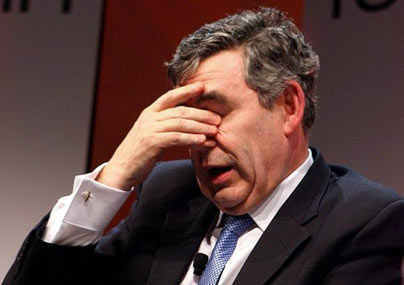
A few days ago, the Nexus asked the question of whether or not the Labour Party was feeling the pressure being applied by the Liberal Democratic Party.
As it turns out, they are feeling the pressure, as the most recent polls have the Liberal Democrats inching closer to contending for power on May 6.
The problem for Labour is that they don't seem to know how they're going to cope with that pressure.
Lord Andrew Adonis, the current Secretary of Transportation, has called on Lib Dem voters to vote strategically to prevent a Tory government, and has reportedly been working toward the establishment of a post-election agreement.
Prime Minister Gordon Brown reportedly sanctioned Adonis' efforts.
Then, he promptly went on the attack, doing whatever he can to try to sour that particular well.
"The Liberal Democrats have got to be exposed," Brown recently announced. "I think they have made a mistake in their economic policy. Why do they want to cut child tax credits? I think that is unfair. Why do they want to cut child trust funds?"
This, of course, should deliver something of a death blow to Lord Adonis' claims that the Liberal Democratic platform is "just like Labour’s." While Lord Adonis insists that the two party's platforms are similar in the sense that they're both social democratic documents, it seems that Brown thinks of this election as far less of a "two against one contest" than does his Transport Secretary.
If Gordon Brown does intend to negotiate a post-election deal with the Lib Dems to keep power, one has to imagine how, precisely, he will do it after having attacked their platform during the election.
Perhaps proving himself to be a true political heavyweight is more important to Brown than maintaining a coherent front with his Labour fellows.
But then perhaps the idea of a deal isn't off the table at all. As Canadians can attest, political parties can try some awfully strange things when the prospect of keeping power -- or gaining it -- is on the table.
Tuesday, April 06, 2010
Cameron/Brown Showdown Set for May 6
Gordon Brown calls early summer election
The day any Britons who have been waiting for an opportunity to turn Prime Minister Gordon Brown and the Labour Party out of government has finally arrived -- Brown has called a General election for May 6.
With David Cameron's Conservative Party poised to claim a narrow majority government, Brown has seemingly decided that the time to put his government on the line is at hand.
The issues at hand moving toward the May 6 vote are the economy, Britain's public debt, wars in Iraq and Afghanistan (with an inquiry into the decision to go to war in Iraq ongoing), and almost certainly some Labour-instigated class warfare-styled politicking.
The day any Britons who have been waiting for an opportunity to turn Prime Minister Gordon Brown and the Labour Party out of government has finally arrived -- Brown has called a General election for May 6.
With David Cameron's Conservative Party poised to claim a narrow majority government, Brown has seemingly decided that the time to put his government on the line is at hand.
The issues at hand moving toward the May 6 vote are the economy, Britain's public debt, wars in Iraq and Afghanistan (with an inquiry into the decision to go to war in Iraq ongoing), and almost certainly some Labour-instigated class warfare-styled politicking.
Tuesday, January 05, 2010
Brown, Labour Gearing Up for the Fight of Their Lives
Gordon Brown to fight for his political life in 2010
No matter what 2010 brings for British Prime Minister Gordon Brown, one can remain assured that there is one certainty:
Gordon Brown will face an election in 2010.
Although Brown has the power to decide the timeline of this election, there is no question that it will happen on or before 3 June. Moreover, his principal opponent has already begun campaigning.
Cameron has promised a bold new economic direction not only for Britain, but for his party as well.
"If we win this year's election Britain will be under new economic management," Cameron announced. "We will send out the loudest signal that this country is back open for business and ready for investment."
He's certainly set the stage well. Early in 2009 David Freud, a prized welfare policy advisor for the Labour Party, defected to the Conservatives (a workfare advocate), Ken Clarke has publicly mused about some uncharacteristic options, and Cameron is new Parliamentary offices to help ensure fiscal discipline.
Whether Brown and the Labour Party are ready for a 2010 election against the Tories is one thing. No matter what, they're as ready as they'll ever be.
To date, the Labour Party's best answer to David Cameron and the Conservative Party has been the thinly-veiled vestiges of class warfare.
That will be a very poor panacea for the ills of a party besieged by a poor economy and a Parliamentary Inquiry into the extremely unpopular Iraq War.
Even as the Labour Party trumpets itself as ready for an election, one simply must assume that their search for answers will continue.
No matter what 2010 brings for British Prime Minister Gordon Brown, one can remain assured that there is one certainty:
Gordon Brown will face an election in 2010.
Although Brown has the power to decide the timeline of this election, there is no question that it will happen on or before 3 June. Moreover, his principal opponent has already begun campaigning.
Cameron has promised a bold new economic direction not only for Britain, but for his party as well.
"If we win this year's election Britain will be under new economic management," Cameron announced. "We will send out the loudest signal that this country is back open for business and ready for investment."
He's certainly set the stage well. Early in 2009 David Freud, a prized welfare policy advisor for the Labour Party, defected to the Conservatives (a workfare advocate), Ken Clarke has publicly mused about some uncharacteristic options, and Cameron is new Parliamentary offices to help ensure fiscal discipline.
Whether Brown and the Labour Party are ready for a 2010 election against the Tories is one thing. No matter what, they're as ready as they'll ever be.
To date, the Labour Party's best answer to David Cameron and the Conservative Party has been the thinly-veiled vestiges of class warfare.
That will be a very poor panacea for the ills of a party besieged by a poor economy and a Parliamentary Inquiry into the extremely unpopular Iraq War.
Even as the Labour Party trumpets itself as ready for an election, one simply must assume that their search for answers will continue.
Monday, January 04, 2010
John Major's Revenge
Sir Major calls out Tony Blair on Iraq War
Revenge, when executed most masterfully, is often executed over a very long period of time.
More than 12 years after being defeated by Tony Blair, former British Prime Minister Sir John Major may be very close to having his revenge. And he's waited a very long time indeed for it.
When Sir John Major took power as the British Prime Minister, it was in relief of Margaret Thatcher, a leader whose autocratic tendencies had made her increasingly unpopular with the British public and increasingly at risk of sparking an outright revolution within her own party.
Likewise, when current British Prime Minister Gordon Brown took power as Prime Minister, it was in relief of Blair, a leader whose foreign policy missteps and the use of Prime Ministerial power that facilitated them had made him increasingly unpopular with the British public and increasingly at risk of sparking an outright revolution within his own party.
As has been the case for Brown, Sir Major's tenure as Prime Minister seemed ultimately doomed from the very beginning. Much of this was due to his predecessor's actions.
Considering the declining state of Thatcher's mental health, time -- and human decency -- have sorely limited Sir Major's opportunities to seek retribution on his Prime Ministerial predecessor.
But there's always the next best thing: seeking retribution against the man who defeated him.
Sir Major -- who was the Prime Minister during the 1990-91 Persian Gulf War -- recently weighed in on the events swirling around Britain's Iraq War Inquiry. Sir Major has joined the growing ranks of those who are suggesting that Blair deceived them in order to gain their support for the war.
"I had myself been prime minister in the first Gulf War, and I knew when I said something I was utterly certain that it was correct, and I said less than I knew," Sir Major said. "I assumed the same thing had happened and on that basis I supported reluctantly the second Iraq war."
And while Sir Major would very likely agree that the removal of Saddam Hussein as the President of Iraq was a good thing, he doesn't feel it was sufficient justification for the war.
"The argument that someone is a bad man is an inadequate argument for war and certainly an inadequate and unacceptable argument for regime change," Sir Major insisted. "There are many bad men around the world who run countries and we don't topple them, and indeed in earlier years we had actually supported Saddam Hussein when he was fighting against Iran."
To call the developments coming out of Britain's Iraq War Inquiry "revelations" would be in error. As a matter of fact, many British commentators have been suggesting for yers that Blair deceived Brits in order to make the case for the war, and that the Inquiry is really only confirming those suspicions.
With Labour MPs like Ken Purchase suggesting publicly that Tony Blair left no legacy, and left Gordon Brown with little opportunity to leave one of his own, Sir John Major knows full well that Tony Blair's historical legacy will very much be decided by the Iraq War Inquiry.
Sir John Major has waited a long time -- nearly 13 years, in fact -- to get his revenge on Tony Blair.
After all these years, he may finally have it.
Revenge, when executed most masterfully, is often executed over a very long period of time.
More than 12 years after being defeated by Tony Blair, former British Prime Minister Sir John Major may be very close to having his revenge. And he's waited a very long time indeed for it.
When Sir John Major took power as the British Prime Minister, it was in relief of Margaret Thatcher, a leader whose autocratic tendencies had made her increasingly unpopular with the British public and increasingly at risk of sparking an outright revolution within her own party.
Likewise, when current British Prime Minister Gordon Brown took power as Prime Minister, it was in relief of Blair, a leader whose foreign policy missteps and the use of Prime Ministerial power that facilitated them had made him increasingly unpopular with the British public and increasingly at risk of sparking an outright revolution within his own party.
As has been the case for Brown, Sir Major's tenure as Prime Minister seemed ultimately doomed from the very beginning. Much of this was due to his predecessor's actions.
Considering the declining state of Thatcher's mental health, time -- and human decency -- have sorely limited Sir Major's opportunities to seek retribution on his Prime Ministerial predecessor.
But there's always the next best thing: seeking retribution against the man who defeated him.
Sir Major -- who was the Prime Minister during the 1990-91 Persian Gulf War -- recently weighed in on the events swirling around Britain's Iraq War Inquiry. Sir Major has joined the growing ranks of those who are suggesting that Blair deceived them in order to gain their support for the war.
"I had myself been prime minister in the first Gulf War, and I knew when I said something I was utterly certain that it was correct, and I said less than I knew," Sir Major said. "I assumed the same thing had happened and on that basis I supported reluctantly the second Iraq war."
And while Sir Major would very likely agree that the removal of Saddam Hussein as the President of Iraq was a good thing, he doesn't feel it was sufficient justification for the war.
"The argument that someone is a bad man is an inadequate argument for war and certainly an inadequate and unacceptable argument for regime change," Sir Major insisted. "There are many bad men around the world who run countries and we don't topple them, and indeed in earlier years we had actually supported Saddam Hussein when he was fighting against Iran."
To call the developments coming out of Britain's Iraq War Inquiry "revelations" would be in error. As a matter of fact, many British commentators have been suggesting for yers that Blair deceived Brits in order to make the case for the war, and that the Inquiry is really only confirming those suspicions.
With Labour MPs like Ken Purchase suggesting publicly that Tony Blair left no legacy, and left Gordon Brown with little opportunity to leave one of his own, Sir John Major knows full well that Tony Blair's historical legacy will very much be decided by the Iraq War Inquiry.
Sir John Major has waited a long time -- nearly 13 years, in fact -- to get his revenge on Tony Blair.
After all these years, he may finally have it.
Monday, December 07, 2009
Gordon Brown: Class Warrior
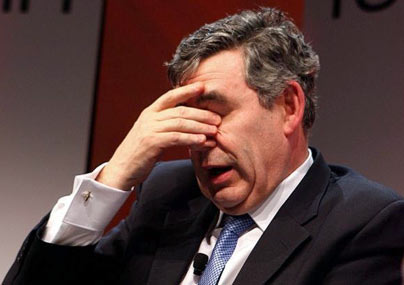 British Prime Minister criticizes David Cameron over schooling
As the old saying tells us, only two things in life are certain: death and taxes. While controversial in separate, the two topics couldn't help but be doubly controversial in combination.
Likewise, class is a particularly controversial topic.
British Prime Minister Gordon Brown recently stumbled upon a way to combine all three topics while commenting on British Conservative Party leader David Cameron's plans to reform the inheritance tax, which currently accounts for 0.8% of the British government's revenue.
Insisting that Cameron's plans to reform the tax would cost the treasury two billion pounds, Brown also took the opportunity to needle Cameron about where he and his advisor went to school.
"I have to say, that with you and Mr [Zach] Goldsmith your inheritance tax policy seems to have been dreamed up on the playing fields of Eton," Brown told the House of Commons.
Cameron, for his own part, is having none of it.
"My view is very simple," Cameron later explained. "What people are interested in is not where you come from but where you're going to, what you've got to offer, what you've got to offer the country."
"Now if Gordon Brown and Mandelson and the rest, if they want to fight a class war, fine, go for it," he continued. "It doesn't work."
Brown's comments may reflect frustrations with his current predicament. With his governing Labour Party continuing to trail the British Tories in the polls and the Prime Minister's influence within his own country waning, class tensions may be one of the few wedge issues Brown has to exploit.
"It's a petty, spiteful, stupid thing to do but if that's what they want to do, you know, go ahead," Cameron said.
"Frankly I think the country is more interested in who are these people, are they any good, have they got the right ideas, will they take the country forward, have they got the energy and vigour and dynamism that we so badly need?" he continued. "And the answer to those questions I believe is yes. But the best way to test it, you know what? Have an election."
At this particular point the election ball is entirely in Brown's court. He must call an election no later than June 3rd, 2010. When he does, he will dribble the ball out to face a veritable gauntlet.
Expectations are that Cameron will win a majority government, if not a dominant majority.
Brown's class-based ruminations certainly won't help.
None of this is to say that Cameron's plans for the inheritance tax couldn't stand to be improved. Cutting taxes on inheritances of less than one million pounds would leave more money in the hands of average Britons while not depriving the state of revenue from wealthy estates.
But even then, some of the provisions of the inheritance tax -- such as taxing any gifts the deceased made during the seven years years prior to their death -- are, frankly, draconian and ought to be done away with in no uncertain terms.
But Gordon Brown isn't doing himself any favours with these recent antics.
Tuesday, October 27, 2009
Go Back to The Fucking Drawing Board, Gordon
British PM recruting professional asshole
Observers of politics have often suggested that a mean streak often proves to be a real asset in politics.
But if it's Simon Cowell's mean streak that has attracted British Prime Minister Gordon Brown to attempt to recruit him into the Labour Party, he may want to think again. There are some varieties of mean that simply cannot be tolerated in public life.
 "Simon Cowell is a rare combination. He's incredibly rich and comes from a posh background but has the common touch," explained Chas Newkey-Burden. "He can push so many different buttons and this makes him a red hot prospect for politicians. They would run over each other to get to his side. The public is so cheesed off with politics at the moment and an endorsement from him could just swing it for one of the parties."
Speculation has it that if Cowell agrees to run for the Labour Party, Brown will have him knighted.
But although Cowell's often-vicious barbs could make him very effective for the Labour Party during Question Period -- either as a government or opposition MP -- the idea in politics is generally to attract voters, not repulse them.
Cowell's vicious treatment of would-be pop stars is one thing. But Simon Cowell's venomous nature very likely wouldn't stand in the public eye.
Observers of politics have often suggested that a mean streak often proves to be a real asset in politics.
But if it's Simon Cowell's mean streak that has attracted British Prime Minister Gordon Brown to attempt to recruit him into the Labour Party, he may want to think again. There are some varieties of mean that simply cannot be tolerated in public life.
"Simon Cowell is a rare combination. He's incredibly rich and comes from a posh background but has the common touch," explained Chas Newkey-Burden. "He can push so many different buttons and this makes him a red hot prospect for politicians. They would run over each other to get to his side. The public is so cheesed off with politics at the moment and an endorsement from him could just swing it for one of the parties."Speculation has it that if Cowell agrees to run for the Labour Party, Brown will have him knighted.
But although Cowell's often-vicious barbs could make him very effective for the Labour Party during Question Period -- either as a government or opposition MP -- the idea in politics is generally to attract voters, not repulse them.
Cowell's vicious treatment of would-be pop stars is one thing. But Simon Cowell's venomous nature very likely wouldn't stand in the public eye.
Saturday, October 03, 2009
Tony Blair's Tender Legacy
As alluded to in part one of Michael Cockerell's Tony Blair: the Inside Story, many politicians spend a great deal of time and energy concerning themselves with their legacy.
Unfortunately for former British Prime Minister Tony Blair, he will very likely share a legacy with US President George W Bush. It likely will not be an entirely positive one.
Like George W Bush, Blair's departure from office was mired by tension with his successor. Just as Bush's departure from office has been mired by increasing tensions with his Vice President, Dick Cheney -- who believed Bush had stopped taking his advice during their second term -- Blair's final days were marked by tensions beteween himself and Gordon Brown, his Chancellor of the Exchequer.
For Bush and Cheney, the matter was clearly the war on terror. For Blair and Brown, the issue was the prospects of Britain replacing Pounds Sterling with the Euro as Britain's currency. Blair favoured this, and Brown did not.
Like Bush, Blair's legacy will be decided by whether or not he led his country to war under false pretenses. Like Bush, Blair's legacy will be impacted by personal controversy. For Bush, a lingering controversy was the outing of CIA agent Valeri Plame. For Bush, the lingering controversy was the suicide of Dr David Kelly, a British arms inspector who had been accused of helping falsify evidence justifying the war.
Like Bush, Blair's efforts to reform the civil service badly backfired. There was a palpable backlash against Blair's proposed reforms for hospitals and schools. Meanwhile, Bush led a dismantling of regulatory economic agencies that eventually helped precipitate a global economic recession. Bush's educational and health care reforms were widely lampooned. At one point, Bush even vetoed a Democrat bill that would supply health care to millions of uninsured children.
Like Bush, Blair left office amidst a push within his own party to minimize its association with him. While Brown worked behind the scenes to collectively push and shame Blair out of office, Bush failed to show up to his own party convention in order to best keep his distance from Presidential nominee John McCain.
Like Bush, Blair was viewed as a liability to his party. In a 2005 election that proved to be a significant setback for his party, Blair was targeted by the opposition Conservative party of Britain as an individual who had lied to take Britain to war in Iraq, and would lie to win an election. Bush was encouraged to stay as far away from the 2008 federal election campaign as he could in order to avoid associating McCain too closely with Bush.
(These efforts were mitigated when McCain hugged Bush at a political rally.)
Like Bush, Blair's time in office was marked by a savage terrorist attack. For Bush, 9/11 eventually wound up writing the story of his time as President. For Blair, 7/7 will be central to his legacy. Unlike Bush, however, who led his country to war partially as a retaliation for a terrorist attack, 7/7 could be viewed as a retaliation for Britain's involvement in Iraq.
Just as Bush's government had received ample warnings about the impending 9/11 attacks, Blair's government had received numerous warnings about the "inevitable" attacks that finally came to fruition on 7/7.
Like Bush, Blair led his party into office as a well-organized political machine, ready to do its country's business. Like Bush, by the time Blair departed, his party was in shambles, with its premier political opposition -- in this case, the David Cameron-led British Tories -- poised to knock them off in the next election.
For a man who came to power at the head of an overwhelming Parliamentary majority, Blair must be very disappointed to look back at his time in office and see such a disappointing record.
Blair came to office as a "destined" Prime Minister, with big hopes and huge expectations to live up to. Like many such leaders, the dizzying heights of his expectations could only be matched by the dispirting depths of disappointment.
Tuesday, September 29, 2009
A Newer (Better) Blairism?
Tory leader emulating Labour PM
If David Cameron is the Tony Blair of the Conservative party, he certainly seems to relish the role.
"He was the future once," he once famously told Blair. "I want to talk about the future."
David Cameron has so effectively claimed Blair's mantle as the "future of Britain" that many consider his victory in the 2010 general election to be all but assured -- just as Blair's victory over John Major was considered assured.
According to Lord Andrew Adonis, the Labour party's Transport Secretary, there is more than a passing resemblence between Cameron's and Blair's style. That resemblence may be more than coincidental -- it may be by design.
"Cameron is trying to offer a better Blairism when he’s trying to be sunny," Lord Adonis remarked, although noting that Cameron's rhetoric can also have a dark side. "Then when he’s not, it’s the age of austerity and broken Britain."
If Cameron has mixed his upbeat rhetoric with some gloominess, he certainly isn't alone.
Many Labour party supporters and boosters -- as well as Prime Minister Gordon Brown himself -- continue to insist that their party is still very much in the running to win the 2010 election. Yet the prognosis offered by polls and various experts is far less than promising for them.
Compass, a left-wing British think tank, has predicted the end of the Labour party altogether if Cameron wins the next election.
They predict that, aside from whatever defeat Labour may absorb in 2010, a Conservative government increases the chance of Scotland opting to secede from the United Kingdom, taking a bastion of Labour strength with them.
Compass insists that a referendum on abandoning Britain's "first past the post" electoral system could gain the party desperately-needed ground against the Tories.
Gordon Brown has yet to fully embrace this issue as a "game changer", but has reportedly taken it under consideration.
Meanwhile, Lord Adonis doesn't believe that all is yet lost to Cameron and the Tories.
"We shouldn’t take the view that we’re in a situation like 1979 or 1997 and should be fatalistic and Cameron has found the new middle ground," Adonis insisted. "I don’t think that’s the case."
For Gordon Brown, defeating Tony Blair (they are well known to have been rivals) is a prospect that has long faded from view. But if anything substantial is to be taken away from Lord Adonis' commentary, it's that defeating David Cameron may be just as good.
That, of course, is provided that Brown can save his (and Labour's) skin in 2010.
If David Cameron is the Tony Blair of the Conservative party, he certainly seems to relish the role.
"He was the future once," he once famously told Blair. "I want to talk about the future."
David Cameron has so effectively claimed Blair's mantle as the "future of Britain" that many consider his victory in the 2010 general election to be all but assured -- just as Blair's victory over John Major was considered assured.
According to Lord Andrew Adonis, the Labour party's Transport Secretary, there is more than a passing resemblence between Cameron's and Blair's style. That resemblence may be more than coincidental -- it may be by design.
"Cameron is trying to offer a better Blairism when he’s trying to be sunny," Lord Adonis remarked, although noting that Cameron's rhetoric can also have a dark side. "Then when he’s not, it’s the age of austerity and broken Britain."
If Cameron has mixed his upbeat rhetoric with some gloominess, he certainly isn't alone.
Many Labour party supporters and boosters -- as well as Prime Minister Gordon Brown himself -- continue to insist that their party is still very much in the running to win the 2010 election. Yet the prognosis offered by polls and various experts is far less than promising for them.
Compass, a left-wing British think tank, has predicted the end of the Labour party altogether if Cameron wins the next election.
They predict that, aside from whatever defeat Labour may absorb in 2010, a Conservative government increases the chance of Scotland opting to secede from the United Kingdom, taking a bastion of Labour strength with them.
Compass insists that a referendum on abandoning Britain's "first past the post" electoral system could gain the party desperately-needed ground against the Tories.
Gordon Brown has yet to fully embrace this issue as a "game changer", but has reportedly taken it under consideration.
Meanwhile, Lord Adonis doesn't believe that all is yet lost to Cameron and the Tories.
"We shouldn’t take the view that we’re in a situation like 1979 or 1997 and should be fatalistic and Cameron has found the new middle ground," Adonis insisted. "I don’t think that’s the case."
For Gordon Brown, defeating Tony Blair (they are well known to have been rivals) is a prospect that has long faded from view. But if anything substantial is to be taken away from Lord Adonis' commentary, it's that defeating David Cameron may be just as good.
That, of course, is provided that Brown can save his (and Labour's) skin in 2010.
Subscribe to:
Posts (Atom)