
Showing posts with label CCF. Show all posts

Thursday, May 20, 2010

The Time to Release Tommy Douglas RCMP File is Now

CSIS refusal to relinquish Tommy Douglas files dubious at best

Writing for the National Post Full Comment, John Baglow -- whose knee-jerk defenses of the most vile indulgences of the far left -- writes about the refusal of CSIS to divulge the files the RCMP compiled on former (and original) NDP leader Tommy Douglas under a freedom of inormation request.

CSIS is refusing to release the files under the auspices of national security. This lacks credulity.

But those who believe the Douglas files will feature any shocking revelations will be sorely disappointed.

Regardless of what Douglas' RCMP file contains, one thing will be certain: it will be a product of its time.

Douglas rose to political prominence at a time when Soviet communism seemed to be an omnipresent threat. Although the Soviet Union would formally be Canada's ally during the war against Nazi Germany -- a war that Douglas, at odds with his pacifist colleagues in the CCF courageously supported -- Canadians of varying political stripes were aware of the threat communism posed.

This included the thousands of citizens of Saskatchewan of Ukrainian descent, many of whom immigrated to Saskatchewan fleeing from Soviet communism and the Holodomor perpetrated by Joseph Stalin the Soviet state.

Adherents to the Greek Orthodox Church proved to be as asiduously opposed to Douglas and the CCF agenda as the Catholic Church and Mennonites. Their suspicion of the CCF brand of socialism did not fester unaided.

The Liberal Party of James Garfield Gardiner exploited Canadian horror at Soviet communism by insisting that the CCF would impliment a similar system in Saskatchewan. The Gardiner Liberals insisted that the CCF would confiscate farms, homes, and the life savings of individuals. They also insisted the CCF would close pubs and churches.

After leaving provincial politics for federal politics -- joining William Lyon MacKenzie King's government as the Minister of Agriculture -- Gardiner worked for the federal Liberals as their Saskatchewan lieutenant. He continued to apply his bag of political tricks -- which reputed to include hiding prohibited alcohol in the homes of political opponents then calling the police -- as a member of King's cabinet, then as a member of St Laurent's government.

It isn't at all unthinkable to suspect that Gardiner may have had a hand in at least the RCMP's post-war attentions to Douglas. Furthermore, it would be interesting to see if Douglas' CSIS file contains what could be the first substantial evidence of Gardiner's alleged trickery.

(Then again, considering how smooth an operator history reputes Gardiner to have been, it would be foolish to bank on it. And while John Diefenbaker would smile from beyond the grave, he'll have to save that smirk -- perhaps indefinitely.)

Looking back on Canadian history, it's easy to underestimate the urgency many Canadians felt in opposing communism. While the Communist Party of Canada only ever elected a single MP -- Fred Rose, whose tenure in Parliament was ended by a prison sentence for non-specific charges filed against him in the wake of the Gouzenko revelation.

The Gouzenko affair underscored for Canadians the breadth and depth of the Communist threat, and the pall of suspicion cast by the affair wasn't restricted to Fred Rose. It was also borne by Tommy Douglas and the CCF.

Whatever national security value the RCMP files on Douglas may hold would very likely be tenuous at best. If the files actually are so sensitive, CSIS will need to make its reasoning clear.

(It would be difficult to believe that the RCMP hasn't altered the methods by which it monitors suspected subversives -- be they suspected terrorists or suspected revolutionaries -- in more than 60 years. If the RCMP hasn't, that is a problem in and of itself.

Anyone intending to use the RCMP's Douglas files to retro-actively indict Canadian government or Canadian law enforcement will be sorely disappointed. The RCMP files on Tommy Douglas will inevitably reflect their day and age.

Using those documents to judge the Canada of the 1940s, 50s and 60s will prove untenable. One cannot reasonably judge a country under the threat of communist subversion by the standards of a time when the country is under no risk of it.



Monday, February 16, 2009

The Coalition That Wouldn't Go West

Western Canada a key factor in Ignatieff's decision to kill coalition

As Michael Ignatieff continues to kiss up to western Canadians during a foray away from Ottawa, he offered a wry wink to western Canadians who opposed the proposed Liberal/NDP coalition government.

Ignatieff, it seemed, decided to turf the coalition as part of his strategy to rebuild the Liberal party in Western Canada.

"You are, after all, looking at someone who turned down the chance to become prime minister of Canada, and I did so, in part, because I felt that it would divide the country," Ignatieff told reporters. "I want to be someone who unites the country, and that includes the West."

The wholesale rejection of the coalition by western Canadians underscores the historical turn of fortune for both the Liberals and the NDP in the west.

The NDP, with its roots as the Cooperative Commonwealth Federation, was actually born in the west. In 1968, under the exemplary leadership of Tommy Douglas, the NDP won nearly half of the Parliament seats allotted to Saskatchewan. In 1972, under David Lewis, they won five seats there, and would continue to win seats in Saskatchewan until being wiped out in 2004. They haven't held seats in Saskatchewan since.

Linda Duncan's 2008 win in Edmonton-Strathcona was the first seat won by the NDP in Alberta since 1988, when they also won a single seat there.

Likewise, the Liberal party dominated Saskatchewan as recently as 1949, before they were significantly undercut by the CCF and then finally wiped out entirely by John Diefenbaker.

If Michael Ignatieff dreams of reachieving the Liberal glory days in western Canada he clearly has his work cut out for him. Having a western strategist as "talented" as James Gardiner -- who once ran the province of Saskatchewan with an iron fist -- would clearly help.

Unfortunately for Ignatieff, the best his party can currently muster in Saskatchewan are Ralph Goodale and David Orchard, the latter of whom will likely carry the label of political loose cannon for the remainder of his days.

Ignatieff certainly seems to understand that, given the current political situation in Canada, the road to a Liberal majority leads through Western Canada. Failing that, as he looks ahead in Parliament, Ignatieff may be set to propose a coalition of a different variety: not a governing coalition, but rather a legislative coalition.

"I'm in this business to win a majority Liberal government," Ignatieff explained. "But I have to also responsibly say, if we fall short of that, then it might be conceivable to be in discussions with, say, the NDP. Not on a coalition basis, but, ‘Let's get some legislation through. How do you feel about that?' That's the normal business of Parliament, and so I wouldn't exclude that. But I think we've had an interesting debate about coalition in Canada, and we've decided that we're not comfortable with it."

Canadians all over Canada have voiced their agreement on numerous occasions. Now all that remains to be seen is whether or not Ignatieff's overtures toward the west are truly sincere.

Thursday, January 24, 2008

Why Doesn't the United States Have a Stable, Viable Social Democratic Party?

An unlikely source provides the answer

If there is one great unanswered question about American politics, it's probably "who really killed JFK?"

At least, if you're a nutbar.

If, like the rest of us, you aren't a conspiracy-peddling, Manitoba-cigarettes-smoking weirdo, that question is probably "why doesn't the United States have a viable, stable social democratic party?

A passage from Al Franken's The Truth (With Jokes) ironically provides an answer -- and it's an answer that "progressives" like Franken probably won't like.

Starting on page 119, and continuing onto page 120:

"It is actually illegal for tax-exempt religious organizations to engage in partisan political activity. But that didn't stop the Bush-Cheney campaign from encouraging clergy in battleground states to do their civic duty. In Pennsylvania, for example, recieved this e-mail from a Bush-Cheney staffer:

"Subject: Lead your congregation for President Bush

The Bush-Cheney '04 national headquarters in Virginia has asked us to identify 1600 "Friendly Congregations" in Pennsylvania where voters friendly to President Bush may gather on a regular basis. In each of these friendly congregations, we would like to identify a volunteer coordinator who can help distribute general informatinon to other supporters. If you are interested, please email Luke Bernstein at LBernstein@GeorgeWBush.com your name, address, phone number and place of worship.

Thanks,
-Luke

Paid for by Bush-Cheney '04, Inc
Jesus Christ! And this from a Bernstein?!

Look. Churches are always going to be involved in social justice issues, on one side or the other. Just as Dr. Martin Luther King (for) or Dr. Jerry Falwell (against). ANd some congregations certainly have a political bent, such as Our Lady of Gun Control in Bayside, Queens. But this was ridiculous. Even the campaign's allies thought the White House had gone too far, considering the state of the law at the time.

There was only one solution. Change the law.
"
Oooh! Those dastardly Republicans, right?

Right?

Hold that phone.

"In early June 2004, Republicans in the House Ways and Means committee added an ammendment to H.R. 4520, the American Job Creation Act of 2004 (which cut corporate taxes, thereby creating jobs for people who gild bathroom fixtures), that would allow churches to commit three (count 'em, three) "unintentional violations" of legal restrictions on political activites each year without losing their tax-exepmpt status. I call that the "four strikes and you're out" law. Even more exciting, clergy would now be allowed to endorse candidates, as long as they made it clear they were acting as individuals and not on behalf of religious organizations.

Thankfully, when even the Southern Baptist Convention said the Republicans were getting a little too cute, the "Safe Harbor for Churches" amendment died a quiet death.
"
Hooray! A victory for the separation of church and state, right? Right?

Well, that is important. But, at the same time, there are numerous questions. What about the right of Pastors to express their opinions (politically or otherwise), alternately known as free speach? What about the right of religious congregations to organize as they see fit (again, politically or otherwise)?

Of course, these are important questions, but not necessarily pertinent for our purposes here. For that, we have to turn to the development of Canada's social democratic party, the New Democratic Party. (While the Bloc Quebecois often claims to be a social democratic party, they don't count because they are founded almost entirely on an exclusionary racial ideology.)

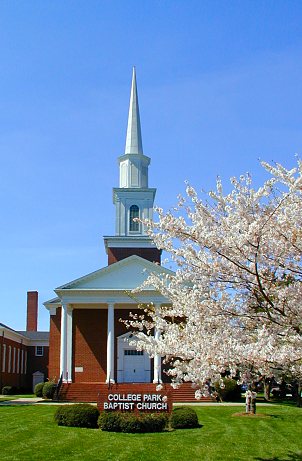
The NDP was formed in 1961 as a political merger of the CCF (Cooperative Commonwealth Foundation) and the Canadian Labour Congress. The annointed leader, Tommy Douglas (quite possibly one of the three best Prime Ministers Canada never had) was actually an ordained Baptist minister. (That's right, you read it -- Baptist.)

Both the CCF and the NDP after it were based almost entirely on the Protestant Social Gospel. The Social Gospel advocated that Christian values demanded a more generous and inclusive society (aforementioned by Al Franken as social justice).

It probably helped that in Canada churches were allowed to hold and express political opinion. An obsession with politically marginalizing religion certainly isn't anything that has never manifested itself in Canada (see: modern NDP), but it has yet to establish the stranglehold on religion that exists in the United States.

Comparing the two case studies, one can't help but draw the conclusion that the failure of the United States to produce a relevant social democratic party is at least partially due to its legal muzzling of religious movements.

Of course other factors, such as an obsessive, fearful suspicion of communism (although suspicion certainly was warranted, at least on a limited basis -- read: not McCarthy-esque) certainly played a role, one has to wonder what would exist today.

Maybe -- just maybe -- a stable, viable social democratic party.

(If you're reading this, Ralph Nader, you don't count. And it certainly was a shame that Howard Dean -- whom history may recognize as one the best Presidents the United States never had -- was judged to be too scary by Democrats.)

Naturally, the blending of politics and religion can go too far, and George W Bush is a fairly decent example of that (although most of the Republican party's intractable opponents find Mike Huckabee even more threatening). But one should also keep in mind that a liberal mixing of politics and religion can also have positive results.

Canadian public health care is, without a doubt, history's greatest example of this.

But before the specific values of the Social Gospel can take root, as they have north of the 49th parallel, religious organizations have to be allowed to at least knock at the door. It's ironic that some of those who most decry the lack of social democrats in the United States are the ones most determined to see that this is never allowed.