Warning: the following post contains significant spoilers about the movie District 9. Those still interested in seeing this film should consider themselves forewarned.
Sci-fi film presents terrifying view of Arms Industry
Films as deep and uniquely thoughtful as District 9 come along very rarely.
District 9 is such a deep film that it's difficult to decide where, precisely, to begin with it. The film, essentially a Harry Turtledove-esque alternate history of South African Apartheid in which an alien spacecraft appeared in the sky over Johannesburg in approximately 1981 -- at the height of the international controversy over Apartheid.
The aliens, referred to by the derogatory epithet "prawns", were eventually segregated into a slum outside of the city. The government is now planning to forcibly move the aliens -- who seem listless and purposeless in the wake of the apparent death of their leadership -- to a refugee camp 200 miles away from the city.
Multi-National United (MNU) is the corporation that eventually wins a contract from the South African government to manage alien affairs. MNU employee Wikus Van De Merwe (Sharlto Copley) is put in charge of the operation, and immediately puts his pencil-pushing skills to work, much to the infuriating chagrin of the mercenaries MNU employs to forcibly move the aliens.
But an opportunity quickly presents itself to MNU -- one of the world's foremost weapons manufacturers -- in the form of the bumbling Wikus.
When Wikus manages to expose himself to a chemical that begins to alter his DNA -- replacing it with alien DNA -- he suddenly becomes the missing link in the company's efforts to unlock the secret of the alien weaponry. The alien weapons, it turns out, can only be fired by the aliens. They feature a sort of DNA trigger lock.
When it's discovered that the transformation Wikus is undergoing has enabled him to fire these weapons, the MNU science division -- which has been undertaking some rather horrific experiments on the aliens -- quickly decides to remove Wikus' organs while he's still alive in order to find out how human and alien DNA can be combined.
Wikus' father in law himself hands down the decision without so much as the first hint of moral difficulty.
Sadly, history is full of examples that show us how quickly scientific ethics can break down once scientists commit themselves to developing new methods of destroying life.
The shocking history of medical experimentation in Nazi Germany shows how quickly science's ethical rules can be discarded -- especially if one has subjects that are deemed to be not human or less than fully human to experiment on.
The sheer power of the alien weaponry in District 9 only adds to the terrifying dilemmas that emerge once science is committed to creating weapons.
Greed and ruthlessness have rarely combined well in human history, especially not when the arms industry is involved. The black market trade in weapons has enabled many civil and ethnic conflicts to continue unabated. In many cases, arms manufacturers have used black market dealers to keep these activities at an arm's length.
If MNU successfully unlocked the secret of using the alien weaponry in District 9, one would imagine they wouldn't hesitate to sell those secrets to the Nigerian gangs hiding out in the alien slum -- some of whom have resorted to eating alien body parts in an effort to gain their powers and use their weapons.
District 9 reminds us of why the arms industry has to be monitored and regulated very closely. Even those who favour minimal levels of government regulation of anything must admit that giving this industry a free hand to develop and sell arms is a terrible, terrible idea.

Showing posts with label Arms Control. Show all posts
Showing posts with label Arms Control. Show all posts
Sunday, August 16, 2009


Tuesday, June 17, 2008
Human 2.0 Presents an Incredible Dilemma For Arms Control
The Incredible Hulk is a hyperbole for a problem policy makers will be facing sooner than we realize
Right now, on movie screens across the world, a mighty green behemoth is smashing his way into the public consciousness.
The Incredible Hulk, Marvel films' attempt at a gimme on 2003's previous and widely-unpopular Hulk film (titled simply Hulk), stars Edward Norton as Bruce Banner, an idealistic young scientist who, in the course of testing his scientific work on himself, transforms himself into a massive, beastial creature whenever his heart rate gets too fast.
With his ex-girlfriend Betty Ross (played by an implacably dull Liv Tyler) in tow, Banner embarks on a quest to excise the Hulk from himself before General Thaddeus "Thunderbolt" Ross (played by William Hurt, who was clearly phoning this performance in) gets his hands on it and tries to weaponize it.
Banner's worst nightmare eventually comes true when Ross imbues career soldier and tough-guy Emil Blonsky with the same experimental gamma radiation technology that eventually transforms him into the Abomination.
The "god-like" power that Blonsky covets will give him the ability to remain an incorrigible tough guy well into the waning years of his military career. Unfortunately, he has little interest in maintaining the level of discipline necessary to continue that career, and quickly becomes the ultimate loose cannon, fighting anyone and everyone in his way, including, eventually, the Hulk.
To the average, implicitly disinterested, viewer The Incredible Hulk seems like nothing more than another sci-fi fantasy/monster flick.
However, to those who have paid even passing attention to science's emerging "human 2.0" movement, the film turns out to be quite prescient: a cautionary tale about science run amok with no will to constrain itself within traditional means or ethics.
One thing that we have slowly been discovering over the past 30 years of human history is that weapons are already hard enough to control. But the burgeoning revolution in bio-engineering is only going to make it much, much worse.
It's one thing when the weapon in question is an old Soviet stock AK-47 in the hands of a terrorist footsoldier, rebel fighter or child soldier. The weapon can always be taken away with relative simplicity.
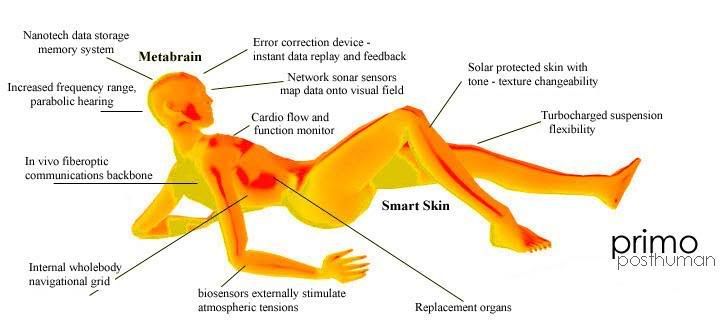 But when the weapon is the person themselves -- enhanced with a variety of occular implants, cybernetically enhanced brains, and post-birth genetic treatments -- it's much harder to take that weapon away, so to speak. Not only do such human weapons pose a serious challenge to our ability to control them -- there's only a certain extent to which human behaviour will tolerate being controlled, particularly when an individual's personal resources in terms of resisting that control have been exponentially expanded -- but they pose a singular threat to the very principle of human sovereignty over the self.
Once militaries begin to weaponize the otherwise-promising advancements offered by human 2.0, this scientific movement very much will begin to pose a dilemma for foreign policy thinkers.
Norton plays Banner as an idealistic young scientist who flees to Brazil in order to prevent the government from weaponizing the results of his accident. But as Dr Samuel Sterns (played by Tim Blake Nelson), Banner's unscrulous "mr Blue" compatriot, reminds us, some scientists don't adhere to conventional ethics or idealism.
As difficult to control as the new human weapons the military applications of human 2.0 will eventually spawn will be, it will be even harder to control these scientists, who all too often are inspired not by the desire to improve the quality of life of all people, but simply to make exorbitant amounts of money and acquire exorbitant amounts of personal glory.
Frankly, the ethical concerns posed by human 2.0 are as stringent as those imposed by human cloning, although it certainly lacks the sensational quality of those posed by cloning.
The time to start constraining this movement within conventional scientific ethics is now. The ethical dilemma posed by human 2.0 could even pose a threat to the extremely important medical advances offered by stem cell research.
To pretend that the human 2.0 (or primo posthuman) movement will spawn armies of Hulks that will proceed to smash their way through major urban centers is a fantasy that, fortunately, defies credulity.
But there are potential consequences that are, in their own way, every bit as bad if not far, far worse -- conequences that even the most imaginative comic book writers could likely never imagine.
Thursday, May 08, 2008
There Are No Superheroes to Save Us From the Indiscretions of the Arms Trade
Superhero film highlights arms trade in a new way
This weekend's big box office winner, Iron Man, is far from the first film to take aim at the arms trade over the last couple of years.
Andrew Niccol's Nicholas Cage-powered Lord of War took aim at the international arms black market in 2005.
For the savvy viewer, Iron Man crosses the finish line as a similarly thought-provoking film (although admittedly with a lot more explosions along the way). This time, however, the film's target is the arms black market's necessary handmaiden, the legal international arms trade.
Robert Downey Jr -- a remarkably befitting choice -- plays Tony Stark, a carefree but brilliant man who has parlayed his unparalleled engineering genius into astounding wealth and renown as the world's top weapons manufacturer.
All too often, the only thing more appealing than his work life -- where he labours along side personal assistant Pepper Potts (Gwyneth Paltrow) -- are some of the obstacles he has to overcome -- particularly, attack dog reporter Christine Everheart (Leslie Bibb). Even his normally-stuffy military attache, Jim Rhodes (Terrence Howard) can be loosened up every once in a while.
However, Stark's life changes forever when he travels to Afghanistan to showcase an incredible new weapon he's developed -- think of it as a self-propelled cluster bomb on steroids. While traveling in Afghanistan, he's ambushed by what seem to be terrorists and taken hostage.
His captors turn out to be not terrorists, but the Ten Rings, a band of world domination types -- although some would argue there is little difference -- who expect him to build them a missile just like the one he just test fired.
To help him accomplish this, Stark is provided with a significant cache of his own company's weapons, which have somehow fallen into the hands of the Ten Rings.
But Stark has a problem. Shrapnel lodged in his chest during the ambush is being held at bay only by an electro-magnet installed in his chest by his cell mate. Instead of building a missile, however, Stark builds himself his ticket out of captivity -- the Iron Man armour which transforms Stark from billionare playboy cad into intrepid super hero.
Upon breaking out of captivity, Stark decides to shut down Stark Industries, leave the weapons manufacturing business, and perfect his armour design.
But Stark is eventually spurred into action when Everheart, his part-time nemesis reveals that recent atrocities taking place in a barely-identified place in the world (it could be a Middle Eastern country or an Eastern European country -- the film isn't entirely clear) are being committed with weapons manufactured by his own company.
Stark quickly discovers that Obidiah Stane (Jeff Bridges) has been selling these weapons to groups like the Ten Rings, and probably others like them. Now he intends to wrest control of Stark Industries away from Stark, and presumably continue to profit by selling arms both over and under the table.
Stark notes at one point of the film that the arms trade has "no accountability", and to a large degree this is true.
In particular, some may recall a revelation last year that Canada's federal government hasn't released a report on arms exports for the last four years. The last available annual report showed a jump to $678 million in exports in 2002 from $302 million in 1997.
In the meantime, Canada has become a mass weapons exporter -- the sixth largest in the world.
The emergence of Canada as a legitimate power in the weapons trade and a notable lack of transparency regarding who is selling those weapons, and to whom (in particular weapons weren't tracked if sold to the United States) has implications for Canada's foreign policy.
In particular, Canadian firms were known to be increasing their exports to various Latin American countries in the mid-to-late '90s.
Considering some of the events taking place during that time period -- civil strife in Guatemala and a suspicious coup d'etat in Haiti -- one can't help but wonder if the combination of arms exports to Latin America and a demonstrable interventionist streak in the foreign policy of Canada's biggest ally could have resulted in a chapter of Canadian history few Canadians would be comfortable with.
Another interesting issue at play is a lack of public knowledge of who is investing in Canadian defense firms -- namely, us. Every Canadian who has paid a CPP contribution has invested in the arms trade, as the Canada Pension Plan has invested no less than $2.55 billion in Canadian defense firms.
Certainly, numerous Canadians would find this particular revelation to be unsettling, to say the least.
There are reasons why the arms trade has many secrets it is loath to surrender -- just as Tony Stark discovers in Iron Man.
Just as the arms black market poses distinct challenges in terms of foreign policy, so does the legal arms trade. After all, the weapons sold in the black market have to come from somewhere. And while poorly-tended weapons stocks in former superpowers -- as well as stocks taken overseas and left their by existing superpowers -- have provided black market dealers with abundant stocks, what often offers them the best profit is the most current materiel.
And to pretend that arms firms have no incentive to sell to oppressive or warlike regimes would be nothing less than an exercise in naivete. Black market arms dealers can often be a means to this very end.
It's time for governments the world over to put a shorter leash on weapons firms.
After all, we can't count on real-world arms dealers to be as surprisingly conscientious as the fictional Tony Stark.
Monday, October 29, 2007
Lack of Arms Export Transparency Disconcerting
Canada rated just better than Iran in terms of arms control
As it turns out, Canada's burgeoning arms industry has become one of its best-kept secrets.
An increase in weapons exports over the past ten years leaves Canada as the world's sixth-largest exporter of military hardware, representing an increase of $374 million annually between 1997 and 2004 alone.
Perhaps the natural impulse is to view this information as good news for Canada's defense contractors, and it is. But, as with most issues, there is actually more to be considered here.
A CBC investigation has discovered that it's very hard to determine to whom these weapons were actually exported. Over at least the past four years, no detailed report regarding these exports has been released -- not even to Parliament.
According to a spokesman for the Department of Foreign Affairs and International Trade, "technical glitches" in an online reporting system are to blame for the lack of transparency. Four years of them (at least).
If one were to think that claim stretches the margins of credulity, they probably wouldn't be alone.
Small Arms Survey, a Geneva, Switzerland-based group, recently rated Canada's transparency regarding arms sales a mere 11 out of a possible 20. Iran has a rating of 10.5.
When one considers that Iran was recently busted trying to smuggle F-14 components through Canadian territory, this rating is a very ominous matter indeed.
Revelations such as this would be alarming under any circumstances. When one considers, however, that Canada is currently at a state of war, it becomes even more worrisome. After all, Taliban forces in Afghanistan are clearly being equipped by someone. While the majority of the actual weapons themselves are known to have been left behind by the Soviet Union following their disastrous Afghan quagmire, the ammunition itself is an entirely different matter. After more than 25 years of fighting, one could expect that Soviet-era ammunition stockpiles would effectively be depleted.
When one considers that ammunition, in particular, is one of the hardest defense articles to track (and for obvious reasons), this particular issue represents an intolerable shaking of Canadian faith in Canada's ability to regulate its own arms industry.
We can probably rest assured that Canadian firms are not selling to the Taliban. That being said, the Canadian public apparently can't determine who Canadian arms contractors have been selling to, or ascertain the fate of those weapons once they reach their destination.
In particular, weapons exports to the United States aren't tracked at all, due to secrecy guarantees dating back to the 1940s.
When one considers that the US' annual surplus auctions are among the poorest controlled arms sales methods in the world today, this is cause for alarm as well.
The time has long passed for Canada to step up to the plate and start regulating weapons sales properly. Particularly when Canadian soldiers are risking their lives in a foreign war zone (as well as on a number of peacekeeping missions), it is the responsibility of the Canadian government to ensure that weapons and ammunition sold by Canadian firms don't find their way into the wrong hands, and the public has the right to be assured that the government is doing this.
Proper transparency regarding Canada's arms industry is the best way to start.
After all, as in most things, when you're doing only marginally better than Iran, something is clearly wrong.
As it turns out, Canada's burgeoning arms industry has become one of its best-kept secrets.
An increase in weapons exports over the past ten years leaves Canada as the world's sixth-largest exporter of military hardware, representing an increase of $374 million annually between 1997 and 2004 alone.
Perhaps the natural impulse is to view this information as good news for Canada's defense contractors, and it is. But, as with most issues, there is actually more to be considered here.
A CBC investigation has discovered that it's very hard to determine to whom these weapons were actually exported. Over at least the past four years, no detailed report regarding these exports has been released -- not even to Parliament.
According to a spokesman for the Department of Foreign Affairs and International Trade, "technical glitches" in an online reporting system are to blame for the lack of transparency. Four years of them (at least).
If one were to think that claim stretches the margins of credulity, they probably wouldn't be alone.
Small Arms Survey, a Geneva, Switzerland-based group, recently rated Canada's transparency regarding arms sales a mere 11 out of a possible 20. Iran has a rating of 10.5.
When one considers that Iran was recently busted trying to smuggle F-14 components through Canadian territory, this rating is a very ominous matter indeed.
Revelations such as this would be alarming under any circumstances. When one considers, however, that Canada is currently at a state of war, it becomes even more worrisome. After all, Taliban forces in Afghanistan are clearly being equipped by someone. While the majority of the actual weapons themselves are known to have been left behind by the Soviet Union following their disastrous Afghan quagmire, the ammunition itself is an entirely different matter. After more than 25 years of fighting, one could expect that Soviet-era ammunition stockpiles would effectively be depleted.
When one considers that ammunition, in particular, is one of the hardest defense articles to track (and for obvious reasons), this particular issue represents an intolerable shaking of Canadian faith in Canada's ability to regulate its own arms industry.
We can probably rest assured that Canadian firms are not selling to the Taliban. That being said, the Canadian public apparently can't determine who Canadian arms contractors have been selling to, or ascertain the fate of those weapons once they reach their destination.
In particular, weapons exports to the United States aren't tracked at all, due to secrecy guarantees dating back to the 1940s.
When one considers that the US' annual surplus auctions are among the poorest controlled arms sales methods in the world today, this is cause for alarm as well.
The time has long passed for Canada to step up to the plate and start regulating weapons sales properly. Particularly when Canadian soldiers are risking their lives in a foreign war zone (as well as on a number of peacekeeping missions), it is the responsibility of the Canadian government to ensure that weapons and ammunition sold by Canadian firms don't find their way into the wrong hands, and the public has the right to be assured that the government is doing this.
Proper transparency regarding Canada's arms industry is the best way to start.
After all, as in most things, when you're doing only marginally better than Iran, something is clearly wrong.
Subscribe to:
Posts (Atom)