Tough stance on piracy out of step for Byers
Michael Byers either really doesn't like pirates or really doesn't like Stephen Harper.
Despite having previously made comments that seemed to portray Somali pirates as victims, Byers has recently made some comments that suggest he favours taking a much tougher approach to piracy.
Then again, it may not be the priacy that necessarily bothers Byers.
Byers' comments come after news that the Canadian navy is releasing Somali pirates because the Canadian government feels it doesn't have the authority to prosecute them.
"Its ludicrous for the Harper government to claim that it can't arrest and prosecute pirates,” Byers fumes. “Canada has a legal obligation under the United Nations and international law to bring pirates to justice.”
One does wonder how Byers would have the government weigh this obligation against its obligations to UN-sanctioned state building efforts in Afghanistan -- which involves a war against the Taliban that Michael Byers opposes. But that is off topic.
“Catch and release only encourages pirates to grow bigger and bolder,” says Byers, although he notes that prosecuting teenage pirates doesn't help the issue. He doesn't suggest releasing them -- and in fact doesn't seem to have much to say on how to deal with teenaged pirates.
Byers is certainly right about catch and release, and about the Canadian government's ability to turn captured pirates over to an international tribunal established in Kenya.
But considering Byers' earlier take on piracy and his constant take on the Harper government -- that absolutely nothing the Harper government does can be allowed to seem tolerable -- one has to wonder how much of Byers' recent take on the issue has to do with piracy and how much of it has to do with a simple opportunity to denounce the Harper Conservatives yet again.
At this point it's hard to tell with Michael Byers.

Thursday, April 30, 2009


Michael's Choice
Rebuilding the party a necessary step
At the Liberal party national convention in Vancouver, Michael Ignatieff has been provided with a stark choice:
Rebuild the party from the bottom up or rebuild the party from the top down. Not rebuilding the party at all is simply not an option.
Speaking at a meeting of Liberal party riding presidents, former Prime Minister John Turner made his preference on the manner of this rebuilding abundantly clear.
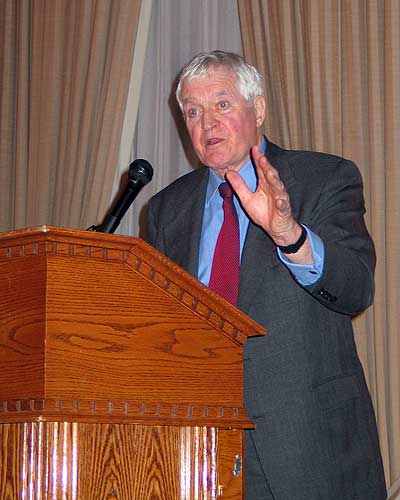 Turner insisted that the Liberal party “will not be rebuilt from the top down. It has to be rebuilt from the bottom up.”
"I don’t want to see any leader-appointed candidates across the country,” he added. “I believe riding-by-riding is how this party should be reconstructed, how this country should be run."
Turner is clearly taking side with the people behind Liberal 308, an enterprising effort to rebuild and renew the Liberal party across the country on a riding-by-riding basis.
Ignatieff responded to Turner by agreeing -- somehwat.
“I believe very strongly and I’ve said since I became leader, I want to open nominations in every [riding] in the country, I want to rebuild the party from the grassroots up," Ignatieff replied. “But I cannot abandon the prerogative of a leader to make those appointments that I deem necessary.”
In other words, Ignatieff will allow individual riding associations to nominate their own candidates so long as its convenient for himself. If Ignatieff has trouble finding a riding for a new star candidate, all bets are likely off.
Many Canadians likely still remember Stephane Dion's star-candidate adventurism when he installed Joan Beatty as a Liberal candidate over David Orchard, the candidate duly elected by that riding's Liberal riding association.
Dion's move came after a promise to use the leader's prerogative to appoint more women as candidates.
Unsurprisingly, National Liberal Women's Commission President Nicole Foster Woollatt was in favour of Ignatieff retaining the power to appoint candidates.
“It’s not something you want to use frequently," he mused. "But it can be important."
Particularly, one supposes, if the Liberal leader is using that power to appoint female candidates, even in ridings were a riding-elected candidate is already in place.
For those supporting the Liberal 308 initiative -- and it certainly deserves support -- Ignatieff's stand on this particular issue is not very promising, but this shouldn't be so surprising.
After all, Ignatieff's abrupt ascension to the Liberal leadership dismembered that renewal process from the leadership campaign -- two things that optimally should have been conducted together.
Other bloggers writing about this topic:
Jeff Jedras - "John Turner at Council of Presidents"
Challenging the Commonplace - "Telling Early Moment May Top LPC Convention"
At the Liberal party national convention in Vancouver, Michael Ignatieff has been provided with a stark choice:
Rebuild the party from the bottom up or rebuild the party from the top down. Not rebuilding the party at all is simply not an option.
Speaking at a meeting of Liberal party riding presidents, former Prime Minister John Turner made his preference on the manner of this rebuilding abundantly clear.
Turner insisted that the Liberal party “will not be rebuilt from the top down. It has to be rebuilt from the bottom up.”"I don’t want to see any leader-appointed candidates across the country,” he added. “I believe riding-by-riding is how this party should be reconstructed, how this country should be run."
Turner is clearly taking side with the people behind Liberal 308, an enterprising effort to rebuild and renew the Liberal party across the country on a riding-by-riding basis.
Ignatieff responded to Turner by agreeing -- somehwat.
“I believe very strongly and I’ve said since I became leader, I want to open nominations in every [riding] in the country, I want to rebuild the party from the grassroots up," Ignatieff replied. “But I cannot abandon the prerogative of a leader to make those appointments that I deem necessary.”
In other words, Ignatieff will allow individual riding associations to nominate their own candidates so long as its convenient for himself. If Ignatieff has trouble finding a riding for a new star candidate, all bets are likely off.
Many Canadians likely still remember Stephane Dion's star-candidate adventurism when he installed Joan Beatty as a Liberal candidate over David Orchard, the candidate duly elected by that riding's Liberal riding association.
Dion's move came after a promise to use the leader's prerogative to appoint more women as candidates.
Unsurprisingly, National Liberal Women's Commission President Nicole Foster Woollatt was in favour of Ignatieff retaining the power to appoint candidates.
“It’s not something you want to use frequently," he mused. "But it can be important."
Particularly, one supposes, if the Liberal leader is using that power to appoint female candidates, even in ridings were a riding-elected candidate is already in place.
For those supporting the Liberal 308 initiative -- and it certainly deserves support -- Ignatieff's stand on this particular issue is not very promising, but this shouldn't be so surprising.
After all, Ignatieff's abrupt ascension to the Liberal leadership dismembered that renewal process from the leadership campaign -- two things that optimally should have been conducted together.
Other bloggers writing about this topic:
Jeff Jedras - "John Turner at Council of Presidents"
Challenging the Commonplace - "Telling Early Moment May Top LPC Convention"
Picking an Atheist Battle in Hip Hop
Greydon Square gains traction among atheist crowd on strength of Dawkins endorsement
Seasoned Richard Dawkins watchers may remember "Beware the Believers", a rap video parodying Richard Dawkins.
They may even remember a briefer follow-up to the video in which its creators revealed it as a mutual mockery of both Dawkins and some of his most diligent detractors -- notably Expelled creator Ben Stein.
The video was particularly hilarious due to the hysterical notion of Dawkins being bothered to even look at a rap CD, let alone actually listen to one.
That stodgy impression of Dawkins may not have been entirely accurate. Dawkins has recently taken to promoting a rapper by the name of Greydon Square.
Greydon Square admits freely to having a confrontational style. That naturally has to be a given, considering the aggressive and confrontational nature of hip hop.
"I'm confrontational with people who are, by nature, confrontational with their ideology," he says. "You can't run around and tell people that they're going to hell because they don't believe in the same sky God as you. Are you serious? I will confront you over that."
Greydon Square wants to approach hip hop in a way that's rarely been attempted before. He wants to approach hip hop as a debate -- an interesting take on battle rap, one that's rarely been embraced.
"See, what I did was I looked at hip hop beefs and noticed that it deteriorated when people started calling each other bitches and ho's and basically stopped formulating arguments," he continues. "They stopped showing the ability, the skill, and just started talking shit. I brought it back to presenting a position. Now you can call me whatever you want, but until you argue a position, you're wack."
But Greydon Square's approach has one singular fatal flaw: in hip hop, winners and losers are normally decided not based on who produces the best argument, but based on who is lyrically superior.
Rappers are starkly divided between two main religious camps -- Christianity, and Islam. Louis Farrakhan and the Nation of Islam has often sought to establish leadership over the hip hop community. In fact Farrakhan has called hip hop summits and has convened personal meetings between rappers in order to squash potentially violent beefs.
Greydon Square would have a difficult time competing lyrically with many rappers of religious faith. DMX, Kanye West and Reverend Run are not only deeply spiritual Christians, but are also dominant battle rappers.
KRS-One, Common and Mos Def are dominant battle rappers who are Muslim.
Any rapper would have difficulty standing against any of these performers in a battle rap. But even so far as dogmatism goes, Greydon Square is unlikely to find suitable targets among the hip hop community.
Many deeply faithful rappers have come from a background that doesn't grant them the luxury of being self-righteous or dogmatic. Due to the very nature of the lives they've lived, these people are sinners who have sought, and continue to seek, redemption -- the most powerful promise of religion.
As a result, the religious beliefs of rappers by their very nature have to be considerably flexible.
If Greydon Square is itching for an opportunity to promote atheism by beefing with other rappers not only is he not terribly likely to win, but he's unlikely to find a target that suits him.
Whether or not Greydon Square will embrace the atheist tactic of inventing a dogmatic opponent where one may not actually exist remains yet to be seen.
Wednesday, April 29, 2009
ADQ Leadership Race Heats Up
Gilles Tailon announces leadership bid
Just a few short months ago, the Action Democratique du Quebec were in extremely dire straights.
They had just finished absorbing a whopping defeat in the 2008 Quebec election, their leader, Mario Dumont, had just quit, and no contenders were lining up to bid for his vacated post.
What a difference a few months can make.
As of yesterday, three candidates have declared their candidacy to become the next leader of the ADQ.
Gilles Tailon has formally declared his candidacy. He says he plans to focus on economic issues.
Eric Caire, the National Assembly Member for La Peltrie and another former MNA, Christian Levesque.
At 63 years of age, Tailon is the oldest candidate to join the field. He'd certainly be a significant change from the young, dynamic Dumont. His best asset is a stint as the President of the Conseil du Patronat du Québec, an association of business people. He was the president of the CPQ for eight years between 1998 and 2006.
Caire was first elected in his riding of La Peltrie in 2007 by 51% of the vote. Since then he's advocated the abolition of public school boards and the introduction of a school vouchers program.
Levesque has some international credentials, having previously been President of General Textiles International, which is based in Paris. In a party that has to lead toward French Canadian nationalism, such links to France could be a real asset for both Levesque and the ADQ.
Any of these candidates would be hard-pressed to replace Mario Dumont, but with the sharp turn in the party's electoral fortunes the ADQ is well-poised for the kind of change in direction a new leader could bring.
Just a few short months ago, the Action Democratique du Quebec were in extremely dire straights.
They had just finished absorbing a whopping defeat in the 2008 Quebec election, their leader, Mario Dumont, had just quit, and no contenders were lining up to bid for his vacated post.
What a difference a few months can make.
As of yesterday, three candidates have declared their candidacy to become the next leader of the ADQ.
Gilles Tailon has formally declared his candidacy. He says he plans to focus on economic issues.
Eric Caire, the National Assembly Member for La Peltrie and another former MNA, Christian Levesque.
At 63 years of age, Tailon is the oldest candidate to join the field. He'd certainly be a significant change from the young, dynamic Dumont. His best asset is a stint as the President of the Conseil du Patronat du Québec, an association of business people. He was the president of the CPQ for eight years between 1998 and 2006.
Caire was first elected in his riding of La Peltrie in 2007 by 51% of the vote. Since then he's advocated the abolition of public school boards and the introduction of a school vouchers program.
Levesque has some international credentials, having previously been President of General Textiles International, which is based in Paris. In a party that has to lead toward French Canadian nationalism, such links to France could be a real asset for both Levesque and the ADQ.
Any of these candidates would be hard-pressed to replace Mario Dumont, but with the sharp turn in the party's electoral fortunes the ADQ is well-poised for the kind of change in direction a new leader could bring.
Tuesday, April 28, 2009
The Death of an Argument
Key rhetorical flub reveals fatuity of Richard Dawkins' "lying for Jesus" argument
Ever since its inception as an argument in the religion/atheism debate, "lying for Jesus" has become a favoured accusation lobbed by the most zealous atheists.
In fact, accusations of general dishonesty have often been central to the arguments of militant fundamentalist atheists. But in a column appearing on the Spectator website Melanie Phillips chronicles the tale of Dawkins flubbing this argument so badly he may never be able to use it again -- at least not with any trace of credibility.
The tale begins with a debate between Dawkins and Irish mathematician John Lennox in which Dawkins reportedly admitted that belief in God is a defensible belief.
"You can make a respectable case for deism," Dawkins admits. "Not a case that I would accept but I think it is a serious discussion that you could have."
Dawkins would insist that he hadn't really meant his comments as an admission that belief in a god could be respectably defended -- insisting that he was merely being sarcastic. As Lennox and Phillips would both note, Dawkins certainly said nothing at the time to indicate that he was being sarcastic, and had reportedly seemed sincere at the time that he said it.
But Dawkins was not yet finished.
Dawkins would go on to accuse Phillips of misrepresenting him in a column published on the Spectator site. He would even go so far as quoting her in a slide shown at a subsequent debate with Lennox:
Those words were actually penned by Culture Watch's Bill Muehlenberg. Oops.
Dawkins would go on to accuse Phillips of "lying for Jesus" based on quotes that he was misrepresenting as hers. But his folly in doing so actually ran deeper than this simple fact.
As it turns out, Phillips is actually Jewish. One clearly pertinent detail is that Jews don't believe in Jesus -- or at least don't believe he was the prophesized Messiah.
Oops.
At the very least, Dawkins most recent flub has demonstrated precisely how eager he is to deploy his vaunted "lying for Jesus" argument, to the extent that he will rush to use it without even stopping to make sure that the words he's quoted were ever written or spoken by the person he's attributed them to.
Considering the high level at which Dawkins has conducted his scientific work it would be hard to believe -- nearly impossible -- that he was unable to tell Bill Muehlenberg' words from Melanie Phillips'.
Then again, considering Dawkins' history of weakly razor-thin arguments -- such as suggesting that astrology is akin to racism -- perhaps there is ample cause for doubt. It's of little surprise that Dawkins isn't nearly as bright as he and his supporters would like to have people believe.
One thing is for certain: Dawkins' "lying for Jesus" argument is now officially dead in the water. That certainly won't stop Dawkins or any of his supporters from using it -- they thrive on the ignorance of those they would convince, and on the alleged ignorance of anyone who believes in religion.
All that can be done is for those who oppose Dawkins and his virulent brand of atheism to remind people that he isn't nearly as bright -- or honest -- as he pretends to be.
Ever since its inception as an argument in the religion/atheism debate, "lying for Jesus" has become a favoured accusation lobbed by the most zealous atheists.
In fact, accusations of general dishonesty have often been central to the arguments of militant fundamentalist atheists. But in a column appearing on the Spectator website Melanie Phillips chronicles the tale of Dawkins flubbing this argument so badly he may never be able to use it again -- at least not with any trace of credibility.
The tale begins with a debate between Dawkins and Irish mathematician John Lennox in which Dawkins reportedly admitted that belief in God is a defensible belief.
"You can make a respectable case for deism," Dawkins admits. "Not a case that I would accept but I think it is a serious discussion that you could have."
Dawkins would insist that he hadn't really meant his comments as an admission that belief in a god could be respectably defended -- insisting that he was merely being sarcastic. As Lennox and Phillips would both note, Dawkins certainly said nothing at the time to indicate that he was being sarcastic, and had reportedly seemed sincere at the time that he said it.
But Dawkins was not yet finished.
Dawkins would go on to accuse Phillips of misrepresenting him in a column published on the Spectator site. He would even go so far as quoting her in a slide shown at a subsequent debate with Lennox:
"Arch-atheist Richard Dawkins is an evolutionist. But many are now asking whether the dyed-in-the-wool critic of religion may be, well, evolving in his views about God. You see, in a recent debate with theist and Christian John Lennox, he let slip what many would regard as a major blooper: he actually admitted that there might be a case for theism of sorts. This was a worldview change of seismic proportions. It was a most remarkable turnaround. For someone who had spent over five decades championing the atheist cause to all of a sudden renounce it was an incredible achievement."The problem, as it turns out, is that Phillips never wrote those words.
Those words were actually penned by Culture Watch's Bill Muehlenberg. Oops.
Dawkins would go on to accuse Phillips of "lying for Jesus" based on quotes that he was misrepresenting as hers. But his folly in doing so actually ran deeper than this simple fact.
As it turns out, Phillips is actually Jewish. One clearly pertinent detail is that Jews don't believe in Jesus -- or at least don't believe he was the prophesized Messiah.
Oops.
"Lying for Jesus! Oh dear oh dear. Not only did Dawkins falsely accuse me of distorting his position, but he accused me of doing so because he assumed I was a Christian. Five minutes’ research maximum would have told him that I am a Jew. Either he thought that all the stuff written on Culture Watch by Bill Muehlenberg, who appears to be a devout Christian, was written by me; or he assumed that, since John Lennox is a Christian, anyone who supports John Lennox must also be a Christian. Either way, the man who has made a global reputation out of scorning anyone who makes an assumption not grounded in empirical evidence has assumed to be true something that can easily be ascertained to be totally false – thus suggesting that the mind that is so addled by prejudice it cannot deal with demonstrable reality is none other than his own."Those words at least actually were written by Phillips.
At the very least, Dawkins most recent flub has demonstrated precisely how eager he is to deploy his vaunted "lying for Jesus" argument, to the extent that he will rush to use it without even stopping to make sure that the words he's quoted were ever written or spoken by the person he's attributed them to.
Considering the high level at which Dawkins has conducted his scientific work it would be hard to believe -- nearly impossible -- that he was unable to tell Bill Muehlenberg' words from Melanie Phillips'.
Then again, considering Dawkins' history of weakly razor-thin arguments -- such as suggesting that astrology is akin to racism -- perhaps there is ample cause for doubt. It's of little surprise that Dawkins isn't nearly as bright as he and his supporters would like to have people believe.
One thing is for certain: Dawkins' "lying for Jesus" argument is now officially dead in the water. That certainly won't stop Dawkins or any of his supporters from using it -- they thrive on the ignorance of those they would convince, and on the alleged ignorance of anyone who believes in religion.
All that can be done is for those who oppose Dawkins and his virulent brand of atheism to remind people that he isn't nearly as bright -- or honest -- as he pretends to be.
Elizabeth May: Political Amnesiac
Green Party leader has peculiar notions of what is "anti-democratic"
According to Green Party leader Elizabeth May, Canadians suffer from a "collective amnesia". Often enough, she's oddly correct -- but in ways that are ironically lost on her.
Her recent book Losing Confidence continues to gain traction in the news media, as various outlets continue to weigh her claims that Canadian democracy is in some kind of trouble.
Yet Elizabeth May herself indulges herself in politically-motivated forgetfulness. She forgets that it was the Canadian citizenry that rejected the coalition. She also forgets that Canadian citizens have different expectations about government than countries where coalition governments are commonplace.
Elizabeth May's biggest problem is that she continues to evaluate Canadian democracy against various European counterpart -- Germany may be the most pertinent example -- without ever taking into account that Canada's political culture and, with it, citizens' expectations of democracy.
"Never in the history of modern parliamentary democracy anywhere in the world had a prime minister sought to shut down the government to avoid losing a confidence vote," she writes.
May continues to complain that she feels the progrogation of Parliament was "breathtakingly anti-democratic".
Yet a clear majority of Canadians had already rejected the proposed Liberal/NDP coalition government. The option of an election -- the traditional political route after a minority Parliament's defeat -- was an election, not the coalition, which was supported by just over a third of Canadians.
Yet an election had just taken place weeks previous. And considering the levels of support the Conservatives enjoyed immediately following the coalition proposal -- careening into majority government territory -- it's unlikely that May would have supported an election.
On that note it's hard to overlook the extent to which May is being politically self-indulgent. As Tom Flanagan noted in a Globe and Mail column, Canadian political culture demands that Canadians decide the government, not the Governor General.
If the Liberals and NDP had run on a coalition government during the 2008 federal election, that would be one thing entirely. But then-Liberal leader Stephane Dion had explicitly ruled that prospect out during the election. So to step up after the election and take the first opportunity to attempt to supplant the government with a coalition that had previously been treated as out of the question was another thing entirely.
Canadians should also never forget that the precipitating event for this coalition was a government move to cut subsidies for political parties. At a time of fiscal crisis, this was the right move to make, but the Liberals, NDP and Bloc Quebecois (whom may describes simply as "democratically elected" without mentioning the contextual fact that their purpose is to separate Quebec from the rest of the country) wouldn't stand for the revokation of their entitlements.
Never before, in a democratic state, has an appointed official been called upon to make a decision on whether or not to replace the duly-elected government with a political monstrosity so out-of-step with the citizens' expectations of democracy.
May's attitude clearly indicates that she believes democracy is something to be managed by elites. The rules set clearly advantage elites in decisions regarding who will and will not govern. If Michaelle Jean had been less respectful of Canada's political culture, Elizabeth May could very well have gotten her way -- and an unstable coalition replete with the Canadian government mortgaged to a separatist party founded on a racial ideology.
Only in the mind of a virulently fervent ideologue could such an option, evaulated according to the entirety of its significance, seem appealing. Especially when one considers that it would undermine Canada's citizen-oriented political culture.
Oddly enough, May forgets that her party has no leadership review process. Although rumblings continue that the rank-and-file Green Party membership has no confidence in Elizabeth May's leadership -- and really, who could blame them? -- May continues to enjoy a very comfortable position her party.
But only because the party's rules allow for this -- not because of the democratic will of her party membership.
To Elizabeth May, only the formal rules matter. That's the biggest difference between May and Governor General Michaelle Jean -- Jean understands that the democratic will of the people matter, and May does not.
It's a good reason why Michaelle Jean deserves an opportunity to utilize her talents beyond the meagre venue of the Governor General's office, and Elizabeth May doesn't deserve to ever be elected.
According to Green Party leader Elizabeth May, Canadians suffer from a "collective amnesia". Often enough, she's oddly correct -- but in ways that are ironically lost on her.
Her recent book Losing Confidence continues to gain traction in the news media, as various outlets continue to weigh her claims that Canadian democracy is in some kind of trouble.
Yet Elizabeth May herself indulges herself in politically-motivated forgetfulness. She forgets that it was the Canadian citizenry that rejected the coalition. She also forgets that Canadian citizens have different expectations about government than countries where coalition governments are commonplace.
Elizabeth May's biggest problem is that she continues to evaluate Canadian democracy against various European counterpart -- Germany may be the most pertinent example -- without ever taking into account that Canada's political culture and, with it, citizens' expectations of democracy.
"Never in the history of modern parliamentary democracy anywhere in the world had a prime minister sought to shut down the government to avoid losing a confidence vote," she writes.
May continues to complain that she feels the progrogation of Parliament was "breathtakingly anti-democratic".
Yet a clear majority of Canadians had already rejected the proposed Liberal/NDP coalition government. The option of an election -- the traditional political route after a minority Parliament's defeat -- was an election, not the coalition, which was supported by just over a third of Canadians.
Yet an election had just taken place weeks previous. And considering the levels of support the Conservatives enjoyed immediately following the coalition proposal -- careening into majority government territory -- it's unlikely that May would have supported an election.
On that note it's hard to overlook the extent to which May is being politically self-indulgent. As Tom Flanagan noted in a Globe and Mail column, Canadian political culture demands that Canadians decide the government, not the Governor General.
If the Liberals and NDP had run on a coalition government during the 2008 federal election, that would be one thing entirely. But then-Liberal leader Stephane Dion had explicitly ruled that prospect out during the election. So to step up after the election and take the first opportunity to attempt to supplant the government with a coalition that had previously been treated as out of the question was another thing entirely.
Canadians should also never forget that the precipitating event for this coalition was a government move to cut subsidies for political parties. At a time of fiscal crisis, this was the right move to make, but the Liberals, NDP and Bloc Quebecois (whom may describes simply as "democratically elected" without mentioning the contextual fact that their purpose is to separate Quebec from the rest of the country) wouldn't stand for the revokation of their entitlements.
Never before, in a democratic state, has an appointed official been called upon to make a decision on whether or not to replace the duly-elected government with a political monstrosity so out-of-step with the citizens' expectations of democracy.
May's attitude clearly indicates that she believes democracy is something to be managed by elites. The rules set clearly advantage elites in decisions regarding who will and will not govern. If Michaelle Jean had been less respectful of Canada's political culture, Elizabeth May could very well have gotten her way -- and an unstable coalition replete with the Canadian government mortgaged to a separatist party founded on a racial ideology.
Only in the mind of a virulently fervent ideologue could such an option, evaulated according to the entirety of its significance, seem appealing. Especially when one considers that it would undermine Canada's citizen-oriented political culture.
Oddly enough, May forgets that her party has no leadership review process. Although rumblings continue that the rank-and-file Green Party membership has no confidence in Elizabeth May's leadership -- and really, who could blame them? -- May continues to enjoy a very comfortable position her party.
But only because the party's rules allow for this -- not because of the democratic will of her party membership.
To Elizabeth May, only the formal rules matter. That's the biggest difference between May and Governor General Michaelle Jean -- Jean understands that the democratic will of the people matter, and May does not.
It's a good reason why Michaelle Jean deserves an opportunity to utilize her talents beyond the meagre venue of the Governor General's office, and Elizabeth May doesn't deserve to ever be elected.
Monday, April 27, 2009
The Political Power of Music
Russel Simmons promotes political power of hip hop
When Republican National Committee Chairman Michael Steele suggested the GOP needed to reenvision itself in a hip hop mold many people assumed he was either crazed or simply delusional.
 After all, hip hop and the Republican party could be expected to mix about as well as oil and water.
But hip hop may be the most inherently political genre music has to offer. Because of its uniquely political character, hip hop provides political organizers with invaluable opportunities to mobilize grassroots urban youths -- a demographic that not only is becoming more politically active, but one that Republicans are practically entirely alienated from.
Russel Simmons provides an example of precisely how powerful hip hop can be as a political organizational force. His efforts to mobilize the hip hop community in support of environmental causes, something he plans to accomplish through his America's Greenest Campus campaign, promise to be nothing short of revolutionary.
 "[This campaign] is an educational tool and an empowerment vehicle. People don’t understand what it is to lighten their footprint, what steps to take," Simmons explains. "So if we give them the simple steps and we tell them exactly how much it affects the environment if they make certain changes—being a vegetarian, doing other things that make a dramatic difference in how much weight they carry in the world—people want to know that. When they realize that by changing simple things they can make a difference, it’s an empowerment vehicle."
While this is an encouraging idea, Simmons fails to exercise some crucial critical thinking in regards to his own ideas. His intent to utilize hip hop -- which in addition to being music's most inherently political genre has also become music's most inherently materialistic genre -- in favour of environmentalism contradicts hip hop's consumer-driven nature.
But Simmons is also right in noting the impact that hip hop has on consumer culture. Convincing rappers to embrace environmentally-conscious products will go a long way toward improving their marketability.
"The biz is depending on hip-hop to pick which color diamond is popular," Simmons explains. "The only way [the Maybach] beats Phantom Rolls Royce is to get rappers to choose it. Tommy Hilfiger’s praying that hip-hop discovers him again. So is Coca-Cola; [they’re] worried what hip-hop says versus Pepsi."
Simmons admits that he doesn't currently have a big-name rapper he can point to as the franchise player for his environmentalist hip hop movement.
But even if rappers aren't necessarily becoming more environmentally conscious just yet, they are becoming wealthier on an ongoing basis.
The ever-increasing wealth of hip hop artists provides an open window for Republicans to appeal to hip hop artists through fiscally conservative policies -- particularly those promising lower levels of taxation. The biggest barrier remaining to Michael Steele remaking the GOP under a hip hop prototype is the social values projected by many of those currently being allowed to portray themselves as the Republican party's standard bearers.
As politically revolutionary music, one can rest assured that few rappers will publicly support a political party that is at least perceived to promote socially regressive or racially hostile policies.
Michael Steele's plan to infuse a raptivist base within the Republican party will require him to embrace Meghan McCain's plans to moderate the GOP. The potential for growth following such a radical course of action is immense -- but first the party would have to endure significant growing pains.
When Republican National Committee Chairman Michael Steele suggested the GOP needed to reenvision itself in a hip hop mold many people assumed he was either crazed or simply delusional.
After all, hip hop and the Republican party could be expected to mix about as well as oil and water.But hip hop may be the most inherently political genre music has to offer. Because of its uniquely political character, hip hop provides political organizers with invaluable opportunities to mobilize grassroots urban youths -- a demographic that not only is becoming more politically active, but one that Republicans are practically entirely alienated from.
Russel Simmons provides an example of precisely how powerful hip hop can be as a political organizational force. His efforts to mobilize the hip hop community in support of environmental causes, something he plans to accomplish through his America's Greenest Campus campaign, promise to be nothing short of revolutionary.
"[This campaign] is an educational tool and an empowerment vehicle. People don’t understand what it is to lighten their footprint, what steps to take," Simmons explains. "So if we give them the simple steps and we tell them exactly how much it affects the environment if they make certain changes—being a vegetarian, doing other things that make a dramatic difference in how much weight they carry in the world—people want to know that. When they realize that by changing simple things they can make a difference, it’s an empowerment vehicle."While this is an encouraging idea, Simmons fails to exercise some crucial critical thinking in regards to his own ideas. His intent to utilize hip hop -- which in addition to being music's most inherently political genre has also become music's most inherently materialistic genre -- in favour of environmentalism contradicts hip hop's consumer-driven nature.
But Simmons is also right in noting the impact that hip hop has on consumer culture. Convincing rappers to embrace environmentally-conscious products will go a long way toward improving their marketability.
"The biz is depending on hip-hop to pick which color diamond is popular," Simmons explains. "The only way [the Maybach] beats Phantom Rolls Royce is to get rappers to choose it. Tommy Hilfiger’s praying that hip-hop discovers him again. So is Coca-Cola; [they’re] worried what hip-hop says versus Pepsi."
Simmons admits that he doesn't currently have a big-name rapper he can point to as the franchise player for his environmentalist hip hop movement.
But even if rappers aren't necessarily becoming more environmentally conscious just yet, they are becoming wealthier on an ongoing basis.
The ever-increasing wealth of hip hop artists provides an open window for Republicans to appeal to hip hop artists through fiscally conservative policies -- particularly those promising lower levels of taxation. The biggest barrier remaining to Michael Steele remaking the GOP under a hip hop prototype is the social values projected by many of those currently being allowed to portray themselves as the Republican party's standard bearers.
As politically revolutionary music, one can rest assured that few rappers will publicly support a political party that is at least perceived to promote socially regressive or racially hostile policies.
Michael Steele's plan to infuse a raptivist base within the Republican party will require him to embrace Meghan McCain's plans to moderate the GOP. The potential for growth following such a radical course of action is immense -- but first the party would have to endure significant growing pains.
CAW Has Done the Right Thing
But Chrysler will have to reciprocate in time
Re-negotiating CAW's lucrative labour contract with Chrysler must be the hardest thing CAW President Ken Lewenza imagined he would ever have to do.
Yet that is precisely what Lewenza has done. In doing so, he's saved thousands of jobs for his constituents in the Canadian Autoworkers Union.
In voting to accept a cost-cutting deal with Chrysler that will save thousands of jobs, the CAW have themselves an immense service.
 Naturally, not everyone sees it the same way. Especially militant is former CAW President Buzz Hargrove, who blamed the government for the entire affair. "I'm angry as hell," he fumed. "I'm not angry at my union, they've done an incredible job. I'm angry at a government. A government that has used a heavy hand -- Mr. Clement and Mr. Bryant, the provincial government as well -- to force workers to give up things that they've worked hard and gained over the years."
It isn't surprising. Hargrove had already made an appearance on a special episode of CBC's Dragon's Den insisting that the government should extend automakers an unconditional bail out -- adamantly refusing to admit that extending such a bailout without a significant restructuring of the companies' operations would inevitably result in further financial trouble for those companies, and further lost jobs. Possibly even another bail out down the road.
Hargrove's sense of entitlement seems to have not wavered one iota. When he appeared on the Dragon's Den Hargrove showed up with his hands in his pockets, almost entirely unprepared to defend his position, and offering little to persuade anyone that such a bail out should be extended at all.
"It's unprecedented where a government would step in and say: 'You're going to cut your wages by $19 an hour,'" Hargrove grumbled. "You know, there's over 20 countries around the world -- France, Italy, Germany, Japan, Australia, New Zealand - all of these countries around the world are pumping money into the auto sector because of the worldwide economic crisis we find ourselves in."
Yet Hargrove overlooks the fact that it wasn't the government that demanded Chrysler cut its wage costs by $19 an hour -- that was Fiat, the partner in the merger that will hopefully save that company.
Despite Hargrove's objections, CAW has indeed done the right thing. But this is far from the end of the story.
In time, the onus will eventually fall on Chrysler to also do the right thing and reciprocate CAW's good will. This should come in the form of a structured plan to restore the conceded wages and benefits once the company becomes profitable again.
A situation where a labour union makes concessions to help a struggling company stay afloat shouldn't be tolearted. Having done the right thing for both themselves and Chrysler, CAW shouldn't be betrayed like many other companies have done in the past.
Re-negotiating CAW's lucrative labour contract with Chrysler must be the hardest thing CAW President Ken Lewenza imagined he would ever have to do.
Yet that is precisely what Lewenza has done. In doing so, he's saved thousands of jobs for his constituents in the Canadian Autoworkers Union.
In voting to accept a cost-cutting deal with Chrysler that will save thousands of jobs, the CAW have themselves an immense service.
Naturally, not everyone sees it the same way. Especially militant is former CAW President Buzz Hargrove, who blamed the government for the entire affair. "I'm angry as hell," he fumed. "I'm not angry at my union, they've done an incredible job. I'm angry at a government. A government that has used a heavy hand -- Mr. Clement and Mr. Bryant, the provincial government as well -- to force workers to give up things that they've worked hard and gained over the years."It isn't surprising. Hargrove had already made an appearance on a special episode of CBC's Dragon's Den insisting that the government should extend automakers an unconditional bail out -- adamantly refusing to admit that extending such a bailout without a significant restructuring of the companies' operations would inevitably result in further financial trouble for those companies, and further lost jobs. Possibly even another bail out down the road.
Hargrove's sense of entitlement seems to have not wavered one iota. When he appeared on the Dragon's Den Hargrove showed up with his hands in his pockets, almost entirely unprepared to defend his position, and offering little to persuade anyone that such a bail out should be extended at all.
"It's unprecedented where a government would step in and say: 'You're going to cut your wages by $19 an hour,'" Hargrove grumbled. "You know, there's over 20 countries around the world -- France, Italy, Germany, Japan, Australia, New Zealand - all of these countries around the world are pumping money into the auto sector because of the worldwide economic crisis we find ourselves in."
Yet Hargrove overlooks the fact that it wasn't the government that demanded Chrysler cut its wage costs by $19 an hour -- that was Fiat, the partner in the merger that will hopefully save that company.
Despite Hargrove's objections, CAW has indeed done the right thing. But this is far from the end of the story.
In time, the onus will eventually fall on Chrysler to also do the right thing and reciprocate CAW's good will. This should come in the form of a structured plan to restore the conceded wages and benefits once the company becomes profitable again.
A situation where a labour union makes concessions to help a struggling company stay afloat shouldn't be tolearted. Having done the right thing for both themselves and Chrysler, CAW shouldn't be betrayed like many other companies have done in the past.
Sunday, April 26, 2009
The Puzzle of Foreign Intervention
Michael Byers' simplistic views on foreign intervention rears its head again
Running in the 2008 federal election as a foreign policy expert for a party that continues to hold ambitions of governing Canada, there's little question that Michael Byers has ambitions of being Canada's Minister of Foreign Affairs.
It's in the revelation of these ambitions that Byers' simplistic views on foreign policy become so alarming.
In an article published in the Winnipeg Sun, Byers speaks about the issue of Piracy in Somalia, insisting that the end of humanitarian efforts in Somalia has led to a desperate situation which contributes to the increases in piracy.
"The Somali people are desperate for survival, plus they have a vendetta against the developed world which sails off the country's waters and seems to have ignored for too long the problems of the disadvantaged country, leaving millions to their fate and premature deaths," says Byers.
"Partly it's symptomatic of failed states and lawless coastal zones that exist in some parts of the world, and in part the failure of political will on the part of western states to expend the resources and sometimes the military personnel necessary to do the hard work of rebuilding hard states," he continues. "When we abandon countries like Somalia, we will eventually pay a price."
Byers' words tend to ring rather hollow when one considers that he's one of many activists who insists that the western world should abandon Afghanistan, equally a case study in the international peril of ceding state to regimes that foment internal instability and don't respect international law.
But even beyond that, Byers seems to overlook the devil in the details.
For one thing, the humanitarian mission in Somalia had a troubled history. This in part began when the Red Cross refused military escorts in Somalia.
The vulnerability of aid organizations in Somalia has led to a history of them being treated as easy targets by armed bandits in the country. Both the Red Cross and Red Crescent have been the subject of attack in Somalia.
Clearly aid organizations cannot operate in Somalia without armed protection. Somalia was the first example of such a dangerous operation, one that has led to the more muscular and aggressive peacekeeping model and has led to the demise of the Pearsonian model of peacekeeping -- a demise that has left many individuals like Byers evidently confused.
Those familiar with the Somalia peacekeeping mission are well aware that a United States-led, UN-sanctioned task force had to first forcibly establish peace in Somalia before a peacekeeping mission could really begin. When American forces were ambushed in Mogadishu it became obvious that the peace was fragile at best.
The general security environment in Somalia has even led to organizations like the Red Cross rearming, carrying their own armed security with them -- in a war zone this is an act that certainly carries the risk of being mistaken for combatants.
In order for aid missions to be able to safely operate in countries like Somalia requires a muscular and aggressive peacemaking mission to subdue beligerents and enforce peace through armed force afteward. This is precisely the kind of mission that "peace" activists like Michael Byers -- who have demonstrated an awfully bizarre notion of what peace is and is not -- have tended to oppose in recent years.
If Michael Byers expects aid missions in countries like Somalia to continue, he must support providing a safe environment for those missions to operate. By necessity, this means that Byers will have to re-think his attitudes on foreign intervention, and the ideology he has allowed to dominantly influence them.
Running in the 2008 federal election as a foreign policy expert for a party that continues to hold ambitions of governing Canada, there's little question that Michael Byers has ambitions of being Canada's Minister of Foreign Affairs.
It's in the revelation of these ambitions that Byers' simplistic views on foreign policy become so alarming.
In an article published in the Winnipeg Sun, Byers speaks about the issue of Piracy in Somalia, insisting that the end of humanitarian efforts in Somalia has led to a desperate situation which contributes to the increases in piracy.
"The Somali people are desperate for survival, plus they have a vendetta against the developed world which sails off the country's waters and seems to have ignored for too long the problems of the disadvantaged country, leaving millions to their fate and premature deaths," says Byers.
"Partly it's symptomatic of failed states and lawless coastal zones that exist in some parts of the world, and in part the failure of political will on the part of western states to expend the resources and sometimes the military personnel necessary to do the hard work of rebuilding hard states," he continues. "When we abandon countries like Somalia, we will eventually pay a price."
Byers' words tend to ring rather hollow when one considers that he's one of many activists who insists that the western world should abandon Afghanistan, equally a case study in the international peril of ceding state to regimes that foment internal instability and don't respect international law.
But even beyond that, Byers seems to overlook the devil in the details.
For one thing, the humanitarian mission in Somalia had a troubled history. This in part began when the Red Cross refused military escorts in Somalia.
The vulnerability of aid organizations in Somalia has led to a history of them being treated as easy targets by armed bandits in the country. Both the Red Cross and Red Crescent have been the subject of attack in Somalia.
Clearly aid organizations cannot operate in Somalia without armed protection. Somalia was the first example of such a dangerous operation, one that has led to the more muscular and aggressive peacekeeping model and has led to the demise of the Pearsonian model of peacekeeping -- a demise that has left many individuals like Byers evidently confused.
Those familiar with the Somalia peacekeeping mission are well aware that a United States-led, UN-sanctioned task force had to first forcibly establish peace in Somalia before a peacekeeping mission could really begin. When American forces were ambushed in Mogadishu it became obvious that the peace was fragile at best.
The general security environment in Somalia has even led to organizations like the Red Cross rearming, carrying their own armed security with them -- in a war zone this is an act that certainly carries the risk of being mistaken for combatants.
In order for aid missions to be able to safely operate in countries like Somalia requires a muscular and aggressive peacemaking mission to subdue beligerents and enforce peace through armed force afteward. This is precisely the kind of mission that "peace" activists like Michael Byers -- who have demonstrated an awfully bizarre notion of what peace is and is not -- have tended to oppose in recent years.
If Michael Byers expects aid missions in countries like Somalia to continue, he must support providing a safe environment for those missions to operate. By necessity, this means that Byers will have to re-think his attitudes on foreign intervention, and the ideology he has allowed to dominantly influence them.
The Forgotten Phelps
Nate Phelps continues to speak out against the Westboro Baptist Church
When speaking about the Phelps family and the Westboro Baptist Church, it can become all too easy to conclude that each and every member of the Phelps family is nothing more than a homophobic bigot.
Watching Louis Theroux's Most Hated Family in America, one certainly gets that impression.
But there's more to the story that is so often overlooked: the members of the Phelps family who have denounced their father, his church, and the hateful premises on which it was founded.
Nate Phelps is one of three Phelps family members who has done precisely this. Of the three, he is the most active, speaking about his family and their church on a regular basis.
The picture paints is, unsurprisingly, a very, very ugly one.
"At the age of 7, I could recite all 66 books of the Bible in 19 seconds," Phelps explains. "My father insisted on this because he was frustrated at waiting as his children flipped back and forth trying to find the verses he was preaching from. Afterwards, if one of us took to long my father would stop in the middle of his preaching, cast a gimlet eye on the offender and demand that, 'Somebody smack that kid!'"
"For me, the story of Fred Phelps and the Westboro Baptist Church is a very long and painful one," Phelps continues. "But the first time that the wider community became aware of them was in 1991, when my father led his church in Topeka, Kansas to stage a protest against gays at a local city park."
"The community reacted with outrage at the mean-spirited and hateful nature of the protest, and sentiments on both sides escalated quickly," Phelps explains. "However, far from discouraging my father, this incited him to much greater efforts at publicly protesting all that he decided was wrong."
More than merely base hatred, Phelps is motivated by a tangible sense of megalomania.
"The church was soon staging dozens of protests every week, against local politicians, businesses, and citizens who dared to speak out against him and his church," Phelps says. "But public protests weren’t enough. My father equipped his church with a bank of fax machines, and daily sent faxes to hundreds of machines across the city and state, filled with invective and diatribes against anyone who had offended him."
Having lived within the Phelps household, Nate has a unique perspective on the actions of the WBC, and can place them fully within their horrific context -- a context soaked in the blood and tears of Nate and his family.
"Most people, coming in contact with them for the first time stare in stunned amazement," Phelps acknowledges. "But for me, it is a natural and almost inevitable progression, from the things I was taught and experienced in the Phelps household as a child, to the circumstances we find today."
"On the first anniversary of my father’s suspension, I returned home from school to find my mother weeping in the church vestibule," Phelps says. "My older brother, Mark, was trying to comfort her. She turned to him, her eyes red and swollen, her voice choked with rage. She yanked the stocking cap off her head, revealing that her long dark hair has been coarsely chopped off. 'He cut my hair off', she cried. Looking closer, I could see that in some places her white scalp has been exposed."
"I think everyone here can understand the trauma of such violence, the feeling of violation and abuse. But for my mother, and for our family, there was more to it than that," Phelps explains. "My father had a fascination with 1 Corinthians 11, in which Paul teaches the hierarchal authority from god, to Christ, to Man, to Woman. A sign of a woman’s submission, he argues, is her wearing her hair long. Fred took quite literally the instructions that women should have long hair; and more than that, he determined that the Greek word translated as 'long' in the bible would be more properly translated as 'uncut'. Thus, no woman in the church was allowed to put scissors to her hair. Nor were they allowed to present themselves in church without their heads properly covered."
Witness and subject to Phelps' brutal temper, Nate looked forward to his opportunity to escape. "My 18th birthday is very important, even central to my planning. My brother left after he was 18, and he was successful," he explains. But not all of Phelps' children were so fortunate.
"My oldest sister Kathy, on the other hand, tried to leave before she was 18," Phelps says. "My father tracked her down, and I watched as he physically forced her to return home. The physical and emotional damage that he inflicted on her in those last few months took a terrible toll on her. She was never the same, her spirit was broken."
Ironically, Fred Phelps' incessant demands for rigid adherence to a religious doctrine stripped from its ultimate context -- the love of the creator and a message of compassion and goodwill to humankind -- ruined Nate's ability to partake in any kind of religious observance.
"The next five years marked a struggle for a sense of who I was, while carefully avoiding anything to do with religion," Phelps explains. "In 1981 I moved to southern California to work with my brother Mark in the printing business. From time to time, at the sincere urging of friends, I would attend a church service. But it all seemed so plain and feeble. When they taught about God’s love, I’d hear my father’s voice condemning them for their namby-pamby fag-enabling beliefs."
The doubts originally implanted by his father's horiffic abuses eventually led to Nate embracing atheism. But Phelps notes that he still may have began to doubt religion even without his father's abuse.
The scores upon scores of people who embrace atheism without being subjected to that standard of abuse prove that he is correct. And even though Phelps has embraced the extreme and virulent brand of atheism promoted by Richard Dawkins and Christopher Hitchens (among others), Phelps continues to retain a healthy respect for the positive aspects of religious belief.
"Certainly there are many aspects to Christianity that are good and desirable," Phelp acknowledges. "But I began to think in terms of those aspects existing outside the framework of God. Why can’t the mosaic code exist outside the notion of a god?"
There certainly is no reason why they can't. The belief in God -- especially in the conventional sense -- is nothing more than a belief regarding the origin of creation. It is not in itself a moral belief.
As Phelps himelf notes, his journey certainly isn't complete. No one -- not even Phelps himself -- knows what the future will hold for him or any of the other forgotten Phelps.
When speaking about the Phelps family and the Westboro Baptist Church, it can become all too easy to conclude that each and every member of the Phelps family is nothing more than a homophobic bigot.
Watching Louis Theroux's Most Hated Family in America, one certainly gets that impression.
But there's more to the story that is so often overlooked: the members of the Phelps family who have denounced their father, his church, and the hateful premises on which it was founded.
Nate Phelps is one of three Phelps family members who has done precisely this. Of the three, he is the most active, speaking about his family and their church on a regular basis.
The picture paints is, unsurprisingly, a very, very ugly one.
"At the age of 7, I could recite all 66 books of the Bible in 19 seconds," Phelps explains. "My father insisted on this because he was frustrated at waiting as his children flipped back and forth trying to find the verses he was preaching from. Afterwards, if one of us took to long my father would stop in the middle of his preaching, cast a gimlet eye on the offender and demand that, 'Somebody smack that kid!'"
"For me, the story of Fred Phelps and the Westboro Baptist Church is a very long and painful one," Phelps continues. "But the first time that the wider community became aware of them was in 1991, when my father led his church in Topeka, Kansas to stage a protest against gays at a local city park."
"The community reacted with outrage at the mean-spirited and hateful nature of the protest, and sentiments on both sides escalated quickly," Phelps explains. "However, far from discouraging my father, this incited him to much greater efforts at publicly protesting all that he decided was wrong."
More than merely base hatred, Phelps is motivated by a tangible sense of megalomania.
"The church was soon staging dozens of protests every week, against local politicians, businesses, and citizens who dared to speak out against him and his church," Phelps says. "But public protests weren’t enough. My father equipped his church with a bank of fax machines, and daily sent faxes to hundreds of machines across the city and state, filled with invective and diatribes against anyone who had offended him."
Having lived within the Phelps household, Nate has a unique perspective on the actions of the WBC, and can place them fully within their horrific context -- a context soaked in the blood and tears of Nate and his family.
"Most people, coming in contact with them for the first time stare in stunned amazement," Phelps acknowledges. "But for me, it is a natural and almost inevitable progression, from the things I was taught and experienced in the Phelps household as a child, to the circumstances we find today."
"On the first anniversary of my father’s suspension, I returned home from school to find my mother weeping in the church vestibule," Phelps says. "My older brother, Mark, was trying to comfort her. She turned to him, her eyes red and swollen, her voice choked with rage. She yanked the stocking cap off her head, revealing that her long dark hair has been coarsely chopped off. 'He cut my hair off', she cried. Looking closer, I could see that in some places her white scalp has been exposed."
"I think everyone here can understand the trauma of such violence, the feeling of violation and abuse. But for my mother, and for our family, there was more to it than that," Phelps explains. "My father had a fascination with 1 Corinthians 11, in which Paul teaches the hierarchal authority from god, to Christ, to Man, to Woman. A sign of a woman’s submission, he argues, is her wearing her hair long. Fred took quite literally the instructions that women should have long hair; and more than that, he determined that the Greek word translated as 'long' in the bible would be more properly translated as 'uncut'. Thus, no woman in the church was allowed to put scissors to her hair. Nor were they allowed to present themselves in church without their heads properly covered."
Witness and subject to Phelps' brutal temper, Nate looked forward to his opportunity to escape. "My 18th birthday is very important, even central to my planning. My brother left after he was 18, and he was successful," he explains. But not all of Phelps' children were so fortunate.
"My oldest sister Kathy, on the other hand, tried to leave before she was 18," Phelps says. "My father tracked her down, and I watched as he physically forced her to return home. The physical and emotional damage that he inflicted on her in those last few months took a terrible toll on her. She was never the same, her spirit was broken."
Ironically, Fred Phelps' incessant demands for rigid adherence to a religious doctrine stripped from its ultimate context -- the love of the creator and a message of compassion and goodwill to humankind -- ruined Nate's ability to partake in any kind of religious observance.
"The next five years marked a struggle for a sense of who I was, while carefully avoiding anything to do with religion," Phelps explains. "In 1981 I moved to southern California to work with my brother Mark in the printing business. From time to time, at the sincere urging of friends, I would attend a church service. But it all seemed so plain and feeble. When they taught about God’s love, I’d hear my father’s voice condemning them for their namby-pamby fag-enabling beliefs."
The doubts originally implanted by his father's horiffic abuses eventually led to Nate embracing atheism. But Phelps notes that he still may have began to doubt religion even without his father's abuse.
The scores upon scores of people who embrace atheism without being subjected to that standard of abuse prove that he is correct. And even though Phelps has embraced the extreme and virulent brand of atheism promoted by Richard Dawkins and Christopher Hitchens (among others), Phelps continues to retain a healthy respect for the positive aspects of religious belief.
"Certainly there are many aspects to Christianity that are good and desirable," Phelp acknowledges. "But I began to think in terms of those aspects existing outside the framework of God. Why can’t the mosaic code exist outside the notion of a god?"
There certainly is no reason why they can't. The belief in God -- especially in the conventional sense -- is nothing more than a belief regarding the origin of creation. It is not in itself a moral belief.
As Phelps himelf notes, his journey certainly isn't complete. No one -- not even Phelps himself -- knows what the future will hold for him or any of the other forgotten Phelps.
Saturday, April 25, 2009
Entering the House of Hate
Produced by the BBC's Louie Theroux, The Most Hated Family in America documents the Westboro Baptist Church.
It follows these unsettlingly-awful people through the course of various protests, one of their church services, and even their day-to-day life. It provides a window into their horrible world that most viewers will find hard to look away from -- much like a car crash.
Yet in a certain way, it makes the hateful gospel preached by the Phelps family almost make sense. Simply put, the alleged American embrace of homosexuality -- which would likely come as a surprise to most American homosexuals -- has allegedly placed that entire country in violation of God's sixth commandment: thou shalt not commit adultery.
Shirley Phelps-Roeper provides an intriguing definition of the word "fag" that isn't restricted to gay men, but rather to anyone engaging in any sex act outside of marriage, any sex act within marriage involving someone from outside the marriage, or any adulterous act.
In fact, she goes on to brand any of these acts as adulterous.
Phelps-Roper puts an extraordinary amount of time into researching the dead soldiers whose funerals they're protesting at. In the film, she not only knows the name of the soldier whose funeral they're picketing, but also very explicit details about the man's death.
The most striking diversion from traditional Christian activism is the purpose of the WBC's protests. According to Phelps-Roeper, the goal of the WBC is not to "win souls for Christ", but to provoke people into revealing what the church interprets as contempt for God through their reaction to what the church presents as God's message.
Phelps-Roper describes her and her fellow parishoners as "evil angels", who prophesize the evils God has planned for the world. When told that God isn't supposed to commit evil, she actually becomes exasperated.
The WBC offers no compromise, even to those who oppose the message of the church while also rejecting homosexuality. They treat rejection of their church -- not even necessarily rejection of its message -- as condonation of homosexuality.
By staging their protests near traffic thoroughfares, the WBC always guarantees themselves the last word. At some point, after all, an indignant motorist has to focus on their driving.
The more one sees of The Most Hated Family in America, the more they appear to fit the most classical definition of a cult. Almost all 70 members of the Church live together in a group of houses conjoined by a shared back yard.
Phelps-Roper's two eldest daughters acknowledged they were hated at school, yet insist that they're nice to everyone. They have a bizarre definition of niceness -- they admit to telling their classmates that they're destined to go to hell when they die because of their lifestyles. They even offer doctrinal justification for their lack of friends outside the church, insisting that "friendship with the world is enmity with God".
It's a little unsettling how happily members of the WBC will tell people they're going to hell -- as if they're actually happy about it. Later in the film, Jennifer Phelps explains that they view people going to hell as vindication of their church's message -- and apparently they need no confirmation that such people actually go to hell in order to enjoy this vindication.
The members of the WBC rarely seem to consider the possibility that they may be wrong, but they do apparently consider the possibility that they may be among the "wicked" that God banishes to hell. Jennifer treats the prospect of personal tragedy befalling herself as a confirmation that she is among the damned, and that she would go to hell if such a thing were to ever happen.
The WBC even maintains one individual whose job it is to disseminate their hate propaganda over the internet -- and apparently produces signs aimed at almost any public figure one can think of, from Bishop Desmond Tutu to the deceased Princess Diana.
The production of video propaganda by the church is actually quite a sophisticated process, complete with teleprompters for Fred Phelps to read off his hate speech.
It's almost physically painful to watch Shirley Phelps-Roper's grandchildren spout the hate propaganda their grandmother has so painstakingly taught them.
The bizarre rationalism of the WBC should be enough to make anyone question their belief in an interventionalist God. Phelps muses that God put the idea of invading Iraq in George W Bush's heart, and did this because Bush "tweaked his nose".
Yet one wonders if Phelps considers the possibility that God prodded Bush to act in the way that Phelps believe has offended him. If that were the case, then no one would fall within Phelps' narrow definition of the "wicked" -- after all, these people would only be acting according to God's will.
The actions that allegedly offend God would have been prompted by God, and thus would fall within the rationale that Jacob Roper offers for his belief that all of the WBC's protests are excellence. "God did this, therefore it's perfect," insists Roper.
A sociopathic rage seems to possess Phelps-Roper. Any appeals to her conscience seem to do about as much good as appealing to any sense of self-doubt -- she denies its very existence.
She often seems so sure that she is right that when she predicts Godly retribution, as if she believes it could happen at any instant.
Sadly, Theroux skips over the most intriguing part of the Phelps family story -- the story of the Phelps family members who have left the church. Fred Phelps has never restricted his abuse to the outside world -- he has also abused his own children, physically, mentally, and emotionally, in a horrifically brutal manner. Nate and Mark Phelps were subjected to physical abuse the likes of which has seldom been accounted for.
Yet Theroux makes little mention of the four Phelps who have left the church, save to ask Fred Phelps how many children he has, just so see if he'll include them. Phelps contemptfully concludes the interview at that point.
At the end of The Most Hated Family in America, it's obvious that Theroux has only been shown what the Phelps family wanted him to see. Quite obligingly, it's all he chooses to show the viewer.
It's the world behind this presentation that would really help people understand the Westboro Baptist Church. But on that note, perhaps it may be better that it is never seen -- there are somethings that defy understanding, and possibly even things that are better not understood.
Thursday, April 23, 2009
More Found Documents of the Blogosphere

No Confidence in Elizabeth May
Green party leader obscures the truth in toxicity complaints
While Elizabeth May's unelectability has certainly rendered her inactive as a politician, she's certainly been very busy as an author.
Hot on the heels of Global Warming for Dummies, May has a new book about to debut, entitled Losing Confidence: Power Politics and the Crisis in Canadian Democracy.
The book argues that Canada needs significant electoral reform in order to restore Canadian faith in electoral politics.
"The health of Canadian democracy just isn't very strong," May complains. "We're seeing decreased voter turnout, incivility in political discourse, a Parliament that can't function because it's seized with toxic levels of partisanship."
Moreover, she blames that toxicity entirely on Prime Minister Stephen Harper and the governing Conservative party.
"In the normal course of democracy, the level of animosity dropped when you were out of an election period. But the Harper government is about taking partisanship to a level where you never stop campaigning, where every issue is an excuse to score points."
Yet it's May herself who has indulged herself in some of the most virulent anti-Conservative partisanship. It was Elizabeth May who has spent the bulk of her time preaching to any Canadian willing to listen to her about the atrocity that is the Harper government, and insisting that the Conservatives had to be defeated as soon as possible.
Her rationale was the government's alleged lack of action on climate change, more specifically the Kyoto protocol. Yet she stumped relentlessly for a party -- the Liberals -- who, while in government, did even less to address climate change.
This toxic level of partisanship preceded the election of the Harper government by years. During the days of the Reform and Canadian Alliance parties, left-wing activists demonized Preston Manning and Stockwell Day relentlessly. When the Canadian Alliance merged with the Progressive Conservative party to create the modern Conservative party these individuals demonized Stephen Harper with furious vigour.
The Liberal party gleefully echoed these sentiments. While people like May want to continue to pout over the Conservative party running negative ads about Stephane Dion highlighting his failure to act on the issue that May insists is the basis of the Tories' unsuitability to govern, Canadians also remember the viciousness of the attack ads the Liberal party has run against Stephen Harper.
Elizabeth May can say whatever she wants about Stephen Harper and the alleged incivility of his discourse. His party has never implied that a political opponent was planning a military coup. The Liberal party that she so prefers did.
May's participation in these campaigns of demonization renders her complaints purely hypocritical.
But at the end of the day there's clearly little reason to be alarmed. The Canadian people don't take Elizabeth May seriously enough to elect her, so it's unlikely they'll take her seriously enough to buy her hypocritical arguments at face value.
Canadians have demonstrated that they have no confidence in Elizabeth May.
While Elizabeth May's unelectability has certainly rendered her inactive as a politician, she's certainly been very busy as an author.
Hot on the heels of Global Warming for Dummies, May has a new book about to debut, entitled Losing Confidence: Power Politics and the Crisis in Canadian Democracy.
The book argues that Canada needs significant electoral reform in order to restore Canadian faith in electoral politics.
"The health of Canadian democracy just isn't very strong," May complains. "We're seeing decreased voter turnout, incivility in political discourse, a Parliament that can't function because it's seized with toxic levels of partisanship."
Moreover, she blames that toxicity entirely on Prime Minister Stephen Harper and the governing Conservative party.
"In the normal course of democracy, the level of animosity dropped when you were out of an election period. But the Harper government is about taking partisanship to a level where you never stop campaigning, where every issue is an excuse to score points."
Yet it's May herself who has indulged herself in some of the most virulent anti-Conservative partisanship. It was Elizabeth May who has spent the bulk of her time preaching to any Canadian willing to listen to her about the atrocity that is the Harper government, and insisting that the Conservatives had to be defeated as soon as possible.
Her rationale was the government's alleged lack of action on climate change, more specifically the Kyoto protocol. Yet she stumped relentlessly for a party -- the Liberals -- who, while in government, did even less to address climate change.
This toxic level of partisanship preceded the election of the Harper government by years. During the days of the Reform and Canadian Alliance parties, left-wing activists demonized Preston Manning and Stockwell Day relentlessly. When the Canadian Alliance merged with the Progressive Conservative party to create the modern Conservative party these individuals demonized Stephen Harper with furious vigour.
The Liberal party gleefully echoed these sentiments. While people like May want to continue to pout over the Conservative party running negative ads about Stephane Dion highlighting his failure to act on the issue that May insists is the basis of the Tories' unsuitability to govern, Canadians also remember the viciousness of the attack ads the Liberal party has run against Stephen Harper.
Elizabeth May can say whatever she wants about Stephen Harper and the alleged incivility of his discourse. His party has never implied that a political opponent was planning a military coup. The Liberal party that she so prefers did.
May's participation in these campaigns of demonization renders her complaints purely hypocritical.
But at the end of the day there's clearly little reason to be alarmed. The Canadian people don't take Elizabeth May seriously enough to elect her, so it's unlikely they'll take her seriously enough to buy her hypocritical arguments at face value.
Canadians have demonstrated that they have no confidence in Elizabeth May.
Wednesday, April 22, 2009
No Means No
One thing is certain about Canada's left-wing blogosphere. They don't like Neo Conservative very much.
Neo is far from perfect, and doesn't take criticism very well -- even when it's well-earned.
But a recent episode involving Neo and his criticism of a botched date rape case has led to a bizarre episode in which some of the Canadian blogosphere's most extreme left-wing ideologues are effectively defending a date rapist. It isn't a pretty sight.
The story revolves around a case in which Frank D'Angelo was acquitted of sexually assaulting a woman half his age, whom he'd known since she was a child.
The judge in the case, Justice John Hamilton, concluded that D'Angelo was probably guilty, but said that on a "he said/she said" basis he didn't have enough evidence to convict.
Canadian Cynic wannabe Audrey II concludes that Neo's anger over the verdict means that he "hates Western justice".
Serial troll and Groupthink Temple worshipper liberal supporter had a similar, more blatantly callous take on the matter:
News stories seem to turn up little validate liberal supporer's insistence that she left the hotel with him, or got in his car afterward.
But what liberal supporter is overlooking is the prevalence of date rape in Canadian society. Date rape, also known as assailant sexual assault, and can utilize numerous forms of coercion to force sex.
One of them is the use of body position to imply a threat, as was the case according to the testimony of D'Angelo's victim.
Moreover, date rape victims can be very confused about the affair, and may never realize they've been sexually assaulted. Many of them, likely expecting to face their assailant again in future, convince themselves that they weren't raped.
Many date rapes remain unreported due to this confusion. Many more remain unreported because victims don't want to face the social stigma that primates like liberal supporter cast upon them -- that, by having allegedly put themselselves in the position they were in, they were responsible for their victimization.
Given the facts surrounding and the prevalence of date rape, it would take either a true mysoginist or an extremely callous individual to cast such aspersions on the veracity of a date rape victim's claim based on these circumstances.
Sadly, it seems that neither liberal supporter nor Audrey II were ever taught that "no means no". It doesn't mean "maybe", and it doesn't mean "hold me down and then we'll talk about it".
No does mean no.
Neo is far from perfect, and doesn't take criticism very well -- even when it's well-earned.
But a recent episode involving Neo and his criticism of a botched date rape case has led to a bizarre episode in which some of the Canadian blogosphere's most extreme left-wing ideologues are effectively defending a date rapist. It isn't a pretty sight.
The story revolves around a case in which Frank D'Angelo was acquitted of sexually assaulting a woman half his age, whom he'd known since she was a child.
The judge in the case, Justice John Hamilton, concluded that D'Angelo was probably guilty, but said that on a "he said/she said" basis he didn't have enough evidence to convict.
Canadian Cynic wannabe Audrey II concludes that Neo's anger over the verdict means that he "hates Western justice".
Serial troll and Groupthink Temple worshipper liberal supporter had a similar, more blatantly callous take on the matter:
"My own daughter would not have remained in the room while her rapist took a shower.According to the facts heard in court, D'Angelo's victim did, indeed, go with him to his hotel room. According to the facts heard in court, D'Angelo's victim did, indeed, remain in the room and get dressed while he had a shower.
My own daughter would not have accompanied her rapist out of the hotel after the rape.
My own daughter would not have got in her rapist's car after the rape.
My own daughter would not have waited until a day later after talking with her friends to go to the police.
All these provide plenty of reasonable doubt, in a 'he said-she said' situation with no other evidence."
News stories seem to turn up little validate liberal supporer's insistence that she left the hotel with him, or got in his car afterward.
But what liberal supporter is overlooking is the prevalence of date rape in Canadian society. Date rape, also known as assailant sexual assault, and can utilize numerous forms of coercion to force sex.
One of them is the use of body position to imply a threat, as was the case according to the testimony of D'Angelo's victim.
Moreover, date rape victims can be very confused about the affair, and may never realize they've been sexually assaulted. Many of them, likely expecting to face their assailant again in future, convince themselves that they weren't raped.
Many date rapes remain unreported due to this confusion. Many more remain unreported because victims don't want to face the social stigma that primates like liberal supporter cast upon them -- that, by having allegedly put themselselves in the position they were in, they were responsible for their victimization.
Given the facts surrounding and the prevalence of date rape, it would take either a true mysoginist or an extremely callous individual to cast such aspersions on the veracity of a date rape victim's claim based on these circumstances.
Sadly, it seems that neither liberal supporter nor Audrey II were ever taught that "no means no". It doesn't mean "maybe", and it doesn't mean "hold me down and then we'll talk about it".
No does mean no.
Tuesday, April 21, 2009
The Liberal Party's New Electoral Strategy: Obama!
Grits want Ignatieff to be Obama's newest best friend
Now that George W Bush has been out of office for three months, the Liberal party has realized they need a better electoral strategy against Prime Minister Stephen Harper and the Conservative party than "Bush's best friend".
So the Grits have dreamed up an alternative: "Michael Ignatieff is Barack Obama's best friend".
On Wednesday Ignatieff will have a dinner meeting with Richard Holbrooke, Obama's Afghanistan policy advisor.
Liberal party insiders have reportedly been scrambling to spread the good word on the meeting, and portray it as demonstration that Obama would prefer Ignatieff as Prime Minister.
"Michael Ignatieff is not even prime minister and already the Obama team is reaching out to him for his expertise and because they believe he will be Canada's next prime minister," said an unidentified Liberal.
"This shows how highly regarded Michael Ignatieff is to leading figures in the Obama administration," says another unidentified Liberal.
This tactic is likely meant to remind Canadians of the role John F Kennedy played in the political rivalry between John Diefenbaker and Lester Pearson. Kennedy actively sought ways to help Pearson defeat Diefenbaker, whom Kennedy didn't particularly care for -- and the feeling was mutual.
During the 1960s, it was Kennedy who sought to interfere with Canadian politics. This time it's the Liberals who are attempting to drag an American President into Canadian politics, and make it appear as if he's taking partisan sides while he's doing it. It's a common act of Liberal cross-border partisan parochialism, one with particularly hypocritical undertones.
If the Conservative party were making themselves this cozy with an American President, the Liberals would howl bloody murder over it. In fact, they have before.
Even more comical are Liberal claims that Canada has allowed itself to be neglected in the formation of policy on Afghanistan.
"Canada's voice has been muted. We should not simply be a repeat of the US," said another Liberal insider. "We have paid the largest price in the percentage of soldiers killed and we are significant aid donor. We should make sure we have a say in the war against terrorism and the mounting challenge in Pakistan."
Of course this ignores the fact that Canada has been very active in settling multilateral -- not merely bilateral -- policy on Afghanistan, especially through NATO.
This all points to an evident lack of imagination in the Liberal party's strategy. At the earliest opportunity, they'll envoke Obama and one can expect that they'll do it as often as they can.
Now that George W Bush has been out of office for three months, the Liberal party has realized they need a better electoral strategy against Prime Minister Stephen Harper and the Conservative party than "Bush's best friend".
So the Grits have dreamed up an alternative: "Michael Ignatieff is Barack Obama's best friend".
On Wednesday Ignatieff will have a dinner meeting with Richard Holbrooke, Obama's Afghanistan policy advisor.
Liberal party insiders have reportedly been scrambling to spread the good word on the meeting, and portray it as demonstration that Obama would prefer Ignatieff as Prime Minister.
"Michael Ignatieff is not even prime minister and already the Obama team is reaching out to him for his expertise and because they believe he will be Canada's next prime minister," said an unidentified Liberal.
"This shows how highly regarded Michael Ignatieff is to leading figures in the Obama administration," says another unidentified Liberal.
This tactic is likely meant to remind Canadians of the role John F Kennedy played in the political rivalry between John Diefenbaker and Lester Pearson. Kennedy actively sought ways to help Pearson defeat Diefenbaker, whom Kennedy didn't particularly care for -- and the feeling was mutual.
During the 1960s, it was Kennedy who sought to interfere with Canadian politics. This time it's the Liberals who are attempting to drag an American President into Canadian politics, and make it appear as if he's taking partisan sides while he's doing it. It's a common act of Liberal cross-border partisan parochialism, one with particularly hypocritical undertones.
If the Conservative party were making themselves this cozy with an American President, the Liberals would howl bloody murder over it. In fact, they have before.
Even more comical are Liberal claims that Canada has allowed itself to be neglected in the formation of policy on Afghanistan.
"Canada's voice has been muted. We should not simply be a repeat of the US," said another Liberal insider. "We have paid the largest price in the percentage of soldiers killed and we are significant aid donor. We should make sure we have a say in the war against terrorism and the mounting challenge in Pakistan."
Of course this ignores the fact that Canada has been very active in settling multilateral -- not merely bilateral -- policy on Afghanistan, especially through NATO.
This all points to an evident lack of imagination in the Liberal party's strategy. At the earliest opportunity, they'll envoke Obama and one can expect that they'll do it as often as they can.
Monday, April 20, 2009
Action, Not An Election
Jack Layton's priorities uncharacteristically straight
With some Liberals musing about the prospects of a fall election and Conservatives dredging up the spectre of the coalition, it's fair to wonder where the priorities of many federal politicians are.
NDP leader Jack Layton, interestingly enough, seems to be one of the few who has his priorities in order.
In a recent radio interview, Layton has noted that his party is going to focus on reform of Employment Insurance, as opposed to merely defeating the government. "I didn't hear anybody saying that they were hankering after an election," Layton admits.
Instead, Layton says the NDP will be focusing on EI reforms that will help Canadians put out of work during the ongoing recession. "Get moving on it Prime Minister, work with us to implement the changes that must happen and must happen now," Layton said before a recent NDP caucus meeting.
"What I heard [Canadians] say is that they want action," Layton said.
"And they want action now, not off in the future when someone deigns to ordain that something should happen in Canadian politics, months and months away from now," he continued.
Layton has already suggested that work on these measures would occupy his party for the next ten weeks. That's two-and-a-half months in which Michael Ignatieff won't be able to mobilize his party's former coalition partner in order to defeat the government.
It isn't like Jack Layton to have his priorities so straight. Usually his party is quite eager to rattle the sabre, threaten to defeat the government, and dismiss any notion of actually working with them.
But Layton's recently-sraightened sense of priorities means that Canadians should see the action they so desire, provided that the Liberals and Conservatives will put petty politics aside long enough to get some work done.
With some Liberals musing about the prospects of a fall election and Conservatives dredging up the spectre of the coalition, it's fair to wonder where the priorities of many federal politicians are.
NDP leader Jack Layton, interestingly enough, seems to be one of the few who has his priorities in order.
In a recent radio interview, Layton has noted that his party is going to focus on reform of Employment Insurance, as opposed to merely defeating the government. "I didn't hear anybody saying that they were hankering after an election," Layton admits.
Instead, Layton says the NDP will be focusing on EI reforms that will help Canadians put out of work during the ongoing recession. "Get moving on it Prime Minister, work with us to implement the changes that must happen and must happen now," Layton said before a recent NDP caucus meeting.
"What I heard [Canadians] say is that they want action," Layton said.
"And they want action now, not off in the future when someone deigns to ordain that something should happen in Canadian politics, months and months away from now," he continued.
Layton has already suggested that work on these measures would occupy his party for the next ten weeks. That's two-and-a-half months in which Michael Ignatieff won't be able to mobilize his party's former coalition partner in order to defeat the government.
It isn't like Jack Layton to have his priorities so straight. Usually his party is quite eager to rattle the sabre, threaten to defeat the government, and dismiss any notion of actually working with them.
But Layton's recently-sraightened sense of priorities means that Canadians should see the action they so desire, provided that the Liberals and Conservatives will put petty politics aside long enough to get some work done.
Picking A Strange Hill to Die On
In a post on his blog today Warren Kinsella is promoting a strange video suggesting that Stephen Harper doesn't like Brian Mulroney very much.
Not a great secret.
Presented in the form of a storybook, replete with "The Dance of the Sugar Plum fairy" playing in the background, the video chronicles Stephen Harper's turn away from the Mulroney-era Progressive Conservatives. Harper had worked for then-Calgary West MP Jim Hawkes as a Parliamentary aide, but would quit over concerns about Mulroney's fiscal policies.
Harper would run unsuccessfully against Hawkes as a Reform party candidate in the 1988 federal election before defeating him in 1993.
After a falling out with Reform party leader Preston Manning, Harper left the party to become the President of the National Citizens Coalition. The video highlights Harper's criticisms of Mulroney and Harper's suggestion that the then-governing Liberal party not settle Mulroney's libel lawsuit out-of-court so the RCMP could continue investigating the matter.
"Not nice," the video muses, complaining that Harper has rarely been there to help Mulroney.
Yet when Kinsella's Liberal party called for a judicial inquiry into his dealings with Karlheinz Schreiber -- who promised startling revelations regarding the Airbus scandal, but only if he wasn't extradited to Germany -- Harper initially refused.
Not exactly the actions of someone pursuing a grudge against a former political opponent.
The video is an interesting exercise in branding and counter-branding. It seeks to brand Brian Mulroney as largely an innocent victim of Stephen Harper's malice and lack of niceties. Meanwhile, it tries to counter-brand Harper as a vindictive and petulant individual for whom personal hatred of Mulroney is motivating his government's actions vis a vis Mulroney, as opposed to the persistent demands of the opposition parties.
It's unsurprising that Warren Kinsella would be so eager to help promote such a piece of online tripe. The video in question banks on the short memories of its viewers, hoping that they'll separate the Oliphant inquiry from its real-world context -- the demands by then-Liberal leader Stephane Dion that Mulroney be investigated.
This is unsurprising from someone who demands that the sponsorship scandal be separated from its context. He has long railed against holding Jean Chretien responsible for the sponsorship scandal, but refuses to acknowledge the simple fact that the sponsorship program was run out of his office, by his personal staff.
Then again, Warren Kinsella has a history of pcking strange hills to die on. One recalls Kinsella's recent accusation that several conservative bloggers covertly receive paycheques from the Conservative party -- an odd accusation from an individual who has, in the past, accepted paycheques from the Liberals.
More Greens Turning Red
Noel Burgon follows Monica Jarabek to Liberal party
When Green party leader Elizabeth May forged her vaunted Red-Green coalition with the Stephane Dion-led Liberal party, she must have imagined the matter would turn out very differently for her party.
Instead her bid to defeat Conservative deputy Prime Minister Peter MacKay led only to her embarrassment, and her party failed to win a single seat in Parliament -- failing even to keep the seat it had, occupied by Liberal defector Blair Wilson.
The vote-splitting between left-wing parties contributed to the Conservatives winning government again, although this was likely mitigated by vote-swapping schemes among these various parties.
To top it all off Monica Jarabek -- who received more votes than any other Green party candidate in the 2008 federal election -- jumped ship to the Liberal party. Now another key Green, Noel Burgon, has left the Greens to become a Grit.
 "It's a lot like coming home," remarked Burgon, who formerly led the Young Liberals of Ontario.
"It's something to see two local Green candidates have gone to the Liberals," Burgon notes, but insists that he doesn't see a mass exodus from the Green party to the Liberals.
Burgon seemed to share the opinion that the Green party may be one left-wing party too many. "The left is getting crowded (politically)," he mused.
This is certainly a problem for the Green party. May's steering of the party -- which once held appeal for environmentally-minded conservatives -- inexorably toward the left has limited the party's ability to build an electoral coalition. By devoting the party to a single purpose -- defeating the Tories -- May has left conservatives who favour conservative fiscal policies but would prefer stronger environmental policy stranded with the conservatives.
Meanwhile, May's "non-endorsement" of Stephane Dion as Prime Minister (which actually was an endorsement) undermined the raison d'etre of her party. With no purpose other than to defeat the Conservative party, one wonders precisely what it was May imagines was going to keep promising candidates in her party.
The Liberal party has a better-recognized national brand, can muster greater resources in favour of its candidates, and is better poised to fulfil what May treats as the Green party's singular purpose.
It's only natural that Green candidates would abandon the party for the Liberals, especially when one considers that Elizabeth May has managed to erase any compelling reason for the Green party to even go on existing.
When Green party leader Elizabeth May forged her vaunted Red-Green coalition with the Stephane Dion-led Liberal party, she must have imagined the matter would turn out very differently for her party.
Instead her bid to defeat Conservative deputy Prime Minister Peter MacKay led only to her embarrassment, and her party failed to win a single seat in Parliament -- failing even to keep the seat it had, occupied by Liberal defector Blair Wilson.
The vote-splitting between left-wing parties contributed to the Conservatives winning government again, although this was likely mitigated by vote-swapping schemes among these various parties.
To top it all off Monica Jarabek -- who received more votes than any other Green party candidate in the 2008 federal election -- jumped ship to the Liberal party. Now another key Green, Noel Burgon, has left the Greens to become a Grit.
"It's a lot like coming home," remarked Burgon, who formerly led the Young Liberals of Ontario."It's something to see two local Green candidates have gone to the Liberals," Burgon notes, but insists that he doesn't see a mass exodus from the Green party to the Liberals.
Burgon seemed to share the opinion that the Green party may be one left-wing party too many. "The left is getting crowded (politically)," he mused.
This is certainly a problem for the Green party. May's steering of the party -- which once held appeal for environmentally-minded conservatives -- inexorably toward the left has limited the party's ability to build an electoral coalition. By devoting the party to a single purpose -- defeating the Tories -- May has left conservatives who favour conservative fiscal policies but would prefer stronger environmental policy stranded with the conservatives.
Meanwhile, May's "non-endorsement" of Stephane Dion as Prime Minister (which actually was an endorsement) undermined the raison d'etre of her party. With no purpose other than to defeat the Conservative party, one wonders precisely what it was May imagines was going to keep promising candidates in her party.
The Liberal party has a better-recognized national brand, can muster greater resources in favour of its candidates, and is better poised to fulfil what May treats as the Green party's singular purpose.
It's only natural that Green candidates would abandon the party for the Liberals, especially when one considers that Elizabeth May has managed to erase any compelling reason for the Green party to even go on existing.
Sunday, April 19, 2009
They Still Don't Get It
Liberals complain about cost of income trust investigation
When the Liberal party lost the 2005/06 federal election, many partisans blamed the Income Trust scandal and the RCMP investigation of it for their defeat.
To a certain extent, this is true. And while they continue to insist that the RCMP investigation was inappropriate and (allegedly) politically-motivated, they also conveniently overlook the fact that the Sponsorship Scandal had made the idea that the Liberal party would tip its friends off to a potentially advantageous taxation decision seem incredibly believable. Even likely.
So as documents obtained via the Access to Information act reveal that the RCMP spent $445,000 on the investigation it's only natural that the Liberal party would take this as an opportunity to complain again.
 "Not only was the investigation inappropriate and misguided, but now we know it cost a huge bundle of money too," said Liberal MP Mark Holland. "Over $400,000 is a massive expense -- and there are a lot of questions that have to be answered."
Yet Holland overlooks the fact that an investigation into the RCMP's investigation revealed no evidence of wrongdoing on the RCMP's behalf, and that while the RCMP did not find evidence of criminal wrongdoing on the part of then-Finance Minister Ralph Goodale, it did lay charges against an official working under Goodale's supervision.
As those who remember the matter should recall, a spike in trading in Income Trusts had called attention to the potential for corruption surrounding the affair. Finance department official Serge Nadeau was charged for insider trading after purchasing stock in Income Trusts before the announcement was formally made.
Holland seems to think that the RCMP should wait to investigate suspicious activity that could affect an election until after that election is concluded.
But the RCMP has a duty to investigate suspicious activities regardless of their proximity to a federal election. To delay investigations into known suspicious behaviour until after an election provides those responsible with extra time to conceal evidence, giving them a greater opportunity to go free.
Considering that the RCMP turned up enough evidence to justify charging Nadeau it's hard to accept writing the investigation off as "inappropriate" or "misguided".
It would be inappropriate and misguided to decline to investigate such suspicious occrences. And, as NDP MP Judy Wascylycia-Leis notes, Ralph Goodale himself had plenty of opportunities to investigate the affair on his own.
 "I was doing my job as an MP to get to the bottom of something many people were concerned about," said Wascylycia-Leis. "In my view, this whole chapter in our history could have been avoided -- including these costs to the RCMP investigation -- if the minister at the time, Ralph Goodale, had said these concerns were legitimate, we will investigate and get back to you ... I think he could have avoided the financial cost and the political cost."
All of this comes as the Oliphant Inquiry continues into dealings between Brian Mulroney and Karlheinz Schreiber -- a matter which continues to slide further and further into farce as revelations continue to surface that Schreiber hasn't been truthful about his dealings with Mulroney.
This inquiry was demanded by the Liberal party, and all that has been revealed thus far is how deceptive Schreiber has been in his bid to avoid extradition to Germany.
Perhaps complaining about a perfectly legitimate investigation that cost them politically out of their own negligence and lack of credibility is just the Liberal party's way of deflecting public attention away from this embarrassing debacle in which all that's really being revealed is that party's eagerness to politically capitalize on Karlheinz Schreiber's lies.
Even all this time after the Liberal party's political ouster, this party still doesn't get it. They aren't entitled to take corruption lightly and continue to govern.
When the Liberal party lost the 2005/06 federal election, many partisans blamed the Income Trust scandal and the RCMP investigation of it for their defeat.
To a certain extent, this is true. And while they continue to insist that the RCMP investigation was inappropriate and (allegedly) politically-motivated, they also conveniently overlook the fact that the Sponsorship Scandal had made the idea that the Liberal party would tip its friends off to a potentially advantageous taxation decision seem incredibly believable. Even likely.
So as documents obtained via the Access to Information act reveal that the RCMP spent $445,000 on the investigation it's only natural that the Liberal party would take this as an opportunity to complain again.
"Not only was the investigation inappropriate and misguided, but now we know it cost a huge bundle of money too," said Liberal MP Mark Holland. "Over $400,000 is a massive expense -- and there are a lot of questions that have to be answered."Yet Holland overlooks the fact that an investigation into the RCMP's investigation revealed no evidence of wrongdoing on the RCMP's behalf, and that while the RCMP did not find evidence of criminal wrongdoing on the part of then-Finance Minister Ralph Goodale, it did lay charges against an official working under Goodale's supervision.
As those who remember the matter should recall, a spike in trading in Income Trusts had called attention to the potential for corruption surrounding the affair. Finance department official Serge Nadeau was charged for insider trading after purchasing stock in Income Trusts before the announcement was formally made.
Holland seems to think that the RCMP should wait to investigate suspicious activity that could affect an election until after that election is concluded.
But the RCMP has a duty to investigate suspicious activities regardless of their proximity to a federal election. To delay investigations into known suspicious behaviour until after an election provides those responsible with extra time to conceal evidence, giving them a greater opportunity to go free.
Considering that the RCMP turned up enough evidence to justify charging Nadeau it's hard to accept writing the investigation off as "inappropriate" or "misguided".
It would be inappropriate and misguided to decline to investigate such suspicious occrences. And, as NDP MP Judy Wascylycia-Leis notes, Ralph Goodale himself had plenty of opportunities to investigate the affair on his own.
"I was doing my job as an MP to get to the bottom of something many people were concerned about," said Wascylycia-Leis. "In my view, this whole chapter in our history could have been avoided -- including these costs to the RCMP investigation -- if the minister at the time, Ralph Goodale, had said these concerns were legitimate, we will investigate and get back to you ... I think he could have avoided the financial cost and the political cost."All of this comes as the Oliphant Inquiry continues into dealings between Brian Mulroney and Karlheinz Schreiber -- a matter which continues to slide further and further into farce as revelations continue to surface that Schreiber hasn't been truthful about his dealings with Mulroney.
This inquiry was demanded by the Liberal party, and all that has been revealed thus far is how deceptive Schreiber has been in his bid to avoid extradition to Germany.
Perhaps complaining about a perfectly legitimate investigation that cost them politically out of their own negligence and lack of credibility is just the Liberal party's way of deflecting public attention away from this embarrassing debacle in which all that's really being revealed is that party's eagerness to politically capitalize on Karlheinz Schreiber's lies.
Even all this time after the Liberal party's political ouster, this party still doesn't get it. They aren't entitled to take corruption lightly and continue to govern.
Saturday, April 18, 2009
Janene Garofalo's Limbic Brain
Is oversized
The recent "Tax Day" protests in the United States have received an incredible surplus of coverage based on their comparative size. Clearly tailored for vulgar sensationalism, the "tea bag the White House" demonstrations were a perfect example of South Park conservatism.
But many people clearly didn't appreciate the calculated nature of these protests. Among them were CNBC's Keith Olbermann and a recent guest on his show, Janeane Garofalo. On a recent Countdown segment, Garofalo insisted that the tea bag protests were about nothing but racism.
"Let's be very honest about what this is about," Garofalo mused. "It's not about bashing Democrats. It's not about taxes. They have no idea what the Boston Tea Party was about, they don't know their history at all. This is about hating a black man in the White House. This is about racism straight-up."
Certainly, some people have managed to find some examples of signs at these protests that are either overly racist, arguably racist, or at least can be conflated into being racist.
But interestingly enough, the Ku Klux Klan -- the American cultural leader in racism -- doesn't seem like they've had anything to do with or say about these tea bag protests. Ever.
If these protests were really just about "racism straight-up", it's interesting that a group that is all about "racism straight-up" seem to have no interest in these protests.
Certainly, it couldn't possibly occur to either Olberman or Garofalo that even if most of those people participating in those protests are due for a tax cut, that this couldn't possibly be about government debt and the future taxes that would be necessary to pay back that debt.
No, like many left-wing ideologues, Garofalo and Olberman seem to have only one angle to play here -- the racism angle, even it is an incredibly ill-fitting frame.
Well, OK. Maybe not quite. Garofalo also took some time out of her interview to play amateur neurologist, and indulge herself in the intellectual folly of trying to write off fiscal conservatism -- even as poorly-conceived as these particular examples of fiscal conservatism are -- as a mental illness.
"The Limbic brain inside a right-winger or Republican or conservative or your average white power activist, the limbic brain in much larger in their headspace (Gee, does anyone think that's the technical term for that? -ed) than in a reasonable person and it's pushing against the frontal lobe so their synapses are misfiring," Garofalo muses. "It is a neurological problem we're dealing with."
In the end, Garofalo's conclusion seems to be based on the crowds being mostly- or all white. By almost any standard of evidence this is extremely thin gruel, particularly when these protests are taking place in so many communities that are predominantly caucasian.
It's amusing to witness Olbermann's toadyism in the course of the interview, not stopping once to question or challenge Garofalo on her inflammatory rhetoric. This is nothing new to anyone who's paid so much as passing attention to the American media -- one sees this kind of Toadyism on Fox News quite frequently, especially on shows hosted by arch-conservatives like Sean Hannity and Bill O'Reilly.
It's just ironic to see this on a CNBC program complaining about the alleged media malpractice of Fox News.
But it's hard to hold this against Keith Olbermann or Janeane Garofalo. Their limbic brains must be oversized.
Poisoning the Well of Freedom
In parts one and two of The Trap, Adam Curtis demonstrates how removing human decision-making from key societal institutions led to a bureaucratized world in which management-by-numbers has made people less free than ever before.
Ironically, the goal of these exercises -- designed to promote negative freedoms -- were part of a "bureaucracy bashing revolution" that, according to Curtis, went horribly awry.
In the concluding chapter of The Trap, Curtis presents the alternative to these notions of negative freedom -- positive freedom, the promotion of which he muses has led to tyranny around the world. The dream of positive freedom, Curtis argues, has at its very heart the goal of transforming people.
Curtis acknowledges the particular dangers of this particular form of freedom, he also notes its strengths -- that it provides hope and inspiration.
To governments, these two things can be dangerous. Of all the things governments believe they can control, they know they cannot control inspiration, and so must account for where that inspiration may lead before they can afford to encourage -- or even discourage -- it.
Hope is actually what often fuels revolutions. Contrary to popular belief, revolutions tend to take place when conditions are improving, and revolution is seen as a method for helping make further hoped-for improvements.
Curtis credits Iasiah Berlin for dreaming up this theory of positive freedom.
Berlin concluded that most people don't understand true freedom, and had to be terrified into freedom. French Jacobin Robespierre is said to have said the same thing, and conducted his famed reign of terror in the name of coercing the French people to muderously and ruthlessly cast off the elite Robespierre believed was oppressing them.
Berlin described negative freedom as a society designed to prevent citizens from impeding upon the freedoms of others. It is essentially the freedom to do as one chooses within throughly-defined boundaries.
Berlin treated the Soviet Union as the epitome of the perils of positive freedom, and proof of the need for the predominance of negative freedom.
There is, however, a key logical flaw in Berlin's theory. If anything, the Soviet Union offered negative freedom -- allegedly, freedom from material want, although history would eventually revoke that offer -- but it never tolerated positive freedoms.
Moreover, revolution is rarely an act of positive freedom exercised by the populace as a whole. Rather, revolution is usually the machination of a select few people -- a new elite, replacing the old elite.
Berlin's belief was that the freedoms of politicians to attempt to improve society should be curtailed, because the efforts of such individuals could only lead to the kinds of tyranny witnessed in the Soviet Union.
American leaders would eventually conclude that the only solution was to counter governments implementing positive freedom was to stage and promote revolutions based on negative freedom. During the Cold War, the goal of this policy would be complete containment of communism, particularly Soviet communism.
According to Curtis, this interventionist mentality essentially poisoned its own well. In the name of containing Soviet tyranny the United States had supported many oppressive regimes, simply because they helped contain communism.
Because the battle against communism was also the battle for freedom, this certainly represented little more or less than the perversion of freedom.
The American neo-conservative movement partially emerged in protest to American support of some of the world's harshest dictatorian regimes. In 1979, the neo-conservative protest was vindicated by the Iranian revolution, in which the Shah, a tyrannical patron of the US government, was overthrown by the equally- or more-oppresive Ayotollah Khomeini.
Ronald Reagan took full advantage of the neo-conservative protest to American support of oppressive regimes by promising to use America's power to spread freedom across the globe.
This particular strain of neoconservative thought led to the rise of ironically-self-dubbed "democratic revolutionaries" like Michael Ledeen.
What these individuals overlooked is that democracy cannot be imposed through a revolution. A revolution, as mentioned before, is by its very nature a mass uprising designed by elites in order to empower themselves. The opportunity to implement democracy can be won through a civil war -- as was the case in the United States and Britain -- but history offers no clear examples of countries wherein democracy was implemented in the wake of a revolution.
Reagan was as good as his word to the democratic revolutionaries, compelling dictators into calling elections and respect the results. The United States embarked on an aggressive democracy-building campaign around the world, teaching politicians to implement democracy.
Reagan's administration did take a very cynical view of democracy in places like Nicaragua, where a democratic victory by the Sandanistas was viewed as tainted.
In order to promote freedom, neoconservatives embraced Leo Strauss' "noble lie", using propaganda inventing a serious threat to justify using coercive force in places where threats did not actually exist, and eventually led the Reagan administration into the famed Iran/Contra scandal.
When the Soviet Union dissolved many viewed it as an opportunity to implement their visions of negative freedom in the land where positive freedom had allegedly reigned.
When economic reforms implementing free-market capitalism through the overnight removal of price controls backfired, Russia collapsed into complete chaos, and eventually to the empowerment of individuals like Vladimir Putin who simply empowered themselves while restoring the old positive freedom-backed status quo.
Even in Iraq the goal of spreading democracy failed when those planning the construction of a post-war democratic order forgot about the whole "democracy" part.
What these individuals have failed to recognize is that one cannot socially engineer societies to be free -- freedom is only truly freedom when it develops organically. To attempt to force freedom and democracy around the world is only to lay the groundwork for tyranny.
All those who wish to spread democracy can truly do is give people who are prepared to embrace democracy the opportunity to do so. In the end, the actual construction of a democratic order must be left to them.
Friday, April 17, 2009

Dr Ignatieff's Coalition
Liberal leader may need to play Dr Frankenstein with coalition
In an op/ed appearing in today's Globe and Mail, Tom Flanagan writes about musings that the Liberal party may attempt to force a fall election.
Flanagan notes that, after his refutal of the Liberal/NDP coalition, defeating the government may require Ignatieff to reassemble and reanimate that very coalition.
"Mr Ignatieff can't force an election by himself," Flanagan rightly notes. "He needs the votes of the New Democrats and the Bloc Québécois to defeat the Conservatives on a vote of no-confidence. In other words, he has to reactivate the coalition with the socialists and separatists against which Canadians reacted so strongly last fall."
But because Ignatieff's decision to abandon the proposed coalition so deeply offended Jack Layton and the NDP -- Layton accused Ignatieff of abandoning opposition in favour of simply backing the government -- the NDP and Bloc Quebecois' will to defeat the government has to exceed the diminished good will between themselves and the Liberals.
There are no guarantees.
For one thing, as Flanagan notes, the NDP may not be well-situated financially to wage an election campaign, having nearly matched the Conservative party's expenditures on the past campaign.
And while recent polls show that both the Liberals and NDP are gaining support, those polls can often be deceptive. Swings in support between the Conservatives and Liberals are likely to have the biggest impact in Liberal-NDP swing ridings, where narrow margins of voters opting for the Conservatives over the Liberals have delivered increasing numbers of seats to the NDP.
The noted lack of substantive difference between Harper and Ignatieff on many issues may make an election gamble less tempting for the NDP -- and there's no question Layton would be risking a lot.
"In the six elections starting in 1993, the result has always been the same: When the Liberals go up, the NDP goes down, and vice versa," Flanagan notes. "Jack Layton has worked hard in three campaigns to build up his party's caucus from 13 members when he became leader to 37 after the 2008 election. Will he risk those gains trying to put in power a Liberal leader who mirrors the Conservative leader on so many major issues?"
The Liberals and NDP could, however, skip an election entirely by once again presenting Governor General Michaelle Jean with the option of appointing their coalition in the government's place. This would certainly take the risk off of Layton's shoulders, as they could terminate the coalition at any point if they were unsatisfied with their partner -- as could the Bloc Quebecois.
But then Ignatieff risks doing precisely what the coalition did the last time it was dangled -- energize Conservative party support back into majority territory.
This is all depending on whether or not the Liberals and NDP can find themselves a willing partner in the Bloc Quebecois. But under the previous coalition proposal, the Liberals and NDP treated the Bloc as if would be the coaltion's equivalent of a feral family member, stowed away in the attic and subsisted off of raw fish heads.
While they certainly seemed to enjoy the attention they received the last time the coalition reared its head -- the question of mortgaging Canada's government to a separatist party naturally forced Quebec separatism back into the limelight -- one can legitimately wonder whether they'd be as eager to expose themselves to this treatment again.
Moreover, as Flanagan notes, increased Liberal support poses key dilemmas for the Bloc as well.
"The Bloc may also balk at an early election," he writes. "Money is not the problem; since the Bloquistes operate only in Quebec, their campaign costs are so low that they can live off the federal subsidy without worrying about fundraising. But if the Liberal vote goes up in Quebec, the Bloc could lose seats in the Montreal area. It might compensate by picking up Conservative seats around Quebec City; but that's not a sure thing, because most of those seats are held by well-entrenched incumbents who might win re-election on their individual reputations."
Flanagan goes on to insist that Ignatieff's refutal of the coalition upon becoming Liberal leader is not written in stone.
"There is the little matter of Mr Ignatieff's signature on the coalition agreement, around which a whole suite of Conservative ads could be designed," Flanagan writes.
But here he is in error. After all, it is not Ignatieff's signature on the coalition agreement, but rather Stephane Dion's. And while Ignatieff did conditionally back the coalition -- even agreeing, along with Bob Rae and Dominic LeBlanc, to suspend the leadership campaign -- he never signed that particular agreement, nor did he volunteer himself to lead any such coalition.
Flanagan is right to note that Ignatieff could have terminated the coalition by opposing it. But in order to do so he would have had to oppose his party at the time when it was most vulnerable. That would have been political suicide not only for his leadership ambitions, but for his party as well.
In an op/ed appearing in today's Globe and Mail, Tom Flanagan writes about musings that the Liberal party may attempt to force a fall election.
Flanagan notes that, after his refutal of the Liberal/NDP coalition, defeating the government may require Ignatieff to reassemble and reanimate that very coalition.
"Mr Ignatieff can't force an election by himself," Flanagan rightly notes. "He needs the votes of the New Democrats and the Bloc Québécois to defeat the Conservatives on a vote of no-confidence. In other words, he has to reactivate the coalition with the socialists and separatists against which Canadians reacted so strongly last fall."
But because Ignatieff's decision to abandon the proposed coalition so deeply offended Jack Layton and the NDP -- Layton accused Ignatieff of abandoning opposition in favour of simply backing the government -- the NDP and Bloc Quebecois' will to defeat the government has to exceed the diminished good will between themselves and the Liberals.
There are no guarantees.
For one thing, as Flanagan notes, the NDP may not be well-situated financially to wage an election campaign, having nearly matched the Conservative party's expenditures on the past campaign.
And while recent polls show that both the Liberals and NDP are gaining support, those polls can often be deceptive. Swings in support between the Conservatives and Liberals are likely to have the biggest impact in Liberal-NDP swing ridings, where narrow margins of voters opting for the Conservatives over the Liberals have delivered increasing numbers of seats to the NDP.
The noted lack of substantive difference between Harper and Ignatieff on many issues may make an election gamble less tempting for the NDP -- and there's no question Layton would be risking a lot.
"In the six elections starting in 1993, the result has always been the same: When the Liberals go up, the NDP goes down, and vice versa," Flanagan notes. "Jack Layton has worked hard in three campaigns to build up his party's caucus from 13 members when he became leader to 37 after the 2008 election. Will he risk those gains trying to put in power a Liberal leader who mirrors the Conservative leader on so many major issues?"
The Liberals and NDP could, however, skip an election entirely by once again presenting Governor General Michaelle Jean with the option of appointing their coalition in the government's place. This would certainly take the risk off of Layton's shoulders, as they could terminate the coalition at any point if they were unsatisfied with their partner -- as could the Bloc Quebecois.
But then Ignatieff risks doing precisely what the coalition did the last time it was dangled -- energize Conservative party support back into majority territory.
This is all depending on whether or not the Liberals and NDP can find themselves a willing partner in the Bloc Quebecois. But under the previous coalition proposal, the Liberals and NDP treated the Bloc as if would be the coaltion's equivalent of a feral family member, stowed away in the attic and subsisted off of raw fish heads.
While they certainly seemed to enjoy the attention they received the last time the coalition reared its head -- the question of mortgaging Canada's government to a separatist party naturally forced Quebec separatism back into the limelight -- one can legitimately wonder whether they'd be as eager to expose themselves to this treatment again.
Moreover, as Flanagan notes, increased Liberal support poses key dilemmas for the Bloc as well.
"The Bloc may also balk at an early election," he writes. "Money is not the problem; since the Bloquistes operate only in Quebec, their campaign costs are so low that they can live off the federal subsidy without worrying about fundraising. But if the Liberal vote goes up in Quebec, the Bloc could lose seats in the Montreal area. It might compensate by picking up Conservative seats around Quebec City; but that's not a sure thing, because most of those seats are held by well-entrenched incumbents who might win re-election on their individual reputations."
Flanagan goes on to insist that Ignatieff's refutal of the coalition upon becoming Liberal leader is not written in stone.
"There is the little matter of Mr Ignatieff's signature on the coalition agreement, around which a whole suite of Conservative ads could be designed," Flanagan writes.
But here he is in error. After all, it is not Ignatieff's signature on the coalition agreement, but rather Stephane Dion's. And while Ignatieff did conditionally back the coalition -- even agreeing, along with Bob Rae and Dominic LeBlanc, to suspend the leadership campaign -- he never signed that particular agreement, nor did he volunteer himself to lead any such coalition.

Flanagan is right to note that Ignatieff could have terminated the coalition by opposing it. But in order to do so he would have had to oppose his party at the time when it was most vulnerable. That would have been political suicide not only for his leadership ambitions, but for his party as well.
Real News Has Issues With Reality
When the Conservative party won the 2008 federal election many opponents of the party were disheartened. Others, like Murray Dobbin, were militarized.
Within days Murray Dobbin was on the Real News suggesting that the formation of a coalition government was imminent. As it stood, his prediction was off by a couple of months.
In a recent interview with Liberal party foreign affairs critic Bob Rae, Paul Jay asks him about Michael Ignatieff's abandonment of the Liberal/NDP coalition proposal, noting that it "had quite a bit of support in Canada".
When one calls their network the Real News, one should accept that this level of pretension comes with an obligation that their coverage will closely resemble reality. On this particular occasion, Jay's commentary doesn't.
Polls taken shortly after the formation of the Liberal/NDP coalition, polls revealed that 60% of Canadians opposed the coalition, as opposed to a comparably mere 37% of Canadians that supported it.
Moreover, the Conservative party enjoyed a surge in support after the proposal. Some polls had the Tories polling close to the 50% range.
The consensus among Canadians was clear: if the governing Conservatives were to be defeated, Canadians wanted the opportunity to decide who would govern the country in an election, as opposed to allowing the Liberals and NDP to seize power with a coaltion government that then-leader Stephane Dion had already insisted would never happen.
As a supporter of the Coalition government, Bob Rae certainly cannot afford to admit the extent to which Canadians rejected the proposed coaliton. But deep down, even Rae knows this is true.
Oddly enough, Paul Jay doesn't. This is rather unfortunate from someone who pretends to present the "real" news.
A Sobering Reminder
Rwandan immigrant shares his stories of the 1994 genocide
When the Rwandan genocide began in earnest on April 17, 1994, Eugene Mbonyinshuti was just two days shy of his fifth birthday.
If Rwanda's Hutu militias and Interhamwe had gotten their way, he wouldn't have survived to see it.
Speaking recently about the genocide to his classmates at Welland Ontario's Notre Dame College, Mbonyinshuti provided a sobering reminder of the atrocity that unfolded in that country, much to the indifference of the so-called developed world and the United Nations.
“Local print and radio media fuelled the killings, while the international media either ignored or seriously misinterpreted events that were really happening,” Mbonyinshuti explained. “The local media used names such as exterminate all the cockroaches or kill all the snakes. A baby snake is still a snake. Kill them all.”
The Rwandan genocide was precipitated over ethnic differences that were largely inflated by Belgian colonists, who favoured Tutsis over Hutus because of their moderately lighter skin.
Prior to the arrival of Belgian -- and, previously, German -- colonists, it's generally believed that the Hutus and Tutsis were one people, and that the minor differences between them were exploited so the Tutsis could be used to control the Hutus.
“The two ethnic groups are actually very similar,” Mbonyinshuti continued. “They speak the same language and share the same culture, eat the same foods, worship in the same churches, study in the same classrooms and living in the same neighbourhoods.”
Indeed they did. And when the genocide turned really ugly, Tutsis were butchered in the very churches in which they worshipped alongside Hutus. Alongside the foreign governments and United Nations agencies that failed to substantively intervene in the atrocity was the Catholic Church, who failed to issue an edict condemning the carnage and those perpetrating it.
The general public consensus surrounding the genocide holds that it was largely the result of a mob mentality mobilized by inflammatory radio broadcasts which mixed Rwandan rock and roll music with hate propaganda.
According to Mboyinshuti, the truth is very different.
“The actual genocide was planned for many years, much like Hitler planned the killing of all the Jewish people. It was well planned,” he explained.
And, indeed, it had to be. Hutu militias and Interhamwe had brought weapons into the country and stored them in convenient caches. These weapons varied as widely as semi-automatic assault rifles to machetes.
Furthermore, these weapons were no secret. When UNAMIR commander Lt General (ret) Romeo Dallaire planned a raid to seize some of these weapons stocks, he was ordered to stand down by UN commanders.
Mboyinshuti expressed his admiration for Dallaire's commitment to trying to halt the carnage. When told to leave the country, Dallaire would not. "He refused. He stayed."
He also paid a tremendously deep personal price for doing what no western government would do: the right thing.
“There were unspeakable horrors,” Mbonyishuti said. “Little babies suffered the most, some of them were my little cousins. The babies were tossed against walls, others barbecued alive ... I know it is hard to believe, but what I don’t understand is why?”
It's difficult to understand how and why a genocide takes place. In his book Get 'Em All! Kill 'Em!, Bruce Wilshire offers a theorem of cultural mortal terror as justification for genocide -- explaining that, in many cases, an ethnic group perpetrating ethnic cleansing or a genocide do so because they perceive their victims as threatening to the ongoing survival of their culture.
Sometimes this kind of terror leads to distinctly irrational actions. In Rwanda, Interhamwe and Hutu mobs attempted to kill Tutsis on their way to being evacuated from the country.
If the genocide were being carried out under rational conditions, one would have expected that Tutsis leaving the country would have served Hutu purposes just as well as annhiliating them. Then again, genocides are rarely carried out under rational pretenses.
Even under the fear of extinction a genocide is difficult to justiy -- one has to remember that justification rests on a foundation of opinion, and thus cannot be accomplished objectively.
Eugene Mbonyishuti and his family arrived in Canada in 2008. It's unlikely that any of them will ever fully leave the Rwandan genocide behind them.
This is unfortunate for them, but very important for the rest of the world. The best way to ensure that horrors such as that which began in Rwanda 15 years ago today is to allow them to be forgotten.
The world needs these sobering reminders.
When the Rwandan genocide began in earnest on April 17, 1994, Eugene Mbonyinshuti was just two days shy of his fifth birthday.
If Rwanda's Hutu militias and Interhamwe had gotten their way, he wouldn't have survived to see it.
Speaking recently about the genocide to his classmates at Welland Ontario's Notre Dame College, Mbonyinshuti provided a sobering reminder of the atrocity that unfolded in that country, much to the indifference of the so-called developed world and the United Nations.
“Local print and radio media fuelled the killings, while the international media either ignored or seriously misinterpreted events that were really happening,” Mbonyinshuti explained. “The local media used names such as exterminate all the cockroaches or kill all the snakes. A baby snake is still a snake. Kill them all.”
The Rwandan genocide was precipitated over ethnic differences that were largely inflated by Belgian colonists, who favoured Tutsis over Hutus because of their moderately lighter skin.
Prior to the arrival of Belgian -- and, previously, German -- colonists, it's generally believed that the Hutus and Tutsis were one people, and that the minor differences between them were exploited so the Tutsis could be used to control the Hutus.
“The two ethnic groups are actually very similar,” Mbonyinshuti continued. “They speak the same language and share the same culture, eat the same foods, worship in the same churches, study in the same classrooms and living in the same neighbourhoods.”
Indeed they did. And when the genocide turned really ugly, Tutsis were butchered in the very churches in which they worshipped alongside Hutus. Alongside the foreign governments and United Nations agencies that failed to substantively intervene in the atrocity was the Catholic Church, who failed to issue an edict condemning the carnage and those perpetrating it.
The general public consensus surrounding the genocide holds that it was largely the result of a mob mentality mobilized by inflammatory radio broadcasts which mixed Rwandan rock and roll music with hate propaganda.
According to Mboyinshuti, the truth is very different.
“The actual genocide was planned for many years, much like Hitler planned the killing of all the Jewish people. It was well planned,” he explained.
And, indeed, it had to be. Hutu militias and Interhamwe had brought weapons into the country and stored them in convenient caches. These weapons varied as widely as semi-automatic assault rifles to machetes.
Furthermore, these weapons were no secret. When UNAMIR commander Lt General (ret) Romeo Dallaire planned a raid to seize some of these weapons stocks, he was ordered to stand down by UN commanders.
Mboyinshuti expressed his admiration for Dallaire's commitment to trying to halt the carnage. When told to leave the country, Dallaire would not. "He refused. He stayed."
He also paid a tremendously deep personal price for doing what no western government would do: the right thing.
“There were unspeakable horrors,” Mbonyishuti said. “Little babies suffered the most, some of them were my little cousins. The babies were tossed against walls, others barbecued alive ... I know it is hard to believe, but what I don’t understand is why?”
It's difficult to understand how and why a genocide takes place. In his book Get 'Em All! Kill 'Em!, Bruce Wilshire offers a theorem of cultural mortal terror as justification for genocide -- explaining that, in many cases, an ethnic group perpetrating ethnic cleansing or a genocide do so because they perceive their victims as threatening to the ongoing survival of their culture.
Sometimes this kind of terror leads to distinctly irrational actions. In Rwanda, Interhamwe and Hutu mobs attempted to kill Tutsis on their way to being evacuated from the country.
If the genocide were being carried out under rational conditions, one would have expected that Tutsis leaving the country would have served Hutu purposes just as well as annhiliating them. Then again, genocides are rarely carried out under rational pretenses.
Even under the fear of extinction a genocide is difficult to justiy -- one has to remember that justification rests on a foundation of opinion, and thus cannot be accomplished objectively.
Eugene Mbonyishuti and his family arrived in Canada in 2008. It's unlikely that any of them will ever fully leave the Rwandan genocide behind them.
This is unfortunate for them, but very important for the rest of the world. The best way to ensure that horrors such as that which began in Rwanda 15 years ago today is to allow them to be forgotten.
The world needs these sobering reminders.
Subscribe to:
Posts (Atom)